DeMarco Murray Contract History: Breakdown of Salary, Guarantees, and Career Earnings
DeMarco Murray signed contracts with a cumulative potential value exceeding $70 million, earning approximately $25.8 million in total cash across seven NFL seasons. His contracts—spanning a modest rookie deal with Dallas, a blockbuster...
DeMarco Murray signed contracts with a cumulative potential value exceeding $70 million, earning approximately $25.8 million in total cash across seven NFL seasons. His contracts—spanning a modest rookie deal with Dallas, a blockbuster $42 million free-agency contract with Philadelphia, and a restructured agreement with Tennessee—illustrate how running back valuations evolved in the salary cap era.
Contents
The Financial Blueprint of DeMarco Murray’s NFL Career
The trajectory of DeMarco Murray’s NFL contracts reflects the volatile business of the running back position in modern professional football. Drafted by the Dallas Cowboys in 2011 out of the University of Oklahoma, Murray transitioned from an underpaid mid-round rookie into one of the league's most lucrative free agents in 2015, before finishing his playing career as a high-value veteran for the Tennessee Titans.
Understanding Murray's contract mechanics requires looking beyond headline total numbers. In the NFL, non-guaranteed base salaries, signing bonuses, roster bonuses, and dead-money caps dictate the true financial impact of any player contract. Murray’s transactions showcase how team offensive schemes, player workload, age curves, and divisional rivalries dictate roster management decisions.
The 2011 Dallas Cowboys Rookie Deal: High Value, Low Cost
DeMarco Murray entered the NFL as the 71st overall pick in the third round of the 2011 NFL Draft. Under the provisions of the 2011 Collective Bargaining Agreement (CBA), rookie contracts were strictly governed by a rookie wage scale designed to prevent unproven players from commanding massive initial deals.
Contract Structure and Terms
- Contract Duration: 4 years (2011–2014)
- Total Value: $2,974,200
- Signing Bonus: $624,200
- Average Annual Value (AAV): $743,550
- Guaranteed Money: $624,200 (signing bonus only)
| Season | Base Salary | Signing Bonus Proration | Salary Cap Hit | Cash Earned |
|---|---|---|---|---|
| 2011 | $375,000 | $156,050 | $531,050 | $999,200 |
| 2012 | $490,000 | $156,050 | $646,050 | $490,000 |
| 2013 | $605,000 | $156,050 | $761,050 | $605,000 |
| 2014 | $1,402,000 | $156,050 | $1,558,050 | $1,402,000 |
Performance vs. Compensation: The 2014 Breakout
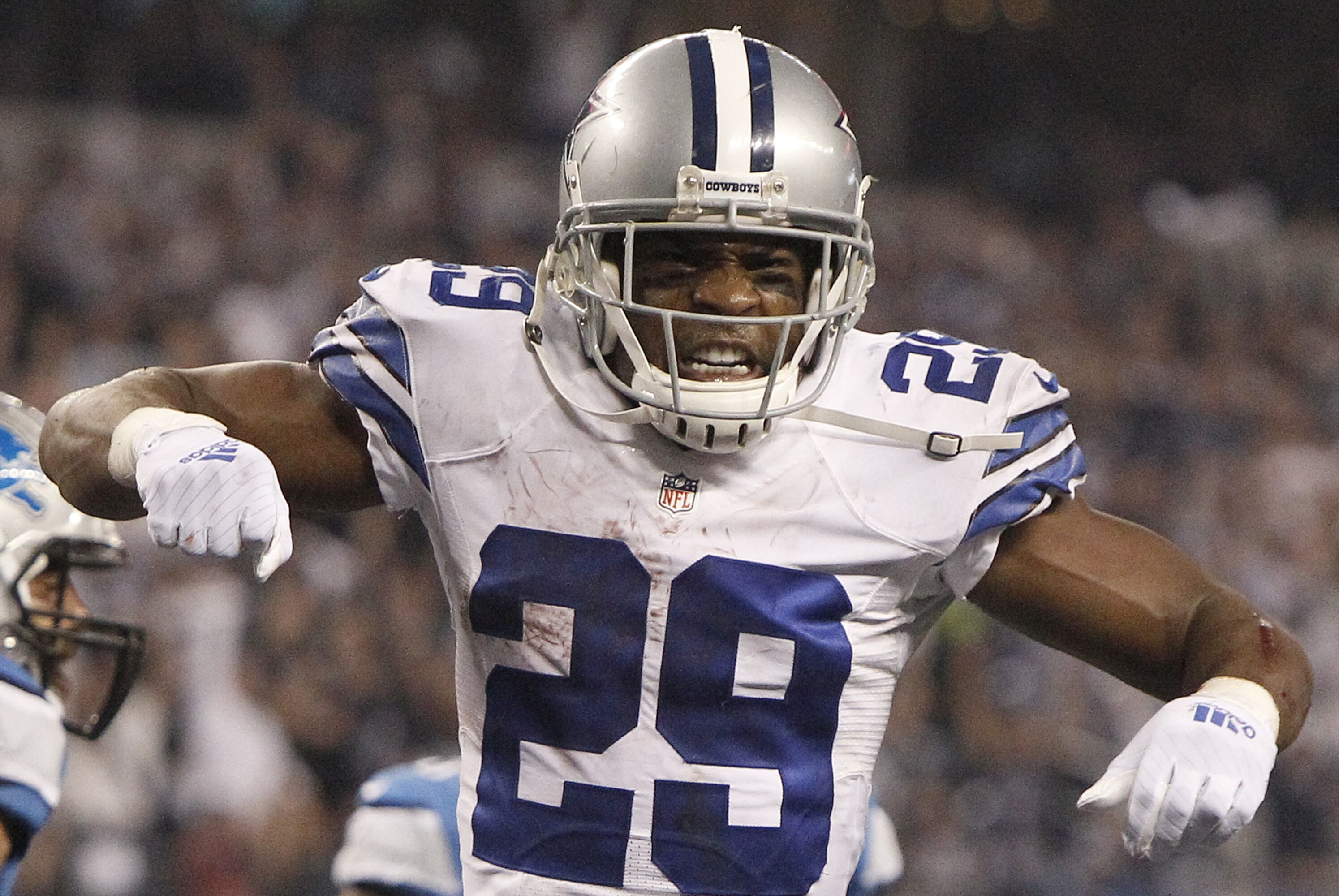
During the 2014 season, Murray delivered one of the most productive rushing seasons in modern NFL history. He rushed for an NFL-leading 1,845 yards and 13 touchdowns on 392 carries, while adding 57 receptions for 416 yards. He was named the AP NFL Offensive Player of the Year and earned First-Team All-Pro honors.
Despite producing elite efficiency and durability, Murray was compensated on a base salary of just $1.402 million in 2014. This dynamic highlighted the extreme surplus value teams gain from mid-round draft picks on rookie deals. However, the heavy workload of 392 regular-season carries (plus 44 postseason carries) raised durability concerns among front offices evaluating his long-term financial commitment.
The 2015 Philadelphia Eagles Free-Agent Blockbuster
Following his historic 2014 campaign, Murray hit unrestricted free agency at age 27. The Dallas Cowboys expressed interest in retaining him but refused to match top-of-the-market offers, citing salary cap constraints and concerns over potential decline following a high-carries season.
On March 12, 2015, the Philadelphia Eagles—led by head coach and personnel director Chip Kelly—signed Murray away from their division rival on a headline-grabbing multi-year deal.
Breakdown of the $42 Million Contract
- Contract Duration: 5 years (2015–2019)
- Total Potential Value: $42,000,000
- Total Guaranteed Money: $21,000,000
- Fully Guaranteed at Signing: $18,000,000
- Signing Bonus: $5,000,000
- Average Annual Value (AAV): $8,400,000
The contract structure guaranteed Murray’s full compensation for the first two seasons. It included a $5 million signing bonus, fully guaranteed base salaries of $1 million in 2015 and $7 million in 2016, along with a fully guaranteed $5 million roster bonus paid in March 2015.
Philadelphia Eagles Contract Structure (2015):
- Total Potential Value: $42.0M over 5 years
- Fully Guaranteed at Signing: $18.0M
- Signing Bonus: $5.0M
- 2015 Roster Bonus: $5.0M
- 2015 Base Salary: $1.0M
- 2016 Base Salary: $7.0M (Guaranteed for Skill/Cap/Injury)
- Non-Guaranteed Years: 2017–2019 ($21.0M total potential base salary)
Scheme Incompatibility and Cap Fallout
The contract proved disastrous on the field. Chip Kelly’s offensive system relied heavily on shotgun lateral sweeps and outside zone runs, whereas Murray’s skillset was optimized for downhill, under-center power running.
In 2015, Murray logged just 702 rushing yards and 6 touchdowns on 193 carries. Discontent between player and coaching staff, combined with structural changes in the Eagles' front office following Kelly's dismissal late in the 2015 season, made Murray’s contract an immediate burden for Philadelphia.
Because $7 million of Murray's 2016 salary was fully guaranteed, Philadelphia could not cut him without taking on an intolerable dead-money charge against their salary cap. Their only viable option was to find a trading partner willing to absorb the contract.
The 2016 Tennessee Titans Trade and Restructured Contract
In March 2016, newly appointed Eagles General Manager Howie Roseman negotiated a trade sending Murray to the Tennessee Titans. To facilitate the move, the Eagles and Titans agreed to swap fourth-round draft choices in the 2016 NFL Draft, effectively allowing Philadelphia to shed the remaining obligation of Murray’s salary.
Terms of the Contract Restructure
Upon arriving in Tennessee, Murray signed a restructured agreement that adjusted his financial terms to better suit the Titans' cap management while securing additional immediate guarantees for the player.
- New Contract Duration: 4 years (2016–2019)
- Total Value: $25,500,000
- Total Guaranteed Money: $12,500,000
- Guaranteed at Signing: $6,250,000
- Average Annual Value (AAV): $6,375,000
| Year | Base Salary | Roster/Roster Bonus | Total Salary Cap Hit | Cash Earned |
|---|---|---|---|---|
| 2016 | $1,000,000 | $5,000,000 (Signing) | $6,000,000 | $6,000,000 |
| 2017 | $3,900,000 | $1,250,000 | $6,250,000 | $5,150,000 |
| 2018 | $5,400,000 | $1,100,000 | $6,500,000 | $0 (Released) |
| 2019 | $5,700,000 | $1,000,000 | $6,700,000 | $0 (Released) |
Resurgence in Tennessee and Final Release
The contract renegotiation worked well for both parties initially. In 2016, fitting into Mike Mularkey’s "exotic smashmouth" power-running scheme, Murray revived his career, rushing for 1,287 yards and 9 touchdowns to capture the AFC rushing title and earn his third career Pro Bowl selection.
However, by 2017, injuries slowed Murray's effectiveness (659 rushing yards), while second-year running back Derrick Henry emerged as the franchise's primary ball-carrier. Because the restructured contract contained zero guaranteed money in 2018 and 2019, the Titans released Murray on March 8, 2018, clearing $6.5 million in salary cap space with no dead-cap penalty. Murray officially announced his retirement from professional football in July 2018.
Comprehensive Overview of Career Earnings and Contract Parameters
Over seven professional seasons, Murray signed deals worth up to $70.47 million, but actual cash earnings totaled $25,791,200. The disparity between contract maximum values and real cash payout is typical for NFL skill-position players who are released prior to non-guaranteed outer years.
| Team | Contract Years | Original Total Value | Guaranteed at Signing | Total Cash Earned | Key Milestone / Context |
|---|---|---|---|---|---|
| Dallas Cowboys | 2011–2014 | $2,974,200 | $624,200 | $2,891,200 | 2014 NFL Rushing Leader (1,845 yds), OPOY |
| Philadelphia Eagles | 2015 | $42,000,000 | $18,000,000 | $13,000,000 | Traded after 1 season; $4M dead money for PHI |
| Tennessee Titans | 2016–2017 | $25,500,000 | $6,250,000 | $9,900,000 | AFC Rushing Leader (2016), Released March 2018 |
| Career Totals | 2011–2017 | $70,474,200 | $24,874,200 | $25,791,200 | 3x Pro Bowl, 1x All-Pro, 1x OPOY |
Analytical Lessons from DeMarco Murray’s Contract History
DeMarco Murray’s contract arc serves as a case study for modern sports management, salary cap strategy, and athletic valuation.
1. The Workload Penalty and Age 27 Ceiling
Dallas’ decision not to sign Murray to a major second contract after his 392-carry 2014 season established a template that front offices continue to follow. NFL analytics departments view extreme single-season workloads as a precursor to accelerated physical decline. Dallas let Murray walk, replaced his production with a committee approach, and eventually drafted Ezekiel Elliott in 2016.
2. Scheme Fit vs. Market Value
Philadelphia’s $42 million deal demonstrated the hazard of paying market value for a marquee player without an offensive scheme tailored to their specific athletic traits. High-priced free-agent running backs rarely outperform their contracts when forced to adapt to incompatible blocking concepts.
3. The Power of "Fully Guaranteed" Structure
From the player's perspective, Murray’s agent negotiated an advantageous structure with Philadelphia. By securing $18 million in full guarantees at signing, Murray ensured that even when the relationship in Philadelphia broke down after one season, he received $13 million in cash from Philadelphia and retained leverage to re-establish guaranteed compensation in Tennessee.
Frequently Asked Questions
How much total cash did DeMarco Murray earn in his NFL career?
DeMarco Murray earned $25,791,200 in gross cash earnings across seven seasons in the NFL. This includes $2.89 million from the Dallas Cowboys, $13 million from the Philadelphia Eagles, and $9.9 million from the Tennessee Titans.
Why did the Dallas Cowboys decline to re-sign DeMarco Murray in 2015?
The Cowboys were reluctant to commit high guaranteed money to a running back entering his age-27 season after enduring 436 combined carries in the 2014 regular season and playoffs. Dallas offered a contract below Philadelphia's market rate, opting to preserve cap space for key positions like offensive line and quarterback.
How did the Philadelphia Eagles trade DeMarco Murray despite his large contract?
Because Philadelphia structured the original contract with a $5 million signing bonus (prorated over five years), trading Murray in 2016 forced the Eagles to absorb $4 million in accelerated dead money on their cap. However, the Tennessee Titans agreed to take on his remaining $7 million guaranteed base salary after Murray agreed to restructure his remaining contract terms.
What was the cap hit of DeMarco Murray’s contract for the Tennessee Titans?
Murray’s cap hit with the Titans was $6,000,000 in 2016 and $6,250,000 in 2017. Because his 2018 and 2019 contract years carried no remaining guaranteed money, the Titans incurred zero dead money when they released him in March 2018.
Was DeMarco Murray’s Philadelphia Eagles contract considered one of the worst free-agent signings?
In terms of on-field returns relative to average annual value ($8.4 million per year), Murray’s 2015 deal with Philadelphia is often cited by cap analysts as an ill-fitting free-agent signing. However, because Eagles management successfully traded him after one year, the long-term structural cap damage was contained.
Final Takeaway for Salary Cap Analysts
When studying historical running back valuations, DeMarco Murray’s contract path illustrates the vital difference between headline contract values and realized cash earnings. Analysts evaluating running back contracts should focus on the structure of full guarantees, signing bonus acceleration, and dead-cap cutoffs rather than cumulative multiy-ear base figures. Murray maximized his earnings by securing high initial guarantees upfront in 2015, protecting his financial position despite short-term team changes.
Image Gallery