Comprehensive Guide to Loan Forgiveness for Non-Profit Organizations in 2026
Loan forgiveness for non-profit organizations encompasses two primary tracks: the Public Service Loan Forgiveness (PSLF) program for employees and specialized federal or private debt-to-grant conversions for the entities themselves. To...
Loan forgiveness for non-profit organizations encompasses two primary tracks: the Public Service Loan Forgiveness (PSLF) program for employees and specialized federal or private debt-to-grant conversions for the entities themselves. To qualify, organizations must maintain 501(c)(3) status or meet specific public service criteria while ensuring rigorous documentation of employment and qualifying debt payments.
Contents
For non-profit leaders and employees in 2026, navigating the landscape of debt relief requires a dual understanding of individual federal student loan programs and organizational liability management. While the "forgiveness" most commonly discussed refers to the personal debts of the workforce, the financial health of the organization itself often hinges on its ability to leverage these programs as recruitment tools and manage its own corporate or federal obligations.
The State of Non-Profit Debt Relief in 2026
By 2026, the regulatory environment surrounding non-profit financial assistance has stabilized following years of legislative shifts. The primary focus has moved toward long-term sustainability and the integration of debt relief into standard compensation packages. For an organization to truly understand "loan forgiveness," it must differentiate between its role as an eligible employer and its potential as a debt-carrying entity.
The federal government remains the largest provider of forgiveness through the Department of Education and the Small Business Administration (SBA). However, private foundations and state-level initiatives have increasingly introduced "forgivable loans"—essentially grants structured as loans that are cancelled upon the achievement of specific social impact milestones.
The Role of 501(c)(3) Status
The bedrock of most forgiveness programs is the organization’s tax-exempt status. In 2026, the IRS and the Department of Education use automated data sharing to verify an organization’s standing. If a non-profit’s status is revoked or shifted to a non-qualifying category (such as a 501(c)(4) social welfare organization that does not meet specific "public service" definitions), the eligibility for its entire workforce to claim PSLF may be jeopardized.
Public Service Loan Forgiveness (PSLF): The Organizational Anchor
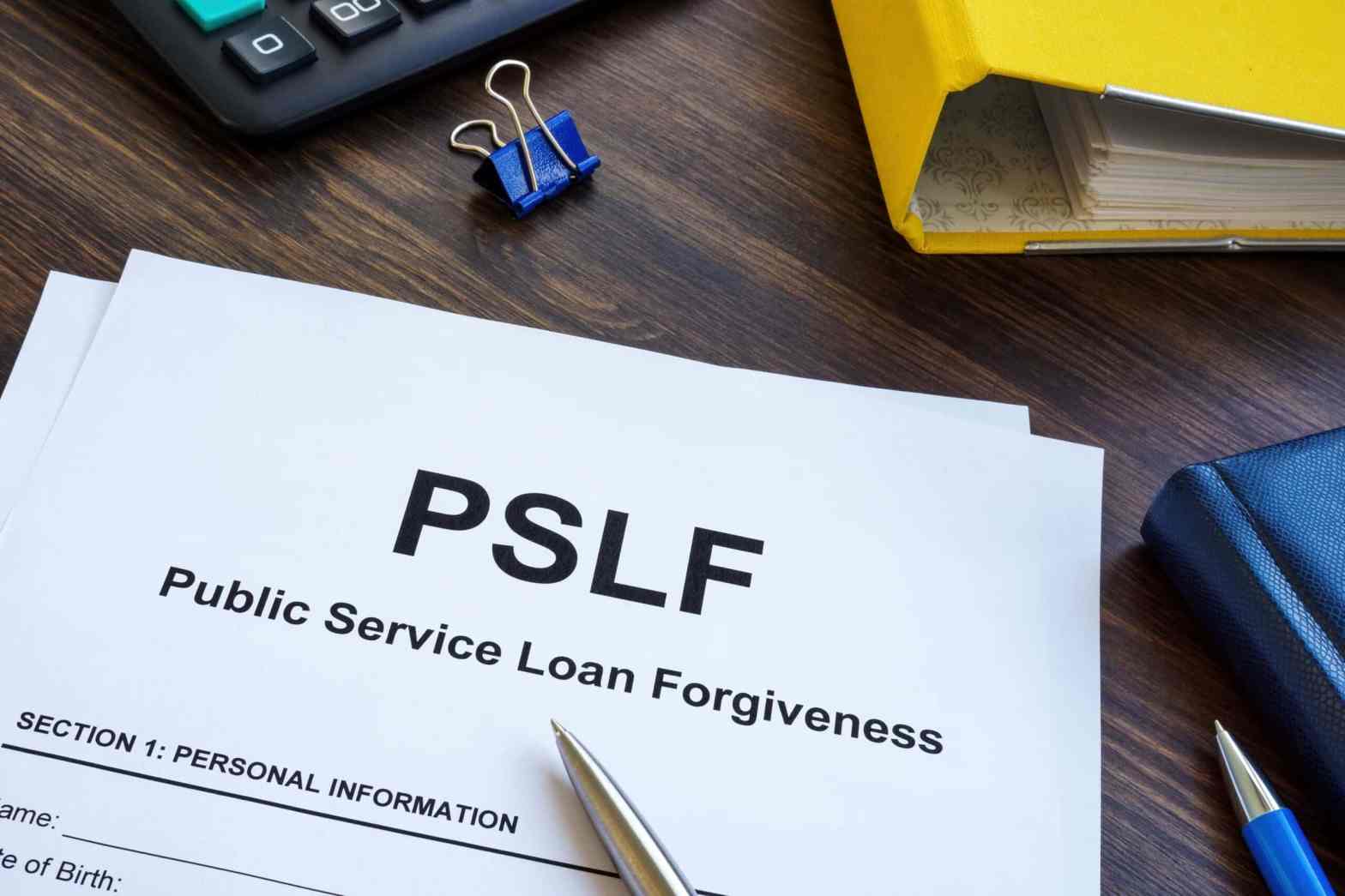
The Public Service Loan Forgiveness program remains the most significant debt relief mechanism associated with the non-profit sector. As of 2026, the program has undergone several administrative "fixes" designed to automate the process, but the core requirements for non-profit organizations and their staff remain stringent.
Employer Eligibility and Certification
For an organization’s employees to qualify, the non-profit must be a governmental organization, a 501(c)(3) tax-exempt entity, or a private non-profit that provides specific qualifying public services. In 2026, the definition of "qualifying public services" includes:
- Emergency management and public safety.
- Health services, including residency programs.
- Education and early childhood programs.
- Legal aid and public interest law.
- Public library services.
Organizations must proactively use the PSLF Employer Search Tool on the Federal Student Aid website to ensure they are correctly categorized. Management should designate a specific official to sign the Employment Certification Form (ECF), which is now predominantly handled via digital signatures through the DocuSign-integrated PSLF Help Tool.
The "Full-Time" Requirement
In 2026, "full-time" employment is standardized across the federal system. An employee is considered full-time if they work at least 30 hours per week, regardless of the employer's internal definition of a full-time schedule. This is a critical distinction for non-profits that rely on staggered shifts or part-time staff. Organizations can help their employees by aggregating hours for those working multiple part-time positions within the non-profit sector, provided the total exceeds the 30-hour threshold.
Forgiveness of Organizational Debt and SBA Obligations
While PSLF focuses on individuals, non-profit organizations often carry their own debt in the form of SBA loans, commercial mortgages, or community development bonds. Understanding how these liabilities can be "forgiven" or converted into non-repayable funds is essential for 2026 fiscal planning.
SBA Disaster Loan Conversions
Historically, programs like the Paycheck Protection Program (PPP) introduced the concept of mass loan forgiveness for non-profits. While PPP has concluded, the SBA continues to offer Economic Injury Disaster Loans (EIDL) for non-profits affected by localized disasters. In 2026, certain "advance" portions of these loans are structured as non-repayable grants. For larger EIDL balances, forgiveness is rare; however, the SBA frequently offers "Hardship Accommodation Plans" that allow non-profits to make interest-only payments, effectively preserving cash flow for mission-critical activities.
Private Foundation Debt-to-Grant Conversions
A growing trend among philanthropic institutions in 2026 is the "Forgivable Impact Loan." Under these agreements, a foundation lends a non-profit capital for a specific project (e.g., building a community health center). If the non-profit meets predefined Key Performance Indicators (KPIs) over a 3-to-5-year period, the principal of the loan is "forgiven" and reclassified as a restricted grant.
Requirements for Debt-to-Grant Conversions:
- Strict Performance Tracking: Automated reporting of service metrics.
- Financial Audits: Annual third-party audits to ensure funds were not diverted.
- Legal Restructuring: Amending the initial loan note to include "cancellation of debt" (COD) clauses triggered by performance.
Technical Specifications of Qualifying Repayment Plans
For employees of non-profits to achieve forgiveness, they must be enrolled in an Income-Driven Repayment (IDR) plan. In 2026, the primary plan utilized is the Saving on a Valuable Education (SAVE) plan or its successor. These plans ensure that any remaining balance on a Direct Loan is forgiven after 120 qualifying monthly payments (10 years of service).
Comparison of Forgiveness Pathways in 2026
| Feature | PSLF (Employee-Focused) | SBA Relief (Entity-Focused) | Foundation Debt-to-Grant |
|---|---|---|---|
| Primary Beneficiary | Individual Staff Member | The Non-Profit Organization | The Non-Profit Organization |
| Qualifying Debt | Federal Direct Loans | EIDL or 7(a) Loans | Private Foundation Capital |
| Service Requirement | 10 Years in Non-Profit | Disaster Recovery/Economic Need | Outcome-Based KPIs |
| Tax Implications | Tax-Free (Federal) | Varies by State | Generally Tax-Free for 501(c)(3) |
| Documentation | Annual ECF Submission | SBA Financial Disclosures | Impact Reporting & Audits |
Administrative Steps for Non-Profit Leaders
To support loan forgiveness within an organization, leadership must take proactive steps. This not only aids employee retention but also protects the organization from legal and tax complications related to debt management.
Step 1: Verification of Tax-Exempt Status
Confirm that the organization is listed in the IRS Publication 78 Data, which is the cumulative list of organizations eligible to receive tax-deductible charitable contributions. If the organization's name or EIN (Employer Identification Number) has changed recently, this must be updated with the Department of Education to avoid PSLF application rejections.
Step 2: Implementing a Student Loan Repayment Program (SLRP)
Under the Consolidated Appropriations Act (provisions extended through 2026), non-profit employers can provide up to $5,250 per year in student loan repayment assistance to employees on a tax-free basis. These payments are not considered taxable income for the employee, and the organization can use them as a "bridge" while the employee works toward their 120-payment PSLF goal.
Step 3: Record Keeping and Compliance
Maintain digital copies of all employment contracts and payroll records that prove the "30-hour" rule is being met. In the event of a Department of Education audit, the organization must be able to verify that the employee was not engaged in "proselytizing" or other non-qualifying activities if the organization is a religiously affiliated non-profit.
Common Obstacles and Troubleshooting
Despite the improvements in 2026, several hurdles remain that can derail loan forgiveness efforts for non-profits.
- Loan Type Incompatibility: Only Federal Direct Loans qualify for PSLF. If an employee has older FFEL or Perkins loans, the organization should advise them to consolidate into a Direct Consolidation Loan immediately.
- Contractor Status Misunderstandings: Individuals who work for a non-profit through a third-party staffing agency or as 1099 contractors generally do not qualify for PSLF, even if they are doing the same work as a full-time staffer.
- Late Payments: In 2026, the "Permanent Fix" regulations allow for some flexibility, but generally, a payment must be made within 15 days of the due date to count as one of the 120 required payments.
Frequently Asked Questions
Do all 501(c)(3) organizations qualify for PSLF?
Yes, all 501(c)(3) organizations are considered qualifying employers for the Public Service Loan Forgiveness program. This applies regardless of the specific services provided, as the tax-exempt status itself satisfies the federal requirement. Employees must still meet the full-time work requirements and have eligible federal loans.
Can a non-profit organization have its commercial bank loans forgiven?
Standard commercial bank loans are rarely "forgiven" in the traditional sense. However, they can be refinanced through community development financial institutions (CDFIs) or replaced by government-backed forgivable loans if the organization is located in an underserved area or meets specific community-benefit criteria established by the U.S. Department of the Treasury.
Is the forgiven loan amount considered taxable income for the non-profit?
For 501(c)(3) organizations, the cancellation of debt (COD) is generally not considered taxable income, provided the debt was incurred for purposes related to the organization’s exempt mission. For individual employees receiving PSLF, the forgiven amount is exempt from federal income tax through 2026 under the American Rescue Plan Act extensions.
How does "buyback" work for non-profit employees in 2026?
The PSLF "Buyback" program allows employees to receive credit for past months spent in deferment or forbearance that previously didn't count toward the 120-payment total. To use this, the employee must still be working for a qualifying non-profit and have exactly enough months of service to reach the 120-payment mark if those months are "bought back" at the rate of what their IDR payment would have been at that time.
Practical Recommendations
For non-profit organizations looking to maximize their benefits in 2026, the first action should be an Internal Debt Audit. Identify all outstanding organizational liabilities and categorize them by creditor (SBA, CDFI, or Private). For employee-facing support, the human resources department should distribute a "PSLF Tool Kit" annually, ensuring all staff members have updated their employment certification.
Finally, consider engaging with a financial advisor specializing in non-profit accounting to explore Section 127 Education Assistance Programs. By integrating these into your benefits package, you can provide immediate financial relief to your team while they pursue long-term federal forgiveness, creating a powerful incentive for talent to remain in the public service sector.
Image Gallery