Complete Guide to IRS Forms W-8 and W-9: Compliance and Tax Requirements for 2026
Navigating United States tax compliance requires a precise understanding of documentation, particularly when distinguishing between domestic and foreign status. When individuals and businesses encounter compliance terminology, they fre...
Navigating United States tax compliance requires a precise understanding of documentation, particularly when distinguishing between domestic and foreign status. When individuals and businesses encounter compliance terminology, they frequently compare IRS Form W-8 and Form W-9 to determine which document applies to their specific financial arrangements. Form W-8 and Form W-9 serve entirely different populations and legal statuses under the Internal Revenue Code, governing everything from withholding rates to information reporting for contractors and vendors.
Contents
Important Disambiguation Note: While Form W-8 and Form W-9 are often referenced together as a pair of primary tax classification documents, they are mutually exclusive. Form W-9 is strictly for U.S. persons and domestic entities, whereas Form W-8 series documents apply exclusively to foreign individuals and non-U.S. entities receiving U.S.-source income.
Understanding Form W-9: Request for Taxpayer Identification Number and Certification
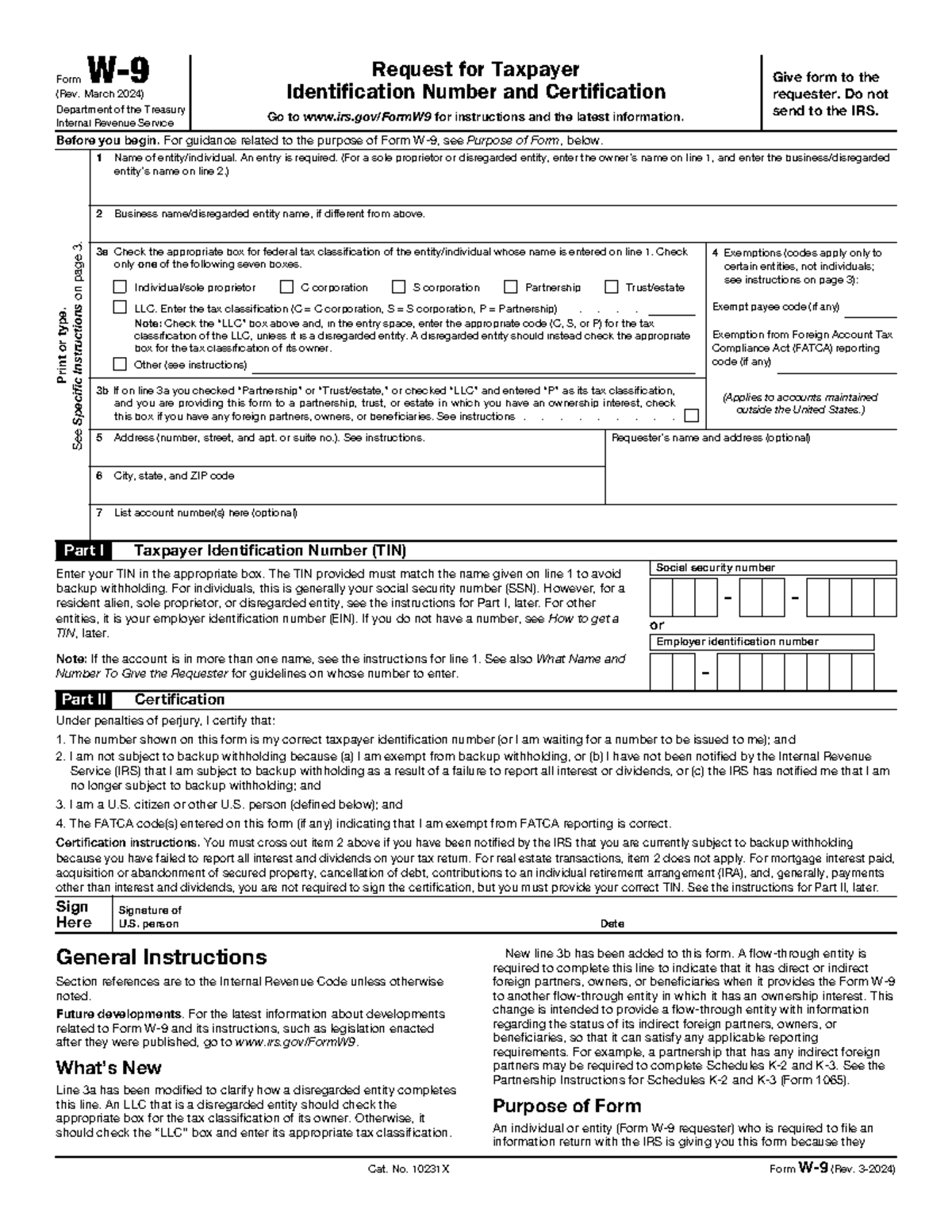
Form W-9, officially titled the Request for Taxpayer Identification Number and Certification, is a foundational document in the U.S. tax system. Domestic businesses, financial institutions, and platforms utilize this form to collect accurate identification information from U.S. persons and entities. The primary objective is to verify the correct Taxpayer Identification Number (TIN), which may be a Social Security Number (SSN), Employer Identification Number (EIN), or Individual Taxpayer Identification Number (ITIN), to ensure proper reporting on information returns such as Form 1099.
When an independent contractor, freelancer, or single-member LLC begins a business relationship with a U.S. client, submitting a completed Form W-9 is standard procedure. By signing the certification section under penalties of perjury, the provider confirms their correct TIN, verifies that they are not subject to backup withholding, and asserts their status as a U.S. person. Failure to provide a valid Form W-9 often triggers mandatory backup withholding at the statutory rate of 24%, meaning the payer must withhold nearly a quarter of all gross payments and remit them directly to the Internal Revenue Service.
Navigating the W-8 Series: Tax Withholding for Foreign Persons and Entities
Unlike its domestic counterpart, the W-8 series of forms targets foreign individuals, foreign corporations, partnerships, and other non-U.S. entities receiving income from sources within the United States. The overarching purpose of Form W-8 is to establish foreign status and claim applicable reductions or exemptions from U.S. tax withholding under bilateral income tax treaties.
U.S. source income paid to foreign persons is generally subject to a statutory withholding tax of 30 percent. However, providing a properly validated Form W-8 allows the beneficial owner of the income to demonstrate eligibility for reduced withholding rates or total exemption. The W-8 series includes several distinct variations tailored to specific entity types and operational structures:
- Form W-8BEN: Used by foreign individuals to certify their foreign status and claim tax treaty benefits for passive income such as dividends, interest, and royalties.
- Form W-8BEN-E: Designed for foreign entities (corporations, foundations, partnerships) to establish entity classification, document FATCA compliance, and claim treaty benefits.
- Form W-8ECI: Utilized by foreign persons or entities to certify that income is effectively connected with the conduct of a trade or business within the United States.
- Form W-8IMY: Required by foreign intermediaries, flow-through entities, or U.S. branches acting as intermediaries for tax withholding purposes.
Core Structural and Functional Comparison
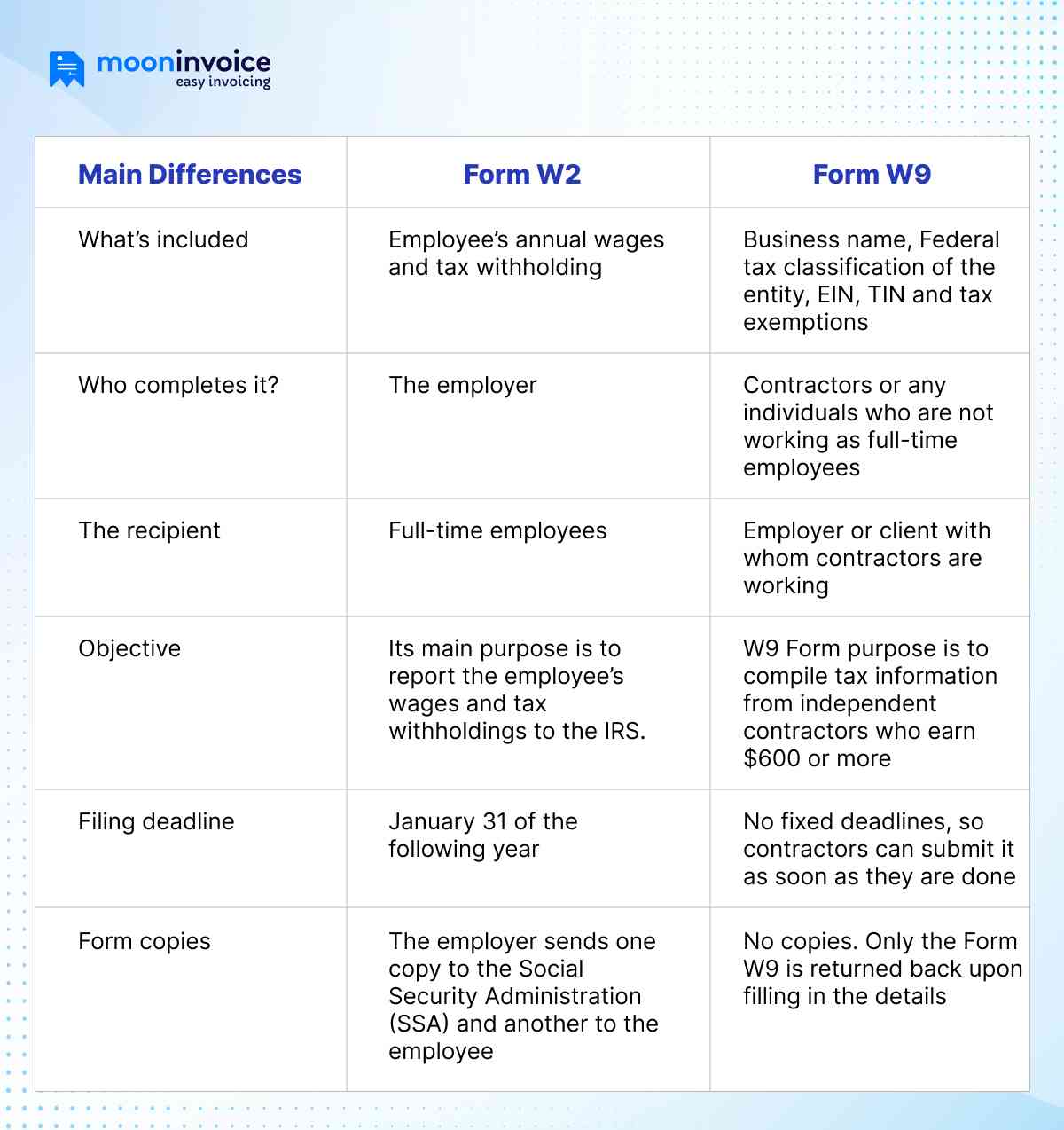
Evaluating the operational differences between these two compliance standards requires looking at who files the document, the applicable tax reporting mechanisms, and the associated withholding liabilities. The following comparison highlights the structural divergences between Form W-8 and Form W-9 for the 2026 tax year.
| Compliance Parameter | IRS Form W-9 | IRS Form W-8 Series (e.g., W-8BEN / W-8BEN-E) |
|---|---|---|
| Target Audience | U.S. citizens, resident aliens, partnerships, corporations, estates, or domestic trusts. | Non-resident aliens, foreign corporations, foreign partnerships, and international entities. |
| Primary Identifier | Social Security Number (SSN) or Employer Identification Number (EIN). | Foreign Tax Identifying Number (TIN) or U.S. ITIN/EIN if applicable. |
| Reporting Form | Form 1099-NEC, 1099-MISC, 1099-INT, etc. | Form 1042-S (Foreign Person's U.S. Source Income Subject to Withholding). |
| Standard Withholding | 0% standard, subject to 24% backup withholding only if TIN is missing or invalid. | 30% statutory withholding, reducible to 0%-15% via valid tax treaty claims. |
| Expiration Period | Generally remains valid indefinitely until a material change in circumstances occurs. | Expires strictly three full calendar years from the date of signature unless a change occurs sooner. |
Step-by-Step Compliance Workflow for Businesses
Implementing a robust vendor and contractor onboarding process protects organizations from IRS penalties and withholding liabilities. Compliance officers and accounts payable teams must systematically route payees to the correct documentation track based on their geographic and tax classification.
- Initial Status Determination: During vendor onboarding, collect primary address and entity data to determine whether the payee is a U.S. person or a foreign individual/entity.
- Distribution of Correct Document: If the payee has a U.S. address and domestic status, issue Form W-9. If the payee operates internationally or maintains a foreign address, route them to the appropriate W-8 variation.
- Validation and Review: Inspect the submitted document for completeness, ensuring signatures, dates, TINs, and treaty claim justifications are fully populated without alterations.
- System Configuration: Input the verified tax data into the enterprise resource planning (ERP) or accounts payable software to configure accurate withholding rates and downstream 1099 or 1042-S reporting rules.
- Periodic Re-certification: Establish automated schedules to track expiration dates, specifically ensuring W-8 forms are systematically re-collected every three years.
Common Compliance Pitfalls and Mitigation Strategies
Organizations frequently face audit scrutiny and financial penalties due to improper handling of tax documentation. Recognizing common failure points allows financial controllers to tighten internal controls.
- Accepting Incomplete Certifications: Accepting forms missing signatures, dates, or tax identification numbers invalidates the document and exposes the payer to secondary tax liability. Always utilize automated validation tools or manual check-sheets before approving a vendor file.
- Failing to Track W-8 Expiration: Unlike Form W-9, which lacks a fixed expiration date, W-8 forms expire precisely on December 31 of the third full year following signature. Payers must institute proactive re-solicitation campaigns well before expiration to maintain treaty withholding rates.
- Misclassifying Independent Contractors: Treating a foreign contractor as a domestic 1099 worker without verifying permanent residency or work authorization violates federal reporting mandates. Ensure proper foreign status verification via W-8BEN-E before issuing gross payments without withholding.
Frequently Asked Questions
What is the primary difference between Form W-8 and Form W-9?
Form W-9 is utilized exclusively by U.S. persons and domestic entities to verify their Taxpayer Identification Number, while the W-8 series is used by foreign individuals and international entities to certify non-U.S. status and claim tax treaty benefits. Form W-9 ensures proper reporting on Form 1099, whereas W-8 forms govern withholding under Form 1042-S.
When does an IRS Form W-8 expire?
Form W-8 documents generally expire on December 31 of the third full calendar year following the date the form was signed and validated. Payers must collect updated forms prior to this expiration date to continue applying reduced tax treaty withholding rates.
What happens if a U.S. vendor refuses to provide a Form W-9?
If a domestic contractor or vendor refuses to supply a completed and signed Form W-9, the paying business is legally mandated to implement backup withholding at a rate of 24 percent on all future reportable payments. These withheld funds must be remitted directly to the IRS.
Can a foreign entity use Form W-9 if they operate within the United States?
Foreign entities cannot use Form W-9 unless they are classified as a U.S. resident alien or domestic organization for tax purposes, such as an entity with effectively connected U.S. business operations that has elected domestic treatment. Standard foreign corporations must utilize Form W-8BEN-E.
How do tax treaties impact the submission of Form W-8?
Bilateral income tax treaties between the United States and foreign jurisdictions allow eligible residents to claim reduced withholding percentages or total exemptions on specific types of U.S.-source income. Form W-8 acts as the legal instrument to declare eligibility for these treaty provisions.
Securing Your Tax Compliance Framework
Maintaining a seamless tax documentation workflow protects your organization from costly IRS penalties, ensures accurate year-end reporting, and streamlines financial operations. Whether your enterprise engages domestic freelancers through Form W-9 or manages global partnerships via the W-8 series, adopting strict verification protocols is vital. Review your current vendor onboarding pipelines today to ensure complete compliance across all domestic and international classifications.
Image Gallery