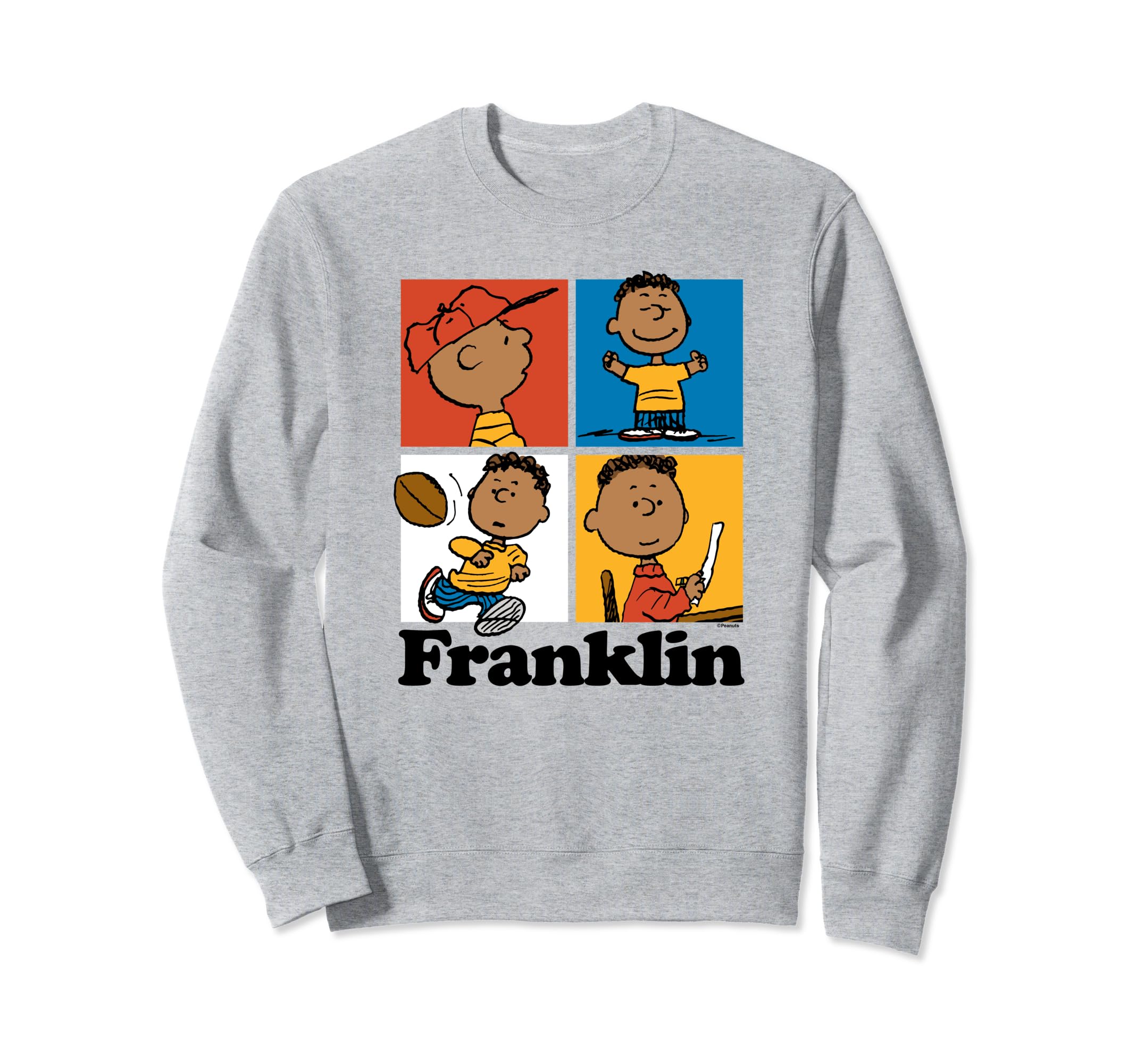
Franklin Armstrong in the Peanuts Universe: A Character Legacy
Franklin Armstrong, introduced to the world on July 31, 1968, remains a seminal figure in the Peanuts universe, representing a quiet yet profound evolution in Charles M. Schulz’s legendary comic strip. As the first Black character to j...
Franklin Armstrong, introduced to the world on July 31, 1968, remains a seminal figure in the Peanuts universe, representing a quiet yet profound evolution in Charles M. Schulz’s legendary comic strip. As the first Black character to join the primary cast, Franklin bridged social divides with his calm demeanor and steadfast friendship, serving as a stabilizing presence among the more volatile personalities of the neighborhood. His integration into the daily life of Charlie Brown and the rest of the gang provided a lens through which readers could observe subtle reflections of American social change, all maintained within the hallmark gentle, philosophical tone of the Peanuts franchise.
Contents
The Historical Context of Franklin’s Introduction
The appearance of Franklin in 1968 was not a casual addition but a considered decision by Charles M. Schulz. Following the assassination of Dr. Martin Luther King Jr. earlier that year, the national dialogue on race in the United States was at a critical turning point. Harriet Glickman, a schoolteacher from California, wrote a letter to Schulz urging him to include Black children in his strip to promote social empathy.
Schulz, who had already considered diversifying the cast, responded by introducing Franklin. Unlike many pop-culture portrayals of the era, which often relied on stereotypes or heavy-handed didacticism, Franklin was crafted with the same psychological complexity as his peers. He was an equal peer in the classroom and the ballfield, characterized by his love of baseball, his interest in theology—often discussing scripture with Linus—and his consistent kindness toward Charlie Brown.
Defining Franklin’s Personality and Role
Within the Peanuts universe, Franklin stands out as a "straight man" to the eccentricities of the other characters. Where characters like Lucy demand attention or Linus retreats into philosophical abstraction, Franklin is pragmatic and grounded. His dynamic with Charlie Brown is particularly noteworthy; he is often one of the few individuals who speaks to Charlie Brown with genuine respect and lacking any mockery.
His role can be categorized into several key social and narrative functions:
- The Equalizer: By treating Charlie Brown with uncomplicated warmth, Franklin provides a baseline for normalcy, showing that human kindness is not limited by background or social status.
- The Academic Peer: He is frequently depicted alongside Peppermint Patty and Marcie in school, highlighting his role as an integral part of the central social group.
- The Stoic: Despite the occasional chaotic nature of the neighborhood, Franklin maintains a consistent temperament, often serving as a mediator or a reliable observer during the children's various misadventures.
Notable Interactions and Story Arcs
Franklin’s interactions with the broader cast cemented his status as a permanent fixture rather than a guest character. His friendship with Peppermint Patty and Marcie is a recurring theme, particularly in the later decades of the strip.
One of the most frequently discussed elements of his character is his relative lack of neuroses. While nearly every other character in the Peanuts gang carries a heavy psychological burden—whether it is Charlie Brown’s chronic self-doubt, Lucy’s aggressive projection, or Schroeder’s single-minded obsession—Franklin is defined by his emotional stability. This stability allows him to navigate the social currents of the neighborhood without being consumed by them, making him an essential foil to the more unstable members of the cast.
Comparing Character Archetypes in Peanuts
To understand Franklin’s specific utility within the narrative, it is helpful to compare his personality traits and social standing with other core members of the group.
| Character | Defining Trait | Social Role | Typical Interaction with Charlie Brown |
|---|---|---|---|
| Franklin | Stoic/Pragmatic | Supportive Peer | Empathetic listener and friend |
| Lucy | Assertive/Cynical | Antagonist | Constant critic and verbal foil |
| Linus | Intellectual/Naive | Confidant | Intellectual partner/Deep observer |
| Schroeder | Focused/Remote | Specialist | Distant observer of school life |
| Peppermint Patty | Bold/Confused | Enthusiastic ally | Informal and supportive teammate |
This comparison highlights why Franklin remains a beloved character; he provides a necessary balance to the high-energy, often negative interactions between characters like Lucy and Charlie Brown. He brings a level of social cohesion that the group would otherwise lack.
Franklin in Animation and Modern Adaptations
While Franklin’s origins are rooted in the static medium of the newspaper comic strip, his presence expanded significantly through television specials and films. From his first major appearance in the 1973 television special A Charlie Brown Thanksgiving, his role in animation has been consistent.
Modern interpretations of the Peanuts universe in the 2020s have worked to give Franklin more internal depth, particularly in the Apple TV+ The Snoopy Show and Snoopy Presents specials. These productions have expanded on his home life, his relationship with his family, and his hobbies, ensuring that he remains a fully rounded character for a new generation of viewers. In 2026, the legacy of the character continues to be maintained by Peanuts Worldwide, ensuring that he retains his foundational characteristics while feeling relevant to contemporary children.
Common Misconceptions Regarding the Character
Despite his long tenure, there are persistent myths regarding Franklin’s development. One common misconception is that his inclusion was met with immediate, widespread backlash. While some newspapers in the American South initially resisted the character, historical records show that the overwhelming majority of the strip's readership and publishers accepted Franklin without incident. Schulz famously held his ground, telling his editors that if they were not satisfied with the inclusion of the character, he would simply end the comic strip.
Another misconception is that Franklin was intended to serve as an "educational tool" for diversity. While his presence was a progressive step for the medium of syndication, Schulz avoided making Franklin a mouthpiece for social issues. By keeping Franklin’s dialogue focused on the same daily concerns as the other children, Schulz ensured that the character was accepted as a genuine friend, rather than an outsider or a teaching mechanism.
FAQ: Understanding Franklin Armstrong
Was Franklin Armstrong always portrayed as an equal to Charlie Brown? Yes. From his first appearance in 1968, Franklin was introduced as a fellow student who meets Charlie Brown at the beach. He was never treated as a "guest" or someone temporary; he was integrated into the classroom and the neighborhood sports teams immediately.
Does Franklin have a specific "gimmick" or neurosis like the other characters? Franklin is intentionally designed to be the least neurotic character. While the humor of Peanuts often stems from the psychological baggage of the children, Franklin acts as a point of stability. His role is to be a kind, reliable friend who does not participate in the cycle of teasing or manipulation common among the others.
How is Franklin’s family life represented in the Peanuts universe? Historically, the Peanuts strip rarely showed the parents of any of the children. However, in recent years, digital content and streaming specials have provided glimpses into his life, including his father’s military career, which adds a layer of depth to his character’s backstory regarding frequent moves and adapting to new environments.
Is Franklin a key player in the sports-related storylines? Absolutely. Franklin is a regular on Peppermint Patty’s baseball team and often participates in the group's football games, though he is generally spared the indignity of Lucy pulling the ball away from him. He is portrayed as a competent player who enjoys the spirit of the game.
Recommendations for Further Exploration
For readers interested in the evolution of Franklin within the strip, the most effective approach is to explore the Complete Peanuts collections, specifically the volumes covering 1968 and the following years. Examining these strips chronologically allows the reader to witness how Schulz subtly adjusted the tone of the strip to integrate Franklin naturally. For those interested in his animation history, the 1973 special A Charlie Brown Thanksgiving remains the definitive viewing experience for seeing Franklin as a core member of the gang, seamlessly integrated into the chaotic but loving household that Charlie Brown occupies during the holiday.
Image Gallery