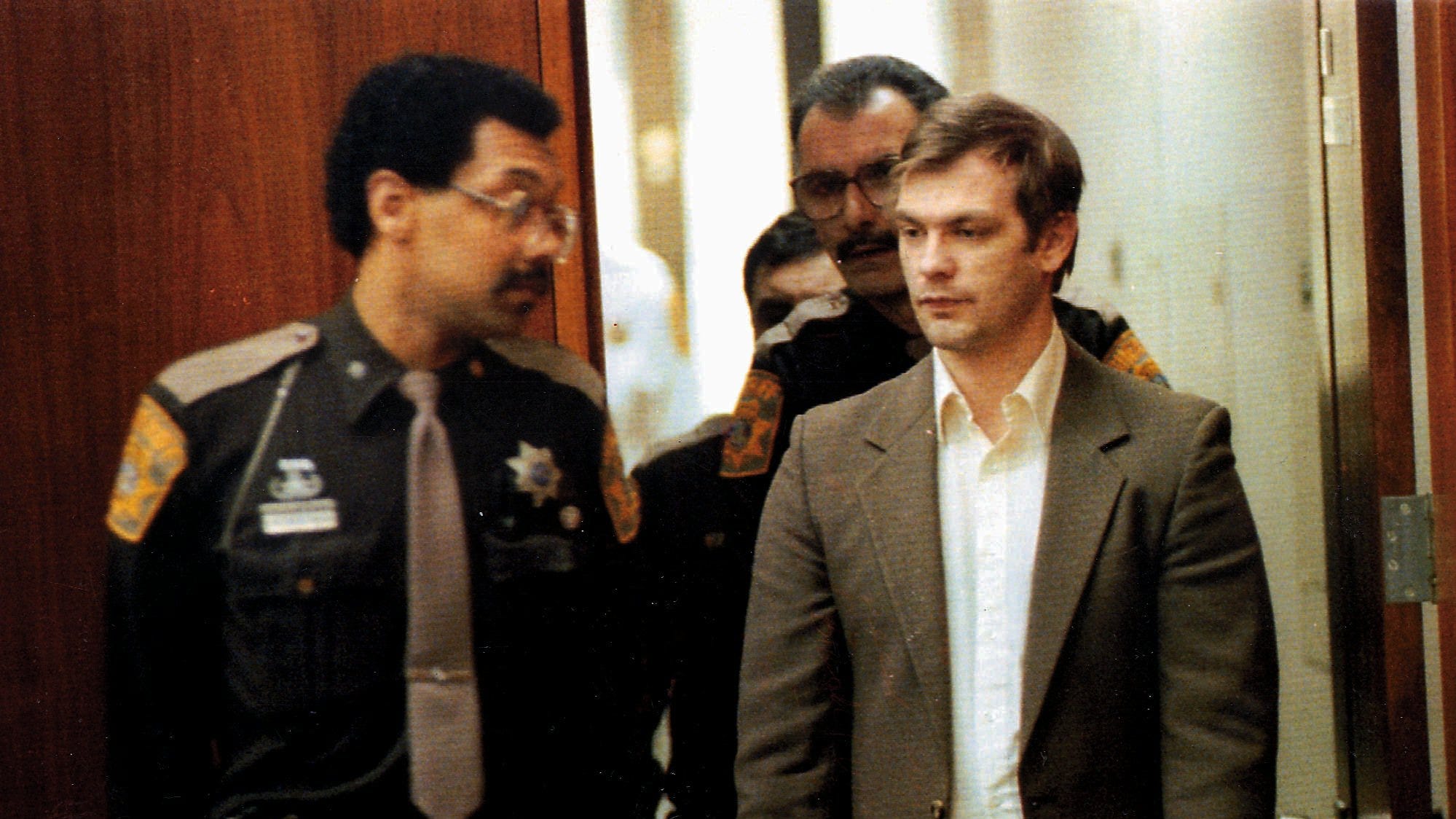
Understanding Jeffrey Dahmer’s Sentencing: Was He Ever on Death Row?
Jeffrey Dahmer was never on death row because the state of Wisconsin, where he was tried and convicted for the majority of his crimes, abolished capital punishment in 1853. Instead, Dahmer was sentenced to 15 consecutive life terms—lat...
Jeffrey Dahmer was never on death row because the state of Wisconsin, where he was tried and convicted for the majority of his crimes, abolished capital punishment in 1853. Instead, Dahmer was sentenced to 15 consecutive life terms—later increased to 16—amounting to 941 years in prison without the possibility of parole.
Contents
The Legal Reality of Wisconsin vs. Capital Punishment
To understand why one of the most prolific serial killers in American history was not sentenced to death, one must look at the specific jurisdictional laws of Wisconsin. As of 2026, Wisconsin remains one of the states with the longest-standing prohibitions against the death penalty in the United States.
The state’s path to abolition began following the 1851 execution of John McCaffary, who was hanged in public for the murder of his wife. The spectacle was so widely criticized for its perceived cruelty and the rowdy nature of the crowd that the Wisconsin Legislature moved to abolish the death penalty entirely in 1853. By the time Jeffrey Dahmer faced trial in 1992, capital punishment had been off the table in Wisconsin for nearly 140 years.
While many high-profile serial killers in the United States, such as Ted Bundy in Florida or John Wayne Gacy in Illinois, were executed by the state, Dahmer’s legal fate was strictly tied to Wisconsin’s statutory limits. Even though his crimes—involving murder, necrophilia, and cannibalism—were among the most heinous ever recorded, the court had no legal mechanism to impose a death sentence.
The 1992 Trial and the Insanity Defense
The primary focus of the 1992 trial in Milwaukee was not whether Dahmer committed the crimes—he had already confessed in graphic detail—but rather his mental state. Under Wisconsin law, a defendant can plead "not guilty by reason of mental disease or defect." If the jury had found that Dahmer lacked the substantial capacity to appreciate the wrongfulness of his conduct or conform his conduct to the requirements of the law, he would have been committed to a mental institution rather than a prison.
The defense argued that Dahmer’s various paraphilias and disorders, including necrophilia and borderline personality disorder, rendered him unable to control his impulses. However, the prosecution, led by E. Michael McCann, argued that Dahmer’s actions showed meticulous planning, evasion of detection, and a clear understanding of the illegality of his acts.
On February 15, 1992, the jury rejected the insanity defense. Because Wisconsin does not have the death penalty, Judge Laurence Gram sentenced Dahmer to 15 consecutive life terms. At the time, this was the maximum penalty available. A 16th life sentence was later added for a murder Dahmer committed in Ohio in 1978.
Comparing Sentences: Why Some Killers Face Execution and Others Don’t
The confusion regarding whether Dahmer was on death row often stems from the different sentencing outcomes for other high-profile criminals. In the United States, the availability of the death penalty is determined by the jurisdiction where the crime occurred—either the specific state or the federal government.
| Serial Killer | Primary State of Conviction | Sentence | Final Outcome |
|---|---|---|---|
| Jeffrey Dahmer | Wisconsin | 16 Life Terms | Killed in prison (1994) |
| Ted Bundy | Florida | Death Penalty | Executed via electric chair (1989) |
| John Wayne Gacy | Illinois | Death Penalty | Executed via lethal injection (1994) |
| Richard Ramirez | California | Death Penalty | Died of natural causes on death row (2013) |
| Gary Ridgway | Washington | Life without Parole | Currently serving life sentence |
| Aileen Wuornos | Florida | Death Penalty | Executed via lethal injection (2002) |
As shown in the table above, the disparity in sentencing is not always a reflection of the severity of the crime, but rather the geographic location of the prosecution. Because Dahmer's 15 murders in Milwaukee occurred in a non-death penalty state, he was never eligible for execution.
Incarceration at Columbia Correctional Institution
Following his sentencing, Dahmer was sent to the Columbia Correctional Institution in Portage, Wisconsin. Because he was not on death row, his experience in the prison system differed significantly from those awaiting execution in other states.
Initially, prison officials placed Dahmer in involuntary protective custody. This meant he was isolated for 23 hours a day to prevent other inmates from attacking him due to his notoriety and the nature of his crimes. However, Dahmer eventually requested to be moved into the general population, expressing a desire for social interaction and work assignments.
In the general population, Dahmer worked alongside other inmates in the prison laundry and attended religious services. His status as a "life-termer" rather than a "death row inmate" meant he had access to different facilities and a different daily routine than he would have had in a maximum-security death row wing in a state like Texas or Florida. This integration into the general population ultimately led to his death.
The Death of Jeffrey Dahmer: November 28, 1994
Although the state did not execute Jeffrey Dahmer, his life ended violently while he was incarcerated. On the morning of November 28, 1994, Dahmer was assigned to a cleaning detail in the prison gym alongside two other inmates: Jesse Anderson and Christopher Scarver.
Scarver, who was serving a life sentence for murder, bludgeoned Dahmer with a 20-inch metal bar taken from a piece of exercise equipment. Scarver then attacked Anderson, who also died from his injuries. Dahmer was pronounced dead shortly after arriving at a local hospital.
Scarver later claimed that his motive was partially driven by Dahmer’s behavior in prison, alleging that Dahmer would use food to mimic severed limbs to taunt other inmates. Scarver also cited a sense of divine retribution, stating he felt he was a tool of God’s justice. Because Dahmer was not on death row, he did not have the heightened security protections usually afforded to high-profile inmates in capital punishment states, which many critics argued contributed to the ease with which the attack occurred.
The Ohio Connection: Could He Have Faced Execution There?
One frequent question is why Dahmer didn't face the death penalty for his first murder, committed in Ohio in 1978. Dahmer murdered Steven Hicks in his father's home in Bath Township, Ohio, shortly after graduating high school.
At the time of the Hicks murder in 1978, the United States was in a period of transition regarding capital punishment. The Supreme Court had struck down existing death penalty statutes in 1972 (Furman v. Georgia) and only began allowing revised statutes in 1976 (Gregg v. Georgia). Ohio’s death penalty laws underwent significant changes during this era.
Furthermore, Dahmer was not charged for the Hicks murder until after his 1991 arrest in Milwaukee. When he pleaded guilty to the Ohio murder in May 1992, he received another life sentence to run concurrently with his Wisconsin sentences. Because he was already serving multiple life terms in Wisconsin and the Ohio prosecution was handled after the Wisconsin trial, there was no push from Ohio prosecutors to seek a death sentence that would have been practically impossible to carry out while he was in Wisconsin custody.
Legal and Ethical Debates Surrounding Dahmer's Sentence
The fact that Dahmer was not on death row fueled significant public debate in the early 1990s. Families of the victims expressed varying opinions, with some feeling that a life sentence was a "mercy" Dahmer did not deserve, while others found solace in the fact that he would never again see the outside world.
From a technical SEO and legal analysis perspective, the Dahmer case serves as a primary example of "jurisdictional luck." Had Dahmer committed his crimes just a few miles south across the border in Illinois (which had the death penalty at the time), he likely would have ended up on death row. This highlights the lack of uniformity in American criminal law regarding the ultimate penalty.
Summary of Incarceration Facts
- Total Life Sentences: 16 (15 in Wisconsin, 1 in Ohio).
- Facility: Columbia Correctional Institution (Maximum Security).
- Time Served: Approximately 33 months.
- Official Cause of Death: Homicide (Blunt force trauma to the head).
- Final Status: Cremated; his brain was initially preserved for study but later destroyed following a legal dispute between his parents.
Frequently Asked Questions
Why didn't Wisconsin bring back the death penalty for Dahmer?
Legislatures cannot pass laws to retroactively punish a person for a crime already committed. This is known as an ex post facto law, which is prohibited by the U.S. Constitution. Even if Wisconsin had reinstated the death penalty during his trial, it could not have been applied to Dahmer’s previous crimes.
Did Dahmer want the death penalty?
During his sentencing statement, Dahmer expressed a sense of remorse and stated, "I didn't want any person to think that I was trying to get out of anything. I wanted the maximum penalty for myself." While he did not explicitly "ask" for a death sentence, he acknowledged that his crimes were worthy of the most severe punishment possible.
Was Christopher Scarver sentenced to death for killing Dahmer?
No. Wisconsin does not have the death penalty, so Scarver received additional life sentences for the murders of Jeffrey Dahmer and Jesse Anderson. He remains incarcerated in a high-security facility.
Could Dahmer have been tried federally to get the death penalty?
For a crime to be tried in federal court, it generally must involve a federal interest, such as crimes committed on federal property, crimes involving interstate commerce, or civil rights violations. While some argued for federal intervention, the murders were prosecuted as state-level homicides, and there was no clear federal jurisdictional hook at the time to seek the federal death penalty.
Where is Jeffrey Dahmer buried?
Jeffrey Dahmer was not buried. After his death in 1994, his body was cremated. His ashes were divided between his mother and father. There is no public gravesite or memorial for him.
Recommended Further Reading
For those interested in the legal complexities of 20th-century serial killer trials, researching the 1976 Gregg v. Georgia Supreme Court decision provides essential context on why capital punishment exists in some states but not others. Additionally, the Wisconsin Historical Society offers extensive archives on the 1853 abolition of the death penalty, which remains the definitive reason Jeffrey Dahmer was never on death row.
Image Gallery