Why You Need Hard Carry-On Luggage: Protection, Durability, and Efficiency
Investing in a hard carry-on luggage piece protects sensitive electronics, fragile valuables, and personal items from impact, pressure, and weather during air travel. Unlike soft fabric bags, rigid hardshell cases withstand heavy overh...
Investing in a hard carry-on luggage piece protects sensitive electronics, fragile valuables, and personal items from impact, pressure, and weather during air travel. Unlike soft fabric bags, rigid hardshell cases withstand heavy overhead bin compression, resist tears, feature integrated TSA locks, and clean off easily after travel through busy transit hubs.
Contents
The Shift Toward Hardshell Luggage
Travel habits have evolved substantially. With airlines strictly enforcing cabin bag dimensions and passengers seeking to avoid checked bag fees and lost luggage, the carry-on suitcase has become the foundation of modern travel gear. Among cabin-sized bags, hard-sided luggage—often called hardshell luggage—has shifted from a niche aesthetic choice to an industry standard.
Selecting the right carry-on requires balancing weight, packing volume, structural protection, and maneuverability. While soft-sided canvas and nylon bags were long preferred for their exterior pocketing and flexible sides, advancements in material science have eliminated historical drawbacks of rigid luggage, such as excess weight and shell cracking. Modern thermoplastics and aluminum alloys provide high tensile strength at minimal weights, making a hard carry-on suitcase one of the most practical investments for frequent business travelers and vacationers alike.
5 Core Reasons You Need a Hard Carry-On Suitcase
Understanding the advantages of hard-shell construction helps travelers choose luggage that withstands the rigors of commercial aviation, train travel, and urban navigation.
- Core Hard Carry-On Advantages
- Structural Protection
- Weather & Liquid Resistance
- Enhanced Theft Deterrence
- Easy Cleaning & Hygiene
1. Superior Protection Against Structural Crush and Impact
The primary functional purpose of luggage is to shield contents from exterior forces. Overhead bins on commercial aircraft are cramped environments where heavy duffels, personal items, and other suitcases are constantly pressed against one another.
A rigid exterior distributes external impact evenly across the shell's surface rather than transferring that force directly to internal contents. This structural rigidity offers distinct advantages:
- Protection for Electronics: Laptops, tablets, camera lenses, and handheld gaming consoles stay safe from crushing weight.
- Fragile Item Safeguarding: Souvenirs, glass bottles, toiletry containers, and prescription medicine bottles retain their physical integrity.
- Garment Preservation: Pressed suits, structured dresses, and collared shirts maintain their shape better against a flat, firm exterior surface than inside a collapsing soft bag.
2. All-Weather Barrier Against Moisture and Grime
Air travel frequently exposes luggage to harsh environmental conditions. Carry-on bags sit on rainy tarmac loading carts during gate checks, drag across wet sidewalks, and sit on contaminated airport floors.
Soft woven materials like polyester or standard ballistic nylon absorb water, oils, and dirt unless frequently treated with durable water repellent (DWR) coatings. Once moisture penetrates a soft bag, it reaches interior clothing and creates damp environments where odors develop. In contrast, hard carry-on luggage constructed from polycarbonate, polypropylene, or aluminum forms an impermeable barrier against rain, snow, spilled liquids, and street grime. A quick wipe with a damp cloth cleans the surface after a trip.
3. Integrated Security Features
Security is a paramount concern when navigating international transit hubs or leaving bags in hotel storage rooms. Hard-shell suitcases offer structural security features that soft bags cannot match:
- Puncture Resistance: Fabric bags can be slashed open using basic utility blades. Rigid shells made from high-grade polymers resist cuts and punctures.
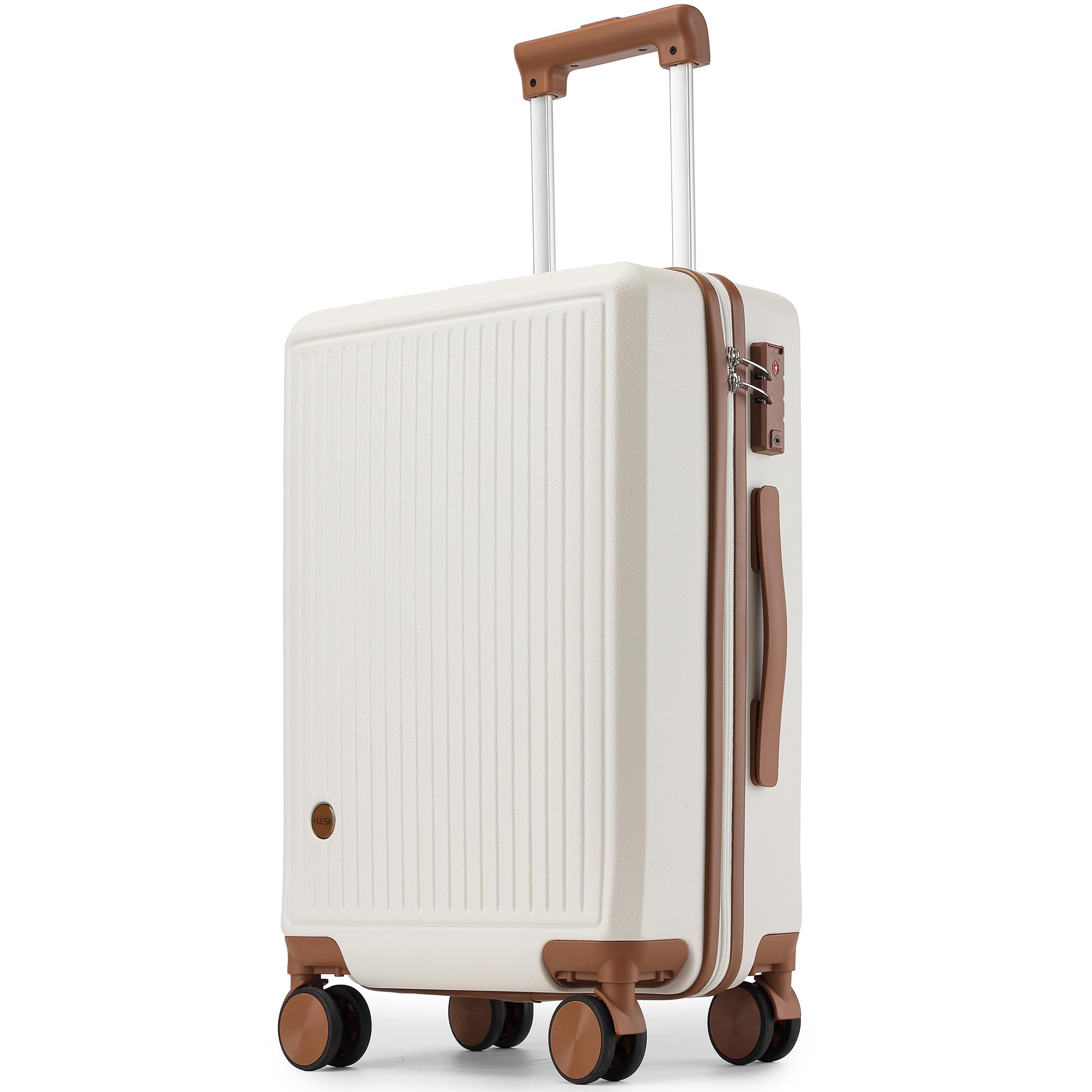
- Built-in TSA Locks: Most quality hard carry-on bags feature flush-mounted, integrated combination locks approved by security authorities such as the Transportation Security Administration. These locks secure zipper pulls directly to the shell frame, eliminating loose padlocks that catch on conveyor belts.
- Zipper-Free Latch Systems: Premium aluminum and advanced polycarbonate cases replace flexible zippers entirely with dual-latch aluminum frames, eliminating the vulnerability of zipper-chain separation using small pointed tools.
4. Efficient Packing Geometry and Space Limits
Soft luggage expands organically when overpacked. While this flexibility seems convenient, it often backfires at the boarding gate. A soft bag packed to capacity bulges outward in the center, causing the bag to exceed maximum airline depth dimensions (typically 9 inches or 23 centimeters).
Hard carry-ons feature fixed exterior boundaries. This rigid structure enforces strict geometric parameters, ensuring your bag slides easily into airline sizing templates and overhead bins without unexpected gate-check forced fees. Furthermore, the clamshell (50/50 split) opening typical of hard carry-ons allows travelers to organize clothes symmetrically, utilizing internal compression straps and divider curtains on both sides of the case.
5. Longevity and Material Hygiene
Woven fabrics tend to trap dust, pet hair, allergen particles, and microbes deep within their weaves over time. Cleaning soft fabric luggage thoroughly requires specialized upholstery cleaners or steam treatment.
Hard carry-on shells feature smooth, non-porous surfaces that prevent contaminants from adhering. A basic cleaning solution of mild soap and warm water sterilizes the exterior instantly. Modern high-impact polymers are also engineered to withstand severe temperature fluctuations without expanding, warping, or becoming brittle.
Material Breakdown: Choosing the Right Hardshell Material
Not all hard carry-on suitcases perform identically. The material composition determines the weight, flex, impact resistance, and price point of the suitcase.
- Hardshell Material Range
- ABS
- Budget-friendly
- Rigid surface
- Prone to crack
- Polypropylene
- Ultra-light
- Flex resistant
- Mid-range price
- Polycarbonate
- Highly flexible
- High impact
- Dent recovery
- Aluminum
- Max security
- Premium metal
- Heavier weight
- ABS
Acrylonitrile Butadiene Styrene (ABS)
ABS is the lightest and least expensive plastic used in rigid luggage. It offers a firm surface and decent initial scratch resistance. However, ABS is brittle compared to other polymers. Under heavy impact or extreme cold, pure ABS can crack rather than flex. It is best suited for casual, infrequent travelers on a budget.
Polypropylene (PP)
Polypropylene is an ultra-lightweight polymer known for high chemical and fatigue resistance. It is exceptionally resilient and retains its shape under stress. While slightly less impact-absorbent than pure polycarbonate, polypropylene is lightweight, making it an excellent material choice for travelers who prioritize keeping their overall cabin weight as low as possible.
Polycarbonate (PC)
Polycarbonate represents the gold standard for mainstream high-performance luggage. It is light, heat-resistant, and extraordinarily tough. Unlike stiffer plastics, polycarbonate is designed to flex under intense pressure and pop back into its original shape without cracking. High-end brands frequently use 100% virgin polycarbonate shells to maximize durability while maintaining low tare weight.
Aluminum
Aluminum represents the premium tier of hardshell luggage. Aluminum suitcases utilize riveted metal frames and latch systems instead of sewn zippers. They offer unmatched crush resistance, high security, and a distinctive aesthetic. However, aluminum carry-ons carry two clear trade-offs: higher empty weight (often 10–12 lbs compared to 6–8 lbs for polycarbonate) and a tendency to show minor exterior scuffs and dints over time, which many travelers view as a mark of mileage.
Comparing Hard Carry-On vs. Soft Carry-On Luggage
Evaluating key characteristics across both categories highlights where hard-sided luggage excels and where soft-sided bags offer specific alternatives:
| Feature / Metric | Hard Carry-On Luggage | Soft Carry-On Luggage | Winner / Practical Advantage |
|---|---|---|---|
| Impact Protection | Superior rigid shell absorbs shocks; protects delicate gear. | Minimal cushion; exterior forces transfer to internal contents. | Hard Carry-On |
| Water & Stain Resistance | Impermeable shell; easily wiped clean after exposure. | Fabrics absorb moisture and oils unless treated with DWR coatings. | Hard Carry-On |
| Security & Theft Deterrence | Integrated TSA combination locks, slash-proof materials. | Fabric can be cut; external pocket zippers are vulnerable. | Hard Carry-On |
| Dimensional Stability | Fixed shape prevents over-bulging; fits sizing bins predictably. | Flexible walls allow stretching, risking gate-check rejections. | Hard Carry-On |
| Exterior Access Pockets | Limited (rare front-pocket models exist). | Plentiful external pockets for quick document access. | Soft Carry-On |
| Flexibility in Tight Bins | Rigid dimensions cannot compress into tight overhead spaces. | Fabric compresses slightly to fit awkward spaces. | Soft Carry-On |
| Scratch & Patina Visibility | Scuffs appear on smooth plastic surfaces over time. | Fabric hides surface abrasions and minor wear well. | Soft Carry-On |
Dimensional Standards and Airline Compliance
A primary benefit of carry-on travel is keeping your luggage in your possession throughout your journey. To ensure your hard suitcase fits cabin requirements, pay close attention to overall dimensions, which include wheels and handles.
- Standard Domestic Carry-On Envelope
- Height: 22 inches (56 cm)
- Width: 14 inches (36 cm)
- Depth: 9 inches (23 cm)
Standard Dimensions Across Major Airlines
For domestic travel in the United States, the standard published carry-on dimension limit across major carriers (including Delta Air Lines, United Airlines, and American Airlines) is 22 x 14 x 9 inches (56 x 36 x 23 cm).
International carriers often enforce slightly smaller dimension limits or implement strict weight ceilings ranging between 7 kg and 10 kg (15 to 22 lbs). The Federal Aviation Administration (FAA) leaves exact sizing policies to individual airlines, meaning travelers should check their specific carrier's rules before departure.
Because a hard suitcase cannot squeeze down in height or depth, choosing a bag built precisely to maximum allowed dimensions ensures compliance while maximizing interior volume (typically 35 to 45 liters).
Crucial Features to Look for in a Hard Carry-On
To get the best performance from a hard carry-on bag, select components engineered to withstand continuous travel stresses:
Essential Hard Carry-On Features
- 360° Double Spinner Wheels
- Telescoping Aluminum Handle
- Split Clamshell Organization
- Front-Loading Laptop Sleeve
360-Degree Double Spinner Wheels: Look for dual-wheel casters (eight total wheels) rather than single wheels. Double wheels roll smoother over carpeted concourses, brick walkways, and elevator thresholds, distributing weight evenly to reduce wrist strain.
Telescoping Aircraft-Grade Aluminum Handles: A loose, wobbly handle is a common point of failure. Look for multi-stop telescoping handles constructed from anodized aluminum that lock firmly at various heights.
Internal Divider Curtains & Compression Systems: Because hardshell bags pack in two equal halves, choose models with full zippered mesh divider panels on both sides. This keeps contents organized when opening the suitcase upright on a luggage rack.
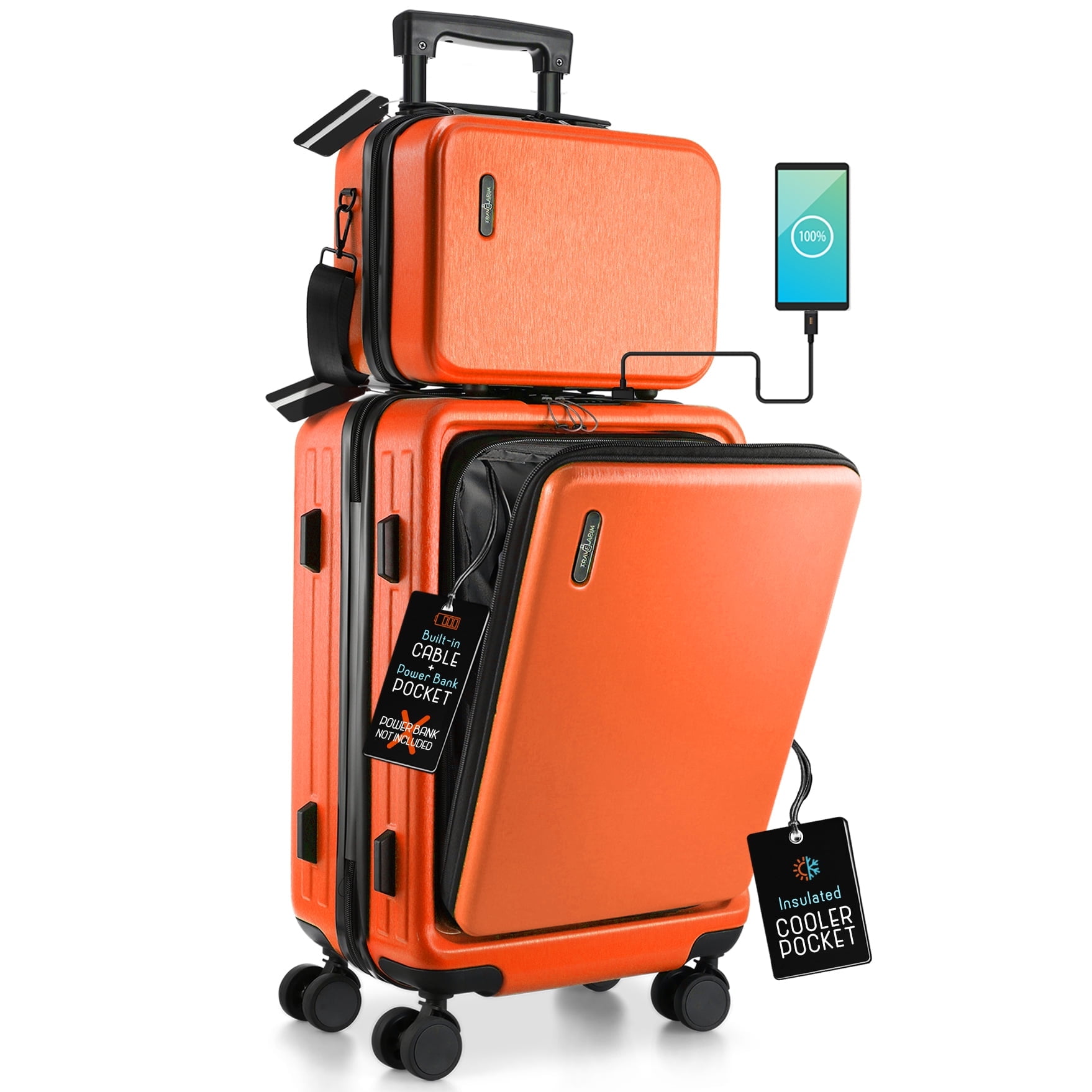
Front-Access Utility Compartments: A classic drawback of hard luggage was the lack of exterior storage. Modern designs frequently incorporate a hinged, hard-shell front pocket equipped with a padded laptop sleeve, allowing travelers to remove electronics quickly at TSA security checkpoints.
Self-Repairing YKK Zippers or Aluminum Frame Latches: Zippers experience significant stress during packing. Select bags built with heavy-duty YKK RC (Racquet Coil) zippers or zipperless aluminum frames to prevent blowouts.
Practical Limitations and How to Manage Them
While hard carry-on luggage offers distinct advantages, travelers should evaluate potential limitations:
Lack of Exterior Flex
Unlike canvas bags, standard hard luggage shells will not stretch to fit last-minute additions. Overpacking a hard bag puts extreme strain on the zipper track and shell seams.
- Solution: Utilize vacuum compression packing cubes to reduce clothing volume naturally without over-stretching the exterior shell.
Exterior Scuffing
Glossy or smooth polycarbonate surfaces can show scuffs from conveyer belts and overhead bins.
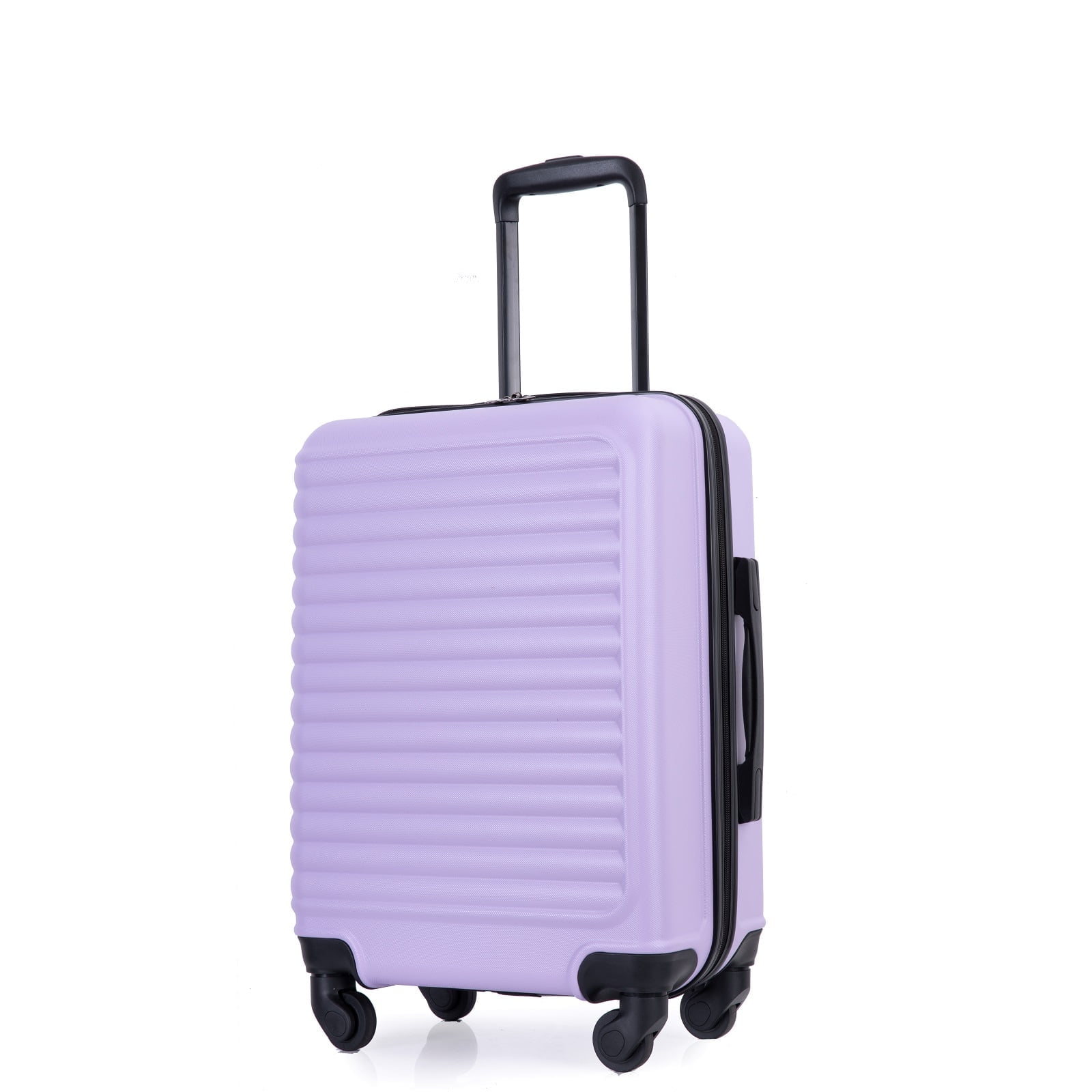
- Solution: Select suitcases with textured (micro-diamond or matte) finishes, which disperse light and obscure minor surface scratches.
Upright Access Challenges
Opening a traditional clamshell hard suitcase requires lying it flat on a surface, taking up twice its footprint.
- Solution: Utilize front-accessible hard-shell carry-on models for items needed during transit (such as passports, tablets, and light jackets), reserving the main internal compartment for items needed at your destination.
Frequently Asked Questions
Can a hard carry-on suitcase crack during flight?
High-quality hard carry-ons made from 100% polycarbonate or polypropylene rarely crack because these polymers are engineered to flex under pressure and absorb high impacts. Cracking is primarily an issue with low-cost ABS plastics subjected to extreme cold or violent impacts.
Do hard carry-ons fit in overhead bins as easily as soft bags?
Yes, provided they comply with standard dimensional limits (such as 22 x 14 x 9 inches). Hard carry-on suitcases slide into overhead bins smoothly because their hard exterior surfaces create low friction against bin linings.
Are zipperless hard carry-on bags better than zippered ones?
Zipperless bags, which use aluminum frames and locking latches, provide superior water resistance, impact defense, and protection against unauthorized entry. However, they are generally heavier and more expensive than zippered polycarbonate bags.
How do I clean and remove scuff marks from my hard carry-on?
For general dirt, wipe the shell with a microfiber towel, warm water, and mild dish soap. For stubborn scuff marks left by rubber conveyor belts, apply a small amount of isopropyl alcohol or use a mild abrasive cleaning sponge gently over the surface.
Do airlines weigh hard carry-on bags at the gate?
Domestic US airlines rarely weigh carry-on luggage, prioritizing dimensional fit instead. However, international carriers routinely weigh carry-on bags at check-in or boarding gates, enforcing weight limits strictly. Keep your empty bag weight under 8 lbs (3.6 kg) to stay compliant.
Summary Recommendation
Choosing a hard carry-on suitcase comes down to protecting gear, maintaining dimensional compliance, and keeping luggage clean through years of travel. If you travel with laptops, cameras, glass containers, or pressed clothing—or if you simply want a durable bag that resists weather and cleans up easily—a high-quality polycarbonate or polypropylene hard carry-on is the ideal choice.
For maximum longevity, select a bag with 360-degree double spinner wheels, a textured scratch-resistant shell finish, an integrated TSA lock, and robust YKK zippers built within standard 22 x 14 x 9-inch dimensions.
Image Gallery