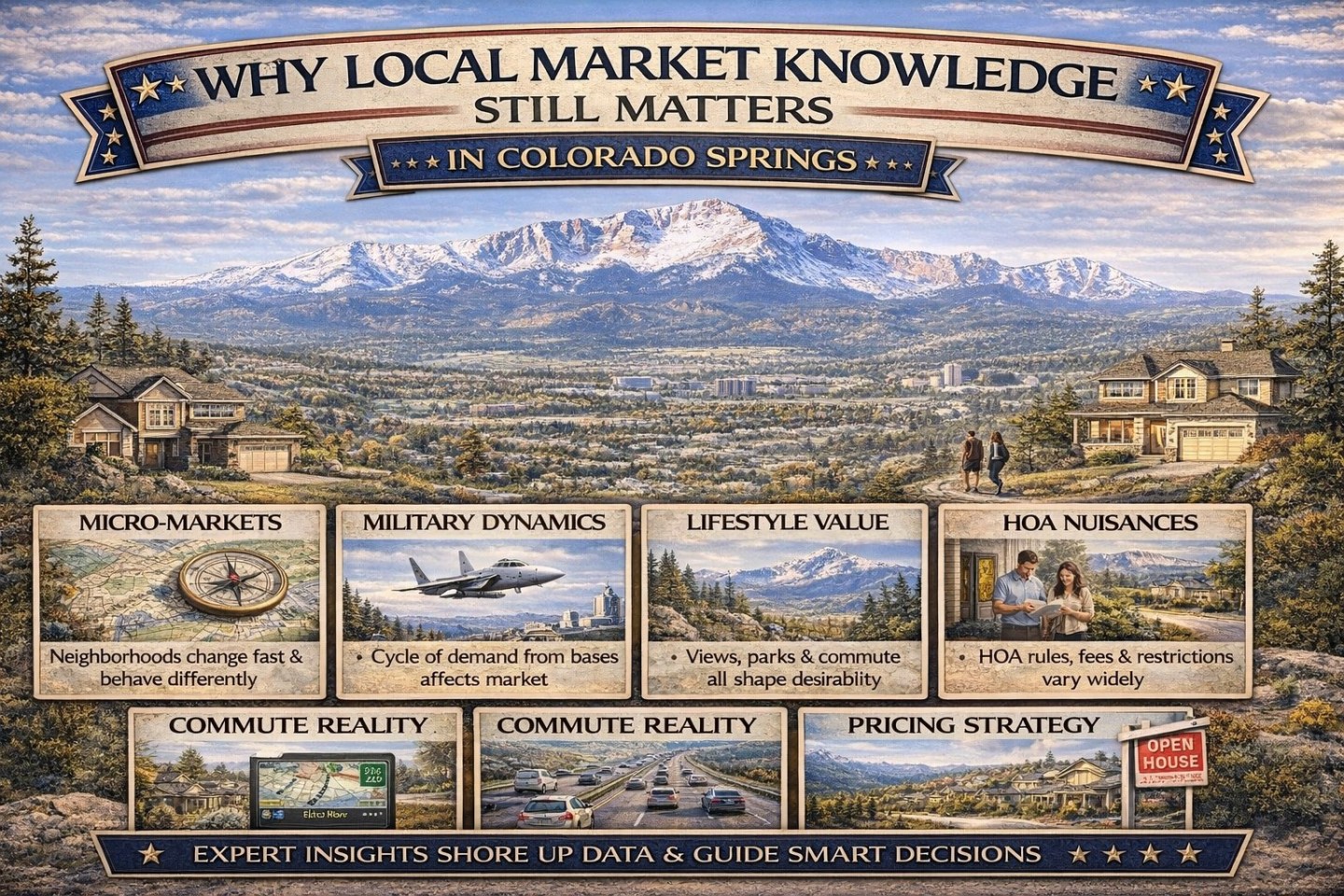
Understanding Why Colorado Maintains a Localized Perspective in 2026
Colorado’s localized perspective is rooted in a unique intersection of extreme geography, a "Home Rule" constitutional framework, and a demographic shift that balances mountain-town environmentalism with urban technological growth. Thi...
Colorado’s localized perspective is rooted in a unique intersection of extreme geography, a "Home Rule" constitutional framework, and a demographic shift that balances mountain-town environmentalism with urban technological growth. This fragmentation ensures that Colorado is rarely a political or social monolith, but rather a collection of distinct regional interests shaped by water rights, elevation, and historical independence.
Contents
To understand the Colorado perspective in 2026, one must look beyond the postcard images of the Rocky Mountains. The state’s identity is defined by a tension between its rapidly growing urban centers and its deeply traditional rural corridors. This "localized perspective" is not a singular viewpoint but a mosaic of priorities that vary significantly whether one is standing in the tech hubs of the Front Range, the ranching lands of the Eastern Plains, or the tourism-dependent valleys of the Western Slope.
The Geographic Architecture of Regionalism
Geography is the primary architect of Colorado’s localized perspective. The Continental Divide, which runs through the heart of the state, creates a literal and metaphorical barrier that dictates everything from climate and commerce to political alignment.
On the eastern side of the Divide lies the Front Range, home to the vast majority of the state’s population in cities like Denver, Colorado Springs, and Fort Collins. Here, the perspective is increasingly cosmopolitan, focused on high-tech infrastructure, renewable energy, and managing the pressures of rapid urbanization. Conversely, the Western Slope—the area west of the Rockies—often feels like a different state entirely. Its economy is traditionally tied to mineral extraction, tourism, and agriculture, leading to a perspective that prioritizes land-use rights and local autonomy over centralized state planning.
This geographic split creates a "basin-centric" worldview. Residents in the Colorado River Basin have vastly different concerns regarding water security than those in the South Platte or Arkansas River basins. In 2026, as water scarcity remains a top-tier policy issue, these localized geographic perspectives dictate the success or failure of statewide legislation.
Home Rule: The Legal Foundation of Localism
One of the most significant reasons why Colorado maintains a localized perspective is its robust "Home Rule" status. Under Article XX of the Colorado Constitution, municipalities and counties are granted the power to govern themselves in matters of local concern.
Unlike "Dillon’s Rule" states, where local governments only have the powers expressly granted to them by the state legislature, Colorado’s Home Rule municipalities can enact their own taxes, zoning laws, and civil ordinances that may differ sharply from their neighbors. This legal structure encourages a highly localized perspective because the most impactful decisions—regarding housing, policing, and business regulation—are often made at the city council level rather than in the state capitol.
For instance, a resident of Boulder may live under a completely different set of environmental and building regulations than a resident of Colorado Springs, despite being only 100 miles apart. This decentralization of power forces citizens to focus on their immediate community’s governance, reinforcing the localized nature of the state’s civic life.
The Political "Purple" Spectrum and Independent Identity
While many national observers have labeled Colorado a "Blue State" in recent years, the localized reality in 2026 is far more nuanced. Colorado has one of the highest percentages of "Unaffiliated" voters in the United States. This independent streak is a hallmark of the localized perspective; voters frequently split their tickets, supporting progressive environmental measures while simultaneously backing fiscally conservative local leaders.
The political landscape is segmented into distinct "micro-climates":
- The Urban Core (Denver/Boulder): Progressive, focused on social equity and transit.
- The Suburban Rings (Jefferson/Arapahoe Counties): The ultimate swing territories, focusing on education and property taxes.
- The Southern Corridors (Pueblo): A blue-collar, populist perspective with deep roots in labor and manufacturing.
- The High Country: A "Lifestyle Perspective" that prioritizes conservation and the outdoor recreation economy.
This political diversity prevents a "one-size-fits-all" approach to statecraft, requiring leaders to navigate a complex web of localized needs to achieve any form of consensus.
Water Rights and the Doctrine of Prior Appropriation
Perhaps nothing defines the localized Colorado perspective more than water. In the arid West, water is the lifeblood of survival, and Colorado operates under the Doctrine of Prior Appropriation, often summarized as "first in time, first in right."
This system creates a hierarchy of water users that dates back to the 19th century. Because water rights are tied to specific parcels of land and specific dates of diversion, the "localized perspective" on water is hyper-specific. A rancher in the San Luis Valley views a proposed water export project to the Front Range as an existential threat to their community’s future. Meanwhile, a municipal planner in Aurora sees that same project as essential infrastructure for a growing population.
In 2026, the ongoing negotiations surrounding the Colorado River Compact continue to highlight these localized tensions. Every drop of water is accounted for, and any change in management triggers a defensive response from local stakeholders who view water not as a statewide resource, but as a local asset that must be protected.
Comparison of Regional Perspectives in Colorado (2026)
| Region | Primary Economic Drivers | Key Local Concerns | Cultural Identity |
|---|---|---|---|
| Front Range | Aerospace, Tech, FinTech | Housing affordability, Traffic | Urban, Progressive, Fast-paced |
| Western Slope | Tourism, Energy, Orchards | Water diversions, Federal land use | Mountain-centric, Independent |
| Eastern Plains | Agriculture, Wind Energy | Rural healthcare, Broadband access | Traditional, Community-focused |
| San Luis Valley | Farming (Potatoes), Solar | Aquifer depletion, Poverty | Historic, Multi-generational |
The Impact of Federal Land Ownership
A localized perspective is also necessitated by the fact that the federal government owns approximately 36% of the land in Colorado. This includes National Forests, Bureau of Land Management (BLM) areas, and National Parks.
For many mountain communities, the "local perspective" is dominated by their relationship with federal agencies. Decisions made in Washington D.C. regarding timber harvests, grazing permits, or trail access have immediate, localized impacts on the economies of towns like Silverthorne, Gunnison, or Meeker. This creates a specialized form of local advocacy where residents must become experts in federal administrative law to protect their backyard interests.
The "Colorado Way of Life" as a Unifying (Yet Local) Concept
Despite these divisions, there is a shared "Colorado Way of Life" that emphasizes outdoor access, health, and a degree of rugged individualism. However, even this shared value is viewed through a localized lens.
To a resident of Telluride, the "Colorado Way" might mean preserving the wilderness and limiting "mega-resort" expansion. To a resident of El Paso County, it might mean the freedom to use off-road vehicles and defend private property rights. This shared vocabulary—where everyone agrees that the "Colorado Way" is worth protecting but no one agrees on exactly what it is—is the essence of why the state remains so localized.
Common Challenges to the Localized Perspective
As we move through 2026, several factors are challenging the traditional localized perspectives:
- Digital Nomads and Remote Work: The influx of workers from coastal states into small mountain towns has led to "gentrification of the wilderness," often clashing with the long-standing localized perspectives of legacy residents.
- Climate Volatility: Wildfires do not respect county lines or Home Rule boundaries. The increasing frequency of natural disasters is forcing localized governments to coordinate in ways they previously resisted.
- Statewide Mandates: In response to the housing crisis, the state legislature has occasionally attempted to override local zoning laws, leading to significant legal battles between the state and Home Rule cities.
FAQ
What does "Home Rule" mean for a Colorado resident?
Home Rule allows your local city or county to draft its own charter and pass laws that address local issues without needing permission from the state government. For a resident, this means your local elections and city council meetings often have a more direct impact on your daily life (taxes, zoning, business rules) than what happens at the state capitol in Denver.
Why is the "Western Slope" perspective so different from Denver's?
The Western Slope is separated by the Rocky Mountains and relies on different economic engines like tourism and energy. Because it is less populated but provides much of the state’s water and energy, residents there often feel their "localized perspective" is ignored by the more populous Front Range, leading to a strong sense of regional identity.
How do water rights affect local perspectives in 2026?
Because water rights are "property rights" in Colorado, they are managed at a very local level. Issues like "buy-and-dry" (where cities buy farmland just for the water rights) create intense local opposition in rural areas because it can lead to the economic collapse of small farming communities.
Is Colorado still considered a "swing state" from a local perspective?
While it leans Democratic in statewide and federal elections, Colorado remains highly "purple" at the local level. Many counties remain staunchly conservative, and the high number of unaffiliated voters means that local issues often override national party platforms.
How does federal land impact local governance?
In many Colorado counties, the majority of the land is owned by the federal government. This means local officials must constantly negotiate with agencies like the US Forest Service for things as simple as road maintenance or fire mitigation, creating a unique "localized perspective" centered on inter-governmental relations.
Recommendation for Navigating Colorado's Perspectives
For businesses, developers, or new residents looking to engage with the state in 2026, the most effective strategy is a hyper-local approach. Do not assume that a strategy used in Denver will be welcomed in Grand Junction or Colorado Springs. Engaging with local stakeholders, understanding the specific water basin dynamics, and respecting the "Home Rule" authority of municipalities is essential for success. Whether you are proposing a new project or moving your family, recognizing that Colorado is a collection of distinct communities—rather than a singular entity—is the key to understanding the "localized perspective."
Image Gallery