How House Foundation Repair Works in Colleyville: A Step-by-Step Guide
House foundation repair in Colleyville works by evaluating structural movement caused by North Texas clay soil, driving supportive steel or concrete piers deep into stable earth, hydraulically lifting the home to level, and stabilizing...
House foundation repair in Colleyville works by evaluating structural movement caused by North Texas clay soil, driving supportive steel or concrete piers deep into stable earth, hydraulically lifting the home to level, and stabilizing the perimeter. The process requires a structural engineering evaluation, under-slab plumbing checks, city permitting, precise pier driving, and ongoing soil moisture management.
Contents
Understanding Colleyville Soil Dynamics and Structural Stress
Colleyville sits within the Dallas-Fort Worth Metroplex, a region notorious for highly active expansive clay soil. The soil in Tarrant County primarily belongs to geological formations rich in montmorillonite and smectite clays. These clay particles possess a molecular structure that absorbs vast amounts of water during rainy seasons and loses that moisture during intense Texas dry spells.
- Wet Season (Expansion)
- Rainfall / High Moisture
- Soil Swells Upward
- Uplift / Center Heave
- Foundation Pushed Up
- Dry Season (Shrinkage)
- Heat / Severe Drought
- Soil Shrinks & Pulls Away
- Settlement / Differential Cracking & Drop
When heavy seasonal rainfall hits Colleyville, the clay expands dramatically, pushing upward against slab-on-grade and pier-and-beam foundations. Conversely, during hot summer droughts, the soil shrinks, contracts, and pulls away from the foundation perimeter. This continuous shrink-swell cycle creates differential movement—where one portion of the slab drops or rises while another remains static.
Key Factors Accelerating Foundation Damage in Colleyville
- Seasonal Shrink-Swell Cycles: Unpredictable North Texas weather causes severe swings between saturated ground conditions and deep droughts, putting localized stress on structural concrete.
- Mature Tree Roots: Large oak, elm, and crepe myrtle trees common in Colleyville neighborhoods consume up to 100 gallons of water daily, desiccating the soil beneath foundation edges and accelerating settlement.
- Poor Surface Drainage: Inadequate grading or clogged rain gutters allow roof runoff to pool near perimeter footings, causing localized soil expansion (heave) on one side of the house while the opposite side settles.
- Plumbing Leaks: Broken cast iron or PVC sewer pipes under slab foundations release water into the soil, causing isolated volume changes in the clay that tilt or crack the overlying slab.
Types of Residential Foundations Found in Colleyville
Understanding your home’s base construction dictates how foundation repair contractors approach structural restoration. Colleyville homes generally feature two primary foundation types.
- Slab-on-Grade Foundation
- Concrete Slab Floor
- Solid Concrete / Rebar Grid
- Soil Layer
- Pier-and-Beam Foundation
- Subfloor & Wood Framing
- Crawlspace / Beams / Joists
- Concrete Pad/Pier | Concrete Pier
Slab-on-Grade Foundations
Most modern developments built in Colleyville from the 1970s onward use post-tensioned or conventionally reinforced slab-on-grade concrete foundations. These consist of a continuous concrete slab poured directly onto the ground with integrated grade beams (deep concrete trenches) running through the interior and around the perimeter. When the clay shifts, these thick slabs can flex, crack, or experience differential settlement.
Pier-and-Beam Foundations
Older custom homes, ranch-style properties, and historic structures in North Texas often feature pier-and-beam or crawlspace foundations. These structures rely on deep concrete pads or footings supporting wood beams and floor joists, leaving an accessible void (crawlspace) beneath the home. Repairing these foundations involves resetting wood shims, adjusting interior concrete pads, or replacing decayed support beams alongside perimeter underpinning.
The Complete Foundation Repair Process in Colleyville
Professional foundation repair follows a rigorous engineering and construction methodology to ensure long-term structural integrity and compliance with local municipal codes.
- Step 1: Initial Structural Engineering & Floor Elevation Survey
- Step 2: Under-Slab Hydrostatic Plumbing Leak Testing
- Step 3: Permitting through City of Colleyville Development Dept
- Step 4: Excavation & Hydraulic Pier Driving to Rock/Refusal
- Step 5: Hydraulic Lifting, Leveling & Securing Structure
- Step 6: Void Grouting, Backfilling & Post-Repair Engineering
Step 1: Structural Engineering & Elevation Mapping
Before driving piers or breaking concrete, a qualified technician or licensed Texas Professional Engineer (PE) conducts a comprehensive floor elevation survey using a electronic manometer (Zip Level). The evaluator plots elevation points across the home’s footprint to calculate variance from a zero-point baseline.
- Acceptable Variance: Standard residential tolerances usually permit up to 1 inch of elevation variance across a entire home, provided the slope does not exceed 1/240th of the span (as referenced in residential construction performance guidelines).
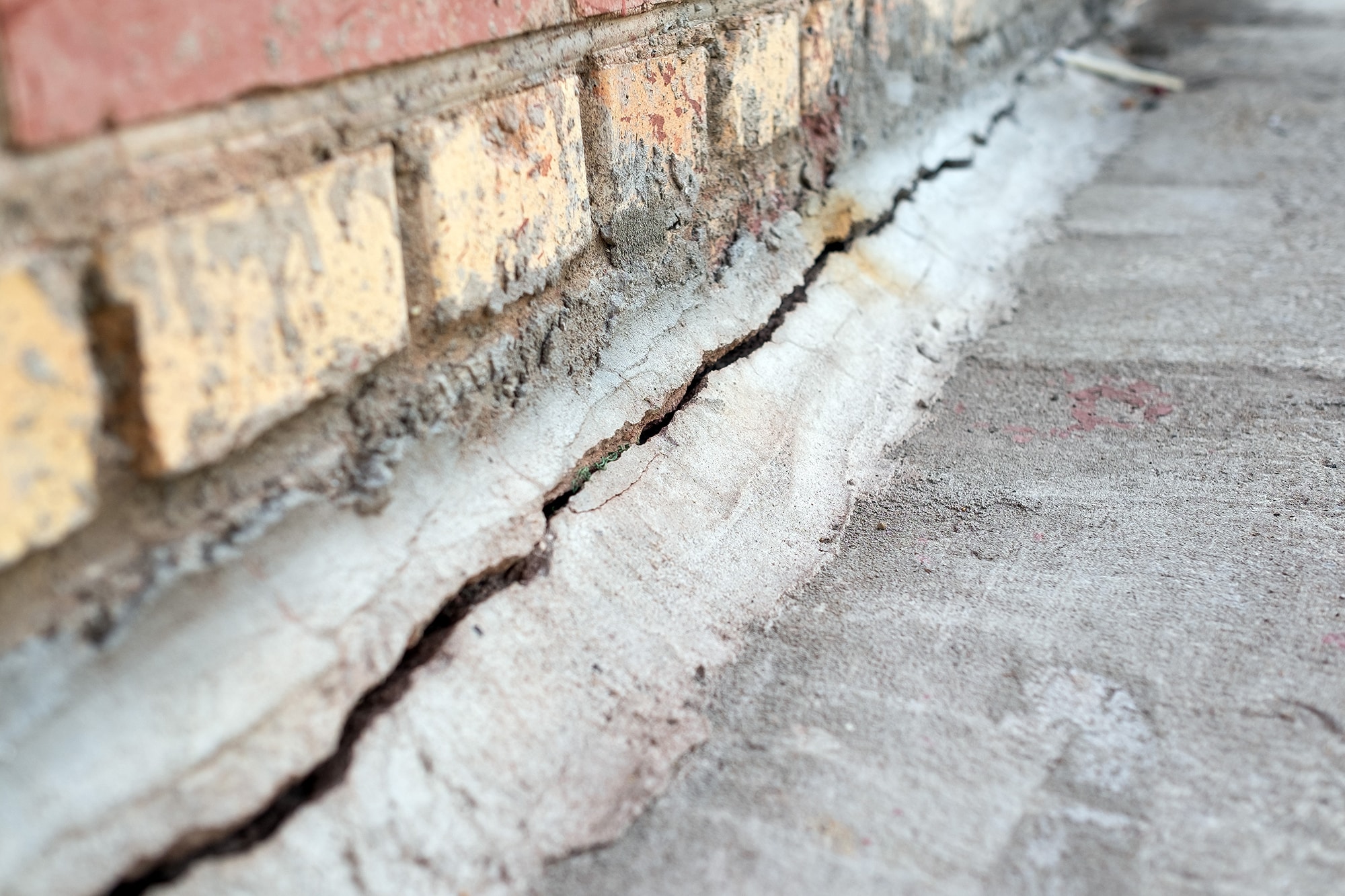
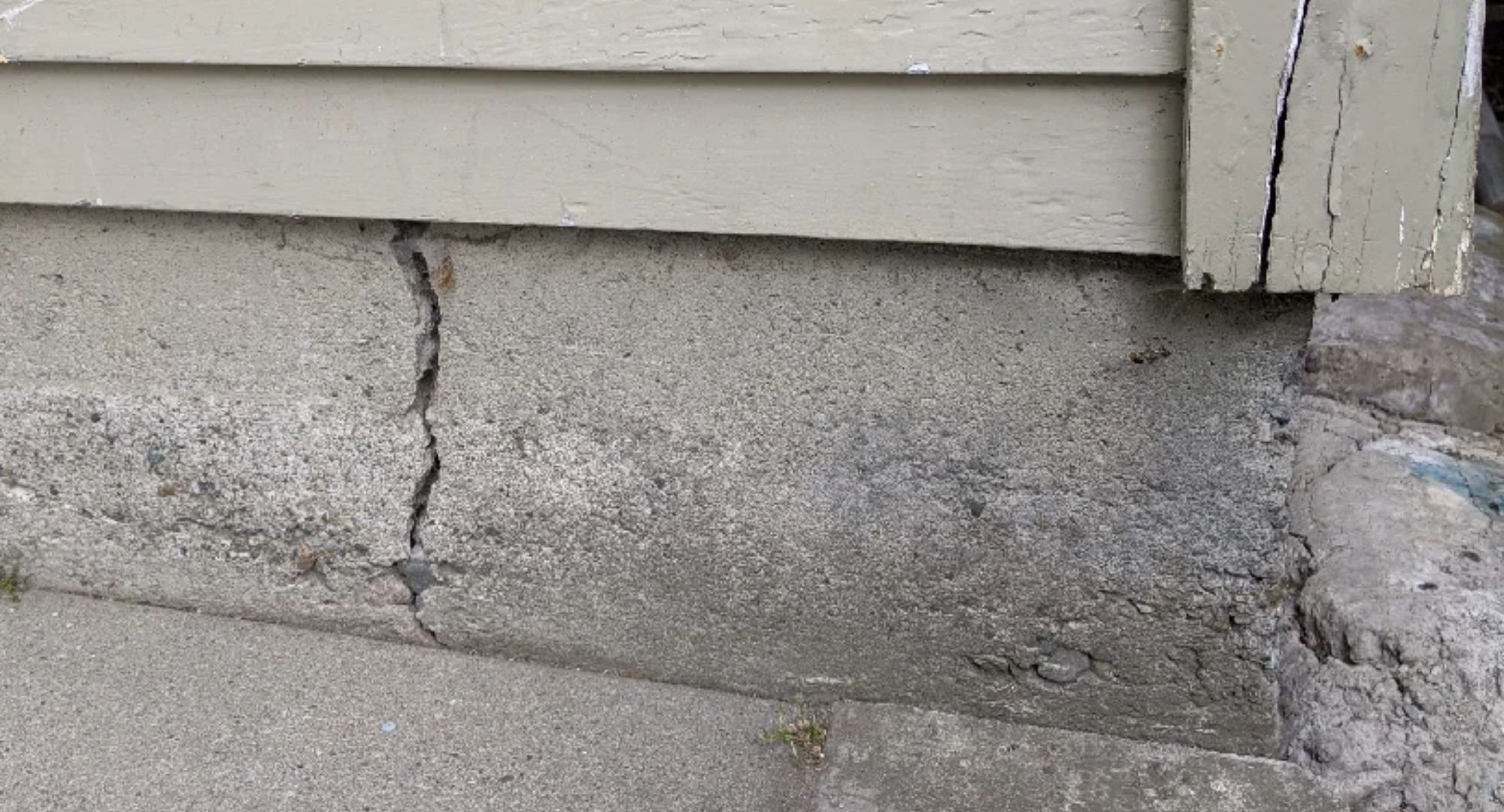
- Damage Documentation: The engineer documents exterior brick fractures (stair-step cracks), interior sheetrock splits, binding doors, and floor sloping to locate structural failure zones.
Step 2: Under-Slab Plumbing Leak Testing
In Texas, plumbing issues and foundation failure are closely linked. Under-slab supply or sewer line leaks constantly saturate clay soil, causing localized heave or washout.
Before structural lifting begins, a master plumber conducts a hydrostatic pressure test. The plumber inserts an inflatable test ball into the main cleanout line to isolate the drainage system, fills the pipes with water, and monitors water level retention for 15 to 20 minutes. If the water drops, a leak exists and must be repaired before or immediately after foundation lifting to prevent ongoing soil movement.
Step 3: Permitting and Regulatory Compliance
The City of Colleyville requires building permits for structural repairs. Contractors submit engineering plans detailing pier placement, structural calculations, and installation depths to the City of Colleyville Building Inspections Department. Municipal oversight ensures the proposed repair plan adheres to current building codes and structural safety guidelines.
Step 4: Excavation and Pier Driving
Once permitted, crew members begin physical site preparation:
- Access Holes: Workers hand-dig 3-foot by 3-foot excavation pits around the home’s perimeter foundation beam, extending beneath the concrete footing.
- Pier Driving: Using heavy-duty hydraulic jacks anchored against the weight of the structure itself, technicians press individual pier segments into the earth.
- Driving to Depth: Piers are driven through active clay zones until reaching stable hardpan soil or solid bedrock (often limestone strata common to North Texas at depths between 12 and 30 feet). Driving continues until the hydraulic pressure gauge reaches refusal (typically 3,000 to 4,000 PSI), ensuring the pier can support the building’s load.
Step 5: Hydraulic Lifting and Structural Stabilization
With piers installed at calculated intervals (usually 6 to 8 feet apart along affected beams), workers place heavy hydraulic jacks atop each pier assembly beneath the foundation footing.
- Operating in tandem, crew leaders activate hydraulic pumps to carefully raise low areas of the foundation toward its original elevation.
- The team monitors interior walls, ceiling joints, and elevation readings during the lift to avoid over-lifting or causing structural stress to framing.
- Steel shims or locking caps are placed on top of the piers beneath the beam to permanently hold the foundation in its lifted position, after which hydraulic jacks are removed.
Step 6: Void Injection, Backfilling, and Final Verification
Lifting a settled foundation slab often leaves open gaps (voids) between the bottom of the slab and the underlying, settled soil.
- Void Filling: Technicians pump a high-density cementitious slurry or expanding polyurethane foam beneath the slab to fill subterranean voids, restoring full ground support.
- Site Restoration: Excavated earth is replaced, compacted, and re-graded away from the foundation. Concrete break-outs on patios or driveways are re-poured and finished.
- Final Engineering Inspection: A licensed Professional Engineer returns to verify post-repair elevations, confirm structural stability, and issue a final engineering sign-off letter submitted to the City of Colleyville to close out the permit.
Comparison of Common Foundation Repair Methods in North Texas
Choosing the correct piering or stabilization method depends on local soil depth, house weight, budget, and engineering recommendations.
| Repair Method | Target Depth / Mechanism | Pros | Cons / Limitations | Relative Cost |
|---|---|---|---|---|
| Pressed Concrete Piers | 10 to 20 feet (Drives to friction/resistance) | Cost-effective; fast installation; suitable for standard North Texas clay soils. | Relies partly on soil skin friction; may tilt if installed through loose upper soil. | Moderate |
| Steel Piers | 15 to 40+ feet (Drives directly to solid bedrock) | Deepest penetration; minimal soil displacement; exceptional load capacity; long life. | Higher material cost; requires rock strata for full depth efficiency. | Higher |
| Helical Piers | Varies (Screwed into load-bearing strata) | Ideal for lighter structures, decks, or additions; precise torque measurements verify capacity. | Can strike shallow boulders in North Texas soil, preventing proper placement depth. | Moderate to High |
| Polyurethane Foam Injection | Sub-surface void filling & slab lifting | Non-invasive; fast cure time (15 mins); lightweight (does not add soil weight). | Does not anchor to bedrock; best for slab void-filling rather than deep structural support. | Lower to Moderate |
Preventing Future Foundation Damage in Colleyville
Installing piers resolves past settlement, but preserving long-term stability requires controlling moisture levels in the clay soil surrounding the foundation.
- Optimal Moisture Barrier Setup
- Rain Gutter & Extended Downspout
- Positive Soil Slope (1" drop per foot away)
- Home / Slab / Pier
- Soil Zone (Soaker Hose)
- French Drain / Swale
1. Implement Balanced Foundation Irrigation
During hot summer months, soil contracts away from the concrete slab. Homeowners should install dedicated foundation soaker hoses or drip irrigation lines positioned 12 to 18 inches away from the foundation edge.
- Program timers to deliver consistent moisture 2 to 3 times weekly during dry periods.
- Maintain uniform soil moisture around the entire perimeter; watering only one side causes uneven clay expansion, leading to center or corner heave.
2. Optimize Perimeter Drainage
Standing water near footings saturates clay soil, causing structural heave.
- Ensure ground grading slopes downward away from the foundation at a slope of at least 6 inches over the first 10 feet.
- Install high-capacity rain gutters with downspout extensions that discharge water at least 5 feet away from the home.
- Add subterranean French drains or surface channel drains in low-lying yards where water pools against the foundation after thunderstorms.
3. Install Tree Root Barriers
Trees located closer to the home than the spread of their mature canopy pull vast amounts of moisture from deep beneath the slab. If removing the tree is not an option, install root barriers—solid physical membranes buried 3 to 4 feet deep between the tree and the foundation—to block root encroachment into structural soil zones.
Cost Considerations and Permitting in Colleyville
Foundation repair costs vary based on structural type, severity of settlement, and the number of support piers required.
- Per-Pier Costs: In the North Texas market, pressed concrete piers typically range from $350 to $600 per pier, while steel piers range from $750 to $1,200+ per pier due to raw material costs and deep driving depths.
- Engineering Fees: Independent structural engineering inspections and post-repair certifications typically range between $500 and $900.
- Plumbing Repairs: If hydrostatic testing reveals under-slab plumbing leaks, localized slab breakout and pipe repair by a licensed plumber can add $1,500 to $5,000+ depending on leak location and depth.
- Permitting Requirements: The City of Colleyville requires official building permits for foundation work. Permit fees depend on total project valuation, and inspections must be scheduled with municipal inspectors to sign off on completed work alongside the engineer's letter.
Frequently Asked Questions
How long does foundation repair take on a Colleyville home?
Most residential foundation piering projects take between 1 to 3 days to complete. Excavation and pier driving typically take 1 to 2 days, followed by lifting, plumbing re-verification, void grouting, and backfilling on the final day.
Should I hire an independent structural engineer before calling a repair company?
Yes. Hiring an independent Texas-licensed Professional Engineer (PE) ensures you receive an unbiased assessment of your foundation's true structural condition. Independent engineers do not sell repair services, so their reports accurately specify whether structural piers are actually necessary or if minor drainage corrections will suffice.
Will home insurance cover foundation repair in Texas?
Standard homeowners insurance policies generally exclude damage caused by normal soil expansion, contraction, settlement, or earth movement. However, if foundation settlement directly results from an abrupt, covered water line rupture under the slab, your policy may cover the cost of tearing out and restoring the slab, though coverage rules vary significantly by carrier and policy endorsement.
How deep do foundation piers need to be driven in Colleyville?
Pier depth varies depending on local soil strata. Pressed concrete or steel piers are driven through active surface clay until reaching hard, unyielding soil or rock strata—typically between 12 and 30 feet deep in Tarrant County.
Can I stay in my home during the foundation repair process?
In almost all cases, homeowners can safely live inside the house during the repair process. Excavation and pier installation take place almost entirely along the exterior perimeter of the building. Brief noise and vibration occur during hydraulic lifting, but structural work rarely requires temporary displacement unless extensive interior piering or total under-slab plumbing replacement is required.
Next Steps for Colleyville Homeowners
If you observe diagnostic signs of structural settlement—such as stair-step brick cracks, sticking exterior doors, diagonal sheetrock tears, or sloping floors—take a methodical approach:
- Schedule an Independent Engineering Evaluation: Contact an independent structural engineer to map your floor elevations and draft a objective scope of work.
- Perform Hydrostatic Plumbing Testing: Have a licensed plumber test supply and sewer lines to confirm under-slab plumbing integrity.
- Obtain Multiple Permitted Quotes: Request detailed bids from established foundation repair contractors operating in Tarrant County who handle City of Colleyville permitting and offer transferable warranties.
- Establish Foundation Maintenance Routines: Implement a seasonal moisture management strategy using soaker hoses and proper perimeter drainage to protect your repaired foundation for years to come.
Image Gallery