The Manning Family College Legacy: From Ole Miss to Texas
The Manning family’s collegiate history is a cornerstone of American football lore, primarily centered around the University of Mississippi (Ole Miss), the University of Tennessee, and the University of Texas at Austin. While patriarch...
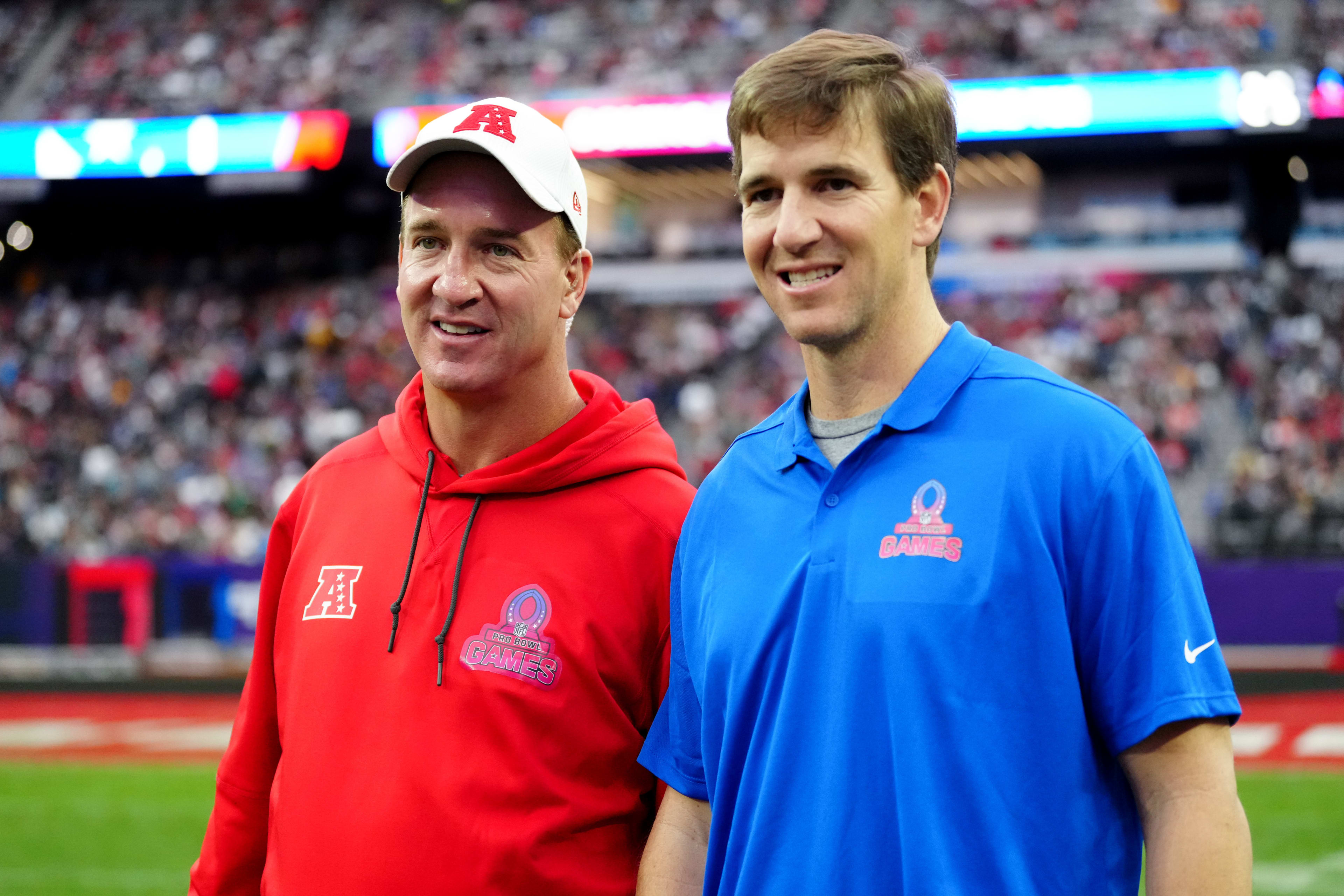
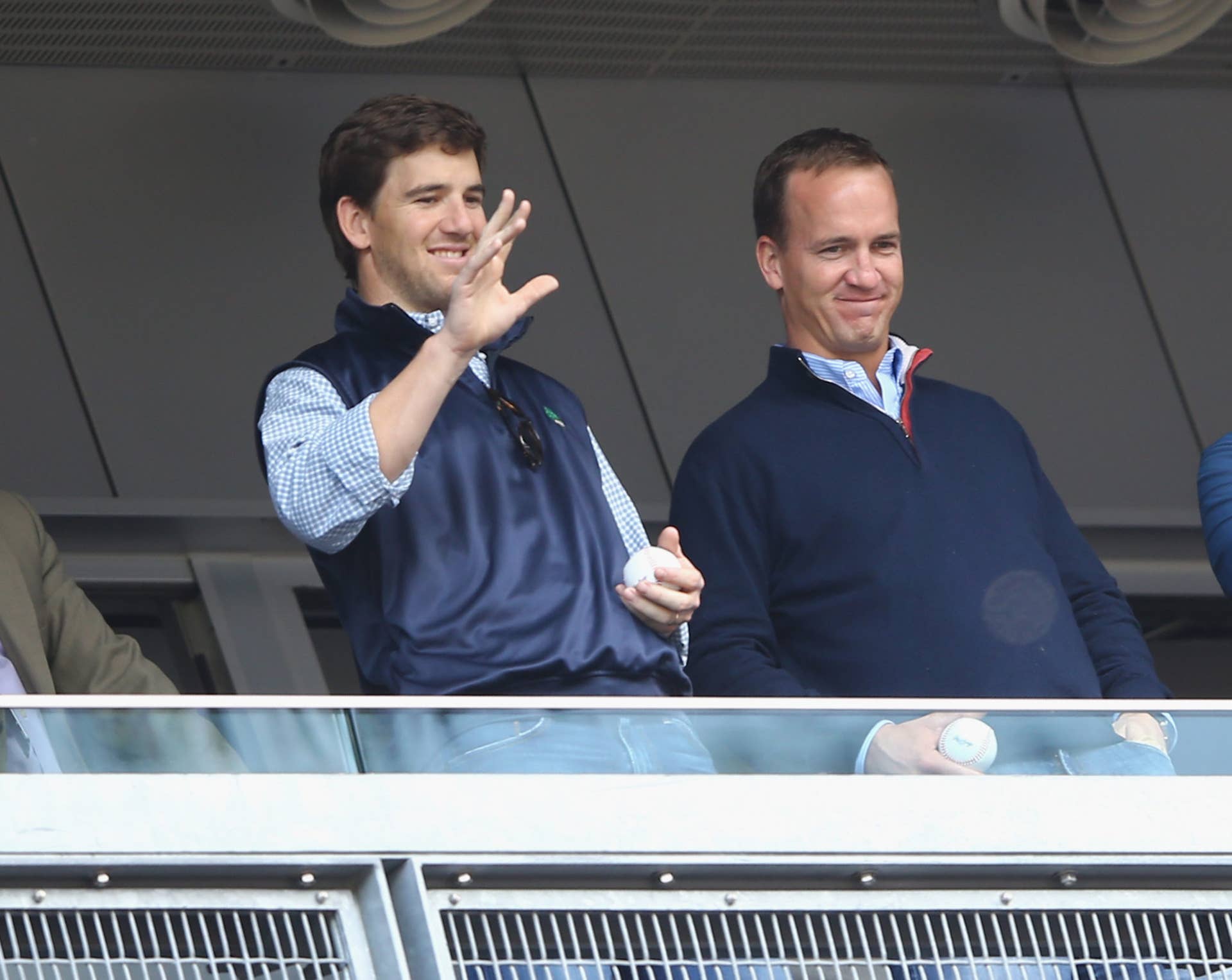
The Manning family’s collegiate history is a cornerstone of American football lore, primarily centered around the University of Mississippi (Ole Miss), the University of Tennessee, and the University of Texas at Austin. While patriarch Archie, his eldest son Cooper, and his youngest son Eli all attended Ole Miss, Peyton Manning famously broke tradition by attending Tennessee, and the newest generation’s star, Arch Manning, chose to lead the University of Texas into the SEC era.
Contents
The Mannings are often referred to as the "First Family of Football," a title earned through three generations of elite quarterbacking and academic achievement. Their collegiate choices have not only shaped their individual professional trajectories but have also fundamentally altered the recruitment landscapes and historical standing of the universities they represented. As of 2026, this legacy continues to evolve as the youngest Manning, Arch, navigates his upperclassman years in Austin, further diversifying a family portfolio once strictly synonymous with the Mississippi Delta.
Archie Manning: The Foundation at Ole Miss (1968–1970)
The Manning saga began at the University of Mississippi with Elisha Archibald "Archie" Manning III. Arriving in Oxford in the late 1960s, Archie became more than just a quarterback; he became a cultural icon for the state. During his tenure from 1968 to 1970, Archie threw for 4,753 yards and 31 touchdowns, while also rushing for 823 yards. These numbers, while modest by 2026 standards, were staggering in an era dominated by ground-and-pound offensive philosophies.
Archie’s impact was best exemplified in the first-ever prime-time national broadcast of a college football game in 1969 against Alabama. Despite a narrow loss, Archie’s performance—436 passing yards and 104 rushing yards—cemented his status as a national superstar. He finished fourth in the Heisman Trophy voting in 1969 and third in 1970.
Beyond the field, Archie met his wife, Olivia Williams Manning, at Ole Miss, where she was the Homecoming Queen. This union solidified the family’s deep roots in Oxford. Today, the speed limit on the Ole Miss campus is 18 miles per hour in honor of Archie’s retired jersey number, a testament to his lasting influence on the institution.
Cooper Manning: The "What If" at Ole Miss (1992–1993)
The eldest of Archie’s three sons, Cooper Manning, was a highly touted wide receiver prospect coming out of Isidore Newman School in New Orleans. Naturally, he followed in his father’s footsteps to Ole Miss. Cooper was known for his incredible hands and size, and many scouts believed he had the potential to be an All-American target.
However, Cooper’s collegiate career was tragically cut short before it truly began. During his freshman year, he began experiencing numbness in his hands and a loss of coordination. He was diagnosed with spinal stenosis, a narrowing of the spinal canal. The condition made continuing in a high-contact sport like football life-threatening.
While Cooper never played a down of varsity football for the Rebels, his presence at Ole Miss was significant. He remained a leader on campus and eventually graduated with a degree in Spanish. His experience with injury would later serve as a profound influence on his younger brothers, Peyton and Eli, teaching them the fragility of an athletic career and the importance of preparation.
Peyton Manning: The Great Tennessee Departure (1994–1997)
In 1994, the football world expected the middle Manning brother, Peyton, to sign with Ole Miss. When he instead chose the University of Tennessee, it sent shockwaves through the Southeastern Conference (SEC). Peyton’s decision was based on a desire to forge his own path, independent of his father’s shadow in Oxford.
Peyton’s career in Knoxville is the stuff of legend. Over four seasons, he set 42 NCAA, SEC, and Tennessee records. He threw for 11,201 yards and 89 touchdowns, leading the Volunteers to the 1997 SEC Championship. Despite being the favorite for the Heisman Trophy in 1997, he famously finished second to Michigan’s Charles Woodson, a result that remains a point of contention for Tennessee fans today.
Academic excellence was as much a part of Peyton's Tennessee legacy as his "Omaha" audibles. He graduated in three years with a degree in Speech Communication, finishing his academic career with a 3.61 GPA and being inducted into the Phi Beta Kappa honor society. His refusal to enter the NFL Draft early in 1997 to complete his senior year at Tennessee remains a landmark moment in college football history, emphasizing his commitment to the collegiate experience.
Eli Manning: The Return to Oxford (1999–2003)
If Peyton sought independence, Eli Manning sought to reclaim the family throne at Ole Miss. Arriving in 1999, Eli faced the immense pressure of following both his father's legendary status and his brother's national dominance. He handled this pressure by becoming arguably the greatest quarterback in Rebel history.
During his four-year career, Eli broke or tied 47 campus records. In 2003, his senior year, he led Ole Miss to a 10-3 record and a victory in the Cotton Bowl over Oklahoma State. He won the Maxwell Award as the nation's best all-around player and, like his father, finished third in the Heisman Trophy voting.
Eli’s tenure was characterized by a calm, stoic leadership style that would later define his two Super Bowl-winning runs with the New York Giants. He graduated with a degree in Marketing, maintaining the family tradition of high academic standards. His jersey, number 10, was eventually retired by Ole Miss, joining Archie’s number 18 in the rafters of Vaught-Hemingway Stadium.
Arch Manning: A New Era at the University of Texas (2023–2026)
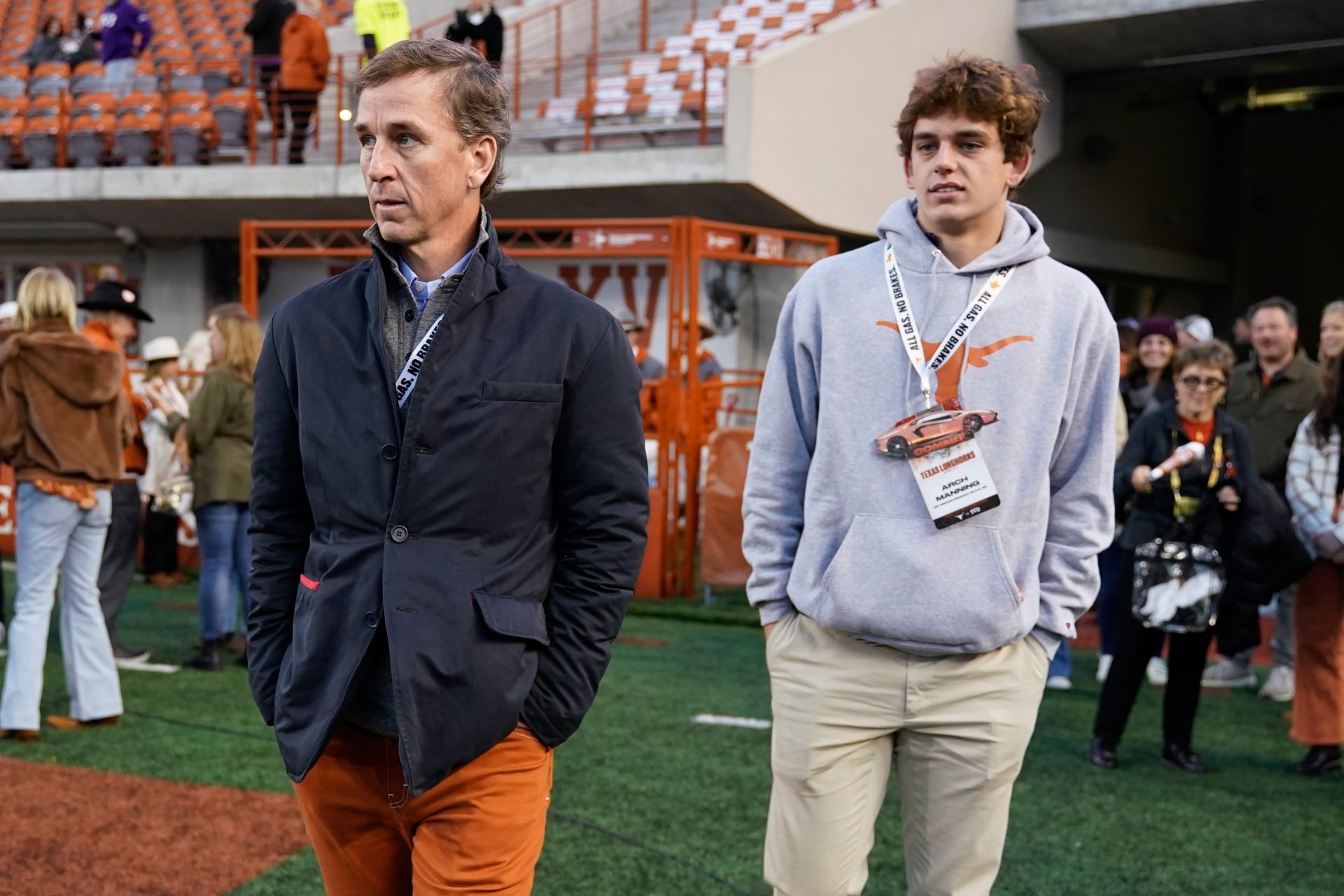
The recruitment of Arch Manning, son of Cooper and nephew of Peyton and Eli, was perhaps the most scrutinized in the history of the sport. As the #1 overall recruit in the class of 2023, Arch had his pick of any program in the country, including his family's alma maters.
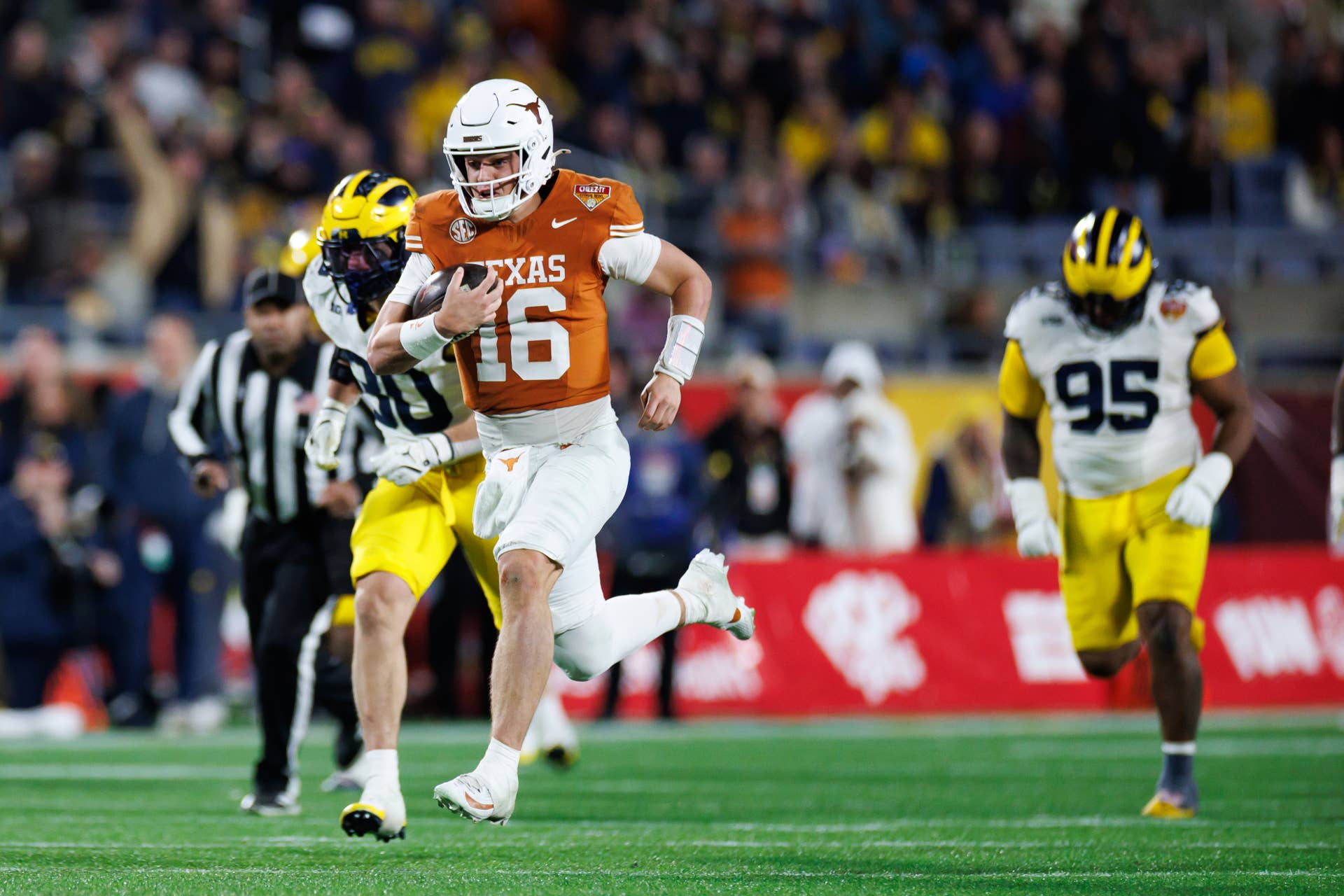
Arch ultimately chose the University of Texas at Austin, led by head coach Steve Sarkisian. This choice was strategic; it aligned Arch with a noted "quarterback whisperer" and positioned him to be the face of the Longhorns as they transitioned from the Big 12 to the SEC in 2024.
As of the current 2026 season, Arch Manning has matured into a cornerstone of the Texas program. After spending his freshman year learning behind Quinn Ewers, Arch took the reins and has demonstrated the arm talent of Peyton and the mobility of Archie. His presence has been a massive boon for Texas in terms of Name, Image, and Likeness (NIL) opportunities and national relevance. By choosing Texas, Arch effectively expanded the Manning collegiate map westward, proving that while family history is important, the Manning brand is adaptable to the modern era of "super-conferences."
Comparative Overview of Manning Family Collegiate Careers
The following table summarizes the collegiate paths of the Manning men, highlighting the diversity of their achievements and academic pursuits.
| Family Member | University | Years Attended | Primary Degree | Major Achievement |
|---|---|---|---|---|
| Archie | Ole Miss | 1968–1970 | Business Admin. | 2x All-American; #18 Retired |
| Cooper | Ole Miss | 1992–1993 | Spanish | High-profile WR recruit |
| Peyton | Tennessee | 1994–1997 | Speech Comm. | SEC Champion; Maxwell Award |
| Eli | Ole Miss | 1999–2003 | Marketing | Cotton Bowl MVP; #10 Retired |
| Arch | Texas | 2023–2026* | Undisclosed | #1 Overall Recruit; SEC Transition |
*Note: Arch Manning's status as of the 2026 season represents his active collegiate tenure.
The Influence of "The Manning Way" on College Recruitment
The collegiate choices of the Manning family highlight a specific philosophy often called "The Manning Way." This approach emphasizes three distinct pillars:
- Multi-Sport Foundations: All Manning brothers and Arch played multiple sports in high school (basketball and baseball), a trait their father Archie encouraged to prevent burnout and build overall athleticism.
- Long-Term Development: Unlike many modern recruits who seek the fastest path to the NFL, the Mannings have historically valued the full four-year college experience. Peyton and Eli both stayed for their senior seasons despite being projected top-five picks.
- Academic Integrity: Every member of the Manning family has completed their degree or is on track to do so. This commitment to education has allowed them to transition into successful careers in broadcasting, business, and philanthropy post-football.
Frequently Asked Questions
Why didn't Peyton Manning go to Ole Miss?
Peyton Manning chose Tennessee over Ole Miss primarily because he wanted to create his own identity. He felt that at Ole Miss, he would always be "Archie’s son," whereas at Tennessee, he could be judged on his own merits. Additionally, Tennessee's program was in a much stronger position nationally at the time of his recruitment in 1994.
Has any other family member attended a different college?
Yes. While the focus is often on the football-playing men, Olivia Manning attended Ole Miss, and Cooper’s other children have also pursued their own paths. For instance, Arch's sister May Manning attended the University of Virginia, where she played volleyball, further diversifying the family's athletic and academic reach.
How did the Manning Passing Academy start?
The Manning Passing Academy was founded in 1996, while Peyton was still at Tennessee and Eli was in high school. It was designed as a way for the family to give back to the game. It is hosted annually at Nicholls State University in Louisiana and has become the premier camp for high school quarterbacks and wide receivers, often featuring current college stars as counselors.
What is Arch Manning's current status at Texas in 2026?
As of 2026, Arch Manning is a leader for the Texas Longhorns. After a patient start to his career, he has become one of the most efficient passers in the SEC. His decision to stay at Texas rather than enter the transfer portal during the height of the "portal era" in 2024-2025 is cited by many analysts as a key factor in Texas's sustained success.
Did any of the Mannings win a National Championship in college?
None of the Manning quarterbacks won a National Championship during their time in college. Peyton came the closest, winning the SEC Championship and playing in the Orange Bowl for a potential share of the title, but Tennessee did not win the national crown until 1998, the year after Peyton graduated. Eli won the Cotton Bowl, and Arch has led Texas to multiple playoff appearances.
Practical Considerations for Future Student-Athletes
The Manning family's collegiate history serves as a blueprint for balancing athletic pressure with academic and personal growth. For aspiring athletes, their story emphasizes that the choice of a college should be based on a combination of coaching fit, academic resources, and the desire for a comprehensive life experience rather than just a stepping stone to professional leagues. Prospective students should look at the "Manning model" of staying the course and fulfilling academic requirements as a way to ensure long-term stability regardless of how a professional sports career unfolds.
Image Gallery