How the Working Capital Equation Impacts Your Business
The working capital equation measures a company's operational liquidity by subtracting current liabilities from current assets. It dictates your ability to cover short-term debts and fund daily operations. A positive balance signals fi...
The working capital equation measures a company's operational liquidity by subtracting current liabilities from current assets. It dictates your ability to cover short-term debts and fund daily operations. A positive balance signals financial health and growth potential, while a negative result warns of impending insolvency and severe operational constraints.
Contents
Understanding the Core Equation
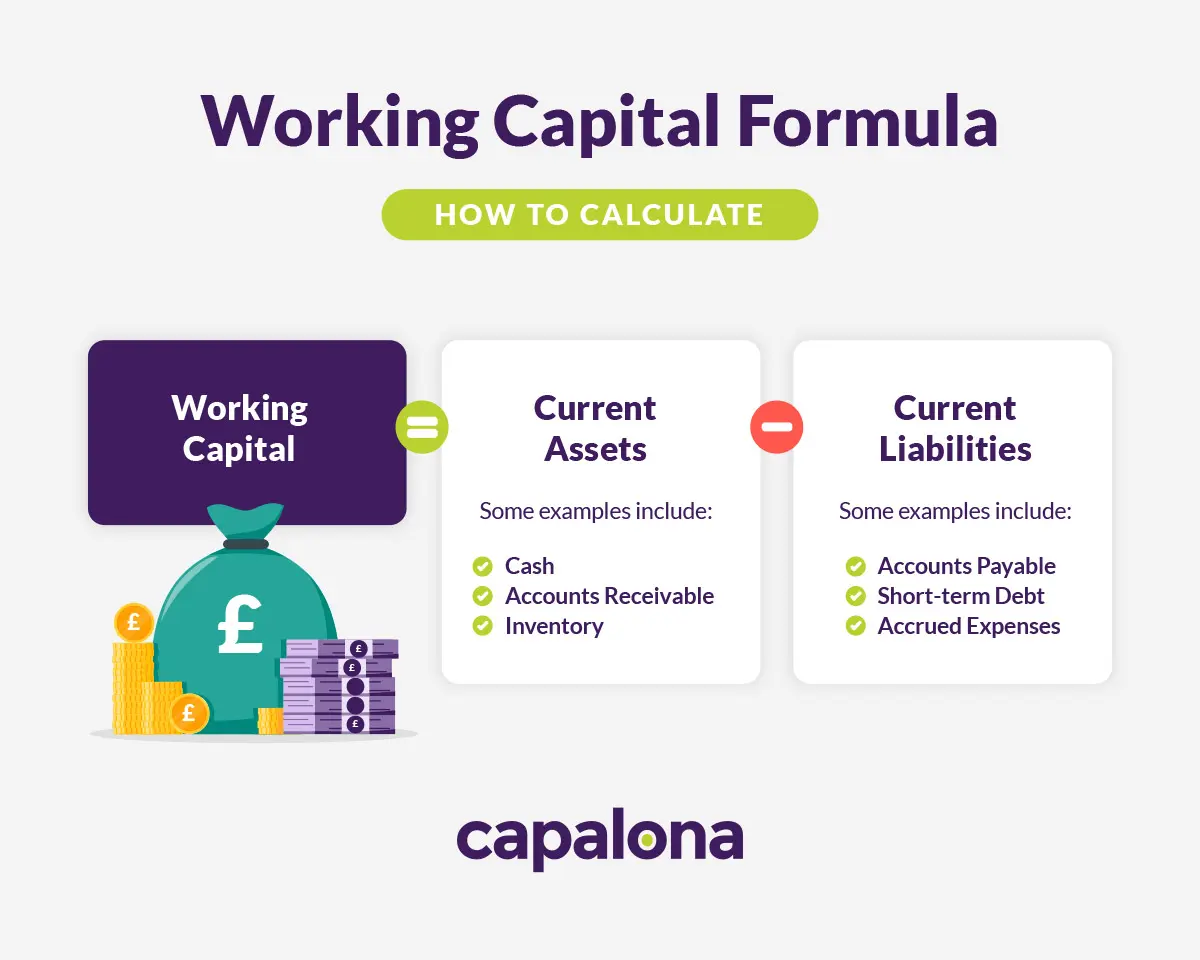
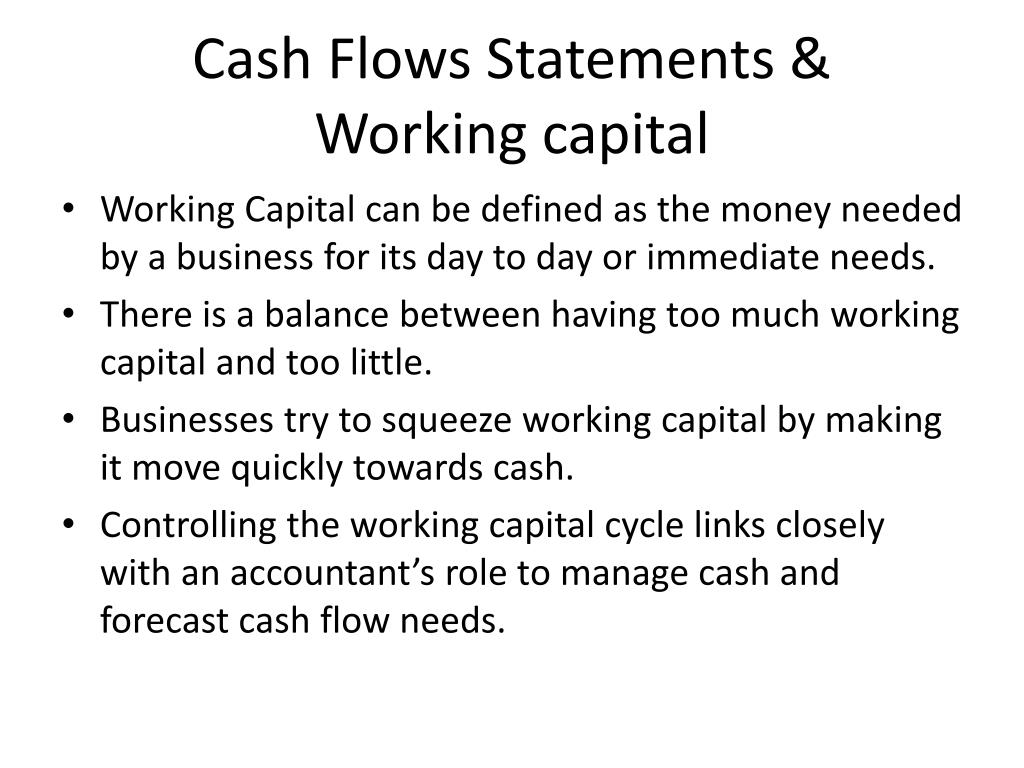
To manage a business effectively in 2026, a leader must look beyond the profit and loss statement. The working capital equation—Current Assets minus Current Liabilities—provides a real-time snapshot of a company’s agility. It is the capital available for the day-to-day operations of an organization, representing the difference between the resources you can quickly convert to cash and the obligations due within the next twelve months.
Current Assets: The Liquid Engine
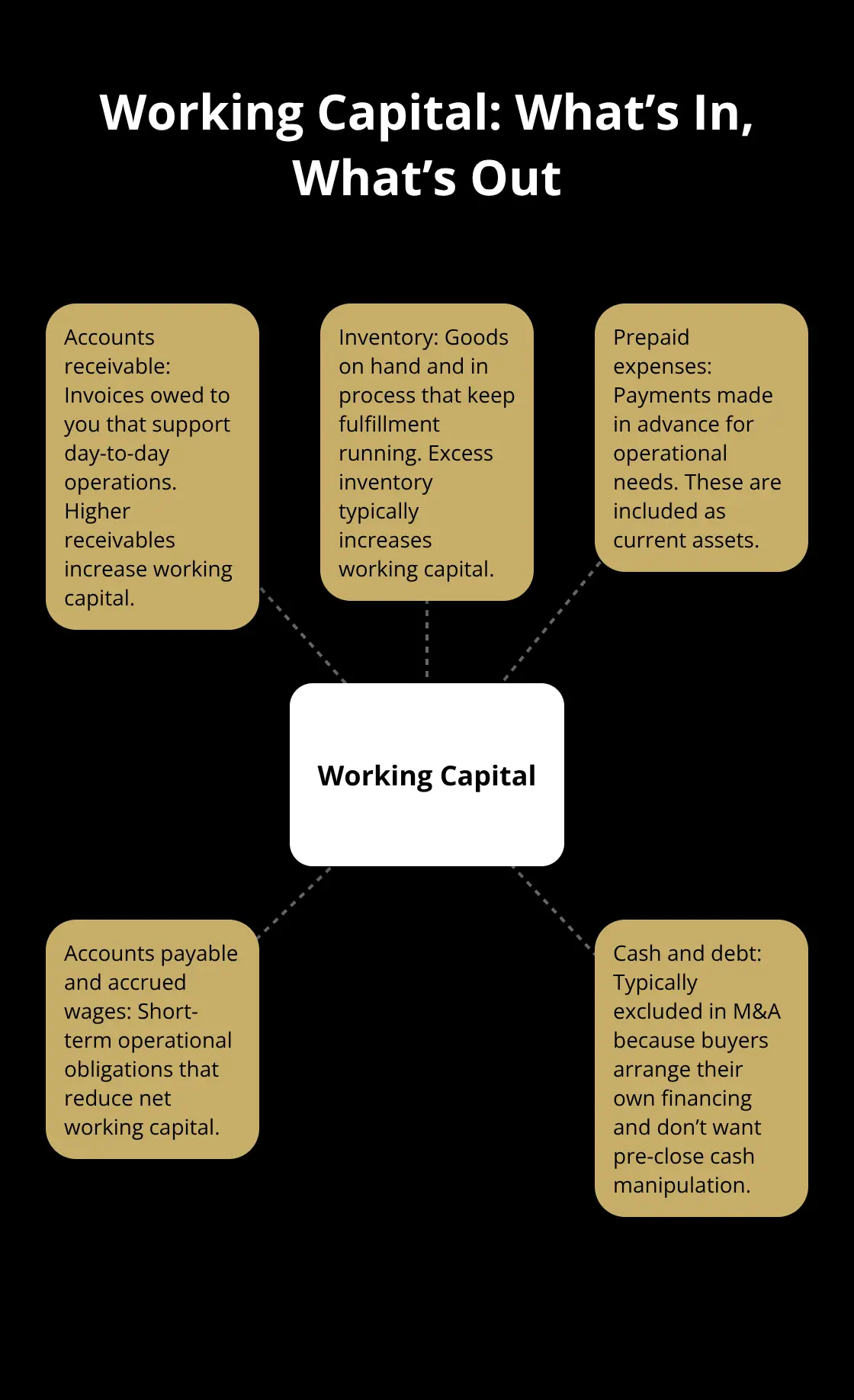
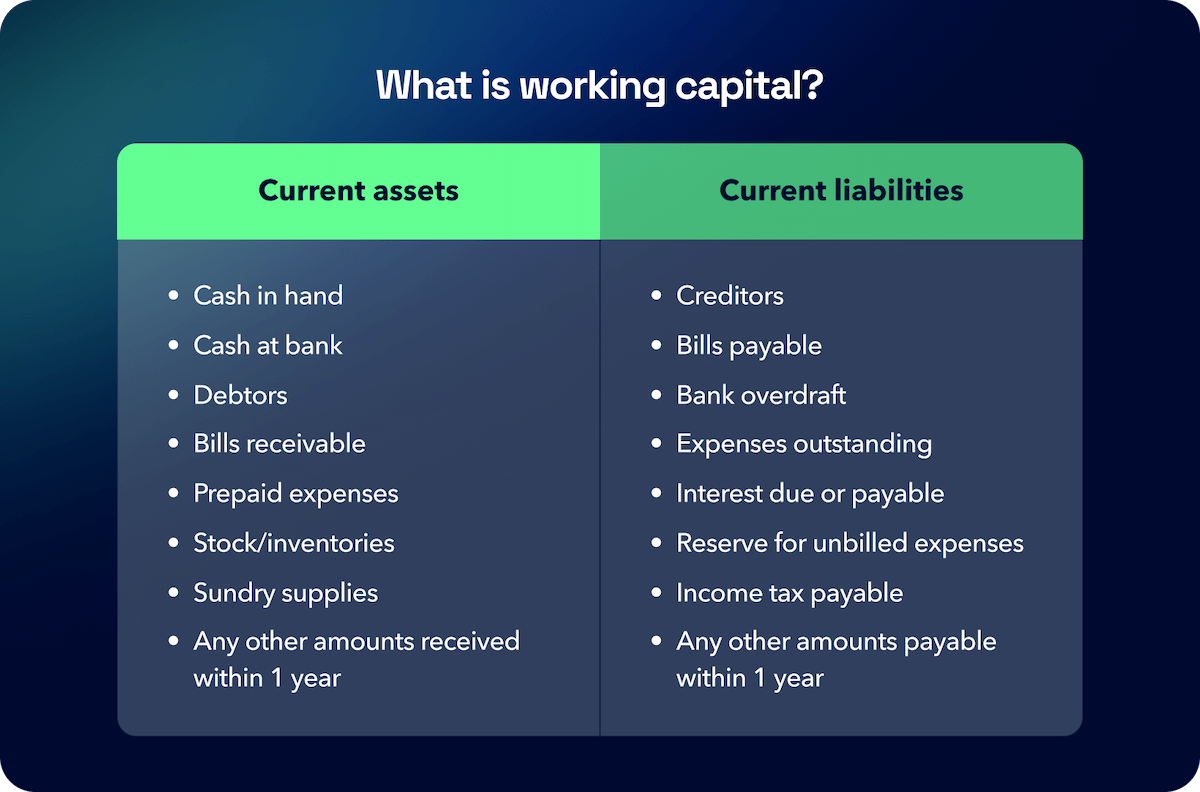
Current assets are the lifeblood of the equation. These include cash, cash equivalents, accounts receivable (money owed by customers), and inventory. In a high-functioning business, these assets move through a cycle: cash is used to buy inventory, inventory is sold to create accounts receivable, and accounts receivable are collected to return to cash.
The quality of these assets is as important as their quantity. For instance, if a significant portion of your current assets is tied up in "dead stock" (inventory that isn't selling), your working capital might look healthy on paper while your actual liquidity is suffocating. Expert financial management requires constant auditing of these assets to ensure they are truly "current" and capable of being liquidated within the fiscal year.
Current Liabilities: The Imminent Obligations
Current liabilities are the debts and obligations your business must satisfy within the upcoming year. This includes accounts payable to suppliers, short-term loans, accrued expenses (like wages and taxes), and the current portion of long-term debt.
The working capital equation impacts your business by highlighting the tension between these liabilities and your assets. If your liabilities are structured poorly—for example, if you have high-interest short-term debt coming due before your receivables are collected—you face a "liquidity crunch." Managing the timing of these outflows is the primary challenge of maintaining a functional working capital balance.
The Operational Impact of Positive vs. Negative Working Capital
The result of the working capital equation is not just a number; it is a diagnostic tool that predicts your business's future performance and risk profile.
The Benefits of Positive Working Capital
When your current assets exceed your current liabilities, you have positive working capital. This surplus provides a safety net for unexpected expenses and the "dry powder" needed to seize market opportunities. In 2026, market volatility remains a constant; businesses with healthy working capital can afford to pivot, invest in new technology, or acquire struggling competitors.
Positive working capital also enhances your relationship with creditors and suppliers. When you have ample liquidity, you can negotiate better terms, such as early payment discounts. This creates a virtuous cycle: better terms lead to lower costs, which in turn increases your working capital.
The Risks of Negative Working Capital
Negative working capital occurs when your current liabilities outweigh your current assets. While some business models (like high-turnover retail) can operate with negative working capital by using supplier credit to fund growth, for most enterprises, it is a red flag.
The impact of negative working capital includes:
- Default Risk: An inability to pay suppliers or employees on time, leading to legal action or closure.
- Growth Stagnation: Without excess cash, you cannot fund marketing, R&D, or inventory expansion.
- High Financing Costs: Lenders view negative working capital as high risk, leading to higher interest rates or outright rejection of loan applications.
The Cash Conversion Cycle (CCC) and Efficiency
To truly understand how the working capital equation impacts your business, you must look at the Cash Conversion Cycle (CCC). The CCC measures how long it takes for a dollar spent on inventory to travel through the entire production and sales process and return to the company as cash.
A business can have a positive working capital result but still struggle if its CCC is too long. For example, if your inventory sits in a warehouse for 90 days and your customers take 60 days to pay, but you must pay your suppliers in 30 days, you have a 120-day "gap" where your cash is trapped.
Improving the working capital equation often involves technical adjustments to these three levers:
- Days Sales Outstanding (DSO): Speeding up how fast you collect payments.
- Days Inventory Outstanding (DIO): Reducing the time goods stay in stock.
- Days Payable Outstanding (DPO): Maximizing the time you keep your cash before paying bills, without damaging supplier relationships.
Sector-Specific Working Capital Standards
The "ideal" working capital balance varies significantly by industry. What is considered a healthy ratio in manufacturing would be seen as inefficient in the software-as-a-service (SaaS) sector.
| Industry | Typical Working Capital Profile | Primary Impact Factor |
|---|---|---|
| Manufacturing | High (Heavy inventory and raw materials) | Supply chain stability and DIO |
| Retail | Moderate to Low (High turnover) | Sales velocity and inventory management |
| SaaS / Tech | Low to Negative (No inventory, upfront billing) | Deferred revenue and collection speed |
| Service-Based | Moderate (High accounts receivable) | Billing efficiency and labor costs |
| Construction | High (Long project cycles, retainage) | Milestone payments and mobilization costs |
How Working Capital Influences Strategic Decision-Making
Investment and Scalability
Before a business scales, it must evaluate its working capital. Rapid growth often requires a massive upfront investment in inventory and staffing. This is known as "overtrading"—growing so fast that you run out of cash despite having a full order book. By monitoring the working capital equation, leaders can determine if they have the internal resources to fund an expansion or if they need to secure external financing before pulling the trigger on a new project.
Creditworthiness and Valuation
When seeking a loan or preparing for an exit in 2026, the working capital equation is a primary metric used by analysts and buyers. A "lumpy" working capital history suggests poor management or seasonal instability. Conversely, a steady, positive ratio suggests a disciplined operational approach. In mergers and acquisitions (M&A), the "Target Working Capital" is a major negotiation point, as it determines how much liquidity the seller must leave in the business upon closing.
Common Pitfalls in Working Capital Management
Many businesses fail to manage their working capital not because they lack revenue, but because they succumb to common accounting and operational errors.
- Over-investing in Inventory: Holding too much stock "just in case" ties up cash that could be used for higher-ROI activities. Modern "Just-in-Time" (JIT) methodologies aim to minimize this, though global supply chain risks must be balanced.
- Lenient Credit Policies: Providing customers with 90-day terms while your own bills are due in 30 days is a recipe for a liquidity crisis.
- Ignoring Accrued Expenses: It is easy to forget about looming tax obligations or quarterly bonuses. These liabilities are part of the equation and can cause significant shocks if not tracked monthly.
- Confusing Profit with Cash: A business can be profitable on an accrual basis while being technically insolvent on a cash-flow basis. The working capital equation is the bridge between these two realities.
Frequently Asked Questions
Does more working capital always mean a better business?
No. While having a buffer is essential, an excessively high working capital balance suggests inefficiency. It means your business is sitting on cash, inventory, or receivables that aren't being "put to work." Investors generally prefer to see capital reinvested into growth or returned to shareholders rather than sitting idle in a low-interest checking account.
How can a business operate with negative working capital?
Companies like Amazon or major grocery chains often operate with negative working capital. They sell products and collect cash from customers almost immediately (low DIO/DSO) but do not have to pay their suppliers for 60 or 90 days (high DPO). This allows them to use their suppliers' money to fund their own growth. This strategy is high-risk and requires immense market power.
What is the "Current Ratio" and how does it relate to working capital?
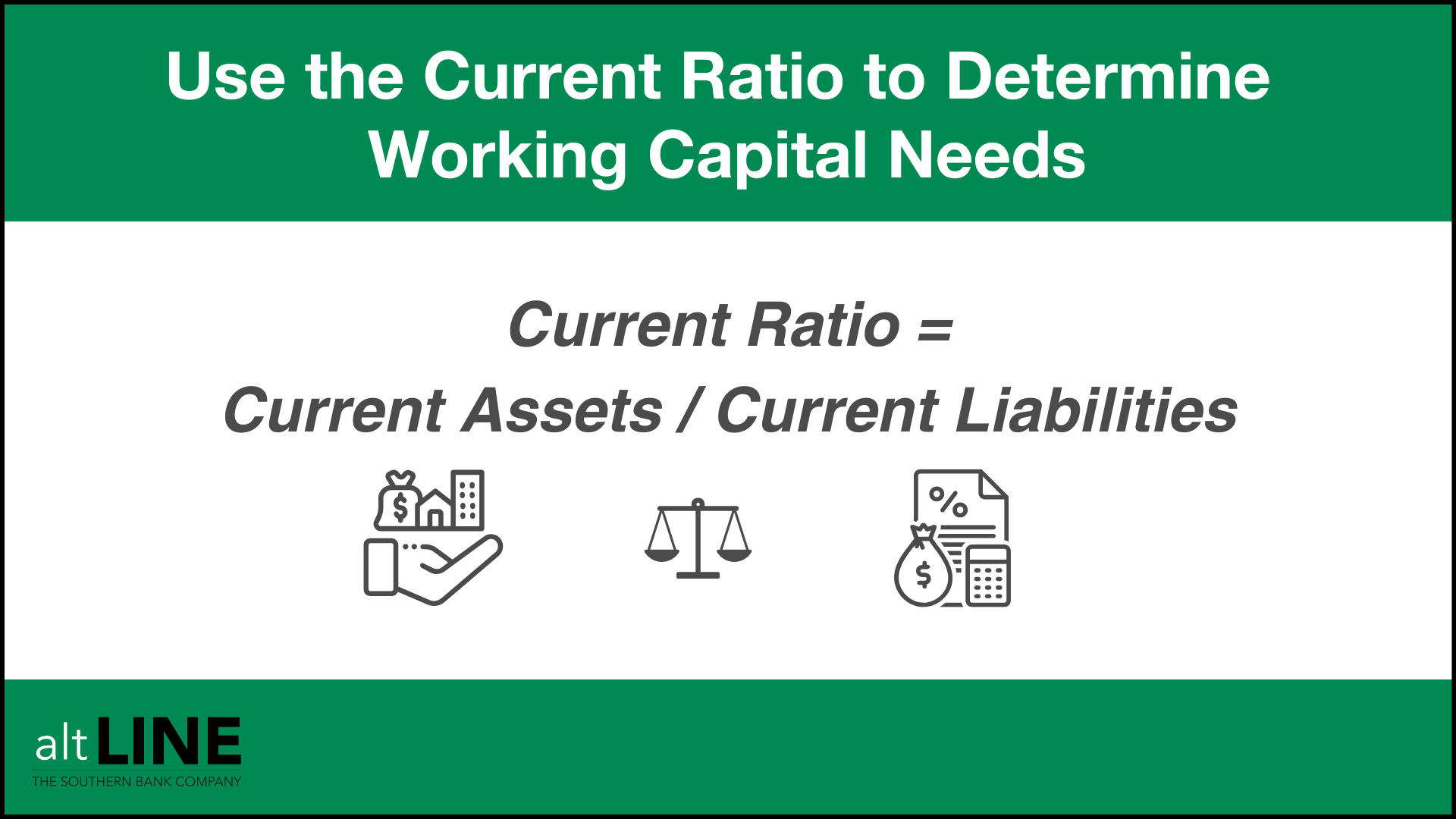
The Current Ratio is the working capital equation expressed as a ratio ($Current Assets / Current Liabilities$). A ratio of 1.0 means you have exactly enough assets to cover liabilities. Most analysts look for a ratio between 1.2 and 2.0 to consider a business "healthy."
How does inflation in 2026 impact the working capital equation?
Inflation increases the cost of inventory and labor, which swells current liabilities. If a business cannot raise its prices at the same rate or collect receivables faster, its working capital will shrink in real terms. Accurate FASB (Financial Accounting Standards Board) compliance and constant monitoring are required to ensure that inflationary pressures don't erode liquidity.
Can debt be used to fix a working capital problem?
Short-term debt can bridge a temporary gap, but it is a "band-aid" solution. If the underlying issue is poor collection or slow inventory turnover, adding debt only adds another liability to the equation, potentially worsening the long-term outlook. Debt should only be used to fund working capital when there is a clear path to conversion (e.g., funding inventory for a confirmed large order).
Strategic Recommendation
To ensure the working capital equation works in your favor, implement a monthly rolling forecast. This should not only track your current balance but project your liquidity 90 to 180 days into the future. By identifying potential "troughs" in your working capital before they occur, you can proactively negotiate terms with suppliers or adjust your sales strategy. Efficient working capital management is not about having the most money; it is about having the right amount of money at the right time to keep the gears of your business turning without friction.
Image Gallery