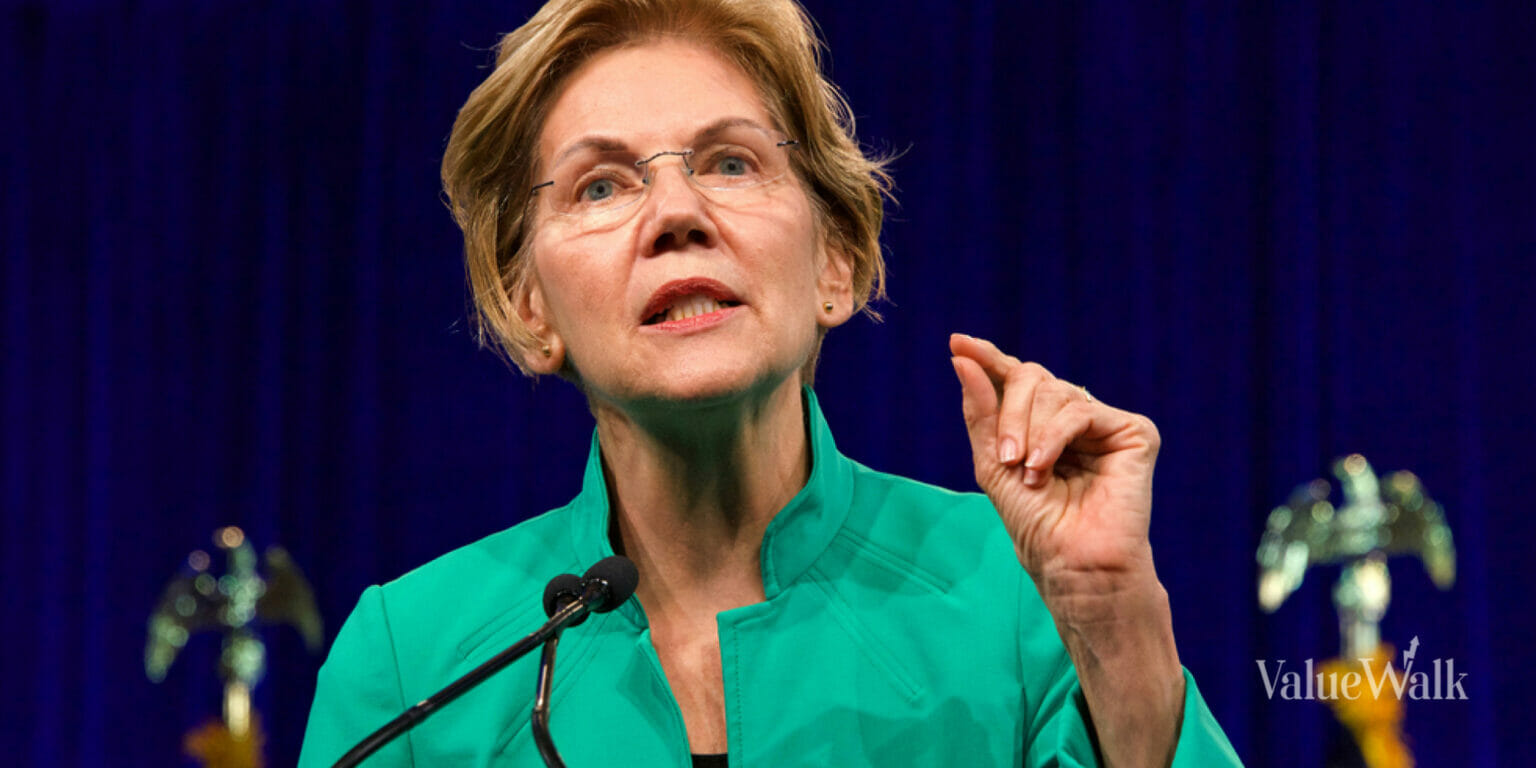
Elizabeth Warren Net Worth: Financial Disclosures, Career Earnings, and Assets
As of 2026, U.S. Senator Elizabeth Warren and her husband, Bruce Mann, have an estimated net worth between $8 million and $12 million. Their wealth stems primarily from decadelong academic careers at top law schools, lucrative book pub...
As of 2026, U.S. Senator Elizabeth Warren and her husband, Bruce Mann, have an estimated net worth between $8 million and $12 million. Their wealth stems primarily from decadelong academic careers at top law schools, lucrative book publication advances and royalties, federal government salaries, and substantial real estate holdings in Cambridge, Massachusetts.
Contents
Name Clarification and Search Intent
Searches for "elizabeth watren net worth" almost universally refer to Elizabeth Warren, the senior United States Senator representing Massachusetts. Because "Watren" is a common typographical error for "Warren," public interest in this topic centers on the financial profile, career earnings, public asset filings, and investment holdings of Senator Elizabeth Warren.
As a member of the United States Senate since 2013, Senator Warren is subject to strict federal reporting laws that require annual financial disclosures. These public filings, combined with property valuation records and historical book contract data, offer a clear window into how her personal wealth was built and managed over several decades in legal academia and public office.
Primary Sources of Income and Wealth Accumulation
Senator Warren’s financial growth is rooted in two distinct careers: a long, high-earning tenure as an expert in bankruptcy law and legal academia, followed by her position in federal public office alongside a prolific writing career.
| Primary Wealth Builders |
|---|
| 1. Academic Salaries (Harvard Law School, UPenn, UT Austin) |
| 2. Book Advances & Royalties (Best-selling non-fiction titles) |
| 3. Federal Senate Salary ($174,000 annually) |
| 4. Cambridge Real Estate Appreciation |
| 5. TIAA-CREF Retirement & Investment Accounts |
Academic Salaries and Legal Consulting
Before running for public office, Warren spent decades as a law professor specializing in commercial law and bankruptcy. Her academic trajectory included faculty appointments at the University of Houston, the University of Texas at Austin, the University of Pennsylvania, and ultimately Harvard Law School.
At Harvard Law School, where she taught for nearly two decades, her annual salary exceeded $350,000 prior to her election to the U.S. Senate. Additionally, during her academic career, she conducted expert legal consulting and served as an advisor on bankruptcy litigation, which provided supplemental private income before entering full-time public service.
Book Advances and Author Royalties
A major component of Warren’s liquid wealth and earnings surge came from commercial book publishing. Over her career, she has authored or co-authored more than a dozen books, ranging from academic treatises on personal finance to political memoirs.
- Academic & Consumer Finance Books: Early titles such as The Two-Income Trap (co-authored with her daughter, Amelia Warren Tyagi) and All Your Worth established her reputation as a financial advocate.
- Memoirs and Political Publications: Following her appointment to set up the Consumer Financial Protection Bureau (CFPB) and her subsequent 2012 Senate election, Warren signed several major publishing deals. Titles including A Fighting Chance (2014), This Fight Is Our Fight (2017), and Persist (2021) generated several million dollars in cumulative advance payments and ongoing royalties.
According to filings submitted to the Senate Ethics Committee, Warren's book royalties added significant capital to her investment portfolio in the years preceding and following her 2020 presidential primary campaign.
Federal Senate Salary
Since taking office in January 2013, Senator Warren has earned the standard congressional salary of $174,000 per year. While this salary constitutes her core active compensation, it represents a smaller portion of her overall asset base compared to her combined academic pension credits, past book earnings, and joint investment portfolio.
Spousal Income: Bruce Mann
Warren’s husband, Bruce H. Mann, is a distinguished legal scholar and professor of law at Harvard Law School, specializing in American legal history. His consistent salary from Harvard—typically exceeding $300,000 annually—along with his own retirement contributions, forms a significant part of the couple's total household assets and income streams.
Detailed Breakdown of Real Estate and Investment Portfolios
Federal financial disclosures do not require politicians to list precise dollar figures for every asset; instead, they report values within broad statutory bands (e.g., $250,001 to $500,000). By analyzing public property registries and mandatory ethics reports, financial analysts estimate the couple's core asset groups as follows.
| Asset Category | Estimated Allocation | Details |
|---|---|---|
| Real Estate | 30% - 40% | Cambridge Residence |
| Retirement Funds | 45% - 55% | TIAA-CREF / TIAA Traditional |
| Mutual Funds | 10% - 15% | Index & Bond Funds |
| Cash & Liquidity | < 5% | Checking & Money Market |
Primary Residence: Cambridge, Massachusetts
The primary physical asset owned by Warren and Mann is a historic Victorian home in Cambridge, Massachusetts, located near Harvard Square.
- Purchase History: The couple purchased the home in the mid-1990s for approximately $447,000.
- Current Market Valuation: Driven by the aggressive growth of the Greater Boston real estate market over the past three decades, the property is currently estimated to be worth between $3 million and $4.5 million.
- Mortgage Status: Senate filings indicate that the home has been owned free and clear of mortgage debt for many years, adding substantial unencumbered equity to their combined net worth.
Investment Portfolios and TIAA-CREF Retirement Accounts
Because of their long careers in higher education, the vast majority of Warren and Mann's liquid holdings reside in academic retirement plans, specifically TIAA (Teachers Insurance and Annuity Association) and CREF (College Retirement Equities Fund) accounts.
Their disclosures consistently reveal investments distributed across:
- TIAA Traditional Annuities: Fixed-income retirement products providing guaranteed principal protection and steady yields.
- CREF Stock and Growth Accounts: Equity-based funds tracking broad U.S. and international stock market indexes.
- Low-Cost Vanguard Index Funds: Diversified index funds that minimize administrative fee Drag while holding exposure to broad total market equities and municipal bonds.
Because Warren has consistently advocated for passive index investing and consumer protection, her portfolio reflects a strategy focused on low-cost mutual funds, index tracking, and traditional university retirement products rather than individual stock trading or speculative assets.
Asset & Income Financial Summary Table
The following table summarizes the financial makeup of Senator Elizabeth Warren and Bruce Mann based on federal financial reporting guidelines and public property assessments.
| Financial Asset / Income Source | Asset Category / Source | Estimated Value or Annual Income | Details & Context |
|---|---|---|---|
| Cambridge Residence | Primary Real Estate | $3,000,000 – $4,500,000 | Historic home purchased in 1990s; paid off in full. |
| TIAA-CREF Retirement | Pension & Investment Accounts | $4,000,000 – $6,500,000 | Accumulated through decade-long academic positions. |
| Mutual & Index Funds | Liquid Holdings | $1,000,000 – $2,500,000 | Low-cost index tracking funds and bond funds. |
| U.S. Senate Salary | Earned Income | $174,000 / year | Standard statutory salary for U.S. Senators. |
| Harvard Academic Salary | Spousal Income (Bruce Mann) | $300,000+ / year | Faculty position at Harvard Law School. |
| Book Royalties | Intellectual Property | Variable ($50k – $500k+ in peak years) | Earnings from commercial publishing agreements. |
Legal and Regulatory Framework for Senate Financial Disclosures
To understand political wealth data, it is necessary to examine how public officials report their assets under federal law.
The Ethics in Government Act of 1978
Under the Ethics in Government Act of 1978, members of Congress, presidential candidates, and key executive branch employees must file annual financial disclosure reports. These filings are submitted to the U.S. Senate Select Committee on Ethics and made accessible through the U.S. Senate Public Disclosure database.
The reporting framework operates under specific guidelines:
- Valuation Ranges: Assets and liabilities are reported in broad categories (e.g., $1,001–$15,000; $15,001–$50,000; $50,001–$100,000; $100,001–$250,000; $250,001–$500,000; $500,001–$1,000,000; $1,000,001–$5,000,000; and over $5,000,000).
- Primary Residence Exemption: While primary residences do not always have to be itemized in standardized congressional financial forms, property records from municipal tax assessors provide exact local assessment figures.
- Exclusion of Federal Pensions: Earned federal retirement benefits under the Civil Service Retirement System (CSRS) or the Federal Employees Retirement System (FERS) are not listed as reportable investment assets on standard disclosures.
The STOCK Act Requirements
Under the Stop Trading on Congressional Knowledge (STOCK) Act of 2012, members of Congress must report periodic transactions in stocks, bonds, commodity futures, and other securities within 30 to 45 days of the transaction.
Senator Warren's filings routinely show minimal active trading, as her holdings are concentrated in broad-market funds and fixed annuities that do not require frequent trading disclosures.
Public Perception vs. Financial Reality
Discussions surrounding Senator Warren's net worth often generate political commentary due to her advocacy for progressive tax policies, wealth taxes on high-net-worth individuals, and stricter regulation of Wall Street.
Critics sometimes highlight her multi-million-dollar net worth as a point of debate. However, financial analysis shows that her wealth places her in the upper middle tier of U.S. Senators, many of whom possess fortunes derived from inherited family wealth, venture capital, or corporate leadership.
Warren’s wealth profile reflects that of two senior legal academics who spent over 30 years at elite universities, owned real estate in an appreciating market, published best-selling books, and maintained disciplined saving habits in institutional retirement funds. Her proposed "wealth tax" policies typically target fortunes exceeding $50 million, well above her own net worth bracket.
Frequently Asked Questions
Is "Elizabeth Watren" the same person as Senator Elizabeth Warren?
Yes. "Elizabeth Watren" is a common spelling error for Elizabeth Warren, the U.S. Senator from Massachusetts. There is no public figure named Elizabeth Watren with reported net worth data.
How much does Elizabeth Warren earn as a U.S. Senator?
Senator Warren earns $174,000 per year, which is the standard base salary set by federal law for members of the U.S. Senate.
What is Elizabeth Warren's main asset?
Her primary individual assets are her historic residential property in Cambridge, Massachusetts, and her extensive retirement investment holdings managed through TIAA-CREF accounts accumulated during her career as a law professor.
Does Elizabeth Warren own single stocks?
No. Senator Warren's disclosures show a strategy centered around index funds, mutual funds, government bonds, and university retirement accounts rather than individual corporate stock picks.
Where can I inspect official Senate financial disclosures?
Public disclosure forms for all sitting U.S. Senators can be searched directly through the official U.S. Senate Financial Disclosure Portal.
Practical Recommendation for Accessing Public Financial Records
To verify the financial profiles, asset ranges, or annual income reports of federal elected officials:
- Visit the U.S. Senate Electronic Financial Disclosure (EFD) Portal.
- Agree to the usage terms required under federal reporting rules.
- Search by the senator's last name ("Warren") and select the desired filing year to view digitized PDFs of original, signed disclosure reports.
Image Gallery