The Cast of Trading Spaces in 2018: A Legacy of Design, Drama, and the Great Reboot Debate
The 2018 revival of Trading Spaces featured a strategic blend of twelve original cast members, including host Paige Davis and designers Hildi Santo-Tomas and Doug Wilson, alongside five new experts. While nostalgia drove initial viewer...
The 2018 revival of Trading Spaces featured a strategic blend of twelve original cast members, including host Paige Davis and designers Hildi Santo-Tomas and Doug Wilson, alongside five new experts. While nostalgia drove initial viewership, debates erupted regarding whether the show’s "shock-value" design philosophy and $2,000 budget could remain relevant in a modern HGTV-dominated landscape.
Contents
The Strategic Reunion: Bringing Back the Original Guard
When TLC announced the return of Trading Spaces in 2018, the primary draw was the massive reunion of the original "Legends." For many viewers, these personalities defined the early 2000s DIY movement. The casting was not just a nod to the past but an attempt to recapture the chemistry that made the original run a cultural phenomenon.
Paige Davis, the energetic host whose 2005 dismissal had previously caused a viewer revolt, returned to her central role. Her presence was seen as essential for the brand's continuity. Joining her were the designers who had become household names: the meticulous Vern Yip, the whimsical Frank Bielec, the sophisticated Genevieve Gorder, the traditionalist Laurie Smith, and the two most controversial figures in the show's history, Doug Wilson and Hildi Santo-Tomas.
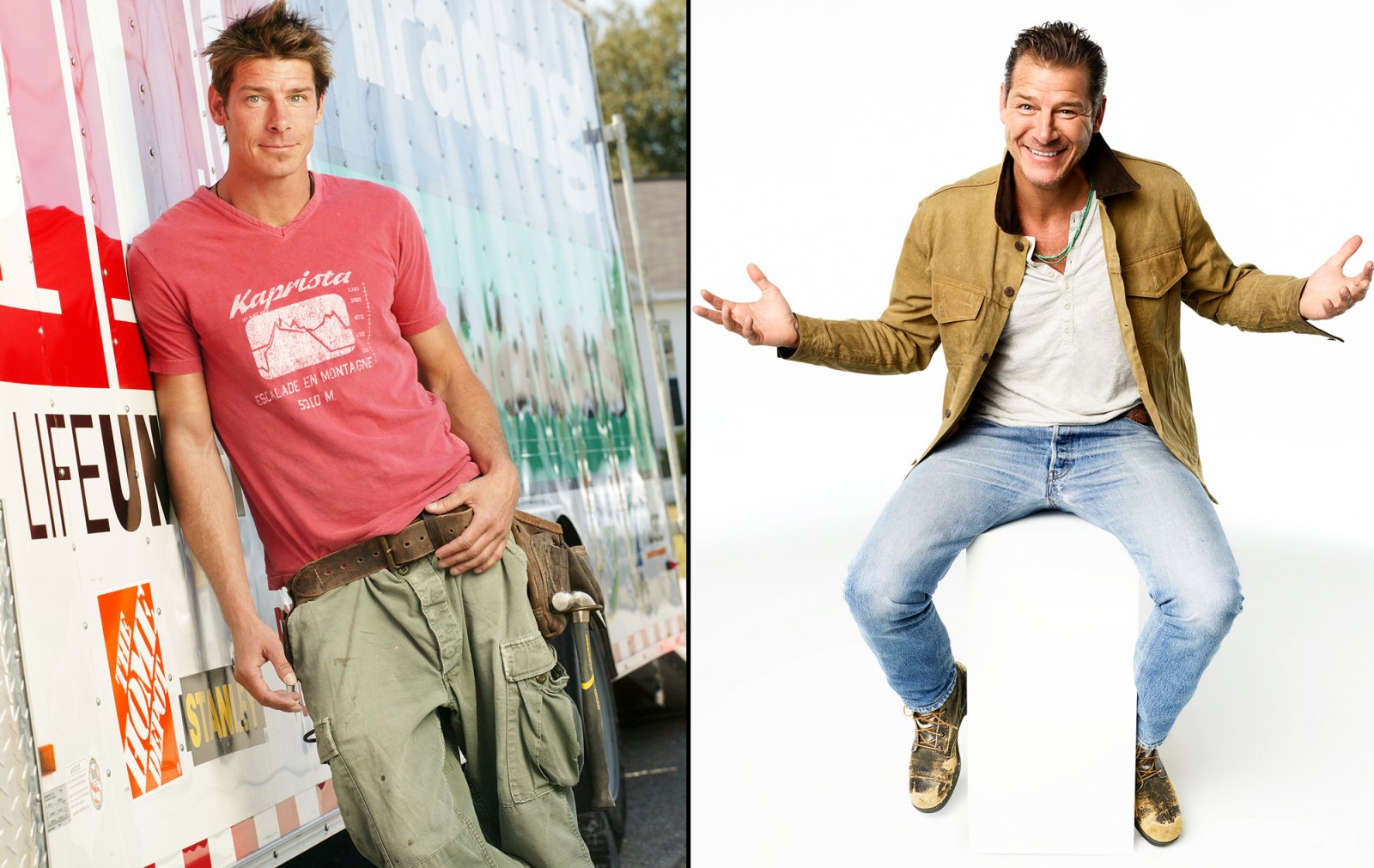
The return of the original carpenters, Ty Pennington and Carter Oosterhouse, added another layer of authenticity. In 2018, Pennington had already transitioned into a major TV star through Extreme Makeover: Home Edition, so his return to the "small-scale" world of Trading Spaces was viewed as a homecoming. The decision to bring back almost the entire original team was a rare feat in television reboots, emphasizing the production's commitment to "subject fidelity" regarding its own history.
The New Class: Modernizing the Design Aesthetic
To prevent the show from feeling like a museum piece, TLC introduced five new cast members in 2018. These individuals were tasked with bridging the gap between the chaotic DIY energy of the 2000s and the polished, professional aesthetics of 2018-era home renovation media.
- John Gidding: Known for Curb Appeal, Gidding brought a high-end architectural perspective that often clashed with the show's "quick and dirty" reputation.
- Sabrina Soto: A veteran of several HGTV programs, Soto specialized in "high/low" design, making her a natural fit for a show centered on strict budgeting.
- Kahi Lee: Bringing an international, eclectic flair, Lee’s style was contemporary and market-ready.
- Brett Tutor and Joanie Sprague: These new carpenters replaced the heavy lifting previously handled by just Ty and Carter. Sprague, a former America’s Next Top Model finalist, notably broke the gender barrier for carpenters on the show, which became a significant point of praise among the 2018 audience.
The $2,000 Debate: Is It Realistic?
One of the most heated debates surrounding the 2018 cast and format was the budget. In the original 2000–2008 run, the budget was a strict $1,000 per room. For the 2018 reboot, this was increased to $2,000. Critics and viewers immediately questioned whether $2,000 was sufficient for a complete room overhaul in a post-recession economy.
From a technical standpoint, the $2,000 budget had to cover flooring, paint, furniture, and decor. In the original series, $1,000 often forced designers to use unconventional materials—like the infamous hay or contact paper—to save money. By 2018, the cost of raw materials (lumber, high-quality textiles) had nearly doubled. The debate centered on whether the show was setting unrealistic expectations for homeowners or if it was simply a creative challenge meant to spur ingenuity. Many viewers argued that the "cheap" look of some 2018 rooms was a direct result of this stagnant budget, while others defended it as the core "hook" of the series.
The Return of Design Extremism: The Hildi and Doug Factor
No discussion of the 2018 Trading Spaces cast is complete without addressing the "shock-value" designers, Hildi Santo-Tomas and Doug Wilson. Their return reignited a decades-old debate: Is the show about making homeowners happy, or is it about the designer's "artistic vision"?
In the 2018 season, Hildi maintained her reputation for the avant-garde. While she didn't staple hay to a wall this time, her use of bold, often polarizing textures and themes continued to frustrate homeowners and delight drama-seeking viewers. Doug Wilson also maintained his "my way or the highway" persona, frequently ignoring homeowner "don'ts" (such as a specific hatred for a color or a piece of furniture).
The debate in 2018 shifted toward the ethics of this approach. In the age of social media, where a "bad" room could go viral and potentially affect a home's resale value, some viewers found the "malicious" design choices to be dated and cruel. Others argued that this was exactly what made Trading Spaces different from the "bland and safe" designs seen on other networks.
Comparing the 2018 Cast Roles and Impact
The following table outlines the primary cast members of the 2018 season and their specific contributions to the show’s revival.
| Cast Member | Role | Era | Design Philosophy / Impact |
|---|---|---|---|
| Paige Davis | Host | Original | The emotional center; balanced designer egos with homeowner anxiety. |
| Hildi Santo-Tomas | Designer | Original | Known for experimental, often controversial "art-installation" rooms. |
| Vern Yip | Designer | Original | Focused on precision, luxury-on-a-budget, and architectural symmetry. |
| Doug Wilson | Designer | Original | High-drama "bad boy" of design; favored theatrical and bold transformations. |
| Frank Bielec | Designer | Original | Whimsical, country-inspired designs; focused on warmth and accessibility. |
| Genevieve Gorder | Designer | Original | Known for "soulful" designs incorporating global textures and personal history. |
| John Gidding | Designer | New | Brought architectural rigor and a more polished, modern finish. |
| Sabrina Soto | Designer | New | Modern, clean, and highly functional aesthetic suited for families. |
| Ty Pennington | Carpenter | Original | Provided high energy and expert carpentry; bridged the gap to the 2018 "superstar" status. |
| Joanie Sprague | Carpenter | New | Modernized the carpenter role; emphasized precision and female representation in trades. |
The "Fixer Upper" Influence vs. The Trading Spaces Formula
By 2018, the landscape of home renovation television had shifted significantly. The "modern farmhouse" aesthetic popularized by Chip and Joanna Gaines had become the gold standard. This created a friction point for the Trading Spaces cast.
The debate among fans was whether the 2018 cast should adapt to current trends or stay true to the show's roots of "organized chaos." The original cast mostly stuck to their guns, leading to rooms that looked distinctly "Trading Spaces"—which is to say, colorful, experimental, and sometimes cluttered. The new cast members, particularly John Gidding and Sabrina Soto, often produced rooms that felt more in line with contemporary 2018 trends. This dichotomy created a stylistic "identity crisis" for the show, where one episode might feature a sophisticated living room and the next a room with a mural painted by a designer with their eyes closed.
Logistical Challenges and the 48-Hour Deadline
A secondary debate emerged regarding the authenticity of the 48-hour timeline. In the 2018 season, the production quality was higher, leading some skeptical viewers to believe the timeline was "faked" or that "ghost crews" (off-camera professionals) were doing the bulk of the work.
While it was verified that professional crews assisted with behind-the-scenes tasks like electrical and plumbing to meet modern safety codes, the cast maintained that the 48-hour pressure was very real. This technical constraint often led to the "unfinished" look that characterized several 2018 reveals. The debate here wasn't just about honesty, but about the quality of the work. Critics argued that rushing a renovation in two days was irresponsible, while fans argued that the "race against the clock" was the source of the show's unique energy.
FAQs: Clarifying the 2018 Cast and Beyond
Did all the original designers return for the 2018 season?
Almost all of them did. The core group—Hildi, Doug, Vern, Genevieve, Laurie, and Frank—all participated in the 2018 revival. Their return was the cornerstone of the marketing campaign, though they rotated through different episodes rather than all appearing in every one.
How did the 2018 budget change from the original?
The budget was doubled from $1,000 to $2,000. Despite this increase, the debate persisted that $2,000 in 2018 had less purchasing power than $1,000 did in 2000, leading to significant challenges in sourcing quality furniture and materials.
Who were the most controversial designers in the 2018 reboot?
Hildi Santo-Tomas and Doug Wilson remained the most controversial. Hildi’s penchant for non-traditional materials and Doug’s refusal to follow homeowner requests continued to spark debates about whether the show prioritized television drama over actual home improvement.
Is the 2018 cast still together in 2026?
As of 2026, many cast members have moved on to individual projects or retired. Sadly, Frank Bielec passed away in 2020, making the 2018 reunion a poignant final chapter for one of the show's most beloved figures. Paige Davis remains active in theater and hosting, while others like Genevieve Gorder have continued their careers in interior design consultancy.
Were the 2018 designs "safe" compared to the original series?
Generally, no. While the new designers brought a more modern "safe" aesthetic, the original designers largely stuck to their provocative roots. This tension between "safe design" and "risky entertainment" was the defining characteristic of the 2018 debates.
Recommendation for Modern Viewers
For those revisiting the 2018 season today, it is best viewed as a time capsule of "reboot culture." To truly appreciate the cast's efforts, one should focus on the episodes where original and new designers are paired together. This highlights the evolution of the genre from pure "shock-value" entertainment to the more professionalized design standards we see in the mid-2020s. If you are looking for practical DIY advice, the episodes featuring Vern Yip or Sabrina Soto offer the most technical value, whereas those featuring Hildi or Doug are better suited for those seeking the classic, high-stakes drama that put the show on the map.
Image Gallery