The Evolution of Disney Scuba Experiences: From Epcot’s Living Seas to Ocean Excursions
Disney’s scuba diving experiences have evolved from experimental oceanographic exhibits into world-renowned recreational diving programs. Anchored by EPCOT’s 5.7-million-gallon indoor Caribbean Coral Reef aquarium at Walt Disney World...
Disney’s scuba diving experiences have evolved from experimental oceanographic exhibits into world-renowned recreational diving programs. Anchored by EPCOT’s 5.7-million-gallon indoor Caribbean Coral Reef aquarium at Walt Disney World and supported by Disney Cruise Line ocean excursions, these experiences offer certified divers unique, controlled underwater encounters alongside marine life, complete with specialized environmental controls and conservation initiatives.
Contents
The Origin of Disney Scuba: The Living Seas Pavilion (1986)
When The Living Seas pavilion opened at Walt Disney World’s EPCOT Center on January 15, 1986, it represented a major architectural and engineering achievement. Designed in collaboration with marine biological advisors, the main tank—holding 5.7 million gallons of manufactured saltwater—was the world's largest man-made ocean environment at the time of its opening.
The primary goal of the facility was twofold: to educate park visitors on ocean conservation and marine ecosystems, and to serve as a research center for marine biologists. In its initial years, diving within the tank was strictly limited to Disney’s professional dive team, aquarists, and visiting researchers. The life-support systems were built to simulate an open-ocean environment, featuring continuous filtration, temperature regulation, and artificial current systems designed to sustain thousands of ocean creatures.
As recreational scuba diving grew in popularity throughout the late 1980s, Disney Imagineers recognized an opportunity to leverage this facility for guest experiences. The controlled environment offered clear visibility, zero thermal current fluctuations, and a concentrated density of marine life that wild ocean dives could rarely guarantee. This set the stage for Disney's formal entry into commercial guest scuba experiences.
EPCOT Seas Adventures: The Creation and Refinement of DiveQuest
Introduced in the 1990s, EPCOT Seas Adventures: DiveQuest transformed guest access to the Caribbean Coral Reef tank. Designed specifically for certified Open Water divers, DiveQuest established a new benchmark for indoor aquatic guest experiences.
| Feature | Details |
|---|---|
| Capacity | 5.7 Million Gallons |
| Depth | 27 Feet |
| Temperature | ~78°F (25.5°C) |
| Species | 6,000+ (Sharks, Rays, Sea Turtles, Teleost Fish) |
Technical and Environmental Parameters
The physical environment of the aquarium provides distinct diving conditions compared to open-water sites:
- Water Volume and Depth: The tank holds 5.7 million gallons of artificial seawater with a maximum depth of 27 feet.
- Thermal Control: The water temperature is maintained at a constant 78°F (25.5°C) year-round, eliminating the need for thick thermal protection.
- Visibility: Water clarity routinely exceeds 100 feet due to mechanical sand filtration and automated chemical monitoring systems.
- Current and Surge: The environment has no surge or wind-driven currents, making it accessible for divers of varying experience levels.
Biological Safety and Gear Protocols
To protect the ecosystem and prevent the introduction of outside pathogens or chemical contaminants, Disney enforces strict gear protocols. Guests are not permitted to use personal buoyancy control devices (BCDs), regulators, wetsuits, or fins inside the main tank.
Disney provides all required scuba gear, including shorty wetsuits, BCDs, regulators with integrated octopuses, weight systems, masks, and fins. Guests may only bring their own dive mask, provided it is inspected and sanitized by the dive team before entry. This biosecurity control prevents foreign bacteria, parasites, or oils from disrupting the biological equilibrium maintained by the marine science personnel.
The Dive Program Structure
The EPCOT DiveQuest experience spans approximately three hours, though the actual bottom time inside the tank is capped at 40 minutes. The program follows a structured operational flow:
- Check-in and Verification: Guests present proof of Open Water certification from a recognized agency (such as PADI, NAUI, SSI, or CMAS) along with photo identification.
- Backstage Tour: Participants tour the filtration facilities, food preparation areas, and veterinary care centers located within SeaBase Alpha.
- Safety Briefing: Divemasters outline hand signals, entry/exit procedures, minimum distance rules for protected species, and emergency protocols.
- The Dive: Divers execute a stride entry from the surface platform into the main basin. The dive is non-directional, allowing participants to explore the artificial reef, underwater observation windows, and themed structures.
- Post-Dive Debrief: Divers rinse, change in dedicated locker facilities, and receive a commemorative logbook entry stamped by the dive team.
Expanding Disney’s Aquatic Scope: Typhoon Lagoon and Cruise Line Excursions
While EPCOT DiveQuest established Disney’s presence in indoor diving, the company expanded its aquatic offerings across other operational branches.
Typhoon Lagoon’s Shark Reef (1989–2016)
Opened in 1989 at Disney's Typhoon Lagoon Water Park, Shark Reef offered a hybrid snorkeling experience designed to introduce non-certified guests to marine life. The unheated, 362,000-gallon saltwater pool contained bonnethead sharks, leopard sharks, stingrays, and schools of tropical fish.
Guests swam across a surface lane using provided masks, underwater snorkels, and cold-water wetsuits. While not a tank dive, Shark Reef served as a gateway experience that motivated many guests to pursue formal scuba certification. Disney permanently closed Shark Reef in October 2016 to repurpose the space and consolidate marine care operations at EPCOT.
Disney Cruise Line Ocean Excursions
With the launch of Disney Cruise Line (DCL) in 1998, Disney extended its scuba offerings to wild ocean environments. Through partnerships with certified local dive operators across the Caribbean, Bahamas, and Mediterranean, DCL provides guided ocean dives for guest cruisers.
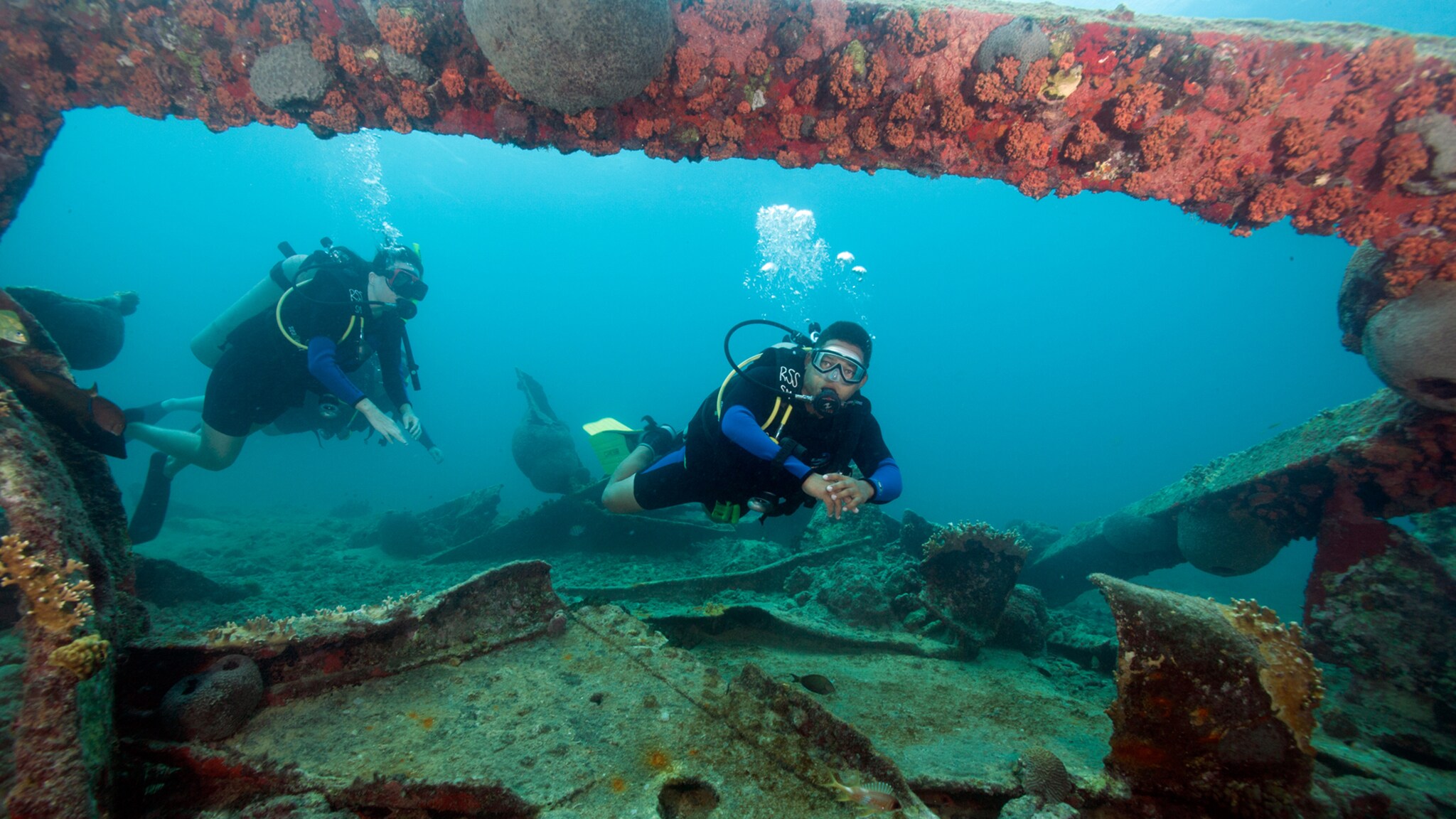
- Castaway Cay: Disney’s private island in the Bahamas features dedicated marine recreation zones. Certified divers can book offshore boat dives to nearby coral reefs and marine walls, while non-certified guests can explore a designated 22-acre Snorkeling Lagoon containing submerged Disney artifacts, including a sunken Nautilus submarine from the former 20,000 Leagues Under the Sea park attraction.
- Port Adventures: DCL coordinates two-tank dive excursions at key ports of call, such as Cozumel, Grand Cayman, St. Thomas, and Aruba. These dives cover wall dives, wreck explorations, and coral restoration sites, operated in compliance with standard international dive training standards.
Comparing Disney Aquatic Experiences
The operational frameworks of Disney’s current and historic scuba and aquatic experiences vary by depth, access requirements, and marine environment.
| Experience | Location | Primary Target Audience | Prerequisites | Environment Type | Key Marine Life / Features |
|---|---|---|---|---|---|
| EPCOT Seas Adventures: DiveQuest | EPCOT (Walt Disney World) | Certified Scuba Divers | Open Water C-Card; Age 10+ | 5.7-M Gallon Indoor Tank | Sand tiger sharks, sea turtles, eagle rays, 6,000+ fish |
| EPCOT Seas Adventures: Aqua Tour (Legacy/Seasonal) | EPCOT (Walt Disney World) | Non-Certified Swimmers | Age 8+; Basic Swimming | Surface-Supplied Air (SAS) Tank | Upper-level tank access to Caribbean Coral Reef |
| Castaway Cay Offshore Scuba | Castaway Cay (DCL, Bahamas) | Certified Scuba Divers | Open Water C-Card; Age 10–12+ | Open Ocean Reef / Wall Dives | Bahamian coral reefs, patch reefs, native pelagic species |
| Castaway Cay Snorkeling Lagoon | Castaway Cay (DCL, Bahamas) | General Guests | None (Life Vest Required) | Enclosed Saltwater Lagoon | Submerged Imagineering props, rays, tropical reef fish |
| Shark Reef (1989–2016, Closed) | Typhoon Lagoon | Water Park Guests | Basic Swimming Ability | 362k-Gallon Cold Saltwater Tank | Bonnethead sharks, stingrays, tropical reef species |
Modern Guidelines, Biosecurity, and Conservation Integration
In recent years, Disney revised its dive operations to better integrate marine conservation funding and updated biosafety standards.
Environmental Conservation Funding
A portion of every dive booking fee for programs like DiveQuest is allocated to the Disney Conservation Fund. This non-profit initiative supports global marine wildlife research, coral reef restoration projects, and sea turtle rehabilitation efforts worldwide. The educational portion of the dive briefing highlights active sea turtle rescue projects managed on-site by Disney's animal care staff.
Updated Biosecurity and Safety Protocols
Post-2020 operational revisions refined handling protocols within the SeaBase Alpha dive complex:
- Sanitization Standards: Sanitization protocols apply to all rental masks, regulator mouthpieces, and wetsuits before guest assignment.
- Camera Restrictions: To maintain guest safety and prevent gear drop hazards inside the main tank, personal cameras, action cameras (such as GoPros), and handheld video lights are strictly prohibited for guest divers. All dive footage is captured by professional underwater video cast members and made available to participants following the dive.
- Medical Screening: All divers must complete an industry-standard recreational scuba medical questionnaire prior to entering the water. If a guest flags a medical precondition, a physician's written sign-off is mandatory.
Step-by-Step Guide: How to Prepare for EPCOT DiveQuest
For certified divers planning to participate in EPCOT’s dive program, proper preparation ensures compliance with all facility requirements.
- Step 1: Verify Certification & Medical Eligibility
- Step 2: Advance Reservation via Disney Official Portal
- Step 3: Day-of Arrival & Documentation Check
- Step 4: Gear Fitting & Backstage Orientation
- Step 5: Safety Briefing & Tank Entry
1. Verify Eligibility and Documentation
Ensure your Open Water Scuba Diver certification card (issued by PADI, NAUI, SSI, SDP, CMAS, or another recognized agency) is active and physical or digital proof is accessible. Participants aged 10 to 17 must be accompanied by a paying adult participant or parent/guardian.
2. Make Reservations Early
Capacity for EPCOT DiveQuest is strictly limited to small groups per session to maintain high divemaster-to-diver ratios and prevent crowded tank conditions. Bookings open up to 60 days in advance via the official Walt Disney World website or app.
3. Pack Appropriate Attire
Because Disney provides all technical scuba gear, guest packing requirements are minimal:
- Swimsuit (to wear beneath the provided shorty wetsuit).
- Personal dive mask (optional; must pass cast member inspection).
- Personal dive logbook (for stamping after the dive).
- Government-issued photo identification and certification card.
4. Arrive for Check-In
Report to the main entrance of EPCOT at the designated meeting time. A cast member escorts the dive group backstage into the SeaBase Alpha briefing room. Leaving loose belongings in the secure locker room facilities provided is required before entering the tank deck.
Frequently Asked Questions
Do I need an EPCOT park admission ticket to participate in DiveQuest?
No. Park admission is not required if you are only attending the DiveQuest program, as guests enter via a dedicated backstage access area. However, if you plan to enter EPCOT to visit attractions before or after your scheduled dive time, a valid theme park ticket and any applicable park reservation are required.
Can non-diving family members watch my dive?
Yes. Non-diving family members and friends who hold valid EPCOT theme park admission can view your dive from the public observation windows inside the SeaBase pavilion. The dive briefing includes information on the specific timeframe when divers will be in the main observation room window areas so viewers can position themselves for photos.
Can I bring my own dive computer or camera into the tank?
Personal wrist-mounted dive computers are generally permitted after inspection by the dive team. Personal cameras, video equipment, underwater lights, and selfie sticks are strictly prohibited inside the tank to protect marine life from dropped objects and preserve spatial awareness.
How deep is the tank during the dive, and will I need a safety stop?
The maximum depth of the Caribbean Coral Reef tank is 27 feet (8.2 meters). Because the dive remains shallower than 30 feet for its entire 40-minute duration, standard recreational dive tables do not require a mandatory safety stop, though standard slow ascent rates are strictly enforced by the leading divemasters.
What marine life will I see during an EPCOT dive?
The aquarium houses over 6,000 sea creatures across dozens of species. Divers regularly encounter sand tiger sharks, nurse sharks, blacktip reef sharks, eagle rays, southern stingrays, endangered sea turtles (such as loggerhead and green sea turtles), giant groupers, tarpon, and tropical reef fish.
Planning Your Next Steps
If you are a certified diver planning a trip to Walt Disney World or aboard Disney Cruise Line:
- Check Certification Expiration: If you have not completed a dive in over two years, complete a Scuba Review or Refresher course with a local dive shop before booking DiveQuest.
- Review Medical Conditions: Consult the standard diver medical participant questionnaire provided during booking to determine if physician approval is needed.
- Coordinate Schedules: Reserve your dive slot early in your trip planning timeline, and pair it with Disney Cruise Line Caribbean itineraries if you wish to experience both tank and ocean environments on a single vacation.
Image Gallery