Finding the Cheapest Guaranteed Universal Life Insurance to Age 90 for a 40-Year-Old Male
Securing the cheapest guaranteed universal life insurance to age 90 for a 40-year-old male involves identifying policies with a "no-lapse guarantee" specifically structured to end at age 90 rather than age 100 or 121. By selecting this...
Securing the cheapest guaranteed universal life insurance to age 90 for a 40-year-old male involves identifying policies with a "no-lapse guarantee" specifically structured to end at age 90 rather than age 100 or 121. By selecting this shorter duration, you reduce the insurer’s risk exposure, which allows for significantly lower premium payments compared to a lifetime policy.
Contents
Understanding Guaranteed Universal Life (GUL) Insurance
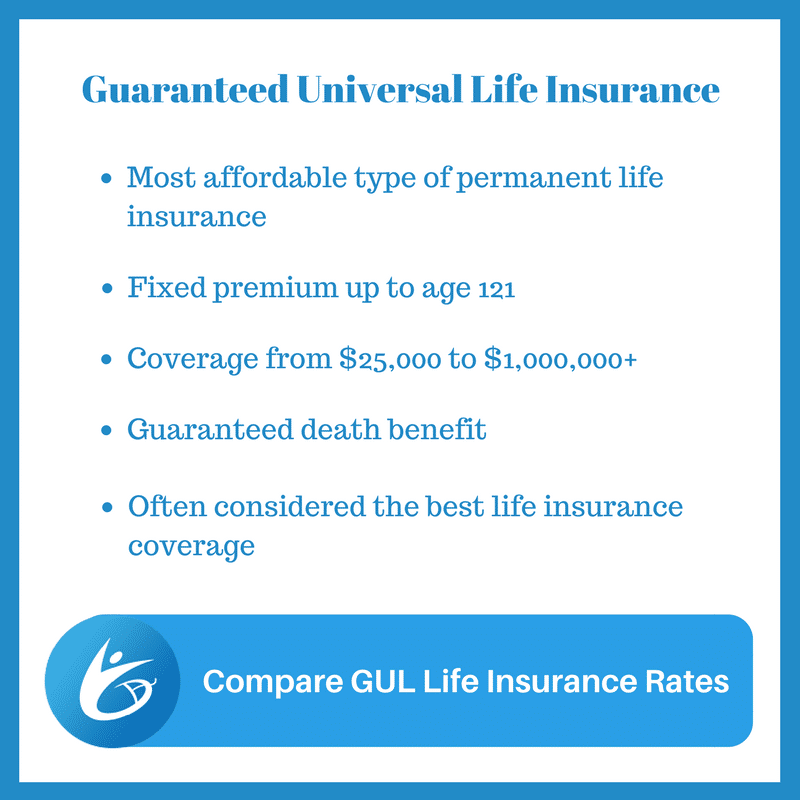
Guaranteed Universal Life (GUL) insurance is a hybrid product that combines the flexibility of universal life insurance with the permanence and price stability of traditional whole life insurance. Unlike standard universal life policies, which are interest-rate sensitive and can collapse if market performance underperforms, a GUL policy offers a guaranteed death benefit provided the premiums are paid as agreed.
For a 40-year-old male, the primary goal is often to provide income replacement or debt protection until a specific milestone—such as the planned age of retirement or the end of a mortgage term. By choosing a policy that guarantees coverage only until age 90, you are effectively "right-sizing" the protection to your financial lifecycle. This reduces the "cost of insurance" (COI) that the carrier must account for, directly lowering your out-of-pocket costs.
Why Age 90 Coverage vs. Lifetime Coverage?
When you apply for a universal life policy, the "guarantee period" is the most significant factor in your premium calculation. A lifetime guarantee (often up to age 121) requires the insurance company to calculate the probability of death over a much longer timeframe, resulting in higher premiums to cover the tail-end risk.
By capping the guarantee at age 90:
- Lower Reserve Requirements: Insurers do not need to hold as much capital in reserve for your policy beyond age 90.
- Minimized COI: You are not paying for protection during years where your financial dependents are statistically less likely to rely on your income.
- Premium Efficiency: You maximize the death benefit per dollar spent, making it an ideal choice for estate planning or long-term family protection.
Factors Influencing Your Premium
Even within the category of guaranteed products, the price you pay as a 40-year-old male is not static. Underwriters use specific actuarial data to determine your individual risk profile.
- Health Class Rating: This is the most critical variable. If you qualify for "Preferred Plus" or "Preferred" rates, your premium will be substantially lower than someone who qualifies for "Standard" or "Substandard" (table-rated) due to health complications.
- Tobacco Status: Non-smokers typically pay 50% to 70% less than smokers for the same coverage amount.
- Policy Face Amount: Larger death benefits can sometimes lower the cost per $1,000 of coverage due to "banded" pricing, but higher coverage amounts naturally increase the total annual premium.
- State Regulatory Environment: Life insurance premiums are regulated at the state level. While insurers have national pricing models, your place of residence may influence the final quoted rate due to state-specific premium taxes and regulations.
Comparing Life Insurance Structures for 40-Year-Olds
Choosing the right type of policy is essential to ensuring you aren't overpaying for features you do not need.
| Feature | Term Life Insurance | Guaranteed Universal Life (to age 90) | Whole Life Insurance |
|---|---|---|---|
| Duration | Fixed (e.g., 20 or 30 years) | Guaranteed to age 90 | Lifetime (Age 121) |
| Cash Value | None | Minimal to None | Guaranteed Growth |
| Premium Cost | Lowest | Moderate | Highest |
| Predictability | High | High (if premiums met) | High |
If your intent is purely to ensure a death benefit exists until you reach 90, GUL is often cheaper than whole life because it lacks the high-cost, forced cash-value accumulation component that characterizes traditional whole life policies.
Steps to Secure the Most Competitive Rate
To ensure you are getting the cheapest rate, you must treat the application process as a strategic move.
Step 1: Obtain Multiple Quotes Do not rely on a single carrier. Prices for the same age and health profile can vary by 20% or more between insurance companies. Use an independent broker who has access to multiple carriers to compare "age 90" GUL products specifically.
Step 2: Prepare for the Medical Exam Many policies at age 40 require a paramedical exam. You can influence your "build and blood" results by avoiding high-cholesterol foods, fasting appropriately before the test, and maintaining a consistent sleep schedule in the days leading up to the appointment.
Step 3: Review the "No-Lapse" Provision Ensure the policy contract explicitly lists a "No-Lapse Guarantee" to age 90. Some policies may market themselves as "Universal Life" but lack a strong guarantee, relying on interest credits that may not materialize. Verify that the guarantee is contractual, not illustrative.
Step 4: Understand the Premium Payment Schedule Most GUL policies allow you to pay premiums until the guarantee age (age 90). However, some insurers allow for "limited pay" options, such as paying the policy up in 10 or 20 years. While this increases the annual cost, it removes the long-term risk of policy cancellation due to missed payments in your 70s or 80s.
Common Mistakes to Avoid
- Ignoring the Lapse Provision: Many buyers choose a policy based on the "current" premium, ignoring the fact that if interest rates drop, the policy might require additional premium injections to stay active. Ensure the policy is a "No-Lapse" GUL, which is immune to market volatility.
- Underestimating Health Rating: Many men wait too long to apply. If you develop a health condition (e.g., hypertension or elevated blood sugar) while procrastinating, your "Preferred" rate will disappear, making the same coverage significantly more expensive.
- Over-insuring Cash Value: If your goal is the lowest possible cost, avoid riders that add cash value accumulation or "return of premium" features. These are add-ons that increase your cost significantly.
Professional Advisory Limitations
While this information provides a guide to navigating the market for guaranteed universal life insurance, it does not constitute personalized financial or tax advice. Life insurance is a complex legal contract. Before committing to a policy, review the "Policy Summary" and "Prospectus" provided by the insurance carrier. It is highly recommended to consult with a licensed life insurance professional or a fee-only financial planner who can analyze your specific estate and income-replacement needs.
Frequently Asked Questions
Does a 40-year-old male have to pay premiums until age 90 for this policy? Not necessarily. While the coverage is guaranteed to age 90, you can often structure the premium payments to be "paid up" in 10, 20, or 30 years. Paying the policy off faster will result in higher annual premiums but eliminates the need for payments in your later years.
What happens if I live past 90? In a GUL policy structured to age 90, the guaranteed death benefit expires at age 90. If you are still living, the policy will either terminate, or you may have the option to convert the remaining cash value (if any) into a reduced death benefit or annuity, depending on the specific carrier's contract terms.
Is guaranteed universal life better than term life insurance? "Better" depends on your intent. Term life is significantly cheaper for a 40-year-old, but it expires (usually after 30 years). If you need coverage specifically until you turn 90—well beyond the expiration of a 30-year term—the GUL is the more suitable, albeit more expensive, tool.
Can I decrease the death benefit later to lower premiums? Yes. Most GUL policies allow for a "partial surrender" or a decrease in the face amount. This can lower your required premium if your financial needs decrease as you age, but it will permanently reduce the payout to your beneficiaries.
Are these premiums fixed forever? Yes, provided you pay the required amount on time. The defining feature of a GUL policy is that the premium remains level for the duration of the guarantee period, protecting you against the rising cost of insurance as you age.
Next Action: Contact an independent insurance broker and explicitly request a "GUL with a No-Lapse Guarantee to age 90." Do not ask for a "lifetime" policy, as that will return quotes that include costs for ages 91 through 121, which you are attempting to avoid. Provide your medical history to get an "informal" quote or "pre-screen" before submitting a formal application to ensure you have a realistic expectation of your rating class.
Image Gallery