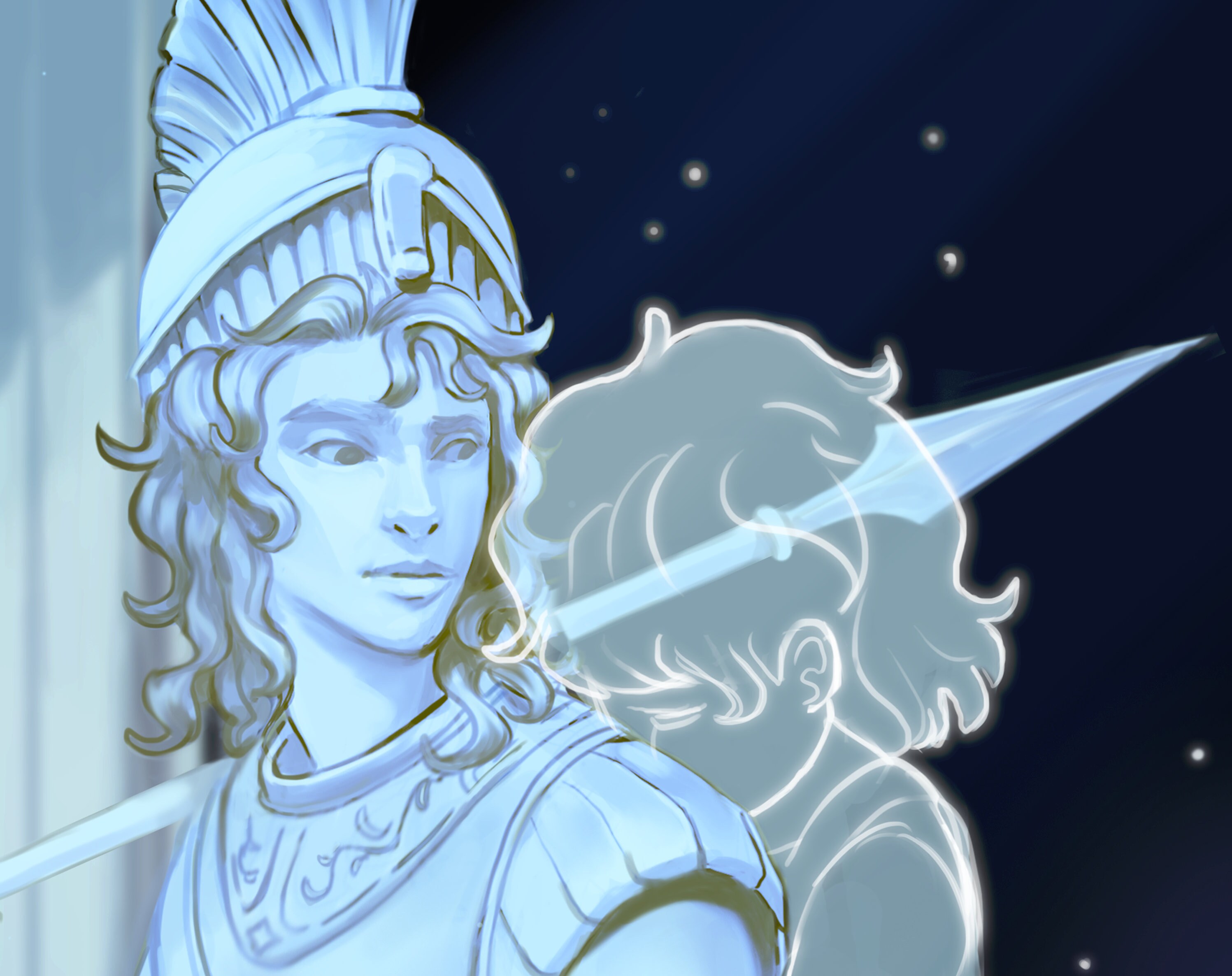
Patroclus in Troy: Role, Mythology, Death, and Representations
In the myth of the Trojan War and Homer’s Iliad, Patroclus is Achilles’ closest companion, advisor, and wartime brother-in-arms. When Achilles withdraws from combat following a feud with Agamemnon, Patroclus enters the battle wearing A...
In the myth of the Trojan War and Homer’s Iliad, Patroclus is Achilles’ closest companion, advisor, and wartime brother-in-arms. When Achilles withdraws from combat following a feud with Agamemnon, Patroclus enters the battle wearing Achilles’ armor to save the Greek ships. His tragic death at the hands of the Trojan prince Hector serves as the pivotal turning point of the war, triggering Achilles’ destructive rage and driving the epic toward its climax.
Contents
Who Was Patroclus? Origins and Background
Patroclus (Patroklos, meaning "glory of the father") occupies a unique position in Greek heroic narrative. Unlike many of the kings fighting at Troy who commanded entire city-states, Patroclus was defined by his loyalty, tactical wisdom, and empathy.
Exile and Youth in Phthia
Patroclus was the son of Menoetius, one of the Argonauts, and spent his early childhood in the region of Opus. According to mythic tradition recorded in Homer's Iliad (Book 23), Patroclus's youth was upended by a tragic accident. During a dispute over a game of dice (astragaloi), Patroclus accidentally killed another child, Clysonymus, the son of Amphidamas.
To escape blood vengeance, Menoetius fled with his young son to Phthia, seeking sanctuary in the court of King Peleus. Peleus took Patroclus in, cleansed him of the blood-guilt, and raised him alongside his son, Achilles. This shared upbringing laid the foundation for an emotional and martial bond that became the central narrative axis of the Trojan War cycle.
- Menoetius (Father)
- Accidental Killing of Clysonymus
- Flight to Phthia
- Peleus (King of Phthia) welcomes Patroclus
- Raised alongside Achilles
The Bond Between Patroclus and Achilles
The exact nature of the relationship between Patroclus and Achilles has been debated since antiquity. Homer presents their connection as an exceptionally intense comradeship based on mutual affection, trust, and shared glory. While Homer does not explicitly label their relationship as romantic or sexual, Classical Athenian writers and philosophers viewed them through the lens of their own cultural norms:
- Homeric Epic (Iliad): Focuses on emotional intimacy, shared quarters, and profound grief. Patroclus acts as Achilles' elder companion—Menoetius specifically instructs Patroclus to use his superior age and wisdom to guide the younger, more impulsive Achilles.
- Classical Athenian Interpretation: In Aeschylus' lost tragedy Myrmidons and Plato's Symposium, fifth-century BCE thinkers analyzed their bond as an erastes (older lover/mentor) and eromenos (younger beloved) relationship, though they debated which hero fulfilled which role.
- Modern Scholarship: Contemporary classicists tend to emphasize that Homeric heroic culture prioritized deep homosocial bonds without needing to categorize them into modern rigid definitions of friendship versus romance.
Patroclus's Role in the Trojan War
When the Greek coalition assembled to reclaim Helen from Troy, Patroclus sailed with Achilles at the head of fifty ships carrying the Myrmidons, Phthia's elite fighting force. Throughout the ten-year siege of Ilium (Troy), Patroclus functioned as Achilles' lieutenant and diplomat.
The Wrath of Achilles and the Achaean Crisis
The Iliad opens in the tenth year of the war with a bitter quarrel between Agamemnon, the supreme commander of the Greek forces, and Achilles. When Agamemnon forcibly demands Briseis—a captive woman awarded to Achilles as a prize of honor (teras)—Achilles withdraws his forces from battle, sitting out the war in his tent beside the sea.
Without Achilles and his Myrmidons, the Greek lines collapse under relentless Trojan assaults led by Prince Hector. The Trojans break through the Greek defensive ramparts and reach the beachhead, threatening to burn the Greek ships and strand the army without retreat or relief.
The Turning Point: Patroclus's Plea
As smoke rises from the burning ships, Patroclus comes to Achilles weeping. Homer famously compares Patroclus to a little girl running after her mother, begging to be picked up. Patroclus rebukes Achilles for his unyielding anger, pointing out that the best Greek warriors—Diomedes, Odysseus, and Agamemnon—are all wounded.
Recognizing that the Greek cause is on the verge of total collapse, Patroclus proposes a compromise: if Achilles will not fight, he should allow Patroclus to lead the Myrmidons into battle wearing Achilles' distinctive armor. Patroclus hopes that the sight of the legendary armor will deceive the Trojans into believing Achilles has returned, causing them to panic and retreat.
Achilles agrees to the plan but issues a strict warning:
- Drive the Trojans from the ships: Save the fleet and clear the beachhead.
- Do not assault Troy: Retreat immediately once the ships are safe, and do not advance toward the walls of Ilium, lest a god intervene against him.
The Aristeia and Death of Patroclus
Book 16 of the Iliad, traditionally titled the Patrokleia, details Patroclus's entry into battle and his ultimate demise. His display of martial supreme prowess is known in classical terminology as an aristeia.
Charging the Trojan Lines
Donning Achilles’ bronze armor, Patroclus takes the reins of Achilles’ chariot, driven by the immortal horses Balius and Xanthus, with Automedon as charioteer. He leads the Myrmidons into the fray, striking immediate terror into the Trojan army.
Patroclus kills numerous Trojan champions, most notably Sarpedon, a king of Lycia and a mortal son of Zeus. The death of Sarpedon marks one of the most poignant moments in the epic, as Zeus considers saving his son but refrains to preserve the tragic order of mortal fate.
The Fatal Transgression and Apollo's Intervention
Flushed with victory and overcome by battle-frenzy (lyssa), Patroclus forgets Achilles' warning. Rather than holding the line near the ships, he pursues the fleeing Trojans across the plain to the very gates of Troy. Three times Patroclus attempts to scale the sloping walls of Ilium, and three times the god Apollo strikes his shield, ordering him back.
When Patroclus makes a fourth charge, divine intervention determines his fate:
- Apollo's Blow: Apollo strikes Patroclus from behind with the flat of his hand, knocking the helmet from his head, breaking his spear, and unbuckling his armor.
- The First Wound: The Trojan warrior Euphorbus strikes the dazed and defenseless Patroclus in the back with a spear.
- The Fatal Strike: Hector steps forward and drives a spear through Patroclus's lower abdomen, dealing the mortal blow.
Before dying, Patroclus delivers a famous prophecy to Hector, warning him that he will not live long and will soon fall to the hand of Achilles.
Patroclus's Last Moments:
- Stripped of armor by Apollo
- Wounded by Euphorbus
- Killed by Hector
- Prophesies Hector's Death
Consequences: Achilles' Rage and the Funeral Games
The death of Patroclus completely alters the trajectory of the Trojan War. The immediate aftermath involves a brutal struggle over Patroclus's corpse.
The Recovery of the Body
A fierce battle erupts over Patroclus's fallen body. Hector strips the divine armor of Achilles from Patroclus and puts it on himself, but Menelaus and Telamonian Ajax manage to defend the physical corpse from desecration. Automedon escapes with the chariot, while Antilochus is dispatched to deliver the news to Achilles.
Achilles' Grief and Vengeance
When Achilles learns of Patroclus's death, his grief is catastrophic. He pours ash over his head, tears at his hair, and falls to the ground, weeping so violently that his mother, the sea-nymph Thetis, rises from the ocean depths to comfort him.
Patroclus's death strips Achilles of his alienation and directs all his rage toward Hector:
- Reconciliation: Achilles resolves his feud with Agamemnon and publicly renounces his wrath against the Greeks.
- New Divine Armor: Thetis petitions Hephaestus, the smith god, to forge a new set of divine armor for Achilles, including the famous Shield of Achilles.
- The Slayer of Hector: Achilles returns to the battlefield, slaughters scores of Trojans, routs their army, and slays Hector in single combat outside the Scaean Gates, subsequently dragging Hector's body behind his chariot for days.
The Funeral Games of Patroclus
In Book 23 of the Iliad, Achilles organizes elaborate funeral rites to honor Patroclus. A massive pyre is constructed, upon which sheep, cattle, horses, and twelve captive Trojan youths are sacrificed.
Following the cremation, Achilles host the Funeral Games for Patroclus, featuring competitive athletic events for the Greek chieftains:
| Event | Winner | Notable Details |
|---|---|---|
| Chariot Race | Diomedes | Assisted by Athena; Antilochus uses daring tactics against Menelaus. |
| Boxing | Epeius | Epeius decisively defeats Euryalus with a single powerful strike. |
| Wrestling | Draw (Ajax & Odysseus) | Achilles stops the contest and declares both heroes equal in strength. |
| Footrace | Odysseus | Odysseus prays to Athena, who trips Ajax son of Oileus near the finish line. |
| Armed Combat | Draw (Diomedes & Ajax) | stopped early by worried spectators who fear for Ajax's life. |
| Iron Lump Throw | Polypoetes | Polypoetes hurls the iron mass far past the marks of his competitors. |
| Archery | Meriones | Meriones shoots a tethered dove out of the sky after Teucer forgets to vow a sacrifice to Apollo. |
| Spear Throwing | Agamemnon | Achilles awards first prize to Agamemnon without competing, out of respect for his status. |
Ancient Sources vs. Modern Adaptations
The character of Patroclus has evolved across centuries of literary and cinematic history. Different eras have reinterpreted his age, martial capability, and romantic involvement with Achilles.
Mythological and Literary Comparison Table
| Source / Adaptation | Era / Date | Role & Status of Patroclus | Relationship to Achilles | Martial Ability |
|---|---|---|---|---|
| Homer's Iliad | ~8th Century BCE | Older companion, trusted advisor, officer of Myrmidons. | Deep comradeship, emotional counterweight, unresolved nature. | Highly skilled warrior; kills Sarpedon; dies due to divine intervention. |
| Classical Athenian Drama / Philosophy | 5th–4th Century BCE | Tragic figure; model of heroic love (paiderasteia). | Formally categorized as romantic partner/lover (erastes or eromenos). | Skilled warrior fulfilling civic/military obligations. |
| Wolfgang Petersen's Troy | 2004 Film | Younger, inexperienced cousin of Achilles. | Strictly familial; younger relative looking up to an idol. | Novice swordsman who sneaks into battle without permission. |
| Madeline Miller's The Song of Achilles | 2011 Novel | Narrator; gentle exile turned compassionate medic. | Romantic partner and lifelong soulmate. | Average warrior, but vital medic and administrative anchor for the army. |
Analysis of Portrayals
In Homer's original text, Patroclus is neither an inexperienced boy nor an incompetent soldier. He is a seasoned warrior commanding respect from the entire Achaean army. Briseis, mourning his death in Book 19, recalls that Patroclus was always gentle (meilichos), constantly seeking to soothe conflicts and treat captives with kindness.
Modern media often struggles with the ancient concept of heroic friendship. The 2004 film Troy altered Patroclus's character into Achilles' younger cousin to avoid homosocial or homosexual themes for broad mainstream audiences, fundamentally changing his motivation for taking Achilles' armor. Conversely, Madeline Miller's The Song of Achilles centers on their romantic intimacy, reimagining the Trojan War through Patroclus's gentle perspective.
Frequently Asked Questions
Was Patroclus Achilles' cousin or lover in classical mythology?
In Homer’s Iliad, Patroclus and Achilles are presented as close companions without an explicit familial relationship. They were not cousins in Homeric epic; their grandfathers (Actor for Patroclus, Aeacus for Achilles) were distinct mythic figures. Later Classical Greek writers, such as Plato and Aeschylus, interpreted their bond as romantic. The cousin relationship was primarily introduced in later pop culture adaptations, most prominently in the 2004 feature film Troy.
Why did Patroclus put on Achilles' armor?
Patroclus put on Achilles' armor to deceive the Trojan army into believing that Achilles had returned to the battlefield. With the Greeks pinned against their ships and facing total destruction, Patroclus hoped the psychological shock of seeing Achilles would break the Trojan assault and force them to retreat back to their city walls.
Who killed Patroclus in the Trojan War?
Patroclus was killed through a combination of divine intervention and human attack. The god Apollo struck Patroclus from behind, removing his armor and leaving him dazed. The Trojan warrior Euphorbus then speared him in the back, and Prince Hector delivered the final, fatal spear thrust to his stomach.
What happened to the ashes of Patroclus?
According to Homeric tradition and later epic accounts (such as the Odyssey Book 24), Patroclus's bones were preserved after his funeral pyre burned out. When Achilles subsequently died, their bones were mixed together in a single golden amphora—crafted by Hephaestus and gifted by Thetis—so that the two companions would remain united forever in burial at Cape Helles (Sigeum).
What does Patroclus symbolize in classical literature?
Patroclus symbolizes empathy, loyalty, and human mortality within the heroic code. While Achilles embodies divine strength and destructive rage (menin), Patroclus represents the humanizing force that connects Achilles to the mortal world. His death demonstrates the tragic consequences of excessive pride (hubris) and war's destructive cycle.
Recommended Next Steps for Research
To explore the literary historical context of Patroclus and his role in ancient Greek literature, consider the following primary and academic resources:
- Read Primary Source Material: Examine Book 16 (Patrokleia) and Book 23 (The Funeral Games) of Homer’s Iliad, using translations by Richmond Lattimore, Robert Fagles, or Caroline Alexander for poetic and structural fidelity.
- Explore Ancient Philosophical Debates: Consult Plato's Symposium (specifically Phaedrus' speech) to evaluate how 4th-century BCE Athenian culture reinterpreted the bond between Patroclus and Achilles.
- Utilize Digital Classical Resources: Review texts and commentary provided by the Perseus Digital Library hosted by Tufts University to compare Greek terms like aristeia, therapon, and kleos.
Image Gallery