The Total Budget for Stranger Things Explained: From Retro Roots to Billion-Dollar Spectacle
As of 2026, the cumulative production budget for all five seasons of Stranger Things is estimated to exceed $800 million. While the first season cost a modest $6 million per episode, the final two seasons saw costs skyrocket to approxi...
As of 2026, the cumulative production budget for all five seasons of Stranger Things is estimated to exceed $800 million. While the first season cost a modest $6 million per episode, the final two seasons saw costs skyrocket to approximately $30 million per episode, reflecting massive salary increases, cinematic-scale visual effects, and extended episode lengths.
Contents
When Netflix first greenlit Stranger Things in the mid-2010s, it was viewed as a risky, mid-budget nostalgia piece. Over the subsequent decade, it transformed into a global flagship franchise, commanding a budget that rivals major Hollywood blockbusters. To understand the total budget for Stranger Things, one must look at the convergence of rising talent costs, the "prestige TV" arms race, and the technical demands of a show that eventually required over 4,000 visual effects shots per season.
The Seasonal Evolution of Spending
The financial trajectory of Stranger Things follows the growth of the streaming era itself. As Netflix’s subscriber base expanded, so did its willingness to invest heavily in its most reliable Intellectual Property (IP).
The Early Years: Seasons 1 and 2
In 2016, Season 1 was produced with a budget of roughly $6 million per episode. For an eight-episode season, the total production cost hovered around $48 million. At the time, this was considered a healthy but standard budget for a premium cable or streaming drama. The focus was on practical effects and set design rather than heavy CGI.
By Season 2, following the show’s explosive success, Netflix increased the budget to approximately $8 million per episode. The nine-episode run cost roughly $72 million. This increase allowed for more ambitious set-pieces, such as the "Shadow Monster" sequences, and the beginning of significant salary renegotiations for the core cast.
The Expansion: Season 3
Season 3 marked a pivot toward high-gloss, "summer blockbuster" aesthetics. With the introduction of the Starcourt Mall—a massive, fully functional set built within a defunct shopping center—and more complex creature work, the budget rose to an estimated $10 million per episode. With eight episodes, the season cost roughly $80 million.
The Mega-Production Era: Seasons 4 and 5
The most dramatic financial shift occurred with Season 4. Reports from The Wall Street Journal and industry insiders confirmed that the cost per episode jumped to a staggering $30 million. Several factors contributed to this:
- Episode Length: Season 4 episodes were significantly longer than previous seasons, with the finale running nearly two and a half hours.
- Global Scope: Production moved between Atlanta, Lithuania (for the prison sequences), and New Mexico.
- VFX Complexity: The creation of Vecna and the expanded "Upside Down" required high-end digital rendering.
For Season 5, which concluded the series in the 2025–2026 window, costs remained at the $30 million to $35 million per episode range. With the final season treated as a series of feature-length movies, the total investment for the final chapter alone likely exceeded $300 million.
Breaking Down the Primary Cost Drivers
To explain the total budget for Stranger Things, we must categorize where the hundreds of millions of dollars were actually spent. It is rarely just about "paying the actors"; it is an intricate web of logistics, licensing, and technology.
1. Cast Salaries and Talent Retention
One of the largest chunks of the budget is dedicated to the ensemble cast. In the television industry, it is standard for actors to receive massive pay bumps after the second and fourth seasons.
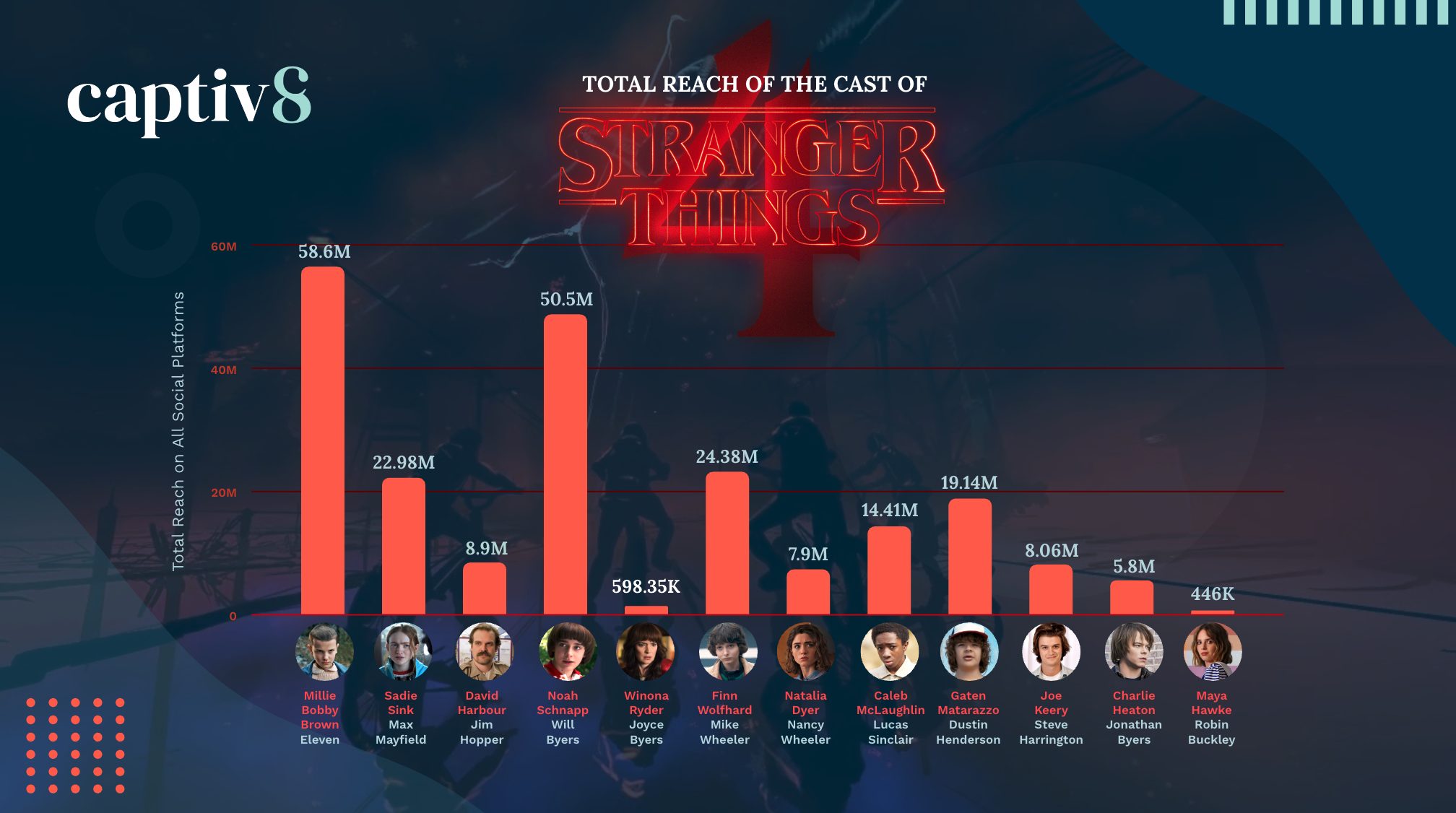
- The Adults (Tier 1): By the final seasons, Winona Ryder and David Harbour reportedly earned between $7 million and $9 million per season.
- The Core Kids (Tier 2): Finn Wolfhard, Gaten Matarazzo, Caleb McLaughlin, and Noah Schnapp saw their salaries rise from roughly $30,000 per episode in Season 1 to over $5 million for the final season.
- Millie Bobby Brown: Due to her breakout status and separate production deals with Netflix (including the Enola Holmes franchise), her compensation is negotiated separately and is estimated to be significantly higher than her young co-stars.
2. Visual Effects (VFX) and Post-Production
The show’s reliance on the supernatural makes VFX a non-negotiable expense. In the early seasons, the "Demogorgon" was often a performer in a suit with digital enhancements. By Season 4 and 5, the "Upside Down" became a fully realized digital environment. The "Dear Billy" and "The Piggyback" episodes in Season 4 were particularly expensive, requiring thousands of individual VFX frames to render the crumbling dimension of Hawkins.
3. Music Licensing and Period Authenticity
The 1980s setting is central to the show’s identity, but "80s nostalgia" is expensive. Licensing iconic tracks like Kate Bush’s "Running Up That Hill" or Metallica’s "Master of Puppets" involves six-to-seven-figure fees. Furthermore, the production design team must source, restore, or recreate thousands of period-accurate props, from Commodore 64 computers to vintage vehicles and wardrobe.
| Season | Number of Episodes | Estimated Cost Per Episode | Total Estimated Season Budget |
|---|---|---|---|
| Season 1 | 8 | $6 Million | $48 Million |
| Season 2 | 9 | $8 Million | $72 Million |
| Season 3 | 8 | $10 Million | $80 Million |
| Season 4 | 9 | $30 Million | $270 Million |
| Season 5 | 8 | $35 Million | $280 Million+ |
| Total | 42 | Average: $18M+ | ~$750M - $850M |
Comparative Analysis: Stranger Things vs. Other Giants
To put the Stranger Things budget into perspective, it is helpful to compare it to other flagship series in the "Streaming Wars."
- Game of Thrones (HBO): By its final season, Game of Thrones was costing roughly $15 million per episode. Stranger Things Season 4 and 5 effectively doubled that spend.
- The Last of Us (HBO): Estimated at $10–$15 million per episode.
- The Lord of the Rings: The Rings of Power (Amazon): This remains the gold standard for high spending, with a first-season budget of roughly $465 million (approximately $58 million per episode).
- House of the Dragon (HBO): Costs approximately $20 million per episode.
Stranger Things sits comfortably in the top tier of television spending. While it does not reach the half-billion-dollar single-season heights of The Rings of Power, its per-minute production value is often cited by critics as being superior due to the concentration of the budget on character-driven VFX rather than just vast landscapes.
Why the Budget Jumped in the Final Years
The transition from a $10 million episode to a $30 million episode is rarely accidental. For Stranger Things, this was driven by a shift in narrative scale.
In Season 1, the horror was "contained." Most of the action happened in houses, the woods, or a single laboratory. By Season 4, the story split into four distinct geographic locations. This required four separate filming units, different sets of local crews, and increased travel costs.
Additionally, the Covid-19 pandemic added significant "safety overhead" to the Season 4 budget. Industry estimates suggest that health protocols and filming delays added 10% to 20% to the cost of major productions during the 2020–2022 period. This essentially meant that Netflix was paying for an extra "invisible" episode just to keep the sets safe and compliant with health regulations.
The Return on Investment (ROI) for Netflix
One might ask why Netflix would spend nearly a billion dollars on a single show. The answer lies in retention and ecosystem value.
Stranger Things is not just a show; it is a driver for Netflix’s gaming division, a source of massive merchandising revenue (via partnerships with brands like Nike, Coca-Cola, and Lego), and a primary reason for "churn reduction." Fans are less likely to cancel their subscription when a new season of a "must-watch" cultural event is on the horizon. The 2022 release of Season 4 famously crashed Netflix’s servers and generated billions of viewing hours, justifying the $270 million price tag in the eyes of shareholders.
Frequently Asked Questions
Why is Season 4 so much more expensive than Season 3?
The cost increase was primarily due to the "cinematic" length of the episodes (many were over 75 minutes), the multiple filming locations across the globe, and the significantly higher salary tiers for the aging cast. Additionally, the VFX requirements for the villain Vecna and the Upside Down were far more complex than the monsters in previous seasons.
How much did the cast of Stranger Things make for the final season?
While exact figures are shielded by private contracts, industry reports indicate that the main adult stars (Winona Ryder and David Harbour) earned roughly $9 million each for the final season. The core group of younger actors earned in the range of $5 million to $7 million each, depending on their specific contract terms and seniority.
Does the budget include marketing and advertising?
No, the $800 million+ estimate refers specifically to production budgets (the cost of making the show). Marketing budgets are separate and can often add another 30% to 50% to the total cost. Netflix likely spent hundreds of millions more on global billboards, premiere events, and digital advertising campaigns across the show's lifespan.
Is Stranger Things the most expensive show ever made?
As of 2026, it is one of the most expensive, but it is surpassed by Amazon’s The Lord of the Rings: The Rings of Power, which had a significantly higher per-episode cost in its debut season. However, Stranger Things remains the most expensive "contemporary/sci-fi" series ever produced.
Final Analysis: The Value of the Upside Down
The total budget for Stranger Things represents more than just the cost of filmmaking; it represents the shift of the entertainment industry toward "blockbuster television." By investing nearly a billion dollars into a single franchise, Netflix proved that television could compete directly with the scale and spectacle of theatrical cinema.
For the viewer, this budget resulted in a series that evolved from a small-town mystery into an epic saga. For the industry, it set a new benchmark for what is required to maintain a global cultural phenomenon. As the series concludes its run in 2026, its financial legacy will be studied by studios looking to replicate the rare balance of high-cost production and high-reward viewership.
Image Gallery