PhD Johns Hopkins Explained: A Comprehensive Guide to Doctoral Excellence
A PhD from Johns Hopkins University is a research-intensive doctoral degree that prioritizes original scholarship, interdisciplinary collaboration, and high-level technical mastery. As the first research university in the United States...
A PhD from Johns Hopkins University is a research-intensive doctoral degree that prioritizes original scholarship, interdisciplinary collaboration, and high-level technical mastery. As the first research university in the United States, Johns Hopkins provides fully funded programs across nine academic divisions, preparing graduates for leadership roles in academia, global industry, and public policy through rigorous mentorship and extensive laboratory or archival access.
Contents
Understanding the Johns Hopkins PhD Landscape
Johns Hopkins University (JHU) occupies a unique position in the global academic hierarchy. Founded in 1876, it was designed specifically to emphasize research and the advancement of individual knowledge rather than just the dissemination of existing information. For a prospective doctoral student in 2026, this means that a PhD at Johns Hopkins is defined by a "research-first" mentality. Unlike many institutions where teaching assistantships are the primary focus, JHU prioritizes the development of independent investigators who can contribute novel data or theories to their respective fields.
The university is divided into several prestigious schools, each offering distinct doctoral paths. The Bloomberg School of Public Health consistently ranks as the top institution of its kind globally, focusing on large-scale health interventions and biostatistics. The Whiting School of Engineering and the Krieger School of Arts and Sciences form the heart of the Homewood campus, housing programs ranging from Robotics and Materials Science to History and Philosophy. Meanwhile, the School of Medicine, located at the East Baltimore campus, provides world-class training in biological sciences, genetics, and clinical research.
Choosing the right division is the first step in "explaining" the Hopkins experience. While the branding is unified, the culture of a PhD in the School of Advanced International Studies (SAIS) in Washington, D.C., differs significantly from a PhD in Molecular Biology in East Baltimore. However, all programs share the hallmark of "One University," an initiative that encourages students to cross-register for classes and collaborate on research projects across different divisions.
Academic Structure and the Doctoral Timeline
The progression of a PhD at Johns Hopkins generally spans five to seven years, depending on the field of study. While the humanities might lean toward the longer end of that spectrum due to extensive archival research and dissertation writing, the laboratory sciences often follow a structured "rotation" model in the early years.
The Early Stages: Coursework and Rotations
In the first two years, students complete a series of advanced seminars designed to provide both breadth and depth. In the experimental sciences, students often participate in laboratory rotations. These are short-term stints (usually 8–10 weeks) in different research groups. This allows the student to "test drive" a mentor’s leadership style and the lab’s culture before committing to a four-year dissertation project. This system is a critical safeguard, ensuring that the student-advisor fit is optimal.
Qualifying Examinations and Candidacy
Before a student can be considered a "Doctoral Candidate," they must pass the Graduate Board Oral (GBO) examination or a departmental equivalent. This is a rigorous oral defense of the student's knowledge and their proposed research direction. At JHU, the GBO is a formal milestone that involves faculty from both inside and outside the student's home department to ensure the research holds up to the university's broad standards of excellence.
Dissertation and Defense
The final years are dedicated almost exclusively to original research. Whether it is conducting clinical trials, developing new machine learning algorithms, or analyzing 18th-century manuscripts, the goal is to produce a dissertation that is a publishable contribution to the field. The process culminates in a public defense, where the candidate presents their findings to a committee of experts and the wider academic community.
Funding and Financial Support for Doctoral Students
One of the most critical aspects of the Johns Hopkins PhD is the financial commitment the university makes to its students. In 2026, the vast majority of PhD programs at JHU remain fully funded. This means that students do not pay tuition; instead, the university or a specific research grant covers the costs.
Standard funding packages at JHU typically include:
- Full Tuition Coverage: This eliminates the primary financial barrier to advanced education.
- Annual Stipend: A living allowance paid to the student to cover housing, food, and personal expenses. These stipends are adjusted periodically to reflect the cost of living in Baltimore or Washington, D.C.
- Health and Dental Insurance: Comprehensive coverage is usually provided at no cost to the student, often including access to the world-renowned Johns Hopkins Health System.
- Travel Grants: Many departments offer specific funds for students to present their research at international conferences.
It is important to note the difference between fellowships and assistantships. Fellowships are often "service-free," meaning the student is paid purely to focus on their research. Assistantships (Teaching or Research) require the student to work a set number of hours per week assisting a professor. Most JHU PhD students experience a mix of both during their tenure.
Comparing PhD Programs Across JHU Schools
The following table provides a snapshot of the primary doctoral divisions at Johns Hopkins as of 2026, highlighting the diverse environments available to researchers.
| Division | Primary Campus | Common Program Duration | Key Research Areas |
|---|---|---|---|
| Bloomberg School of Public Health | East Baltimore | 4–5 Years | Epidemiology, Health Policy, Environmental Health |
| Whiting School of Engineering | Homewood | 5–6 Years | Robotics, Biomedical Engineering, Data Science |
| Krieger School of Arts & Sciences | Homewood | 5–7 Years | Physics, History, Psychological & Brain Sciences |
| School of Medicine | East Baltimore | 5–6 Years | Neuroscience, Cellular & Molecular Medicine |
| School of Advanced International Studies (SAIS) | Washington, D.C. | 4–5 Years | International Economics, Global Risk, Policy |
| School of Education | Baltimore/Online | 4–5 Years | Entrepreneurial Leadership, Learning Design |
Admission Requirements and Strategy
Admission to a Johns Hopkins PhD program is highly competitive, often with acceptance rates in the single digits for top-tier departments like Neuroscience or English. To be successful, applicants must demonstrate more than just high grades; they must show a specific aptitude for independent research.
Essential Application Components
- Statement of Purpose: This is the most vital part of the application. Applicants should clearly articulate their research interests and, crucially, identify which JHU faculty members they wish to work with.
- Letters of Recommendation: Strong letters from professors who can vouch for the applicant’s research potential carry significant weight.
- Transcripts: While a high GPA is expected, JHU looks closely at the rigor of the undergraduate or master's curriculum.
- Standardized Tests: As of 2026, many JHU programs have made the GRE (Graduate Record Examination) optional or eliminated it entirely, focusing instead on holistic review. However, international students are still generally required to submit TOEFL or IELTS scores to demonstrate English proficiency.
- Research Experience: Evidence of prior research, such as a senior thesis, lab work, or published papers, is almost mandatory for competitive programs.
Prospective students are encouraged to contact potential advisors before applying. A brief, professional email expressing interest in the professor's recent publications can help determine if the faculty member is currently accepting new students into their lab or research group.
The Student Experience: Life in Baltimore and D.C.
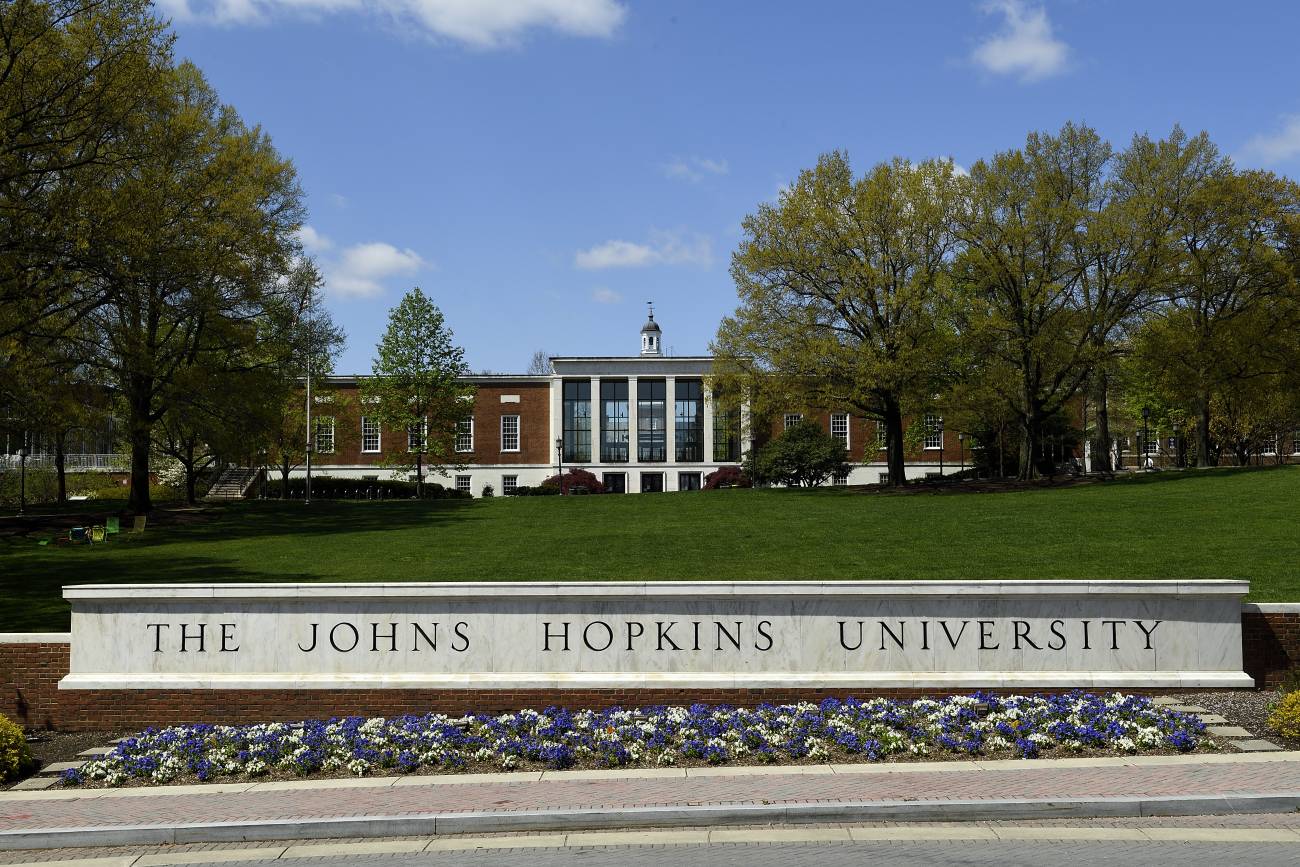
A significant part of the Johns Hopkins PhD "explained" involves the environment in which students live. The Homewood campus in North Baltimore offers a traditional collegiate feel with red-brick buildings and green spaces. It is surrounded by neighborhoods like Charles Village and Hampden, which provide a mix of affordable housing and vibrant local culture.
The East Baltimore campus, home to the Schools of Medicine, Nursing, and Public Health, is a bustling urban medical center. It is more clinical and fast-paced, reflecting its status as a global hub for healthcare. Meanwhile, students at SAIS in Washington, D.C., are embedded in the heart of the nation’s capital, with immediate access to think tanks, government agencies, and international organizations.
Johns Hopkins has made significant investments in graduate student life over recent years. The Graduate Student Association (GSA) serves as a powerful advocate for student interests, ensuring fair stipends and improved mental health resources. Furthermore, the university provides "Professional Development and Career Strategy" offices specifically for PhDs, acknowledging that while many students pursue tenure-track faculty positions, many others will enter the private sector, government, or non-profit leadership.
Common Challenges and Support Systems
The path to a PhD is notoriously difficult, and Johns Hopkins is no exception. The "imposter syndrome" can be prevalent in such a high-achieving environment. Students often face long hours in the lab or library, the pressure to publish in high-impact journals, and the uncertainty of the academic job market.
To combat these challenges, JHU has established several support structures:
- Mentorship Oversight: Many departments now use a "Committee" approach rather than relying on a single advisor, which provides students with multiple avenues for guidance and mediation if conflicts arise.
- Wellness Programs: Specific mental health resources, including counseling and peer support groups, are tailored to the unique stresses of doctoral life.
- The JHU Data Services: For students struggling with the technical side of research, the university provides extensive support in data management, visualization, and high-performance computing.
Frequently Asked Questions
Is the GRE required for a PhD at Johns Hopkins in 2026?
The requirement for GRE scores varies by department. Many programs in the Krieger School of Arts and Sciences and the School of Medicine have moved to a GRE-optional or GRE-blind policy. However, some quantitative programs in the Whiting School of Engineering may still recommend or require it. Always check the specific department’s admissions page for the current cycle.
Are all Johns Hopkins PhD students fully funded?
The vast majority of PhD students at JHU receive a full funding package, which includes tuition, a stipend, and health insurance. However, this primarily applies to "research" doctorates. Professional doctorates, such as the Doctor of Education (EdD) or Doctor of Public Health (DrPH), may have different funding structures or may be employer-sponsored.
Can I apply for a PhD directly after a Bachelor’s degree?
Yes, many programs at Johns Hopkins allow students to apply directly from an undergraduate program without a Master’s degree. In these cases, the student typically earns a Master’s "en route" to the PhD after completing their initial coursework and qualifying exams.
What is the difference between the PhD and the DrPH at JHU?
The PhD (Doctor of Philosophy) is a research degree intended for those who wish to create new knowledge through academic research. The DrPH (Doctor of Public Health) is a professional degree intended for practitioners who want to lead large-scale public health programs and apply existing research to real-world problems.
How long does it take to finish a PhD at Johns Hopkins?
The median time to degree at JHU is approximately 5.5 to 6 years. Lab-based sciences may sometimes be faster if experiments go well, while humanities subjects involving foreign language mastery and extensive field research may take 7 years.
Final Recommendations for Prospective Applicants
If you are considering a PhD at Johns Hopkins University, your primary focus should be on research alignment. Unlike undergraduate admissions, where "school spirit" and general campus life are priorities, PhD admissions are almost entirely about whether your specific research interests match the expertise and resources available in a particular department.
Start by reading the recent publications of JHU faculty members in your field. If you find their work compelling and can envision yourself contributing to that specific body of knowledge, you are a strong candidate for the program. Ensure your application emphasizes your technical skills and your ability to work independently. Finally, take advantage of the university's virtual information sessions and reach out to current graduate students through the Johns Hopkins Graduate Student Association to get an honest perspective on the departmental culture.
For more information on specific programs, visit the Johns Hopkins Graduate Admissions portal to explore the diverse doctoral opportunities available in 2026.
Image Gallery