The Comprehensive Guide to Selecting a Coffee Table with a Hidden Drawer
A coffee table with a hidden drawer provides a seamless blend of aesthetic minimalism and functional utility, allowing homeowners to store essentials—such as remote controls, tablets, or personal documents—completely out of sight. Thes...
A coffee table with a hidden drawer provides a seamless blend of aesthetic minimalism and functional utility, allowing homeowners to store essentials—such as remote controls, tablets, or personal documents—completely out of sight. These specialized furniture pieces utilize clever joinery, magnetic latches, or sliding mechanisms to maintain a clean exterior profile while offering secure, internal storage space.
Contents
The Evolution of Hidden Storage in Modern Living
As we navigate through 2026, the demand for multifunctional furniture has reached an all-time high. Urbanization and the rise of compact living spaces have forced a shift in interior design philosophy. No longer is a coffee table merely a surface for books and beverages; it has become a critical tool for organization. The "hidden" aspect is particularly important in the current design landscape, where the minimalist aesthetic favors clear surfaces and "invisible" storage solutions.
A coffee table with a hidden drawer differs from a standard storage table. While a traditional storage table might have visible drawers or open cubbies, a hidden drawer model is engineered to look like a solid piece of furniture. The seams are often integrated into the decorative trim or hidden beneath the tabletop, making the storage compartment nearly impossible to detect for the uninitiated. This adds an extra layer of privacy and security, as guests or intruders are unlikely to realize the furniture contains internal compartments.
Why Homeowners Prioritize Concealed Compartments
The motivation for choosing a hidden drawer over a standard one usually falls into three categories: security, aesthetics, and organization.
Security and Privacy
For many, the coffee table serves as a central hub for the home. It is often where we leave our most-used electronics, house keys, or even sensitive mail. A hidden drawer allows these items to remain accessible to the homeowner while being shielded from view. In 2026, where digital privacy is paramount, having a physical "dead zone" to store tablets and secondary devices when not in use provides peace of mind.
Aesthetic Minimalism
Visual clutter can significantly increase stress levels in a living environment. By moving necessary but unattractive items—like charging cables, coasters, and gaming controllers—into a concealed drawer, the room maintains a gallery-like appearance. This is especially beneficial for "great room" floor plans where the living area is constantly visible from the kitchen and dining zones.
Childproofing and Safety
Hidden drawers are an excellent secondary measure for childproofing. Items that are not necessarily dangerous but shouldn't be handled by toddlers, such as expensive electronics or small decorative objects, can be kept in a compartment that lacks a traditional handle. Without a visible pull or knob, children are less likely to attempt to open the drawer.
Anatomy of a Hidden Drawer: Mechanisms and Engineering
The effectiveness of a hidden drawer depends heavily on the hardware and the precision of the furniture's construction. Manufacturers in 2026 utilize several distinct mechanisms to achieve "stealth" storage.
1. Magnetic Latch Systems
These are perhaps the most secure. The drawer is held shut by a powerful internal magnet and has no external handle. To open it, a specific "key" (often a decorative object or a specialized magnet) must be placed on a precise spot on the table’s surface. This releases the internal catch, allowing the drawer to pop open or be pulled out.
2. Touch-Latch or Push-to-Open Hardware
Commonly used in high-end modern furniture, touch-latches allow the user to press firmly on a specific section of the table's apron or side panel. A spring-loaded mechanism then nudges the drawer out just far enough to be grasped. This eliminates the need for hardware and keeps the lines of the table completely flush.
3. Sliding Tabletop Mechanisms
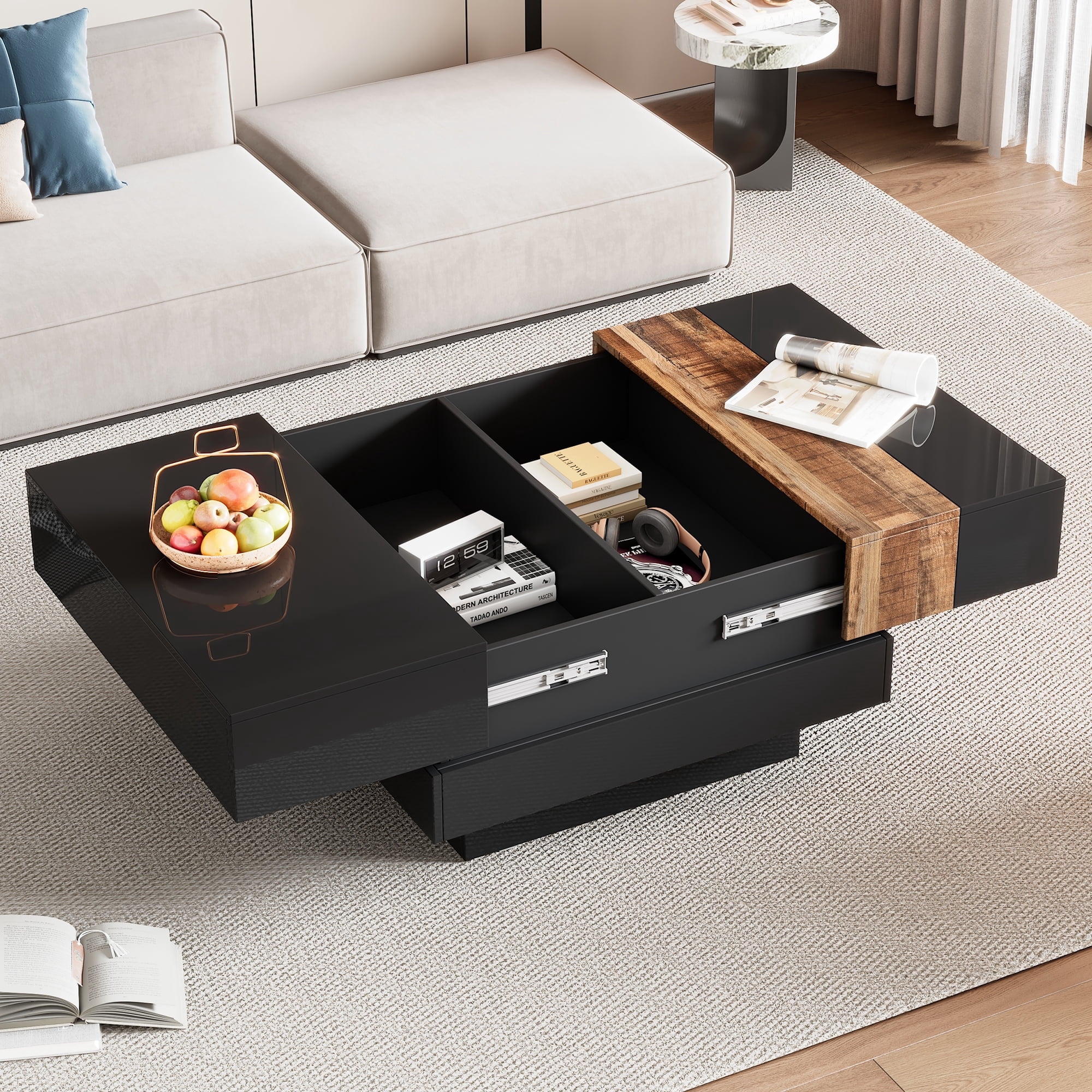
In this design, the entire top of the coffee table slides to one side on heavy-duty ball-bearing runners, revealing a large shallow compartment beneath. While technically a "compartment" rather than a "drawer," it serves the same purpose and often offers significantly more volume for larger items like laptop bags or board games.
4. Friction-Fit and False Bottoms
Often found in rustic or handmade wooden tables, these drawers rely on tight tolerances and wood-on-wood slides. The drawer front might look like a decorative piece of molding. These are simpler but require expert craftsmanship to ensure the wood doesn't swell and jam the mechanism over time.
Material Selection and Structural Integrity
When selecting a coffee table with a hidden drawer, the choice of material is not just about looks; it impacts the functionality of the hidden mechanism.
- Solid Hardwoods (Oak, Walnut, Maple): These offer the best longevity. Because hidden drawers require precise tolerances, the stability of solid wood is vital. However, wood can expand and contract with humidity, which might cause a hidden drawer to "reveal" its seams if not properly seasoned and finished.
- Engineered Wood (MDF with Veneer): Often used in modern, painted furniture. MDF is highly stable and won't warp, making it ideal for push-to-open mechanisms that require perfect alignment to function correctly.
- Metal Frames: Many industrial-style tables use metal frames with wooden "inserts." The metal provides the structural rigidity needed to support sliding tops or heavy internal drawers without sagging.
Weight Capacity Considerations
A hidden drawer adds weight to the table, and the hardware must be rated to handle the contents. High-quality tables will specify a weight limit for the drawer—usually between 15 and 30 pounds. Overloading a hidden drawer can cause the mechanism to misalign, making the "hidden" seam visible or preventing the drawer from opening smoothly.
Comparison of Hidden Storage Mechanisms
| Mechanism Type | Level of Concealment | Ease of Access | Best For |
|---|---|---|---|
| Magnetic Lock | Extremely High | Moderate (Requires Key) | Valuables, Security |
| Touch-Latch | High | High (One-Touch) | Daily use, Remotes |
| Sliding Top | High | Moderate (Clear surface needed) | Laptops, Large items |
| Side Slide-Out | Moderate | High | Magazines, Tablets |
| False Bottom | Very High | Low (Difficult to reach) | Long-term storage |
Integrating Style with Functionality
Finding a table that fits your decor while providing hidden storage is easier in 2026 than in previous years, as manufacturers have moved away from "gimmicky" designs toward sophisticated integration.
Mid-Century Modern
Look for tables with tapered legs and a thick "apron" (the wooden frame under the top). Hidden drawers are often built into this apron, with the grain of the wood continuing uninterrupted across the drawer front to mask the opening.
Industrial
Industrial tables often use "false panels" that look like structural steel or reclaimed wood. The "hidden" drawer might be accessed by pulling on what looks like a decorative bolt or a specific plank of wood.
Contemporary/Minimalist
These tables often feature high-gloss finishes or stone tops. In these cases, the hidden drawer is usually a push-to-open type located on the very bottom edge of the table, making it invisible from a standing or sitting position.
Maintenance and Longevity
To ensure a hidden drawer remains functional and truly hidden, regular maintenance is required.
- Hardware Lubrication: Push-to-open and sliding mechanisms should be cleaned of dust and occasionally lubricated with a dry silicone spray. Avoid oil-based lubricants as they attract hair and debris which can jam the tracks.
- Alignment Checks: If the table is moved, ensure it is level. An unlevel coffee table can cause the drawer to sit slightly askew, revealing the gap that is supposed to be hidden.
- Humidity Control: For wooden tables, maintaining a consistent indoor humidity level prevents the wood from shrinking or swelling, which is the primary cause of hidden compartments becoming stuck or visible.
Frequently Asked Questions
Can I install a hidden drawer in my existing coffee table?
While there are DIY kits available, it is difficult to retro-fit a hidden drawer into an existing table without it being obvious. True hidden drawers are integrated into the initial design to ensure seams are masked by the furniture's natural lines and joinery. However, a shallow "false bottom" can sometimes be added to tables with deep aprons.
Are hidden drawers fireproof?
Generally, no. Most coffee tables are made of wood or wood composites. While the drawer is hidden from sight, it provides no protection against fire or extreme heat. If you need fire protection, you should look for a dedicated fireproof safe that can be hidden within furniture, rather than relying on the furniture itself.
How do I open a magnetic hidden drawer if I lose the key?
Most manufacturers provide a secondary way to bypass the lock, or you can use a strong neodymium magnet to find the internal latch. It is highly recommended to keep the "key" in a consistent, non-obvious location, such as inside a specific decorative bowl on top of the table.
Will a hidden drawer make the table significantly heavier?
Yes. The additional internal housing, the drawer box itself, and the heavy-duty hardware can add 20% to 40% to the total weight of the coffee table. This should be considered if you frequently move your furniture for cleaning or entertaining.
Is it obvious that there is a drawer if you look closely?
In high-quality pieces, the seams are disguised by "grain matching," where the wood grain continues perfectly across the break in the wood. To a casual observer, it looks like a decorative line or part of the natural wood pattern. Lower-quality pieces may have uneven gaps that give away the location of the compartment.
Final Recommendations for Buyers
When shopping for a coffee table with a hidden drawer in 2026, prioritize the quality of the hardware over the initial price point. A hidden drawer that becomes difficult to open or starts to sag after six months loses its primary value.
- Test the mechanism: If buying in person, the drawer should operate silently. Grinding or clicking sounds indicate poor alignment.
- Check the seams: View the table from various angles and lighting conditions. If the "hidden" drawer is obvious from a seated position on the sofa, it fails the aesthetic test.
- Verify the material: Ensure the drawer box itself is made of sturdy material. A flimsy drawer will warp over time, eventually jamming the "hidden" mechanism.
Investing in a well-crafted piece not only organizes your living space but also adds a layer of sophisticated utility that standard furniture simply cannot match. Whether for security or simple decluttering, the coffee table with a hidden drawer remains a pinnacle of functional home design.
Image Gallery