Choosing the Right Medicare Part B Medigap Plan: A Comprehensive Guide
Choosing the right Medicare Part B Medigap plan requires understanding how standardized supplemental insurance policies work alongside Original Medicare to cover out-of-pocket costs like copayments, coinsurance, and deductibles. To sel...
Choosing the right Medicare Part B Medigap plan requires understanding how standardized supplemental insurance policies work alongside Original Medicare to cover out-of-pocket costs like copayments, coinsurance, and deductibles. To select the ideal policy, beneficiaries must evaluate their expected healthcare needs, review standardized lettered plans, and enroll during their initial Medigap Open Enrollment Period to secure guaranteed issue rights without medical underwriting.
Contents
Navigating the landscape of Medicare supplemental insurance—commonly known as Medigap—can feel overwhelming given the array of lettered options and regulatory rules. While Original Medicare (Parts A and B) provides robust coverage for hospital stays and medical services, it leaves significant financial gaps. For individuals relying heavily on outpatient care, diagnostic tests, and physician services under Medicare Part B, these out-of-pocket costs can accumulate rapidly. Selecting the correct policy ensures predictable healthcare expenses and comprehensive coverage tailored to individual medical and financial circumstances.
Understanding the Role of Medigap in Medicare Part B Coverage
Medicare Part B covers medical necessities such as doctor visits, outpatient care, preventative services, and durable medical equipment. However, Original Medicare generally pays only 80% of the Medicare-approved amount for Part B services. The remaining 20% coinsurance is the responsibility of the beneficiary, with no annual out-of-pocket maximum ceiling under standard Medicare.
Medigap policies are private health insurance plans designed specifically to fill these "gaps" in Original Medicare. Sold by private insurance companies licensed in your state, these plans help pay your share of costs, which can include Part A and Part B coinsurance, hospital costs after Medicare benefits are exhausted, and even foreign travel emergency care.
It is vital to understand what Medigap does not cover. Medigap policies sold today cannot include prescription drug coverage; for outpatient medications, beneficiaries must enroll in a separate Medicare Part D prescription drug plan. Furthermore, Medigap cannot be used to pay for costs associated with a Medicare Advantage plan (Part C), as Medigap and Medicare Advantage are entirely separate, mutually exclusive ways to receive your Medicare benefits.
Federal Standardization and Plan Options
To protect consumers and simplify shopping, the federal government standardizes Medigap policies, labeling them with letters from A through N. Each lettered plan represents a distinct set of standardized benefits defined by the Centers for Medicare & Medicaid Services (CMS).
While private insurance companies set their own monthly premiums, the core benefits for a specific plan letter (such as Plan G or Plan N) are identical regardless of which insurance company sells it. This standardization allows consumers to shop purely on price, customer service reputation, and financial stability.
Out of the available options, certain plans have become standard benchmarks for beneficiaries seeking comprehensive financial protection against Part B costs:
- Plan G: Currently one of the most comprehensive plans available to newly eligible beneficiaries, Plan G covers virtually all out-of-pocket costs associated with Original Medicare, except for the annual Part B deductible.
- Plan N: Offers lower monthly premiums than Plan G in exchange for modest cost-sharing. Beneficiaries pay a small copayment for certain office visits (up to $20) and emergency room visits (up to $50), alongside the Part B deductible.
- Plan F: Historically the most comprehensive plan, Plan F covers all out-of-pocket expenses, including the Part B deductible. However, federal law restricts Plan F enrollment to individuals who were eligible for Medicare before January 1, 2020.
Comparing Standardized Medigap Plans
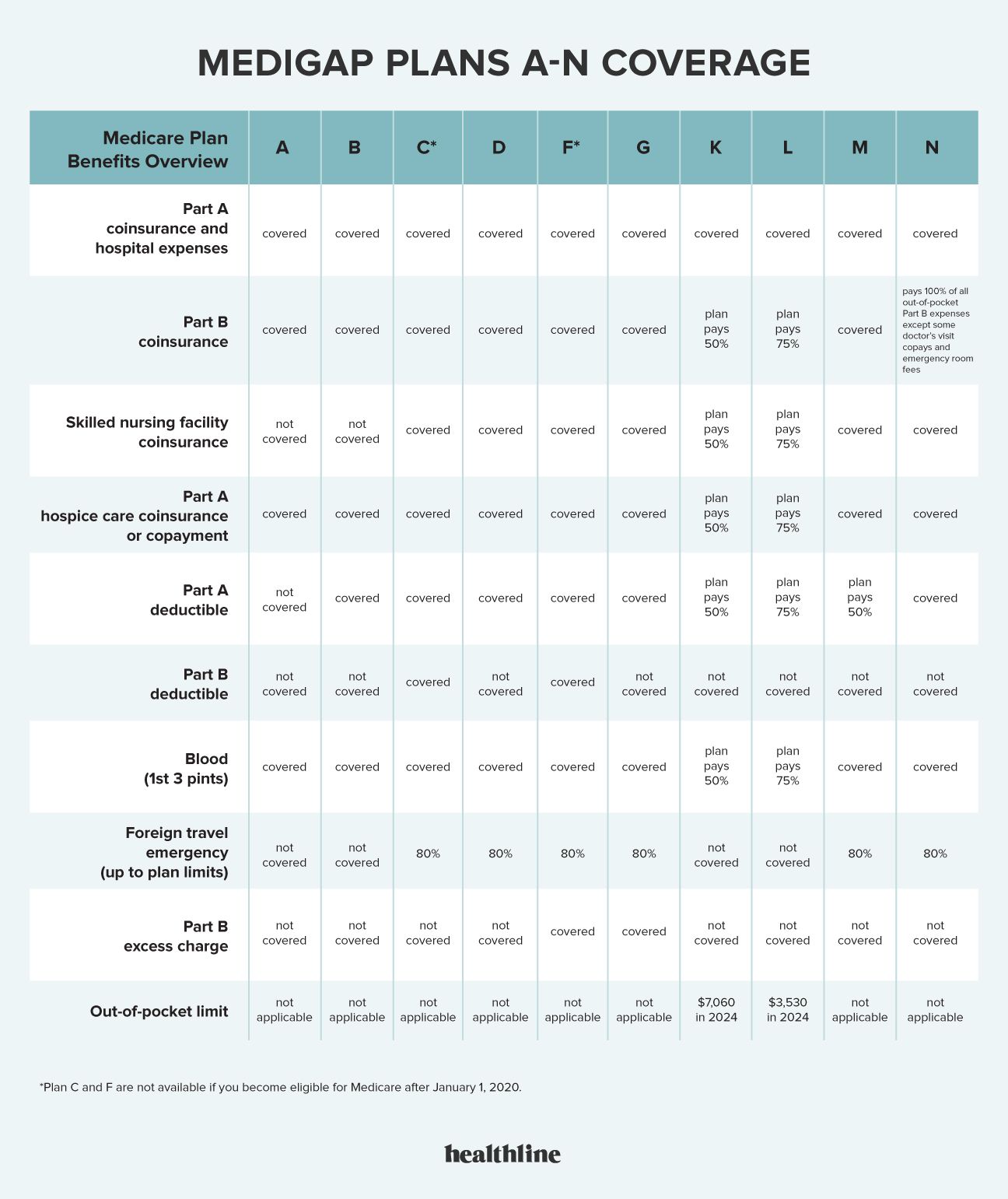
When evaluating plans, comparing their structural coverage features side-by-side helps clarify which option aligns with your risk tolerance and budget. The table below outlines how popular standardized Medigap plans cover key cost-sharing elements associated with Medicare Part B and Part A.
| Benefit Category | Plan A | Plan C* | Plan F* | Plan G | Plan N |
|---|---|---|---|---|---|
| Part A Coinsurance & Hospital Costs | Yes | Yes | Yes | Yes | Yes |
| Part B Coinsurance or Copayment | Yes | Yes | Yes | Yes | Yes (with copays) |
| Blood (First 3 pints) | Yes | Yes | Yes | Yes | Yes |
| Part A Hospice Care Coinsurance | Yes | Yes | Yes | Yes | Yes |
| Skilled Nursing Facility Coinsurance | No | Yes | Yes | Yes | Yes |
| Part A Deductible | No | Yes | Yes | Yes | Yes |
| Part B Deductible | No | Yes | Yes | No | No |
| Part B Excess Charges | No | Yes | Yes | Yes | No |
*Note: Plans C and F are only available to beneficiaries who established Medicare eligibility prior to January 1, 2020.
Timing Your Enrollment: The Medigap Open Enrollment Period
The single most critical factor in securing a Medigap policy without administrative hurdles is timing. The absolute best time to purchase a Medigap plan is during your Medigap Open Enrollment Period.
This is a one-time, six-month window that begins automatically on the first day of the month in which you are both 65 or older and enrolled in Medicare Part B. During this statutory window:
- Insurance companies cannot deny you coverage based on pre-existing health conditions.
- They cannot charge you a higher premium due to your medical history or current health status.
- You have a "guaranteed issue right" to buy any Medigap policy sold in your state.
If you miss this window and attempt to purchase a Medigap plan later, insurance companies in most states are legally permitted to subject you to medical underwriting. Underwriting allows insurers to review your health history, ask detailed medical questions, and either deny coverage entirely or charge significantly higher premium rates based on your pre-existing conditions.
Evaluating Costs: Premiums Versus Out-of-Pocket Expenses
When budgeting for a Medigap policy, understanding how insurers price their plans is essential for long-term financial planning. Insurance companies use three primary rating methods to calculate monthly premiums:
- Community-rated (No-age-rated): Everyone in a specific geographic area pays the exact same monthly premium regardless of age. Premiums may still rise due to general inflation or medical cost increases, but they never increase simply because you grow older.
- Issue-age-rated: The premium is based on the age you are when you first buy the policy. Plans priced this way are generally lower for younger buyers, and premiums do not increase as you age, though they can increase due to overall healthcare inflation.
- Attained-age-rated: The premium is based on your current age, meaning the price goes up automatically every year as you get older. While these plans often start out with the lowest initial price tags, they frequently become the most expensive option over the long term.
Beyond the monthly premium, beneficiaries must also account for the annual Medicare Part B deductible. For example, if you choose Plan G, you will need to pay the Part B deductible out-of-pocket before your Medigap coverage kicks in for outpatient services. Weighing the balance between a higher monthly premium with fewer out-of-pocket costs (like Plan G) versus a lower monthly premium with small copayments (like Plan N) is a central decision point.
Navigating Part B Excess Charges
One subtle yet significant component of Medicare Part B is the concept of "excess charges." Under federal regulations, doctors who do not accept Medicare assignment—meaning they do not agree to accept the Medicare-approved amount as payment in full—are legally permitted to charge up to 15% more than the Medicare-approved amount for a given service.
If you visit a doctor who does not accept assignment and you lack a Medigap plan that covers excess charges, you are personally responsible for paying that extra 15% fee out of pocket.
Standardized plans that cover Part B excess charges in full include Plan F and Plan G. Plan N, conversely, does not cover excess charges; therefore, beneficiaries enrolled in Plan N must verify that their healthcare providers accept Medicare assignment to avoid unexpected out-of-pocket bills.
Common Mistakes to Avoid When Choosing a Plan
Navigating supplemental insurance involves several potential pitfalls that can lead to unexpected financial liabilities or administrative complications:
- Confusing Medigap with Medicare Advantage: Remember that Medigap policies only work with Original Medicare. You cannot legally hold a Medicare Advantage plan and a Medigap policy simultaneously. Attempting to do so can result in severe administrative penalties and loss of coverage.
- Failing to Shop Around: Because plan benefits are federally standardized, Plan G offers identical medical coverage regardless of the insurance carrier. Failing to compare rates across multiple companies means you might overpay for the exact same coverage.
- Ignoring Household Discounts: Many insurance carriers offer multi-policy or household discounts if multiple members of a household enroll in a Medigap plan with the same company. Failing to inquire about these discounts can mean missing out on substantial annual savings.
- Delaying Part D Enrollment: Medigap plans do not cover prescription drugs. Failing to secure a standalone Medicare Part D prescription drug plan when first eligible can trigger late-enrollment penalties that last for as long as you have Part D coverage.
Summary and Recommended Next Actions
Choosing the right Medicare Part B Medigap plan requires balancing your monthly budgetary constraints with your projected healthcare utilization. For individuals seeking maximum predictability with minimal surprise bills, comprehensive options like Plan G offer robust financial shielding against outpatient coinsurance and excess charges. For those comfortable with minor copayments in exchange for reduced monthly premiums, Plan N serves as a cost-effective alternative.
To execute your decision effectively, follow these actionable next steps:
- Verify Part B Enrollment: Ensure your Medicare Part B effective date is established to trigger your Medigap Open Enrollment Period.
- Review State-Specific Options: Consult official resources such as your state’s State Health Insurance Assistance Program (SHIP) or the Medicare Plan Finder to review licensed carriers and localized pricing structures.
- Compare Premium Pricing Structures: Inquire whether local insurers use community-rated, issue-age-rated, or attained-age-rated pricing models.
- Secure Coverage Promptly: Submit your application during your six-month open enrollment window to guarantee acceptance without medical underwriting.
Image Gallery