How to Use Digital Thermometers for Accurate Temperature Readings
To use a digital thermometer accurately, first clean the probe with rubbing alcohol or soap and lukewarm water. Position the sensor in the desired location—under the tongue for oral, in the armpit for axillary, or in the rectum for inf...
To use a digital thermometer accurately, first clean the probe with rubbing alcohol or soap and lukewarm water. Position the sensor in the desired location—under the tongue for oral, in the armpit for axillary, or in the rectum for infants—and hold it steady until you hear a series of beeps. Read the display immediately and record the result.
Contents
Effective health monitoring begins with accurate data. In 2026, digital thermometers remain the primary tool for home fever detection due to their speed, safety, and ease of use compared to the obsolete mercury-in-glass versions. While the technology has become highly accessible, the accuracy of a reading depends heavily on the technique used. This guide provides comprehensive instructions for every measurement method, ensuring you obtain reliable results for children and adults alike.
Preparation and Prerequisites for Measurement
Before taking a temperature, several environmental and physiological factors must be addressed to ensure the reading reflects the actual body temperature rather than external influences.
Physiological Stabilization The body's temperature fluctuates based on recent activity. To ensure an accurate "resting" temperature, the individual should wait at least 20 to 30 minutes after:
- Consuming hot or cold liquids or food.
- Engaging in vigorous physical exercise.
- Smoking or using oral tobacco products.
- Taking a hot bath or shower.
Device Inspection Check the digital thermometer for any visible damage to the probe or screen. Ensure the battery icon is not flashing, as low power can lead to inconsistent sensor performance. In 2026, most modern units include self-calibration checks upon startup; if the screen displays "Err" or a similar code immediately after turning it on, consult the manufacturer's manual.
Hygiene Protocols Always clean the sensor tip before and after use. Use a cotton swab or pad soaked in 70% isopropyl alcohol. If alcohol is unavailable, lukewarm soapy water is an acceptable alternative for contact probes, provided the device is water-resistant. Never submerge the entire digital unit unless it is specifically rated as waterproof.
Step-by-Step Guide: Oral Temperature Measurement
Oral measurement is the most common method for adults and children older than four or five who can follow instructions. It measures the temperature in the sublingual pockets, which are rich in blood flow and closely approximate core body temperature.
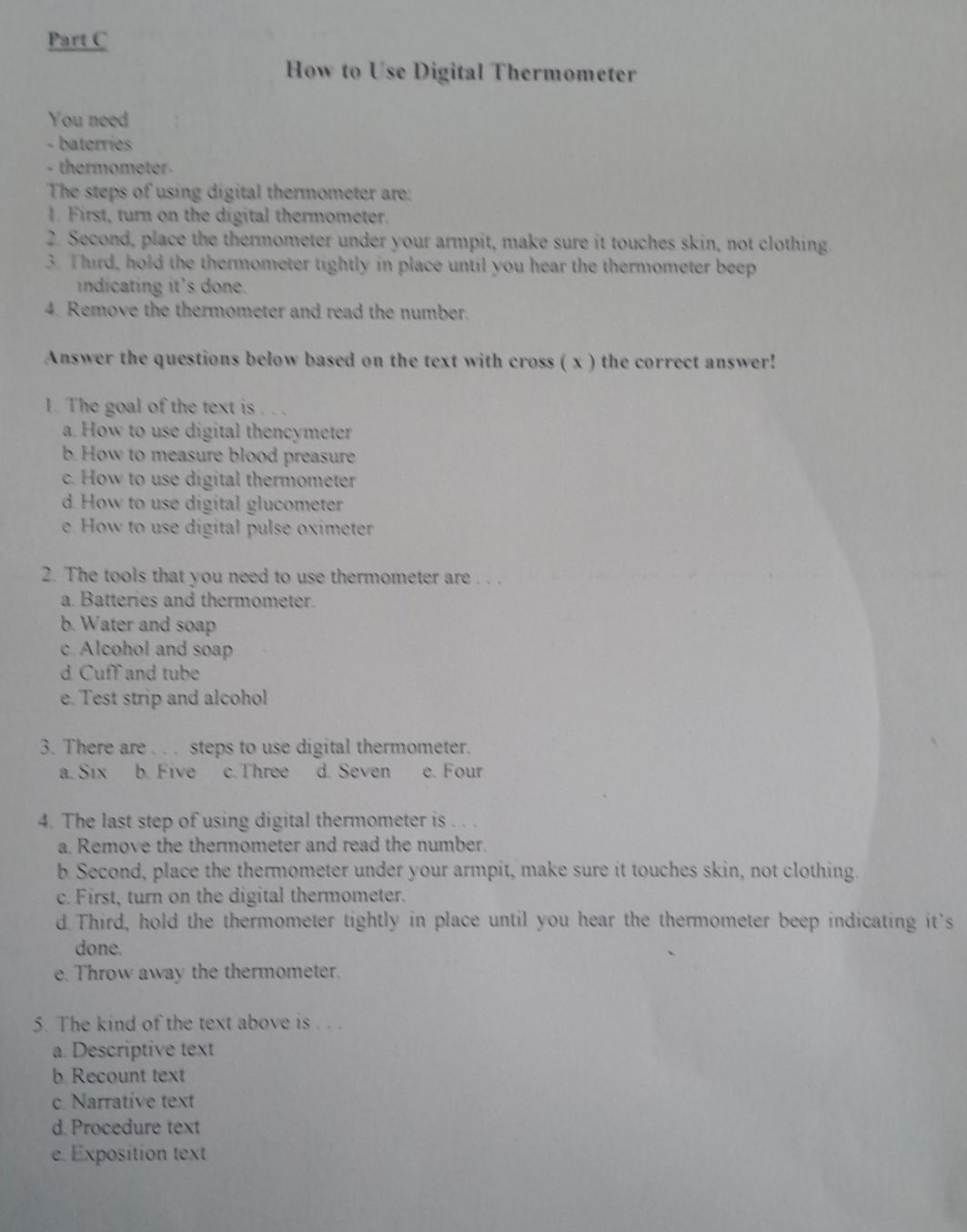
- Turn on the Device: Press the power button and wait for the "ready" signal, often indicated by a beep or a "0.0" or "Lo" display.
- Placement: Place the tip of the thermometer under the tongue, specifically in one of the "heat pockets" located toward the back of the mouth, to either side of the center.
- Sealing the Mouth: Instruct the person to close their lips firmly around the thermometer. They must breathe through their nose; breathing through the mouth introduces cool air that can artificially lower the reading.
- Steadying the Probe: The probe should remain still. Do not bite the thermometer, as this can damage the sensor or the casing.
- Completion: Wait for the beep (usually 10 to 60 seconds). Once it sounds, remove the thermometer and read the digital display.
Step-by-Step Guide: Axillary (Armpit) Measurement
Axillary measurement is non-invasive and easy to perform but is generally considered the least accurate method. It is often used for preliminary screenings in school or daycare settings.
- Preparation: Ensure the armpit is dry. Use a towel to gently pat away sweat, as moisture can interfere with the sensor’s ability to read skin temperature.
- Placement: Place the probe tip directly in the center of the armpit, ensuring it touches skin only, not clothing.
- Positioning: Fold the arm tightly across the chest to "lock" the thermometer in place and prevent ambient air from reaching the sensor.
- Wait Time: Axillary readings typically take longer than oral readings. Maintain the position until the device signals completion.
- Interpretation: Note that axillary temperatures are typically about 1°F (0.5°C) lower than oral temperatures.
Step-by-Step Guide: Rectal Temperature Measurement
For infants and toddlers under the age of three, healthcare providers—including those at the American Academy of Pediatrics—recommend rectal readings as the "gold standard" for accuracy because they measure true internal core temperature.
- Lubrication: Apply a small amount of water-soluble lubricant (such as petroleum jelly) to the tip of the probe to ensure comfort and ease of insertion.
- Positioning: Place the infant on their stomach across your lap or on a firm surface, or lay them on their back with their legs lifted toward their chest.
- Insertion: Gently insert the probe into the rectum. For infants, the depth should be no more than 1/2 inch to 1 inch. Never force the thermometer if you meet resistance.
- Holding: Keep your hand on the infant’s buttocks and hold the thermometer steady between your fingers to prevent it from shifting if the child moves.
- Removal: Once the beep sounds, carefully withdraw the device and read the result. Label this reading as "rectal" when reporting to a doctor.
Step-by-Step Guide: Tympanic (Ear) and Temporal (Forehead) Measurements
Modern infrared digital thermometers offer rapid results without requiring internal contact. These are common in clinical settings in 2026 due to their hygiene benefits.
Tympanic Thermometers These measure the infrared heat waves emitted by the eardrum.
- For adults: Gently pull the top of the ear up and back to straighten the ear canal.
- For children: Pull the earlobe down and back.
- Action: Insert the probe snugly into the ear canal and press the "start" button. Hold until the beep occurs. Note that excess earwax can cause an inaccurately low reading.
Temporal Artery Thermometers These measure the temperature of the blood flowing through the temporal artery on the forehead.
- Action: Place the sensor flat against the center of the forehead. Press and hold the scan button while sliding the thermometer across the forehead toward the hairline at the temple.
- Secondary Check: Some models require a quick touch behind the earlobe after scanning the forehead to account for heat loss.
Comparison of Digital Thermometer Methods
| Method | Best For | Accuracy Level | Pros | Cons |
|---|---|---|---|---|
| Oral | Adults & Children 4+ | High | Convenient, familiar | Affected by food/drink/mouth breathing |
| Rectal | Infants & Toddlers | Very High (Gold Standard) | Most accurate core temperature | Invasive, requires lubrication |
| Axillary | Quick screening | Moderate/Low | Non-invasive, safe | Easily affected by room temperature |
| Tympanic | Children 6 months+ | High (if positioned correctly) | Very fast, easy to use | Accuracy depends on canal alignment |
| Temporal | All ages | High | Non-invasive, can be used while sleeping | Sweat or hair can interfere with sensors |
Interpreting Your Results
Normal body temperature is generally cited as 98.6°F (37°C), but this is an average rather than a strict rule. As of 2026, medical guidelines from organizations like the Mayo Clinic emphasize that a "normal" range can span from 97°F to 99°F.
A fever is typically defined as a temperature of 100.4°F (38.0°C) or higher. However, the significance of a fever depends on the person’s age and the method of measurement. For example, a 101°F rectal reading in an infant is a serious medical concern, whereas a 101°F oral reading in an adult may simply indicate a mild viral infection.
Maintenance and Troubleshooting
To ensure your digital thermometer lasts through the 2026 season and beyond, proper maintenance is required.
- Storage: Store the device in its protective case in a cool, dry place. Extreme heat or cold (such as leaving it in a car) can damage the liquid crystal display (LCD) or the sensitive thermistor in the tip.
- Battery Replacement: Most digital thermometers use button-cell batteries (like CR2032). If the display is dim or the readings seem erratic (e.g., jumping between 94°F and 105°F), replace the battery immediately.
- Error Messages:
- "Lo": This usually does not mean "Low Battery." It often means the ambient temperature is lower than the human body range, and the device is ready to start.
- "Err": Indicates a hardware malfunction or a sensor that was moved too much during measurement. Restart the device.
- Calibration: Most home digital thermometers cannot be manually calibrated. If you suspect your device is inaccurate, test it against a second thermometer or replace it.
Safety and Best Practices
- Avoid Cross-Contamination: Never use the same thermometer for both rectal and oral readings, even if cleaned. Label your thermometers "Oral" and "Rectal" with a permanent marker to prevent confusion.
- Supervision: Never leave a child alone with a thermometer. Small components or batteries pose a choking hazard.
- Disposal: Because digital thermometers contain electronic components and batteries, they should be disposed of as e-waste according to local regulations rather than thrown in the regular trash.
Medical Disclaimer: This information is for educational purposes and does not substitute for professional medical advice. Always consult a healthcare provider for persistent fevers or if an infant under three months shows any sign of illness.
Frequently Asked Questions
Can I use an oral thermometer to take an axillary reading? Yes, most standard probe-style digital thermometers are "multi-use" and can be used for oral, rectal, or axillary measurements. However, the device’s internal programming might be optimized for oral use, so an axillary reading should be viewed as an estimate. Refer to the manual to see if your device has different "modes" for different locations.
How long should I wait between repeat readings? Wait at least two to three minutes between readings using the same device. The sensor tip needs time to return to room temperature; otherwise, the second reading may start from a pre-warmed state, leading to a slight overestimation of the temperature.
Why does my digital thermometer give different readings every time? Minor variations (0.1 to 0.3 degrees) are normal. Larger discrepancies are usually caused by inconsistent placement. For oral readings, shifting the probe just a half-inch away from the sublingual pocket can change the result significantly. For infrared forehead thermometers, sweat or varying distances from the skin are the most common culprits.
Is 98.6°F still the standard for a healthy adult in 2026? Scientific research has shown that the average human body temperature has slightly declined over the last century. While 98.6°F (37°C) remains the historical benchmark, many healthy adults now average closer to 97.5°F to 97.9°F. It is more important to know your own "baseline" temperature when you are healthy than to strictly adhere to the 98.6°F figure.
When should I contact a doctor based on a thermometer reading? You should seek medical attention if:
- An infant under 3 months has a rectal temperature of 100.4°F (38°C) or higher.
- A child of any age has a fever over 102.2°F (39°C) that does not respond to medication.
- An adult has a fever over 103°F (39.4°C) or a fever lasting more than three days.
- The fever is accompanied by a stiff neck, severe headache, or confusion.
Summary of Next Actions
To achieve the most accurate result, identify the correct measurement site based on the subject's age and ensure they have rested for 20 minutes. Always sanitize the probe before use, place it firmly in the correct "heat pocket" or canal, and wait for the auditory signal before removing. Record the number along with the time of day and the method used to provide your healthcare provider with a clear diagnostic picture.
Image Gallery