Best Shoes for Heel Spur Relief: A Comprehensive Guide to Features and Selection
Effective footwear for heel spur relief must provide targeted heel cushioning, robust longitudinal arch support, and a deep heel cup to stabilize the foot's natural fat pad. In 2026, the most successful designs integrate medical-grade...
Effective footwear for heel spur relief must provide targeted heel cushioning, robust longitudinal arch support, and a deep heel cup to stabilize the foot's natural fat pad. In 2026, the most successful designs integrate medical-grade orthotic contours with high-rebound midsole materials to significantly reduce localized pressure and alleviate the inflammation often associated with calcaneal spurs.
Contents
Understanding the Relationship Between Heel Spurs and Footwear
A heel spur, or calcaneal spur, is a bony protrusion that develops on the underside of the heel bone. Contrary to popular belief, the spur itself is rarely the primary source of sharp pain; rather, the pain typically arises from the inflammation of the surrounding soft tissues, most notably the plantar fascia. When a shoe lacks proper structural integrity, every step causes the plantar fascia to stretch excessively, pulling on the point of attachment where the spur is located.
In 2026, the orthopedic community emphasizes that the primary role of a "heel spur shoe" is not to "fix" the bone, but to manage the biomechanical environment of the foot. By providing a stable platform, the shoe prevents the micro-tears in the fascia that lead to chronic heel pain. This requires a shift from generic soft cushioning to "structured cushioning," which combines impact absorption with rigid support where the foot needs it most.
Critical Technical Features of Relief-Oriented Footwear
Selecting a shoe for heel spur relief requires looking beyond aesthetic appeal and focusing on specific engineering specifications. Podiatrists generally recommend four "non-negotiable" features for any footwear intended to manage this condition.
1. Targeted Heel Cushioning and Impact Dispersion
The point of impact—the heel strike—is where the most significant pressure is exerted. Shoes designed for relief often feature specialized "crash pads" or gel inserts specifically under the calcaneus. In 2026, advanced nitrogen-infused foams and dual-density EVA (Ethylene Vinyl Acetate) are the standards. These materials are engineered to compress under high load and return to their original shape quickly, ensuring that the spur is never bottoming out against the hard outsole of the shoe.
2. Contoured Arch Support
Arch support is perhaps the most critical element for long-term relief. When the arch is properly supported, the tension on the plantar fascia is reduced. This prevents the fascia from pulling on the heel bone, which is the mechanical trigger for spur-related pain. A shoe for heel spurs must have a "medial post" or a built-in orthotic shape that matches the user's arch height (low, neutral, or high). If the shoe is too flat, the foot over-pronates, stretching the fascia and exacerbating the injury.
3. Deep Heel Cup and Fat Pad Stabilization
Humans have a natural "fat pad" under the heel bone designed to absorb shock. As we age or experience injury, this fat pad can become displaced or "thinned out." A shoe with a deep, rigid heel cup helps to gather this natural fat pad and hold it directly under the heel bone, providing a natural layer of protection against the spur. If the heel of the shoe is too wide or soft, the fat pad splayed outward, leaving the bone and the spur vulnerable to direct impact.
4. Optimized Heel-to-Toe Drop
The "drop" of a shoe is the difference in height between the heel and the forefoot. For individuals with heel spurs, a "zero-drop" or very flat shoe is often painful because it forces the Achilles tendon and plantar fascia into a fully stretched position. A moderate heel-to-toe drop (typically between 8mm and 12mm) slightly elevates the heel, which shortens the tension on the posterior chain and shifts some of the body weight forward toward the midfoot and forefoot.
Comparison of Leading Footwear Categories for Heel Spurs
Different activities require different structural supports. The following table compares the primary categories of shoes used for heel spur management in 2026.
| Shoe Category | Primary Relief Mechanism | Best For | Typical Support Level |
|---|---|---|---|
| Maximalist Running Shoes | High-volume foam & Rocker sole | High-impact activities | Exceptional Cushioning |
| Orthopedic Walking Shoes | Built-in orthotic insoles | Daily wear & Standing | High Stability |
| Professional Clogs | Rigid arch & elevated heel | Healthcare/Service industry | Rigid Structural Support |
| Recovery Sandals | Anatomical footbed & EVA foam | Post-exercise & Home use | Soft Arch Contouring |
| Motion Control Trainers | Dual-density foam & Medial post | Severe overpronation | Maximum Stability |
The Role of the Rocker Sole in 2026 Footwear
A significant development in footwear technology available in 2026 is the widespread adoption of the "rocker bottom" or "meta-rocker" geometry. In these shoes, the outsole is curved—resembling a rocking chair—which allows the foot to roll through the gait cycle with minimal flexion of the foot joints and the plantar fascia.
By reducing the need for the foot to "push off" using the toes and the ball of the foot, the rocker sole minimizes the strain on the heel. This is particularly beneficial for those whose heel spurs are accompanied by stiffness in the big toe or midfoot. Brands like Hoka and certain specialized lines from ASICS and New Balance have popularized this design, making it a staple for clinical foot health.
Selecting the Right Size and Fit
Even the most technologically advanced shoe will fail to provide relief if the fit is incorrect. For those with heel spurs, a "precision fit" is required to ensure the arch support and heel cup align with the foot’s anatomy.
- Afternoon Fitting: Always shop for shoes in the late afternoon or evening. Feet naturally swell throughout the day; a shoe that fits perfectly at 9:00 AM may be too tight by 4:00 PM, causing constriction that increases inflammation.
- The Thumb Rule: There should be approximately a thumb's width of space between the longest toe and the end of the shoe. This allows the foot to slide forward naturally during the gait cycle without the heel slipping out of the stabilized cup.
- Width Considerations: Heel pain often leads to "guarding," where a person changes their gait. This can cause the foot to spread. Ensure the toe box is wide enough to allow for natural toe splay, which helps stabilize the entire foot.
Common Pitfalls: What to Avoid
When searching for relief, many consumers fall into traps that can actually worsen the condition.
- Excessively Soft Shoes: While a "marshmallow" feel is initially comfortable, shoes that are too soft lack the structural integrity to support the arch. This leads to foot fatigue and increased tension on the heel.
- Worn-Out Outsoles: The life of a high-quality orthopedic or running shoe is typically 300 to 500 miles. Once the internal foam collapses or the heel counter loses its rigidity, the shoe must be replaced. In 2026, many smart-shoes include sensors that alert the user when the compression levels have dropped below therapeutic thresholds.
- Barefoot Walking: Individuals with heel spurs should avoid walking barefoot, even at home on carpet. Using a dedicated pair of "indoor" recovery slides with arch support ensures the heel is never subjected to unprotected impact.
Frequently Asked Questions
Can I just use an insert instead of buying new shoes?
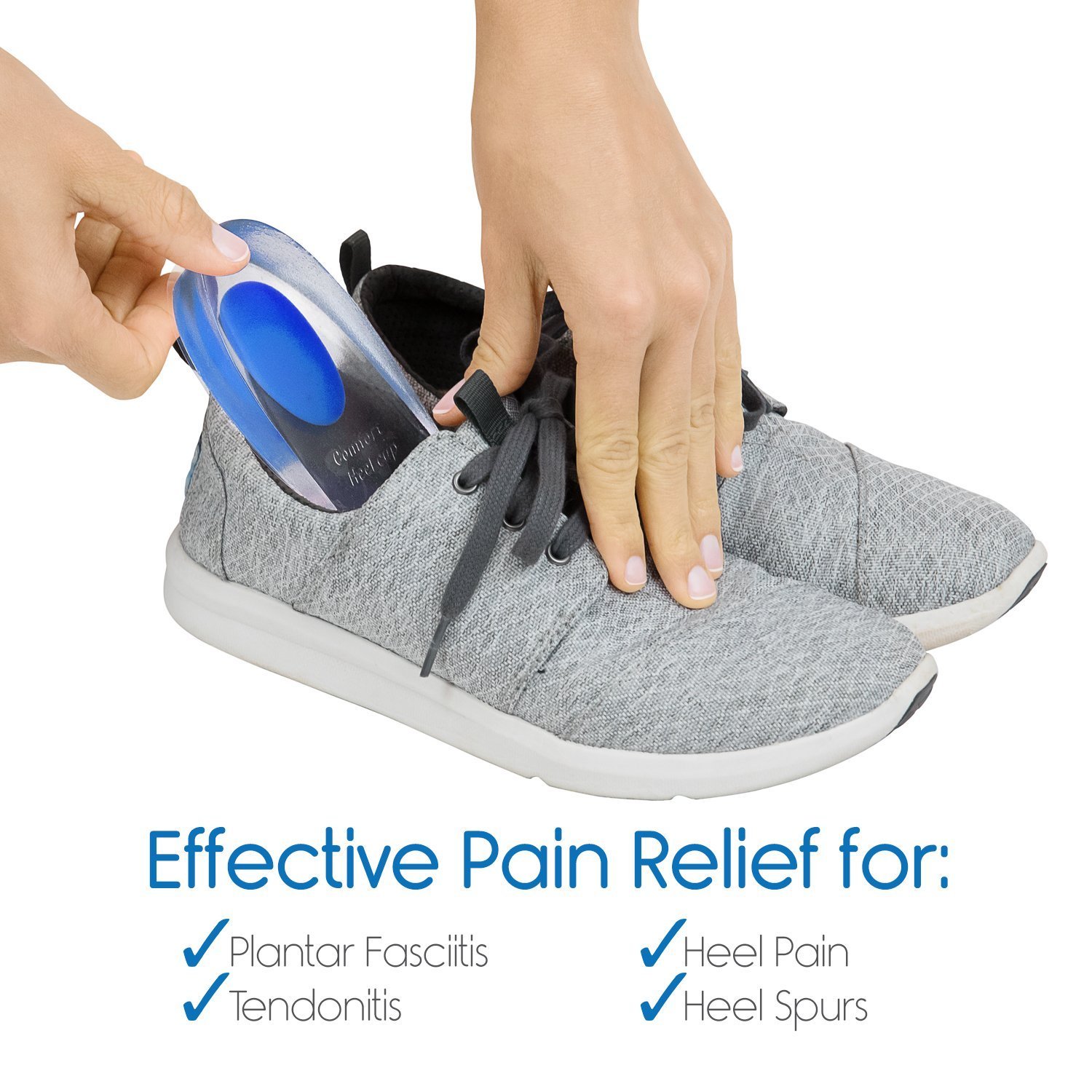
While high-quality over-the-counter (OTC) inserts or custom orthotics can improve a shoe, they require a "neutral" and stable base to work effectively. If your current shoe is worn out or has a flimsy structure, adding an insert is like building a house on a sinking foundation. For the best results, use a therapeutic insert inside a shoe designed with a removable footbed and a rigid heel counter.
How do I know if my shoes have enough arch support?
Perform the "twist test." Hold the shoe at the heel and the toe and try to twist it. A shoe with good arch support for heel spurs should be rigid through the midsole and only flex at the forefoot (where your toes naturally bend). If the shoe folds in half or twists easily in the middle, it does not provide enough support for the plantar fascia.
Does the "weight" of the shoe matter for heel spur relief?
In 2026, lightweight materials have largely replaced heavy, traditional leather orthopedic shoes. While weight itself isn't the primary factor for relief, a lighter shoe can reduce general leg fatigue. However, never sacrifice structural stability for a lighter weight; the "frame" of the shoe is more important than its mass.
Should I choose a neutral or stability shoe?
This depends on your gait. If you over-pronate (your ankles roll inward), a stability or motion control shoe is necessary to prevent the arch from collapsing and pulling on the heel. If you have a very high arch or a neutral gait, a neutral cushioned shoe with added arch inserts may be more comfortable. A gait analysis at a professional footwear clinic is recommended.
How long does it take to feel relief after switching shoes?
Some users feel an immediate reduction in "first-step-in-the-morning" pain. However, because heel spurs involve inflamed tissue, it typically takes 2 to 4 weeks of consistent use for the inflammation to subside significantly. It is important to wear the supportive footwear consistently during this period to allow the tissue to heal.
Final Recommendation for 2026
If you are suffering from acute heel spur pain, the most effective immediate action is to transition into a shoe that offers a 10-12mm heel-to-toe drop, a firm external heel counter, and integrated longitudinal arch support. For those who stand for long periods, consider a professional-grade clog or a maximalist walking shoe with a rocker sole. Always consult with a podiatrist to determine if your specific foot structure requires custom orthotics in addition to high-quality footwear.
Image Gallery