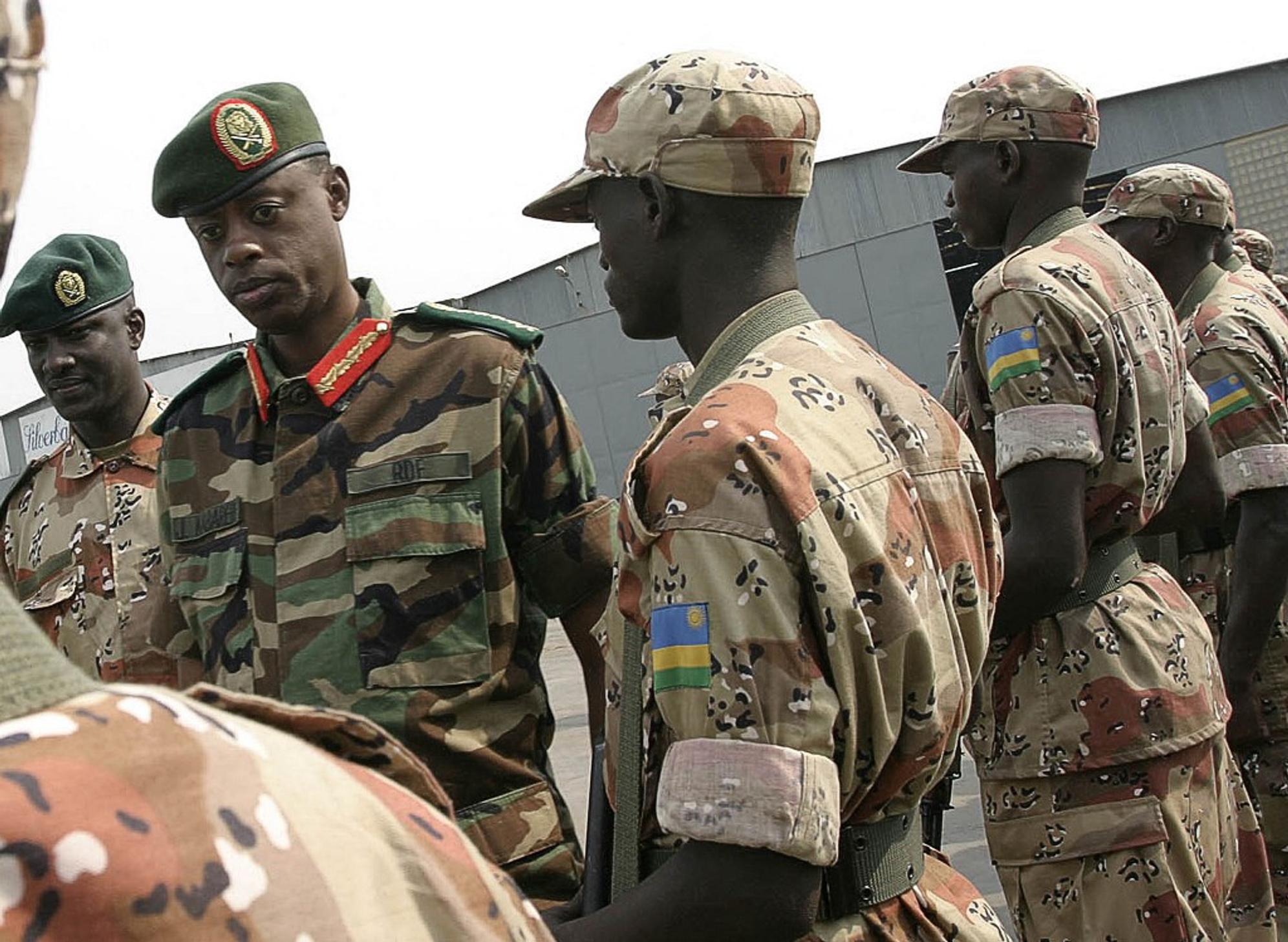
James Kabarebe Net Worth: Analyzing the Career and Financial Profile of the Rwandan General
As of 2026, various independent financial reports and wealth-tracking platforms estimate James Kabarebe’s net worth to be approximately $50 million. This valuation is largely based on his decades-long tenure in high-ranking military an...
As of 2026, various independent financial reports and wealth-tracking platforms estimate James Kabarebe’s net worth to be approximately $50 million. This valuation is largely based on his decades-long tenure in high-ranking military and government positions, though it remains an unofficial figure as Rwandan public officials are not required to make their private asset portfolios public.
Contents
James Kabarebe is one of the most influential military and political figures in modern East African history. His career spans the liberation struggle of the early 1990s, the complex geopolitical conflicts of the Great Lakes region, and the institutional building of the contemporary Rwandan state. To understand the figure of $50 million, one must look beyond a simple salary and examine the intersection of military leadership, regional influence, and the economic landscape of Rwanda over the last thirty years.
The Foundation of Influence: Early Military Career and the RPF
James Kabarebe’s journey began in the corridors of regional military training and ideological formation. Born in 1959, he was part of the generation of Rwandan refugees in Uganda who formed the core of the Rwandan Patriotic Front (RPF). His early years were defined by his involvement in the National Resistance Army (NRA) in Uganda, where he gained essential combat and strategic experience alongside other future leaders of Rwanda.
By the time the RPF launched its struggle in 1990 to return to Rwanda, Kabarebe had already established himself as a trusted officer. He famously served as the Private Secretary and Aide-de-Camp to Major General Paul Kagame. This role was not merely administrative; it placed him at the heart of the decision-making process during the four-year civil war and the subsequent efforts to stop the 1994 Genocide against the Tutsi.
This period is critical to his financial and professional profile because it established his status as a "liberator." In many post-conflict African nations, the original leadership of the liberation movement often transitions into the country’s economic and political elite. While the RPF is known for its strict internal discipline regarding personal enrichment, the social and political capital accumulated during this time is immeasurable.
The Congo Wars and Regional Geopolitics
One of the most frequent points of discussion regarding James Kabarebe’s influence—and by extension, the speculation surrounding his wealth—is his role in the Democratic Republic of the Congo (DRC) during the late 1990s and early 2000s.
During the First Congo War (1996–1997), Kabarebe played a pivotal role in the coalition that overthrew Mobutu Sese Seko. Following the victory, he was briefly appointed as the Chief of Staff of the Congolese army under Laurent-Désiré Kabila. This was an extraordinary historical moment where a Rwandan officer held the highest military position in a foreign, much larger nation.
The subsequent Second Congo War and the various insurgencies in Eastern DRC have led to numerous United Nations reports and academic studies. Some of these reports have alleged that high-ranking officials in the region benefited from the trade of minerals and other resources during the periods of instability. General Kabarebe has consistently denied these allegations, and the Rwandan government has dismissed them as politically motivated. However, from an analytical perspective, these historical associations often form the basis for the high net worth estimates found on financial websites.
Ministerial Roles and Civil Service
Following his return from the DRC, Kabarebe’s career moved into formal institutional leadership within Rwanda. His roles have included:
- Chief of Defence Staff (CDS) of the Rwanda Defence Force (RDF): In this capacity, he oversaw the modernization of the Rwandan military, transforming it into one of the most disciplined and effective forces on the continent.
- Minister of Defence (2010–2018): During his eight-year tenure as Defence Minister, he was responsible for the strategic planning of Rwanda’s national security and its significant contributions to international peacekeeping missions (UNAMID, MINUSCA).
- Senior Presidential Advisor on Security: A role that underscored his position as a key member of President Kagame’s inner circle.
- Minister of State for Foreign Affairs in charge of Regional Cooperation (2023–Present): His current role as of 2026 focuses on navigating the complex diplomatic waters of the East African Community (EAC) and addressing regional tensions.
In Rwanda, ministerial salaries are standardized and transparent. However, the prestige and stability of these roles over three decades provide a level of financial security and access to investment opportunities that are typical of high-level civil servants globally.
Analyzing the $50 Million Valuation
The figure of $50 million often cited in 2026 is a "mid-range" estimate in the world of political wealth analysis. To determine the validity of this number, we must categorize the potential components of such a net worth:
1. Real Estate and Land Holdings
In Rwanda, land is one of the most valuable assets. High-ranking military officers who served during the liberation and the transition periods often acquired significant land holdings, particularly in the Eastern Province. As Kigali has expanded and the agricultural sector has modernized, the value of this land has appreciated exponentially. A significant portion of a $50 million valuation would likely be tied to the appraised value of domestic real estate and commercial farming ventures.
2. Private Business Interests
While Rwandan law has strict codes of conduct for active-duty officers and ministers, many leaders have family-held interests in sectors such as logistics, construction, and hospitality. The Rwandan economy has seen consistent GDP growth (averaging 7-8% annually over two decades), and those positioned at the top of the social hierarchy have been well-placed to benefit from this "Rwandan Miracle."
3. Institutional Linkages
It is important to distinguish between personal wealth and institutional wealth. In Rwanda, entities like Crystal Ventures (the RPF’s investment arm) and the Horizon Group (linked to the military) own a vast array of businesses, from road construction to milk processing. While Kabarebe does not "own" these entities, his leadership roles within the structures that oversee them can lead to a public perception of immense personal wealth.
Summary of Career Milestones
The following table outlines the key phases of James Kabarebe’s career, which provide the context for his current financial standing in 2026.
| Period | Role/Position | Key Significance |
|---|---|---|
| 1990–1994 | Aide-de-Camp to Paul Kagame | Core member of the RPF liberation struggle. |
| 1997–1998 | Chief of Staff, DRC Army | Unprecedented regional military influence. |
| 2002–2010 | Chief of Defence Staff (RDF) | Modernization of the Rwandan military apparatus. |
| 2010–2018 | Minister of Defence | Transition to high-level cabinet and policy making. |
| 2018–2023 | Senior Presidential Advisor | Consolidation of strategic and political influence. |
| 2023–2026 | Minister of State (Foreign Affairs) | Leading regional diplomacy and EAC integration. |
Transparency and the "Wealth Gap" in Reporting
The primary challenge in verifying a net worth of $50 million for a figure like James Kabarebe is the lack of a public "Forbes-style" audit for African political leaders. In the absence of official data, analysts rely on:
- Asset Disclosures: Rwanda has a system where officials disclose assets to the Ombudsman’s office, but these records are not generally open to the public.
- Lifestyle Indicators: Observations of residences, vehicles, and family educational paths.
- Historical Context: Comparing his tenure and rank to similar figures in neighboring countries (e.g., Uganda or Kenya), where net worths are often more openly discussed.
It is also worth noting that in the Rwandan context, the government emphasizes "Agaciro" (Self-worth/Dignity). The RPF culture historically frowns upon ostentatious displays of wealth, meaning that even if an official is worth tens of millions, their lifestyle may appear more modest than their counterparts in West Africa or the Middle East.
The Geopolitical Dimension of Wealth Allegations
When discussing the wealth of Rwandan generals, one cannot ignore the international scrutiny they face. Over the years, Kabarebe has been the subject of various sanctions and legal inquiries from foreign jurisdictions (such as the French inquiry into the 1994 plane crash, which was eventually dismissed). These legal battles are expensive and require significant financial resources, suggesting a level of liquidity and access to capital that aligns with a high net worth individual.
Furthermore, his role in regional cooperation as of 2026 involves mediating disputes that have massive economic implications for the region. The ability to navigate these spaces requires a deep understanding of both political and commercial interests, reinforcing his position as a "power broker" in the East African economy.
Frequently Asked Questions
Is James Kabarebe's $50 million net worth officially confirmed?
No, the $50 million figure is an estimate generated by wealth analysts and regional researchers. There has been no official statement from James Kabarebe or the Rwandan government regarding his specific personal net worth.
How does James Kabarebe's wealth compare to other Rwandan leaders?
Kabarebe is generally considered to be among the wealthier tier of Rwandan officials due to the length of his service. However, his estimated net worth is typically cited as lower than that of the RPF’s corporate entities (like Crystal Ventures), which are valued in the hundreds of millions.
What is James Kabarebe’s current role in 2026?
He serves as the Minister of State for Foreign Affairs in charge of Regional Cooperation. In this role, he is a primary diplomat for Rwanda, focusing on relations within the East African Community and the Great Lakes region.
Does James Kabarebe own any major companies?
There are no public records indicating that Kabarebe is the majority owner of any major Rwandan corporation. However, like many high-ranking officials, his family may have diversified investments in the private sector.
Has his wealth been affected by international sanctions?
While he has faced various travel bans and legal challenges in the past, most of these have been lifted or resolved. His current role as a Minister of State indicates that he is in good standing both domestically and within the regional diplomatic community.
Conclusion and Final Recommendation
While the $50 million figure for James Kabarebe's net worth remains speculative, it serves as a proxy for his immense influence and longevity in the Rwandan state. His wealth is not merely a collection of assets but a reflection of his role in the transformation of Rwanda from a post-genocide state to a regional power.
For researchers or investors looking into the financial profiles of East African leaders, it is recommended to focus on institutional transparency and land registry data rather than tabloid estimates. Understanding the role of state-linked investment groups is often more productive than attempting to pin down the exact bank balance of individual generals. As of 2026, James Kabarebe remains a central figure in the stability and growth of the region, and his financial profile will likely continue to be a subject of interest as Rwanda navigates the next decade of development.
Image Gallery