The Best Trello Alternatives in 2026: A Comprehensive Guide to Project Management Tools
In 2026, the best Trello alternatives include Monday.com for team versatility, ClickUp for feature density, and Asana for complex workflow dependencies. While Trello remains a benchmark for simple Kanban boards, teams requiring native...
In 2026, the best Trello alternatives include Monday.com for team versatility, ClickUp for feature density, and Asana for complex workflow dependencies. While Trello remains a benchmark for simple Kanban boards, teams requiring native Gantt charts, advanced AI-driven automation, or unified document management often find better value in integrated platforms that eliminate the need for third-party plugins.
Contents
The Evolving Landscape of Project Management in 2026
The project management software market has undergone a significant transformation leading into 2026. For over a decade, Trello—owned by Atlassian—defined the "Kanban-first" approach to productivity. Its simplicity was its greatest strength, allowing users to drag and drop cards across lists to represent progress. However, as business needs have shifted toward data-heavy operations and remote-first collaboration, the limitations of a purely visual card system have become more apparent.
In the current year, organizations are no longer satisfied with "simple." They demand tools that provide multi-dimensional views of their work. A modern Trello alternative must do more than just manage tasks; it must serve as a "source of truth" for documentation, time tracking, resource allocation, and cross-departmental communication. The rise of generative AI in 2024 and 2025 has also set a new baseline: project management tools in 2026 are expected to predict bottlenecks, automate status reports, and even draft project briefs based on historical data.
Why Teams Are Moving Away from Trello
Despite its legacy, several pain points drive teams to seek alternatives. Understanding these triggers is essential for selecting a replacement that won't eventually run into the same hurdles.
The "Power-Up" Fatigue
Trello’s architecture relies heavily on "Power-Ups"—integrations that add functionality like calendars, custom fields, or Gantt charts. By 2026, many users have found that managing a stack of third-party plugins leads to increased costs and security vulnerabilities. When vital features are not "native" to the platform, the user experience becomes fragmented. Alternatives like ClickUp or Monday.com integrate these features directly into the core product.
Scalability and Hierarchy Issues
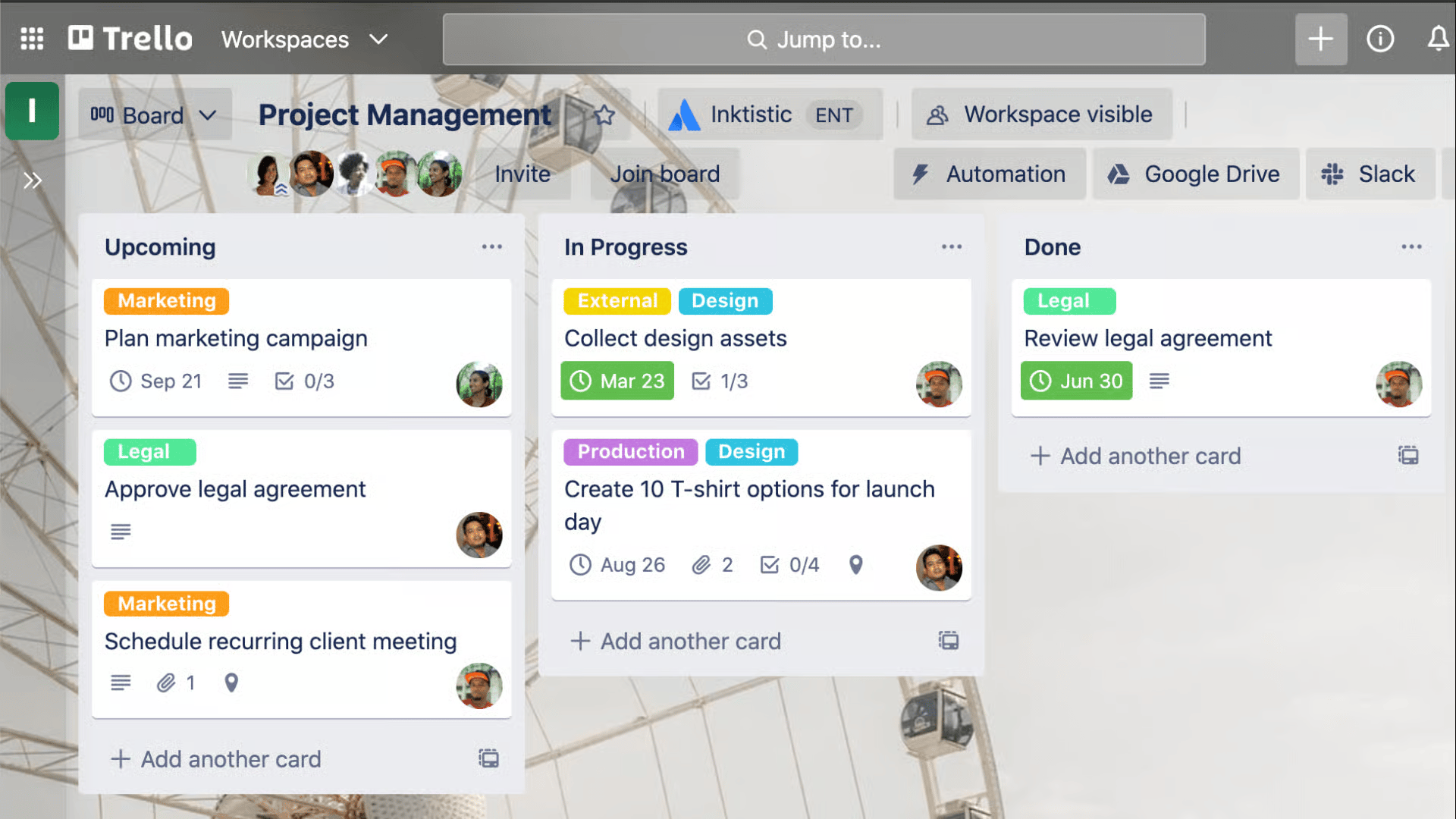
Trello’s flat structure (Board > List > Card) works excellently for small projects but struggles with enterprise-level complexity. When a company grows to hundreds of employees, a board with 50 lists becomes unmanageable. Teams requiring a hierarchical structure—such as Workspace > Space > Folder > List > Task > Subtask—frequently migrate to tools designed for nested data.
Advanced Reporting and Analytics
While Trello has introduced better reporting over the years, it still lags behind competitors when it comes to high-level executive dashboards. In 2026, data-driven decision-making is paramount. Managers need to see real-time "burnup" charts, team capacity heatmaps, and financial forecasting, features that are often rudimentary or absent in Trello’s standard interface.
Top Trello Alternatives Analyzed
To choose the right alternative, one must look at the specific operational needs of the team. Below are the leading contenders in the 2026 market.
1. Monday.com: The All-In-One Work OS
Monday.com has positioned itself as more than just a task manager; it is a "Work OS." In 2026, it stands out for its extreme customizability. Unlike Trello, which forces a Kanban view as the default, Monday allows users to start with a table and instantly toggle between Timeline, Map, Workload, and Kanban views.
- Best for: Medium to large enterprises and marketing agencies.
- Key Advantage: Its "no-code" automation builder is the most intuitive in the industry, allowing non-technical users to create complex triggers (e.g., "When a status changes to 'Approved', move the item to the 'Billing' board and notify the Finance team").
- Security: Monday.com maintains rigorous standards, including ISO/IEC 27001 certification, making it a favorite for security-conscious IT departments.
2. Asana: Sophisticated Workflow Orchestration
Asana remains the premier choice for teams that manage interdependent tasks. While Trello treats every card as a standalone unit, Asana excels at "Work Graph" methodology—mapping the relationships between tasks, projects, and goals.
- Best for: Complex product development and cross-functional corporate teams.
- Key Advantage: The "Timeline" view in Asana is a powerful Gantt chart that handles dependencies with ease. If one task is delayed, Asana can automatically shift all subsequent tasks to reflect the new reality.
- 2026 Feature Focus: Their "Smart Summaries" AI feature now allows project managers to generate weekly progress updates for stakeholders in seconds, pulling data directly from task completions and comments.
3. ClickUp: The Feature-Rich Contender
ClickUp marketing tagline used to be "One app to replace them all," and by 2026, they have largely delivered on that promise. ClickUp combines tasks, docs, chat, and whiteboards into a single ecosystem.
- Best for: Startups and tech teams that want the most "bang for their buck."
- Key Advantage: Customizability. ClickUp offers "ClickApps" that can be toggled on or off, allowing the interface to be as simple or as complex as the user desires.
- Cost Factor: ClickUp continues to offer one of the most generous free tiers in the industry, though its advanced automation and AI features (ClickUp Brain) are gated behind paid tiers in 2026.
4. Notion: The Document-Database Hybrid
Notion took the project management world by storm by combining a wiki with a database. It is the best Trello alternative for teams where knowledge management is just as important as task tracking.
- Best for: Freelancers, creative boutiques, and companies that rely heavily on documentation.
- Key Advantage: Every "task" in Notion is its own fully functional page. This allows users to house meeting notes, research, and design assets directly within the task itself, rather than attaching them to a card.
2026 Comparison Table: Feature Parity and Pricing
The following table compares the primary Trello alternatives based on 2026 industry standards and typical enterprise requirements.
| Feature | Trello | Monday.com | Asana | ClickUp | Notion |
|---|---|---|---|---|---|
| Primary View | Kanban | Table/Grid | List/Timeline | List/Multiview | Document/Wiki |
| Native Gantt | No (Power-Up) | Yes | Yes | Yes | Yes (Timeline) |
| Native Time Track | No | Yes | Yes | Yes | No (Formulaic) |
| Built-in Docs | No | No (Workdocs) | No | Yes | Yes (Excellent) |
| AI Integration | Basic | Advanced | Advanced | Extensive | Advanced |
| Starting Price (Per User/Mo) | $5.00 | $9.00 | $10.99 | $7.00 | $8.00 |
| Scalability | Low-Medium | High | High | Medium-High | Medium |
Technical Considerations: API and Integration Depth
When migrating from Trello, the technical specifications of the new platform are critical. Trello’s API was historically one of the most accessible for developers, which led to its massive library of Power-Ups. However, as of 2026, RESTful APIs and GraphQL support have become standard across all major alternatives.
Data Portability
Before selecting an alternative, verify their import capabilities. Most platforms—specifically Monday.com and ClickUp—offer a "1-Click Trello Import" tool. This tool uses Trello’s JSON export to recreate boards, lists, cards, and even attachments and comments in the new environment. Be aware that Power-Up data (like custom fields from third-party apps) often does not migrate cleanly and may require manual mapping.
Automation Logic
Trello uses "Butler" for automation. Alternatives have moved toward "Logical Recipes." When evaluating a Trello alternative, look for platforms that support cross-app automations natively. For example, a "deep" integration would allow a task marked as "Finished" in your PM tool to automatically trigger a Slack notification, update a row in Google Sheets, and send a client invoice via Stripe.
How to Successfully Migrate from Trello
Transitioning a team from one software to another is as much a cultural challenge as a technical one. Follow these steps to ensure a smooth migration:
- Audit Current Boards: Identify which Trello boards are active and which can be archived. Do not migrate "dead" data.
- Define Your Hierarchy: Decide how your Trello boards will translate to the new system. Will one Trello board become a "Folder" or a "Space"?
- Run a Pilot Program: Move one small team or project to the new tool for two weeks. Identify "friction points" in the new interface.
- Map Your Power-Ups: Ensure that the functionality you currently get from Trello Power-Ups (like "Card Aging" or "Calendar") is either a native feature in the new tool or has a direct integration.
- Data Verification: After the import, check that attachments, due dates, and member assignments have transferred correctly. 2026 migration tools are reliable, but manual verification of "high-stakes" projects is still recommended.
Frequently Asked Questions
Which Trello alternative is best for small teams in 2026?
ClickUp is often the best choice for small teams because its "Free Forever" plan includes features that other platforms charge for, such as unlimited tasks and several "Views" beyond the standard list. Notion is also highly recommended for small teams that need a combined wiki and task manager.
Is there a free Trello alternative that is open-source?
Yes, Taiga and Planka are excellent open-source alternatives in 2026. These platforms are ideal for teams that want full control over their data and prefer self-hosting to maintain privacy and avoid monthly subscription fees.
Can I still use Kanban boards in Asana or Monday.com?
Absolutely. Both Asana and Monday.com have spent years perfecting their Kanban interfaces to compete directly with Trello. In most cases, these "Board Views" now offer more functionality, such as viewing "Subtasks" directly on the card or using conditional formatting to change card colors based on priority.
How does AI change project management in 2026?
AI has shifted from a gimmick to a necessity. In 2026, tools like Asana and ClickUp use AI to perform "capacity planning," suggesting which team member is best suited for a task based on their current workload and past performance speeds. They can also auto-generate summaries of long comment threads, saving managers hours of reading.
Is Trello still relevant in 2026?
Trello remains relevant for individuals and very small teams (1–5 people) who value speed and simplicity above all else. Its "Free" tier is still a strong entry point for basic task tracking, but it is no longer the market leader for enterprise-grade project management.
Final Recommendation
Choosing a Trello alternative in 2026 depends on where your team feels the most "friction." If you are tired of paying for extra plugins just to see a calendar, Monday.com is your best bet for an integrated experience. If you need to manage complex, multi-layered projects with dependencies, Asana remains the industry gold standard. For those who want a single workspace for both documents and tasks, Notion is the most logical choice. Before committing, utilize the free trials offered by these platforms to test their 2026 AI capabilities and ensuring they align with your team's specific workflow.
Image Gallery