What’s New in Hyperscale Data Centers: The AI-Driven Infrastructure Evolution
In 2026, hyperscale data centers have evolved into high-density "AI factories" characterized by massive power requirements and liquid-cooling architectures. The primary shift involves moving away from general-purpose CPU compute toward...
In 2026, hyperscale data centers have evolved into high-density "AI factories" characterized by massive power requirements and liquid-cooling architectures. The primary shift involves moving away from general-purpose CPU compute toward specialized GPU and ASIC clusters, supported by 1.6T networking and localized power generation such as Small Modular Reactors (SMRs) to overcome grid constraints.
Contents
The Transformation of Compute: From General Purpose to AI Factories
The most significant change in hyperscale environments over the last two years has been the fundamental redesign of the server rack. While traditional data centers were built to support a mix of web hosting, database management, and enterprise applications, today's hyperscale facilities are increasingly optimized for large language model (LLM) training and inference.
Specialized Silicon and Custom ASICs
Hyperscalers like Amazon (AWS), Google, and Microsoft have moved aggressively toward custom silicon to reduce reliance on third-party providers and optimize performance-per-watt. In 2026, we see the widespread deployment of chips such as the AWS Trainium3, Google TPU v6, and Microsoft Maia 100 successors. These chips are designed specifically for the matrix multiplication required by neural networks, offering significant efficiency gains over traditional x86 CPUs.
The Rise of Ultra-High-Density Racks
In the previous decade, a high-density rack was considered 15kW to 20kW. Today, hyperscale AI clusters frequently demand 100kW to 120kW per rack. This densification is necessary to minimize latency; by packing compute components closer together, data travels shorter distances over physical cables, which is critical for the synchronized processing required in distributed AI training. However, this density has rendered traditional air-cooling methods obsolete for the highest-performing tiers of the data center.
The Liquid Cooling Revolution
As rack densities exceed 50kW, air cooling—which relies on moving massive volumes of chilled air through the facility—reaches its physical limit. Hyperscale operators have now standardized several forms of liquid cooling to manage the heat generated by modern accelerators.
Direct-to-Chip (DLC) Cooling
Direct-to-chip, or cold-plate cooling, is currently the dominant method for hyperscale AI deployments. This system involves circulating a coolant (often treated water or a dielectric fluid) through a manifold that connects directly to plates sitting atop the CPUs and GPUs. This method removes heat far more efficiently than air, allowing chips to run at higher clock speeds without thermal throttling.
Rear-Door Heat Exchangers (RDHx)
For facilities in transition, Rear-Door Heat Exchangers serve as a bridge. These units replace the back door of a server rack with a radiator-like coil system. As hot air exits the servers, it passes through the liquid-cooled coils, entering the data hall at or below the ambient room temperature. This prevents "hot spots" in the facility and allows for higher densities without a full plumbing overhaul of the server chassis itself.
Immersion Cooling Adoption
While still less common than DLC, single-phase and two-phase immersion cooling are seeing specialized use in 2026. In these setups, entire server blades are submerged in a thermally conductive, non-conductive dielectric fluid. This eliminates the need for fans entirely, drastically reducing the "parasitic load" (the energy used for cooling rather than compute) and allowing for the highest possible power densities.
Solving the Power Paradox: SMRs and Microgrids
The rapid expansion of hyperscale capacity has collided with a global shortage of power grid availability. In many Tier 1 markets, such as Northern Virginia or Dublin, the wait time for a new grid connection can exceed five years. This has forced hyperscalers to become energy producers rather than just consumers.
Small Modular Reactors (SMRs) and Nuclear Energy
In a landmark shift for the industry, several major hyperscale operators have signed agreements to deploy Small Modular Reactors (SMRs). These compact nuclear plants can be built off-site and assembled at the data center location, providing hundreds of megawatts of carbon-free, baseload power. Unlike wind or solar, nuclear provides the 24/7 reliability that hyperscale workloads demand without requiring massive battery storage arrays.
Grid-Interactive UPS Systems
Modern Uninterruptible Power Supply (UPS) systems in hyperscale facilities are no longer just emergency backups. Using lithium-ion and zinc-battery technology, these systems now participate in demand response programs. When the public grid is stressed, the data center can switch to its internal battery reserves or even feed power back into the grid, turning the data center into a stabilizing asset for the local community's energy infrastructure.
Networking Breakthroughs: 1.6T and CXL
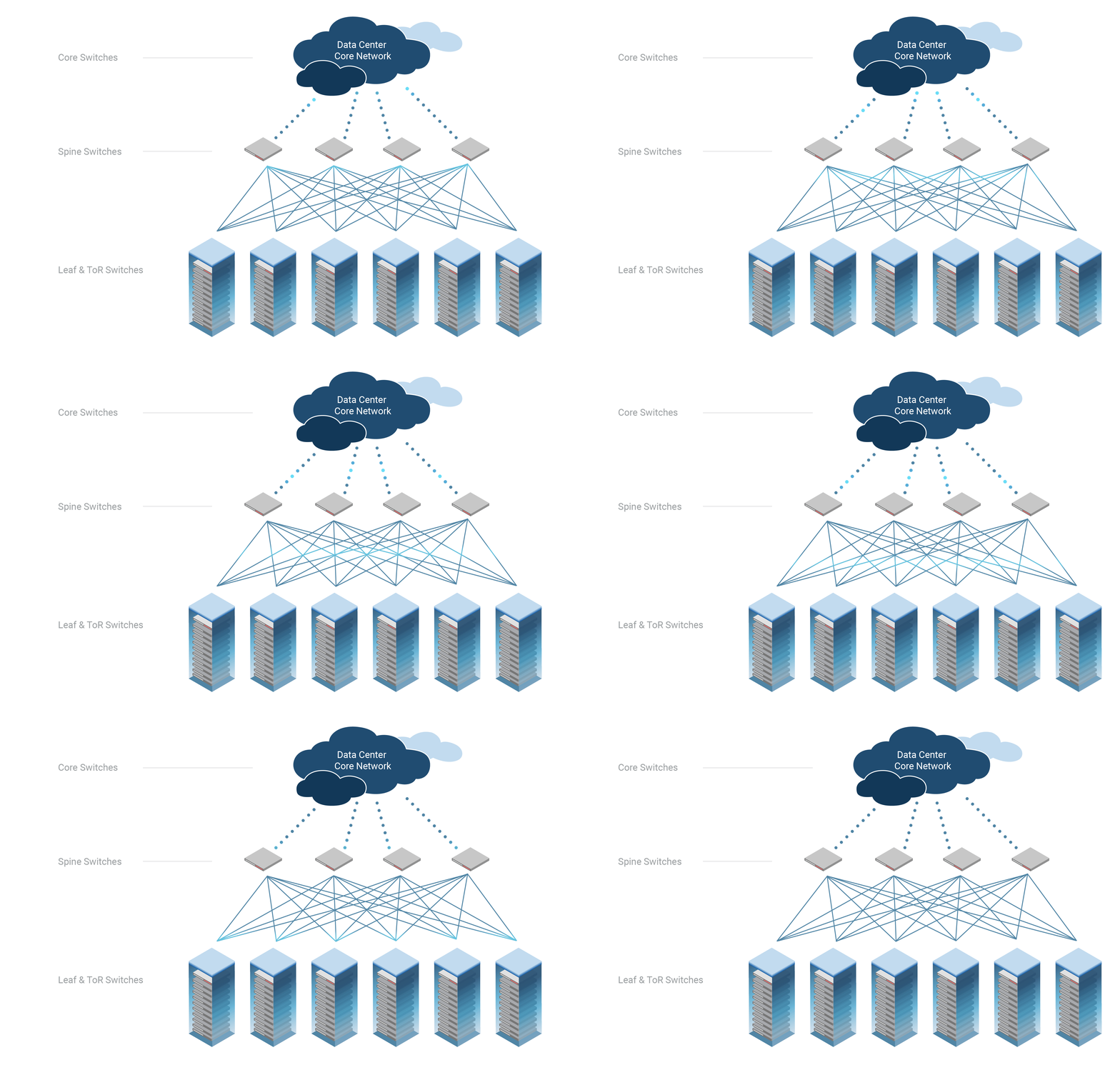
The internal "fabric" of the data center—the networking that connects thousands of GPUs—has become the primary bottleneck for AI performance. In 2026, we are seeing the transition to 1.6 Terabit (1.6T) Ethernet and InfiniBand.
| Technology Component | Previous Standard (2022-2023) | Current Hyperscale Standard (2026) | Primary Benefit |
|---|---|---|---|
| Port Speed | 400G / 800G | 1.6T | Higher throughput for model checkpointing. |
| Cabling | Active Optical Cables (AOC) | Linear Drive Optics / Co-Packaged Optics | Reduced power consumption in the network layer. |
| Memory Interconnect | PCIe Gen 5 | CXL 3.1 (Compute Express Link) | Enables memory pooling and shared memory across nodes. |
| Rack Power | 15kW - 30kW | 60kW - 120kW | Support for AI clusters (NVIDIA Blackwell/Rubin). |
| Cooling Method | Computer Room Air Conditioning (CRAC) | Direct-to-Chip (DLC) / Immersion | Ability to cool chips with TDP over 700W. |
The Impact of CXL 3.1
Compute Express Link (CXL) 3.1 is now a cornerstone of hyperscale architecture. It allows for memory pooling, where a cluster of servers can share a giant pool of external DRAM or Flash memory. Historically, if one server ran out of memory, it would crash or slow down, even if the neighboring server had idle RAM. CXL 3.1 breaks these silos, significantly improving hardware utilization rates and lowering the total cost of ownership (TCO).
Sustainability Beyond Carbon Credits
In 2026, the definition of a "green" data center has moved beyond the simple purchase of Renewable Energy Credits (RECs). Regulators and investors now demand transparency in Scope 3 emissions—the carbon footprint of the building materials (concrete and steel) and the lifecycle of the servers themselves.
- Circular Economy Initiatives: Hyperscalers have established internal "second-life" markets where older servers are decommissioned from high-performance zones and repurposed for less demanding internal tasks or sold to secondary markets.
- Water Usage Effectiveness (WUE): With the transition to liquid cooling, there is a renewed focus on WUE. Closed-loop liquid systems are becoming the standard because they consume almost no water after the initial fill, unlike traditional evaporative cooling towers that lose millions of gallons to evaporation.
- Waste Heat Recovery: In colder climates, hyperscale facilities are increasingly integrated with municipal district heating systems. The heat generated by the servers is captured via heat exchangers and pumped into local homes and greenhouses, improving the facility's relationship with its host community.
Frequently Asked Questions
What is the difference between a traditional data center and a hyperscale data center in 2026?
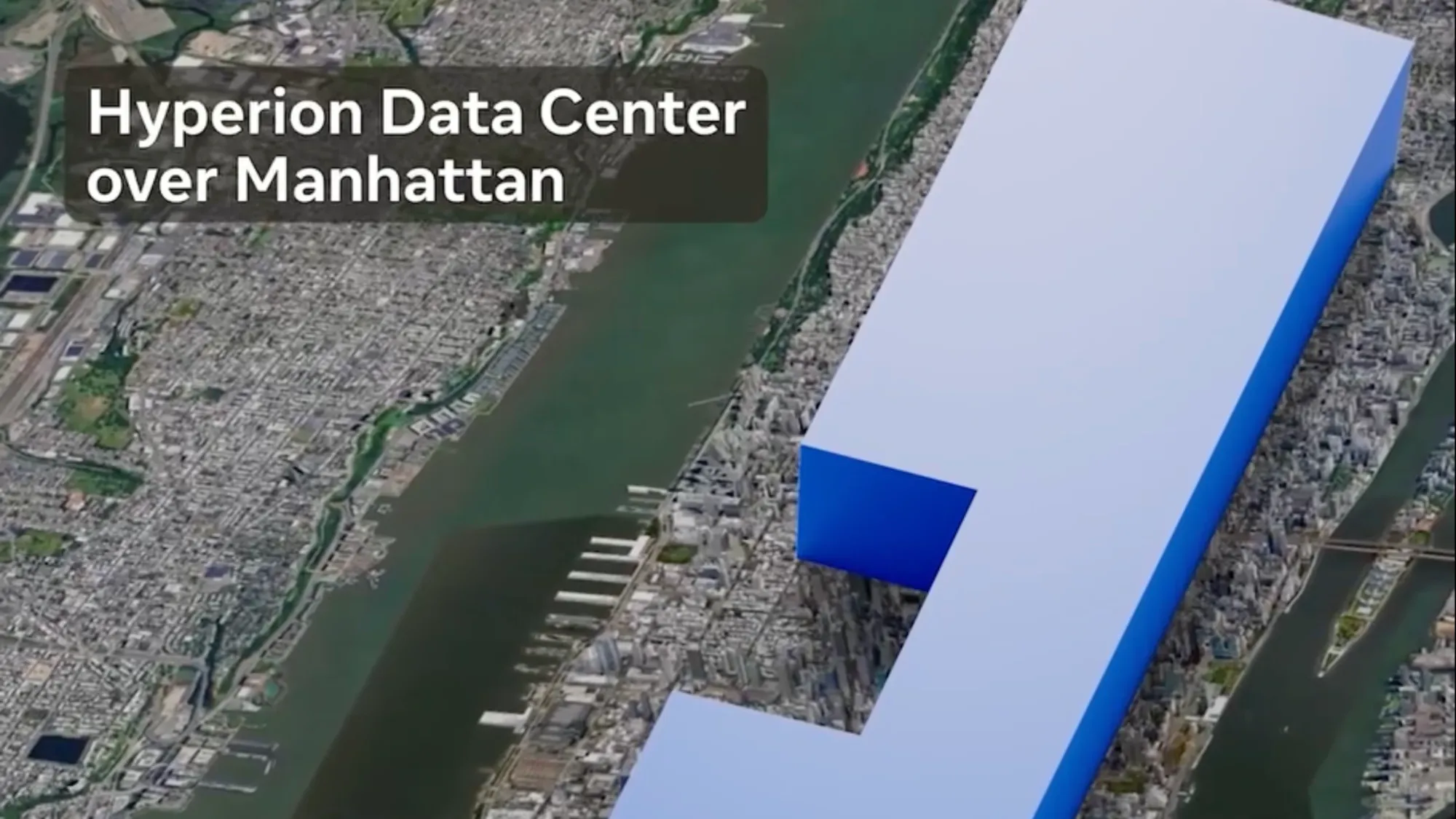
A hyperscale data center is defined by its scale (usually 5,000+ servers and 20MW+ of power) and its architectural uniformity. Unlike traditional colocation facilities that house equipment for hundreds of different companies, hyperscale facilities are typically owned or leased by a single "Big Tech" entity and use custom-designed hardware and software to achieve extreme efficiency.
Why is liquid cooling suddenly mandatory for hyperscale sites?
The latest generations of AI processors, such as the NVIDIA Blackwell and Rubin series, generate more heat than air can physically carry away. At the chip level, Thermal Design Power (TDP) has surpassed 700W-1,000W. Air is an insulator, whereas liquid is a much more effective conductor, making liquid cooling the only viable way to prevent these expensive chips from overheating.
How are hyperscale data centers dealing with power grid shortages?
Hyperscalers are increasingly moving "behind the meter" by building their own power plants. This includes investing in Small Modular Reactors (SMRs), massive on-site solar farms with battery storage, and hydrogen fuel cells. They are also selecting new "secondary" locations where land and power are abundant, even if those locations are far from major population centers.
What is 1.6T networking, and why is it important?
1.6T networking refers to data transfer speeds of 1.6 Terabits per second per port. In the context of AI, thousands of GPUs must work together as a single "supercomputer." If the network is slow, the GPUs sit idle waiting for data, which is a massive waste of capital. 1.6T networking ensures that the interconnect does not become a bottleneck for training massive models.
How does CXL technology change data center efficiency?
CXL (Compute Express Link) allows different components like CPUs, GPUs, and memory to communicate more efficiently. Its biggest advantage in 2026 is memory pooling, which prevents "stranded" memory. By allowing servers to share memory resources, hyperscalers can buy less total RAM while achieving the same or better performance.
Practical Recommendations for Infrastructure Leaders
For those operating in the hyperscale ecosystem or planning large-scale enterprise deployments, the shift toward AI-ready infrastructure is non-negotiable. Organizations should prioritize the implementation of liquid-cooling-ready rack designs, even if they are not yet fully utilizing them. Furthermore, as grid power becomes more volatile and expensive, investing in on-site energy storage and grid-interactive technologies will be essential for maintaining uptime and managing operational costs. Finally, the move toward CXL-enabled hardware should be a primary consideration for any refresh cycle to ensure long-term scalability and resource efficiency.
Image Gallery