Weapons Movie Plot, Cast, and Narrative Spoilers Explained
Zach Cregger’s horror thriller Weapons is an ensemble mystery centered on the multi-threaded disappearance of high school students in a small American town. Featuring an interconnected narrative structure reminiscent of Paul Thomas And...
Zach Cregger’s horror thriller Weapons is an ensemble mystery centered on the multi-threaded disappearance of high school students in a small American town. Featuring an interconnected narrative structure reminiscent of Paul Thomas Anderson’s Magnolia, the film explores systemic trauma, community paranoia, and dark supernatural or psychological forces through shifting, non-linear character perspectives.
Contents
Core Premise and Narrative Framework of Zach Cregger’s Weapons
Following the massive critical and commercial success of his 2022 horror film Barbarian, writer-director Zach Cregger conceived Weapons as a significantly larger, multi-layered horror epic. While Barbarian surprised audiences by executing an abrupt, mid-film genre shift and resetting its narrative track halfway through, Weapons expands this structural experimentation across a broader ensemble cast.
The story takes place in a seemingly quiet suburban community rattled by a horrifying catalyst: a group of high school teenagers disappears simultaneously without a trace in a single night. Rather than following a conventional, singular police procedural structure, the script weaves together multiple distinct perspective threads that unfold concurrently and retroactively. The town's residents—comprising grieving parents, troubled educators, local law enforcement, and remaining teenagers—are forced to confront not only the physical loss of the missing youth but also a pervasive, sinister influence that permeates the town’s history.
Cregger utilizes a multi-perspective structure to build tension organically. By allowing audiences to observe the central mystery through different eyes, the film continuously reframes key events. A scene that appears to be a straightforward emotional reaction in one storyline takes on a chilling, ominous secondary meaning when viewed from another character's vantage point later in the film. This technique keeps viewers continually reevaluating which characters are victims, instigators, or unwitting accomplices to the central horror.
Confirmed Cast and Key Character Dynamics
The production assembled a high-caliber ensemble cast to bring its multi-stranded narrative to life. Because Weapons relies heavily on character interaction across distinct subplots, each member of the main cast represents a distinct facet of the town's structural collapse:
- Josh Brolin: Serves as one of the central anchors of the narrative, portraying a distraught parent and community leader determined to unearth the truth behind the disappearances. His character’s obsessive investigation drives several of the film's most intense dramatic and suspenseful sequences.
- Julia Garner: Plays a vital role within the local educational system, acting as a bridge between the adult population and the internal lives of the missing teenagers. Her character's private struggles and observations provide crucial clues regarding the events leading up to the fateful night.
- Alden Ehrenreich: Appears as a local figure embedded within the town’s socio-economic underbelly, whose history and personal ties connect disparate threads of the central mystery.
- Benedict Wong: Takes on the role of an authority figure whose institutional response to the crisis highlights the administrative failures and cover-ups that exacerbate the community's terror.
- Amy Madigan & Austin Abrams: Contribute pivotal supporting performances, with Abrams representing the voice of the surviving high school demographic and Madigan providing a link to the town’s deeper, historical secrets.
- Cary Christopher & June Diane Raphael: Complete the ensemble, filling out key family units whose internal dynamics fracture under the pressure of the ongoing crisis.
The strength of the narrative relies on how these characters cross paths. Rather than staying isolated in separate subplots, their storylines collide during key set-pieces, creating high-stakes friction as individual motives conflict with the collective effort to locate the missing children.
Major Plot Elements, Narrative Twists, and Spoiler Breakdown
Understanding the story structure of Weapons requires examining how Cregger constructs suspense and delivers narrative reveals. While traditional horror films rely primarily on jump scares or external monster reveals, Weapons derives its horror from structural disorientation, thematic dread, and calculated narrative reveals.
- Central Incident: Simultaneous Disappearance of Students
- Parents & Families (Josh Brolin Thread)
- School & Educators (Julia Garner Thread)
- Law Enforcement & Town (Benedict Wong Thread)
- Intersecting Narrative Climax
The Initial Disappearance and Suburban Hysteria
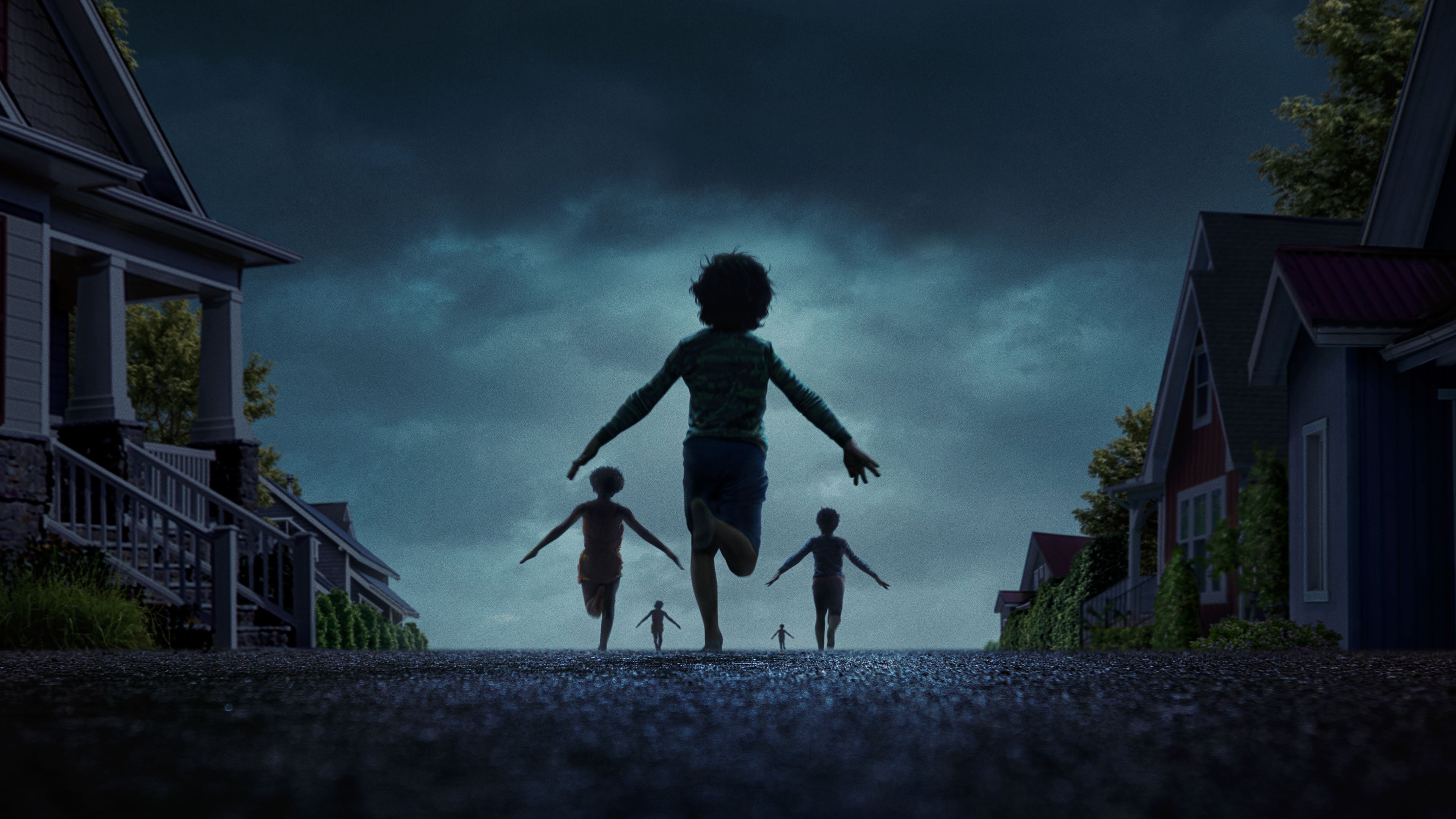
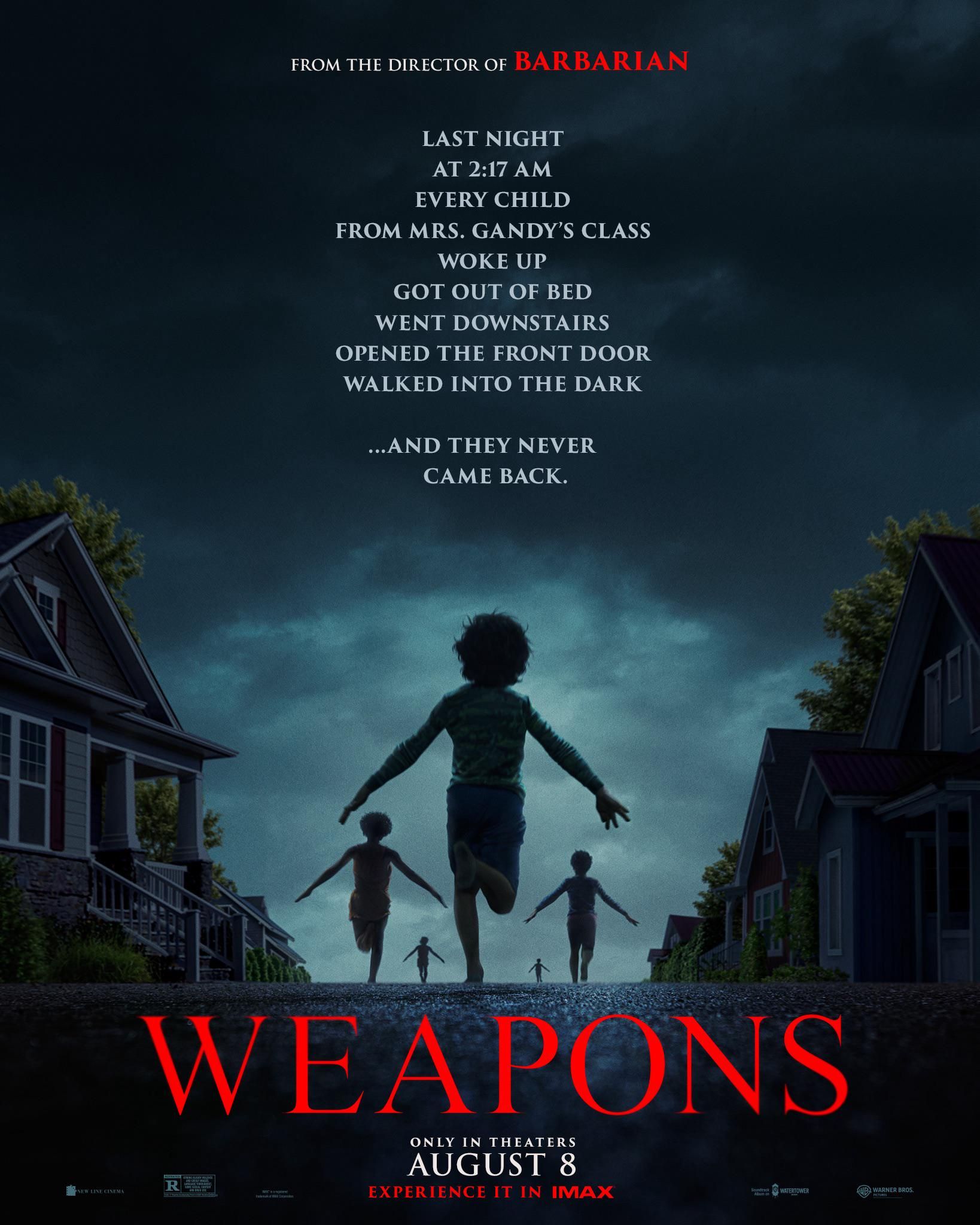
The film opens by establishing the illusion of suburban safety before shattering it with the sudden vanishing of an entire group of high school students. Unlike standard missing-persons cases, there are no immediate signs of forced entry, struggle, or physical violence at the primary sites. This absence of physical evidence immediately ignites widespread paranoia.
As news of the incident spreads, the community devolves into mass hysteria. Neighboring families begin suspecting one another, local authorities struggle to maintain public order, and wild theories circulate regarding potential cult involvement, corporate negligence, or supernatural abduction. Cregger uses this early act to critique how rapidly social cohesion disintegrates when a community faces an unexplainable tragedy.
The Significance of the Title: Literal vs. Symbolic "Weapons"
A central question throughout the film centers on the meaning of the title Weapons. The narrative operates on multiple levels regarding what constitutes a "weapon":
- Literal Instruments: The physical tools, firearms, and dangerous objects that emerge as the investigation deepens and characters resort to vigilante violence.
- Psychological Vulnerabilities: The emotional wounds, secret shames, and unhealed traumas that toxic entities—whether human or supernatural—manipulate to turn community members against each other.
- Institutional Neglect: The systemic failures of local governance, schools, and parental oversight that leave young people exposed to predatory elements in the first place.
As the plot progresses, the line between victim and weapon blurs. Characters who initially appear harmless are revealed to have acted as catalysts for the tragedy, while weapons of defense ultimately cause catastrophic collateral damage.
Structural Twists and Timeline Shifts
Following the storytelling model Cregger established in Barbarian, Weapons features key structural pivots that upend the viewer’s understanding of the story:
- The Non-Linear Second Act: Midway through the investigation, the film abruptly jumps back in time to the months preceding the vanishings. This sequence shifts perspective entirely to the missing teenagers themselves, revealing secret meetings, unusual behavioral shifts, and subtle atmospheric shifts that adults in the community completely overlooked.
- The Subverted Antagonist: A primary suspect built up during the first half of the film is revealed to be a red herring—an isolated individual whose bizarre behavior was a desperate, failed attempt to prevent the disappearances rather than cause them.
- The Climax and Dark Truth: The final act brings the converging storylines together in a harrowing culmination. The resolution exposes a deeply uncomfortable reality: the disappearances were not an isolated, random act of violence, but the result of a calculated, recurring cycle that the town's older generations had quietly facilitated and buried for decades to protect their own stability.
Production Background and Cinematic Style
The journey of Weapons from initial concept to release highlights New Line Cinema's commitment to high-concept, auteur-driven horror. Following the box-office success of Barbarian, a competitive bidding war erupted in early 2023 for Cregger’s next original screenplay. New Line Cinema ultimately secured the rights by offering full creative control, a substantial production budget, and a guaranteed wide theatrical release.
Filming took place primarily in Atlanta, Georgia, throughout mid-2024. Production designers meticulously constructed suburban environments that evoke an uncomfortable sense of false security, utilizing muted color palettes that gradually decay as the narrative becomes darker.
Cinematographically, the film employs long, continuous tracking shots during multi-character sequences to emphasize spatial awareness and narrative connectivity. Sound design also plays a crucial role; subtle auditory cues—such as low-frequency ambient hums and distorted radio signals—are embedded within key scenes to build subconscious tension before major horror reveals occur.
Comprehensive Overview of Weapons Details
The following table summarizes key operational, production, and narrative specifications for the film:
| Specification Category | Details and Features |
|---|---|
| Film Title | Weapons |
| Writer & Director | Zach Cregger |
| Primary Studio / Distributor | New Line Cinema / Warner Bros. Pictures |
| Lead Cast | Josh Brolin, Julia Garner, Alden Ehrenreich, Benedict Wong, Amy Madigan, Austin Abrams |
| Genre Classification | Ensemble Horror / Psychological Thriller / Mystery |
| Narrative Structure | Multi-perspective, non-linear ensemble story |
| Primary Filming Locations | Atlanta, Georgia, United States |
| Central Narrative Focus | Interconnected small-town disappearances, systemic trauma, and community paranoia |
| Cinematic Precedents | Magnolia (narrative structure), Barbarian (genre subversion) |
Comparing Weapons to Barbarian and Ensemble Horror Classics
To understand Weapons' place in modern cinema, it is helpful to contrast its technical and narrative choices against both Cregger's previous work and classic ensemble horror films.
- Barbarian (2022)
- Single linear timeline
- Abrupt middle-act reset
- Focused claustrophobia
- Subterranean monster
- Weapons
- Multi-strand ensemble
- Non-linear time shifts
- Community-wide scale
- Systemic/psychological
Evolution from Barbarian
While Barbarian relied on tight claustrophobia and a hard pivot from an Airbnb rental scenario into a subterranean horror story, Weapons operates on a much broader canvas. Barbarian proved Cregger’s ability to manipulate audience expectations within confined spaces; Weapons applies that same misdirection to an entire township. Rather than swapping protagonists once, Weapons routinely hand-offs the narrative baton between five distinct point-of-view characters.
Influences from Magnolia and 1970s Suspense Cinema
Cregger has frequently cited Paul Thomas Anderson's 1999 masterwork Magnolia as a structural influence. Like Magnolia, Weapons treats a geographical location as a living character, tracking how an overarching sense of grief and hidden guilt links seemingly unrelated lives. Stylistically, the film draws heavily from 1970s paranoia thrillers—such as The Conversation and Invasion of the Body Snatchers—where the horror stems as much from institutional apathy and social isolation as it does from external threats.
Viewer Guidance: How to Approach the Film
For audiences preparing to watch Weapons, maximizing the viewing experience involves navigating spoilers and understanding thematic elements:
- Avoid Detailed Plot Leaks: Because the movie relies heavily on perspective reveals and structural subversions, reading detailed scene breakdowns prior to viewing significantly diminishes the intended suspense.
- Pay Attention to Environmental Details: Background actions, ambient sounds, and recurring visual motifs in early chapters pay off significantly during the second-half perspective shifts.
- Prepare for Heavy Content Themes: The film deals candidly with themes of parental grief, teenage vulnerability, community hysteria, and systemic failure. It features intense psychological dread alongside graphic horror sequences.
Frequently Asked Questions
What is the main plot of the movie Weapons?
Weapons centers on the simultaneous, mysterious disappearance of a group of high school students in a small suburban town. The story explores the resulting paranoia, trauma, and investigation through multiple interconnected perspectives across the community.
Who directed and wrote Weapons?
The movie was written and directed by Zach Cregger, marking his follow-up feature to the critically acclaimed 2022 horror hit Barbarian.
Is Weapons a direct sequel to Barbarian?
No. Weapons is an entirely standalone, original story with a new cast of characters, setting, and thematic focus. It shares Cregger's signature structural subversion and tension-building techniques but is not narrative-connected to Barbarian.
Why is the movie compared to Paul Thomas Anderson's Magnolia?
The comparison stems from the film's structural design. Like Magnolia, Weapons uses a large ensemble cast and multiple overlapping narrative threads to explore how a central emotional theme affects an entire community simultaneously.
What genre does Weapons belong to?
Weapons is primarily categorized as an ensemble horror mystery and psychological thriller, incorporating elements of crime procedurals, small-town mystery, and supernatural dread.
Final Recommendation
To fully appreciate Zach Cregger’s intricate narrative construction in Weapons, viewers should experience the film with minimal prior knowledge of its specific plot twists. The movie’s primary strength lies in its ability to dismantle suburban security layer by layer, turning structural misdirection into a powerful storytelling tool. Theatergoers and horror enthusiasts seeking a complex, ensemble-driven mystery will find Weapons to be a masterclass in modern atmospheric suspense.
Image Gallery