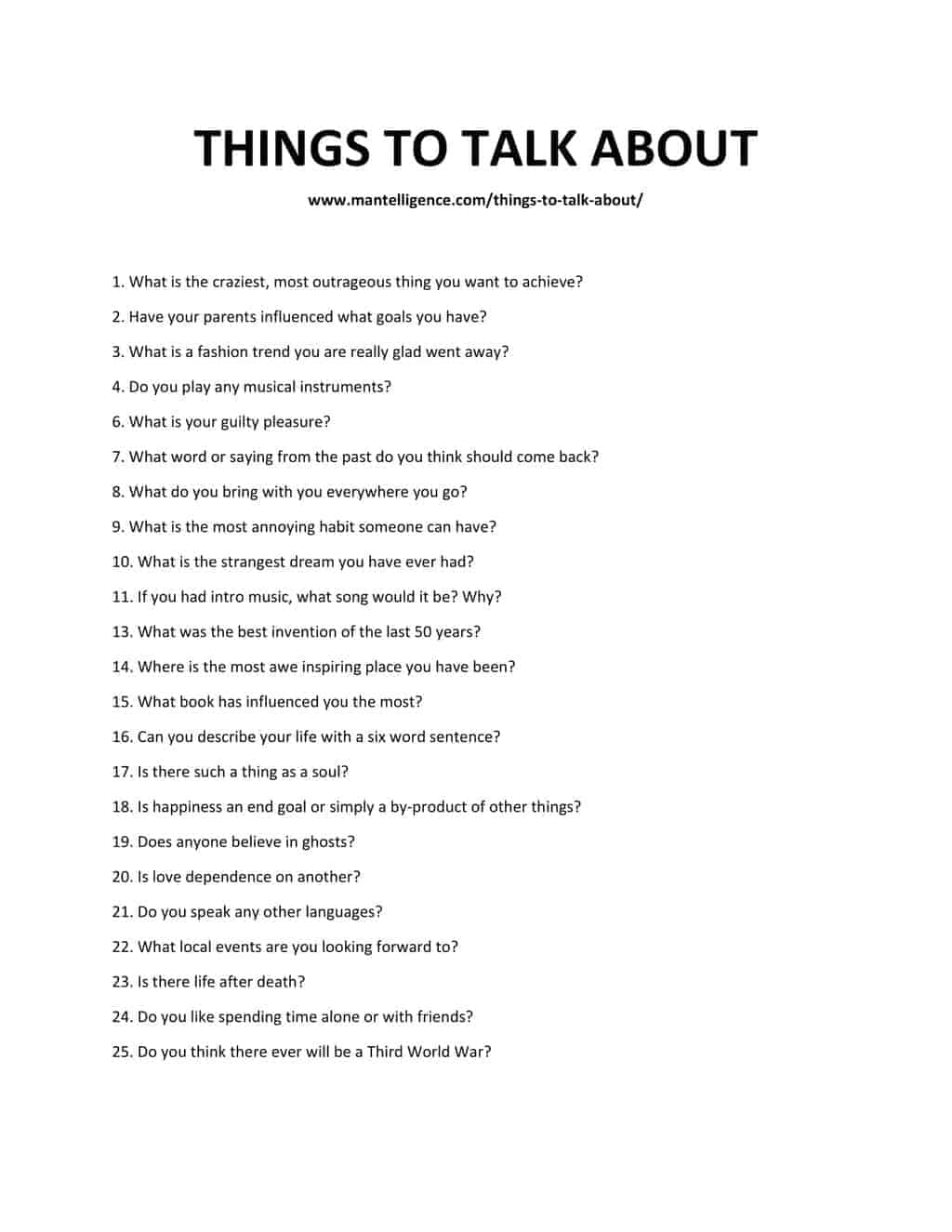
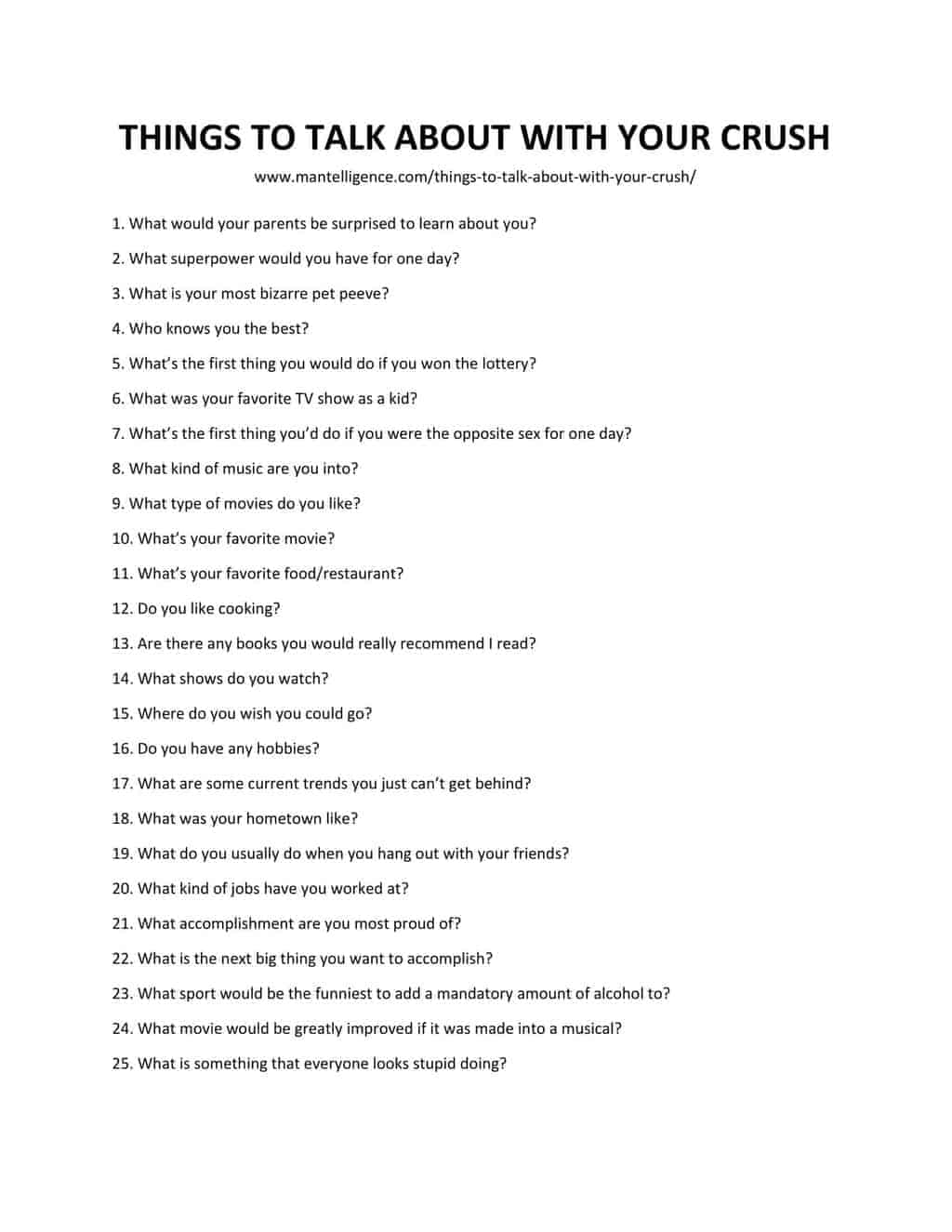
Comprehensive List of Things to Talk to People About in 2026
The most effective things to talk to people about include shared immediate environments, personal passions, professional aspirations, and universal experiences like travel or media. To build genuine rapport, focus on open-ended questio...
The most effective things to talk to people about include shared immediate environments, personal passions, professional aspirations, and universal experiences like travel or media. To build genuine rapport, focus on open-ended questions that allow the other person to share stories rather than simple "yes" or "no" facts.
Contents
Connecting with others is a fundamental human need that transcends the digital interfaces of 2026. Whether you are at a high-stakes networking event, a first date, or a casual gathering, the ability to initiate and sustain a conversation is a vital soft skill. Many individuals struggle not because they lack interesting lives, but because they fear the silence or worry about being intrusive. Mastery of conversation involves moving from "safe" situational topics to deeper, more meaningful exchanges through active listening and strategic questioning.
Understanding the Foundation of Conversation
Before selecting a topic, it is essential to understand the "Social Battery" and the context of the interaction. In the current 2026 social landscape, people value authenticity and brevity. Conversation serves two primary purposes: information exchange and emotional bonding. While the former is functional, the latter is what builds lasting relationships.
Psychologically, the best conversations are those where both parties feel heard and valued. The "Self-Disclosure Loop" is a phenomenon where one person shares a small personal detail, prompting the other to do the same. This creates a ladder of intimacy that allows a conversation to progress from weather-related small talk to significant life philosophies.
Situational Icebreakers: The "Here and Now"
The most natural way to start a conversation is to comment on the shared environment. This is often referred to as the "Situational Lead-In." It is low-risk because it involves something both people are currently experiencing, which minimizes the chance of awkwardness.
- The Venue or Event: If you are at a conference, ask about the most impactful speaker. If you are at a party, ask how the person knows the host.
- The Atmosphere: Comments on the music, the decor, or the food are classic for a reason—they are neutral and easy to agree with.
- Current Transitions: In 2026, many social interactions happen in hybrid spaces. Asking someone about their journey to the event or their experience with the venue's technology can be a quick way to break the ice.
By starting with the "Here and Now," you establish a common ground before moving into more personal territory. This phase of the conversation usually lasts only a few minutes but acts as a necessary "warm-up."
The FORD Method: A Reliable Framework
When situational topics are exhausted, many professional communicators rely on the FORD Method. This acronym stands for Family, Occupation, Recreation, and Dreams. It provides a roadmap for deeper engagement without being overly prying.
Family and Background
While asking about family can sometimes be sensitive, starting with "Where did you grow up?" or "Do you have family in the area?" is generally safe. In 2026, the definition of family has become increasingly broad, so it is often better to ask, "Who are the people who keep you grounded?" This allows the person to discuss whoever is most important to them, whether it is biological family, a partner, or a close-knit group of friends.
Occupation and Purpose
Instead of the standard "What do you do?", which can feel like an interrogation, try asking "What projects are keeping you busy lately?" or "How did you get started in your industry?" This shifts the focus from a job title to the person's daily reality and motivations. In the current economic climate, many people have "portfolio careers" or side passions, so asking about their "work" in a broad sense is more inclusive.
Recreation and Hobbies
This is often the most enjoyable part of a conversation. People love to talk about what they do when they aren't working. Inquire about:
- Recent Reads or Watches: With the evolution of streaming and digital media, asking for a recommendation is a great way to learn about someone’s tastes.
- Physical Activities: Whether it’s pickleball (which remains popular in 2026) or virtual reality fitness, people are usually proud of their physical pursuits.
- Travel: Asking about the last place they visited or their "dream destination" can reveal a lot about their personality and values.
Dreams and Aspirations
This is the deepest level of the FORD method. It should be reserved for when some level of rapport has already been established. Questions like "What is something you’ve always wanted to learn?" or "If you could take a year off to do anything, what would it be?" tap into the person’s imagination and future-oriented thinking.
Professional Networking in 2026
Networking has evolved to focus more on shared challenges and technological integration. When talking to colleagues or potential partners, the goal is to find areas of mutual benefit or shared intellectual interest.
- Industry Trends: Discussing how automation or new software tools are changing your specific field is a perennial topic.
- Professional Development: Ask about any recent certifications or skills they are trying to master. This shows you value growth.
- Work-Life Integration: In 2026, the "hustle culture" of the past has largely been replaced by a focus on sustainable productivity. Asking how someone manages their energy (rather than their time) is a sophisticated way to connect.
According to research from the Harvard Business Review, high-quality professional connections are built on "relational coordination," which involves frequent, timely, and problem-solving communication.
Navigating Deep Conversations and "Big Talk"
"Big Talk" is the opposite of small talk. It skips the pleasantries and moves directly into life’s big questions. While not appropriate for every situation, it is the fastest way to form a deep bond.
| Context | Recommended Topic | Goal of the Topic |
|---|---|---|
| First Date | Core values and life highlights | Determine long-term compatibility |
| Old Friend | Recent personal growth and challenges | Re-establish intimacy and support |
| New Acquaintance | Passions and "unpopular" opinions | Find unique commonalities |
| Networking | Future of the industry and mentorship | Establish professional credibility |
| Family Gathering | Shared history and future goals | Strengthen ancestral/group bonds |
When engaging in deep conversation, use the "2-to-1" rule: listen twice as much as you speak. This ensures the other person feels the space is safe for vulnerability.
The Art of the Follow-Up Question
The secret to being a great conversationalist isn't having a list of topics, but knowing how to dig deeper into whatever the other person says. A follow-up question demonstrates that you were actually listening.
- The "Tell Me More" Technique: When someone mentions a fact, ask for the story behind it. "You mentioned you lived in Tokyo; what was the biggest culture shock for you?"
- The Emotional Check: "How did that experience make you feel?" or "Were you nervous when you started that project?"
- The "Why" vs. "How": "How" questions lead to facts; "Why" questions lead to motivations. Mix both to get a full picture of the person.
Conversation Killers to Avoid
Even with the best topics, certain behaviors can derail a conversation. In 2026, social etiquette emphasizes emotional intelligence and "reading the room."
- Controversial Topics Early On: Unless you are at a political event, avoid diving into polarizing news or religious debates with people you’ve just met.
- The "One-Upper": If someone shares a story about a vacation, don't immediately respond with a story about your even better vacation. Acknowledge their story first.
- Phone Distraction: There is no faster way to end a conversation than checking your device. In 2026, "phubbing" (phone-snubbing) is considered a significant social faux pas.
- Oversharing: While vulnerability is good, sharing deep trauma or highly personal medical issues within the first ten minutes can make others uncomfortable.
Frequently Asked Questions
What if I am an introvert and hate small talk?
Introverts often find small talk draining because it lacks "substance." To manage this, try to bridge to a "Big Talk" topic faster. Instead of talking about the weather, ask a question like, "What’s been the highlight of your week so far?" This bypasses the fluff and gets to something real.
How do I end a conversation gracefully?
Ending a conversation is just as important as starting one. Use a "future-facing" exit: "It was so great hearing about your new project. I’ll let you get back to the event, but let’s catch up again soon." This provides a clear end while maintaining the connection.
What are some "safe" topics for 2026?
Safe topics include technology trends (like new gadgets), popular local restaurants, travel aspirations, and lighthearted media (movies, podcasts). Avoid health crises or economic instability unless the other person brings it up first.
How can I remember people's names and details?
The best way to remember is to repeat the name immediately after hearing it: "Nice to meet you, Sarah." During the conversation, try to link a detail they share to a mental image. If Sarah mentions she likes gardening, imagine her holding a giant sunflower.
What do I do if there is an awkward silence?
Embrace the silence for a moment rather than rushing to fill it with "um" or "so." You can use the silence to transition: "That actually reminds me of something I wanted to ask you..." or simply comment on the environment again to reset the flow.
Practical Recommendation for Social Growth
To improve your conversational skills in 2026, practice the "One New Detail" rule. In every conversation you have this week—whether with a barista or a CEO—aim to learn one new detail about their life that isn't related to their job title. This habit builds your "curiosity muscle" and makes finding things to talk about a natural, intuitive process rather than a rehearsed script.
Image Gallery