Engagement Accounting Software: A Comprehensive Guide for 2026
Engagement accounting software is a specialized category of digital platforms designed to track, measure, and analyze customer, client, or employee interactions across multiple channels, linking those behaviors directly to financial ou...
Engagement accounting software is a specialized category of digital platforms designed to track, measure, and analyze customer, client, or employee interactions across multiple channels, linking those behaviors directly to financial outcomes, resource allocation, and operational profitability.
Contents
In modern organizational operations, tracking raw activity—such as website clicks, email opens, or meeting hours—no longer satisfies the need for accountability. Organizations across various industries face the challenge of connecting day-to-day engagement metrics directly to revenue generation, cost management, and resource forecasting. This challenge has driven the adoption of engagement accounting software, a technological evolution that bridges the gap between customer relationship management (CRM), standard financial accounting systems, and workforce analytics.
By unifying behavioral data with financial ledgers, these platforms allow businesses to calculate the true cost and profitability of specific client relationships, billable projects, or consumer segments. Understanding how these tools function, their core capabilities, and their operational requirements is essential for organizations seeking to optimize their financial and operational efficiency in 2026.
The Evolution and Core Purpose of Engagement Accounting
Traditional accounting systems excel at recording historical financial transactions: accounts payable, accounts receivable, general ledgers, and balance sheets. However, they typically treat client interactions and operational workflows as external variables rather than core inputs. Conversely, traditional customer engagement tools track behavioral milestones without accounting for the granular labor costs, overhead allocation, or exact profit margins associated with maintaining those relationships.
Engagement accounting software resolves this disconnect by aligning time, effort, and behavioral touchpoints with financial metrics. The primary objective is to answer a fundamental business question: Which client engagements, projects, or community interactions actually drive sustainable financial value, and which consume more resources than they return?
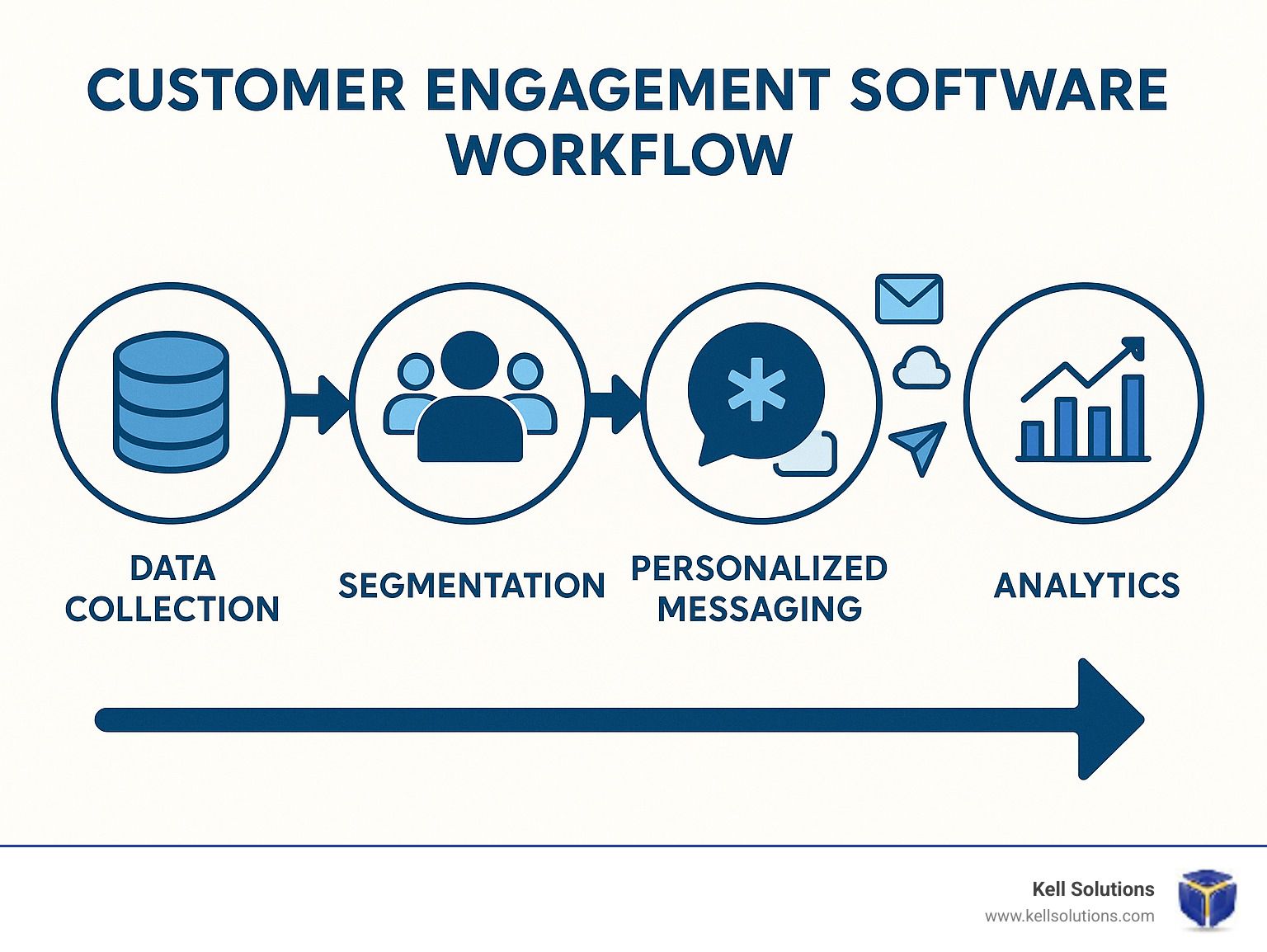
To achieve this, these platforms integrate several traditionally siloed data streams:
- Time and Effort Tracking: Capturing billable and non-billable hours, task completion rates, and resource utilization across teams.
- Behavioral Telemetry: Monitoring how clients or users interact with digital products, service portals, or communication channels.
- Financial Ledger Data: Pulling invoicing history, cost rates, overhead expenses, and revenue realization data.
By processing these inputs concurrently, engagement accounting software provides a multidimensional view of organizational health, moving beyond backward-looking financial statements to offer predictive insights into operational profitability.
Key Features and Technical Capabilities
Modern engagement accounting platforms offer a sophisticated suite of features designed to handle complex data structures. Evaluating these platforms requires an understanding of their core technical capabilities.
Multi-Dimensional Profitability Analysis
At the heart of engagement accounting software is profitability modeling. Unlike standard ledger software that calculates profit on a macro level, engagement accounting breaks profitability down by client, project, department, or individual contributor. The software allocates direct costs (such as contractor fees and dedicated software licenses) and indirect costs (such as shared administrative overhead) to specific engagement streams. This granular visibility helps leadership teams identify unprofitable contracts or mispriced services.
Advanced Time and Resource Allocation Engine
Accurate engagement accounting relies heavily on precise timekeeping and resource allocation. Advanced platforms feature automated time capture tools that monitor application usage, calendar events, and document creation to reduce manual entry errors. Furthermore, resource allocation engines match project requirements with staff availability and cost rates, helping managers optimize workforce utilization without burning out high-value team members.
Integration Ecosystem
Engagement accounting software does not operate in a vacuum. Its utility depends on its ability to ingest data from existing enterprise infrastructure. Essential integrations typically include:
- Enterprise Resource Planning (ERP) and Accounting Systems: Such as QuickBooks, Xero, NetSuite, or Sage, ensuring financial data remains synchronized.
- Customer Relationship Management (CRM) Tools: Such as Salesforce or HubSpot, providing context on sales pipelines, client history, and contract values.
- Project Management Suites: Such as Jira, Asana, or Monday.com, tracking task progression and milestone achievements.
Comparing Traditional Accounting vs. CRM vs. Engagement Accounting
To understand the unique market position of engagement accounting software, it helps to compare it directly against the tools organizations have traditionally used to manage finances and relationships.
| Feature / Metric | Traditional Accounting Software | Customer Relationship Management (CRM) | Engagement Accounting Software |
|---|---|---|---|
| Primary Focus | Financial compliance, tax reporting, and historical ledger management. | Sales pipeline tracking, lead generation, and customer communication history. | Connecting operational engagement and resource costs directly to financial profitability. |
| Data Inputs | Invoices, bills, bank statements, and journal entries. | Email logs, call transcripts, deal stages, and contact details. | Time logs, operational workflows, behavioral touchpoints, and financial ledgers. |
| Profitability View | Macro-level business profitability (P&L statements). | Deal-level forecasted revenue, rarely accounting for delivery costs. | Micro-level profitability per client, project, phase, and resource hour. |
| Primary Users | Chief Financial Officers, accountants, and bookkeepers. | Sales representatives, account managers, and marketing teams. | Project managers, operations directors, finance leads, and executive leadership. |
Implementation Prerequisites and Operational Requirements
Deploying engagement accounting software requires careful preparation. Because these platforms touch both financial data and operational workflows, a rushed implementation can result in inaccurate data modeling and user resistance.
Data Hygiene and Standardization
Before migrating to an engagement accounting platform, an organization must audit its existing data. Inconsistent client naming conventions, outdated employee cost rates, and poorly defined project codes will compromise the software's analytical output. Establishing clear taxonomies for billing codes, department categories, and expense types is a mandatory prerequisite.
Change Management and User Adoption
The accuracy of engagement accounting depends on timely data entry—particularly regarding time tracking and project updates. If employees view the software as an administrative burden, compliance rates drop, leading to skewed profitability reports. Successful implementations require clear communication regarding why the software is being adopted, framing it as a tool to protect margins and secure resources rather than an intrusive employee-monitoring mechanism.
Security and Compliance Standards
Because engagement accounting platforms aggregate sensitive financial records and proprietary operational data, robust security architecture is non-negotiable. Organizations must verify that software vendors adhere to recognized compliance frameworks such as SOC 2 Type II, ISO/IEC 27001, and GDPR or CCPA standards, depending on geographical operating regions and data residency requirements.
Common Pitfalls and Troubleshooting
Organizations adopting engagement accounting software frequently encounter predictable obstacles during the rollout and maturation phases. Recognizing these challenges helps mitigate operational disruption.
- Over-Complexity in Cost Allocation: Attempting to allocate every microscopic overhead expense to individual projects can create administrative bloat that outweighs the analytical benefit. Organizations should establish clear thresholds for what constitutes direct versus indirect cost allocation.
- Siloed Configuration: Implementing the software within a single department (such as finance only or operations only) defeats its purpose as a bridge between teams. Cross-functional representation from finance, project management, and human resources is essential during the setup phase.
- Neglecting Non-Billable Time Tracking: Focusing exclusively on billable hours while ignoring internal meetings, training, and administrative tasks leads to distorted capacity planning. Accurate engagement accounting accounts for total utilization, not just client-facing output.
Selecting the Right Platform
When evaluating engagement accounting solutions, decision-makers should look beyond feature checklists and focus on organizational alignment. Key selection criteria include:
- Scalability: Can the platform handle expanding team sizes and complex, multi-currency international billing structures?
- Customization of Reporting: Does the software allow finance and operations teams to build custom dashboards without requiring complex SQL queries or external data visualization tools?
- Total Cost of Ownership (TCO): Beyond software subscription fees, evaluate implementation costs, ongoing maintenance requirements, and potential productivity dips during the transition period.
Conclusion and Next Actions
Engagement accounting software bridges the historical gap between operational effort and financial reward. By providing granular visibility into resource utilization, project costs, and client profitability, these platforms empower organizations to make informed, data-driven decisions.
To begin the adoption process, leadership teams should conduct an internal audit of their current time-tracking, project management, and financial systems to identify data gaps. Following the audit, stakeholders should map out their specific profitability questions—such as identifying which client tiers yield the highest return on labor—and use those requirements to guide vendor demonstrations and pilot programs.
Image Gallery