Upcoming Solar Eclipses in the US: Timing and Viewing Opportunities (2026–2045)
As of 2026, the United States will not experience another total solar eclipse across the contiguous 48 states until August 22, 2044. However, residents can view a partial solar eclipse on August 12, 2026, in the Northeast, and speciali...
As of 2026, the United States will not experience another total solar eclipse across the contiguous 48 states until August 22, 2044. However, residents can view a partial solar eclipse on August 12, 2026, in the Northeast, and specialized viewing opportunities for annular and partial events will occur periodically over the next two decades.
Contents
The August 12, 2026 Eclipse: What the US Will See
The solar eclipse of August 12, 2026, is primarily a European and Arctic event, with the path of totality crossing over Greenland, Iceland, and northern Spain. For observers in the United States, this event will be visible only as a partial solar eclipse, and visibility is strictly limited to the northeastern corner of the country.
Geographic Visibility in the US
The partial shadow, or penumbra, will brush against the East Coast during the late afternoon and early evening hours. The best viewing opportunities within the US will be in northern Maine, where the sun will be approximately 10% to 20% obscured. Locations further south and west, such as Boston, Massachusetts, and New York City, will see a much smaller "bite" taken out of the sun (roughly 1% to 5% obscuration) just before sunset.
Because the eclipse occurs so low on the horizon for US viewers, observers must have a clear, unobstructed view of the western-northwestern horizon. Buildings, trees, or mountains will likely block the view of this specific event for many East Coast residents.
Timing and Peak Obscuration
The timing of the August 12, 2026, event is critical for US observers. In Portland, Maine, the partial eclipse begins at approximately 5:30 PM EDT, reaching maximum obscuration shortly after 6:00 PM EDT. Because the sun will be extremely low (less than 10 degrees above the horizon), the atmospheric interference will be high, potentially causing the sun to appear distorted or reddened—a phenomenon known as "atmospheric refraction."
The Great Wait: The Next Total Solar Eclipses in the US
Following the widespread coverage of the 2017 and 2024 total solar eclipses, the US has entered a relative "eclipse drought" regarding totality. To see the sun completely obscured by the moon again without leaving the country, Americans will need to wait for the following dates:
March 30, 2033: The Alaskan Totality
The next total solar eclipse to touch US soil occurs on March 30, 2033. However, the path of totality is confined to the remote northwestern regions of Alaska. This event will be a major target for "eclipse hunters" willing to brave sub-zero temperatures and snowy conditions. The path includes locations like Utqiaġvik (Barrow) and Nome. For the rest of the contiguous US, this will remain invisible or a very minor partial event.
August 22–23, 2044: The Northern Plains Return
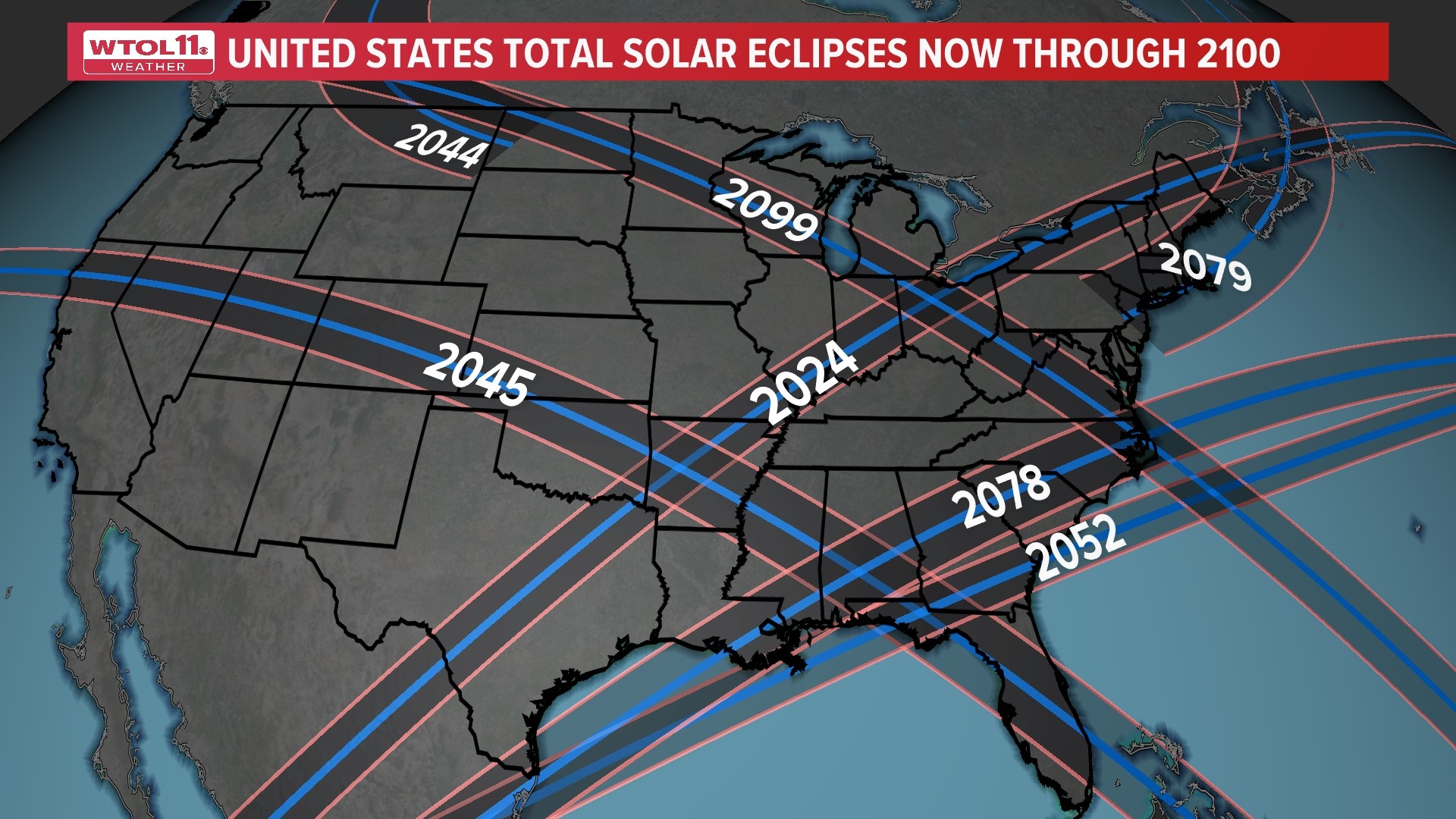
The next total solar eclipse to reach the contiguous 48 states arrives on August 23, 2044. The path of totality will begin in Greenland, sweep through western Canada, and finally enter the US through Montana and North Dakota. Because the path only clips a small portion of the US, many enthusiasts are already planning for the "big one" occurring just one year later.
August 12, 2045: The Great American Eclipse II
On August 12, 2045, a massive total solar eclipse will traverse the United States from coast to coast. This event is expected to be even more spectacular than the 2017 or 2024 events because the path of totality will be wider and the duration of totality will be longer—lasting over six minutes in some locations. The path will move from California through Nevada, Utah, Colorado, Kansas, Oklahoma, Arkansas, Mississippi, Alabama, and finally Florida.
Understanding Eclipse Types and Their Viewing Requirements
To properly prepare for upcoming viewing opportunities, it is essential to distinguish between the three primary types of solar eclipses. Each requires different equipment and offers a unique visual experience.
- Total Solar Eclipse: The Moon completely covers the Sun's disk. Only during the few minutes of "totality" is it safe to look directly at the Sun without protection. This is the only time the solar corona (the Sun's outer atmosphere) becomes visible.
- Annular Solar Eclipse: The Moon is at a point in its orbit further from Earth, making it appear smaller than the Sun. It leaves a "ring of fire" (annulus) around the dark silhouette of the Moon. Eye protection is required at all times during an annular eclipse.
- Partial Solar Eclipse: The Moon, Sun, and Earth are not perfectly aligned, so the Moon only covers a portion of the Sun. This is what the Northeast US will experience in August 2026.
The Physics of Syzygy
The alignment of the Sun, Moon, and Earth is known as syzygy. Because the Moon's orbit is tilted by about 5 degrees relative to the Earth's orbit around the Sun, these three bodies do not align every month. They only intersect at points called "nodes." When a node alignment coincides with a new moon, a solar eclipse occurs. The specific type of eclipse depends on the Moon's distance from Earth (apogee vs. perigee).
Essential Safety Protocols for US Viewers
Regardless of whether you are viewing a 10% partial eclipse in Maine in 2026 or a 100% total eclipse in 2045, safety is the highest priority. The Sun’s infrared and ultraviolet radiation can cause solar retinopathy—permanent damage to the retina—within seconds of unprotected exposure.
Certified Solar Filters
The only safe way to view a partial or annular eclipse is through solar viewing glasses or handheld solar viewers that meet the ISO 12312-2 international safety standard. Standard sunglasses, even those with "polarized" or "dark" lenses, do not provide sufficient protection. Authentic filters are thousands of times darker than regular sunglasses and must be free of scratches, punctures, or tears.
Indirect Viewing Methods
If you do not have certified glasses, you can use indirect viewing methods:
- Pinhole Projectors: Create a small hole in a piece of cardstock and project the Sun's image onto a second piece of paper. You look at the projection, not the Sun itself.
- Optical Projection: Binoculars or telescopes can be used to project the Sun's image onto a white board, but this should only be done by those familiar with the risks of heat buildup in optical instruments.
- Natural Pinhole Projectors: During a partial eclipse, look at the shadows cast by tree leaves on the ground. The small gaps between leaves act as natural pinholes, projecting hundreds of "crescent suns" onto the sidewalk.
Upcoming Solar Eclipse Schedule (2026–2030)
While the contiguous US waits for totality, several global events offer "traveler's opportunities" or partial views.
| Date | Eclipse Type | US Visibility | Primary Path of Totality/Annularity |
|---|---|---|---|
| August 12, 2026 | Total | Partial (Northeast Only) | Greenland, Iceland, Spain |
| February 6, 2027 | Annular | None | Chile, Argentina, West Africa |
| August 2, 2027 | Total | None | Spain, Morocco, Egypt, Saudi Arabia |
| January 26, 2028 | Annular | None | Ecuador, Brazil, Suriname, Spain |
| June 1, 2030 | Annular | None | Algeria, Greece, Turkey, Russia |
Traveling for Totality: The 2026 Iceland and Spain Opportunities
Given the limited viewing opportunities in the US for 2026, many American enthusiasts are planning travel to the path of totality in Europe.
Iceland: The Weather Challenge
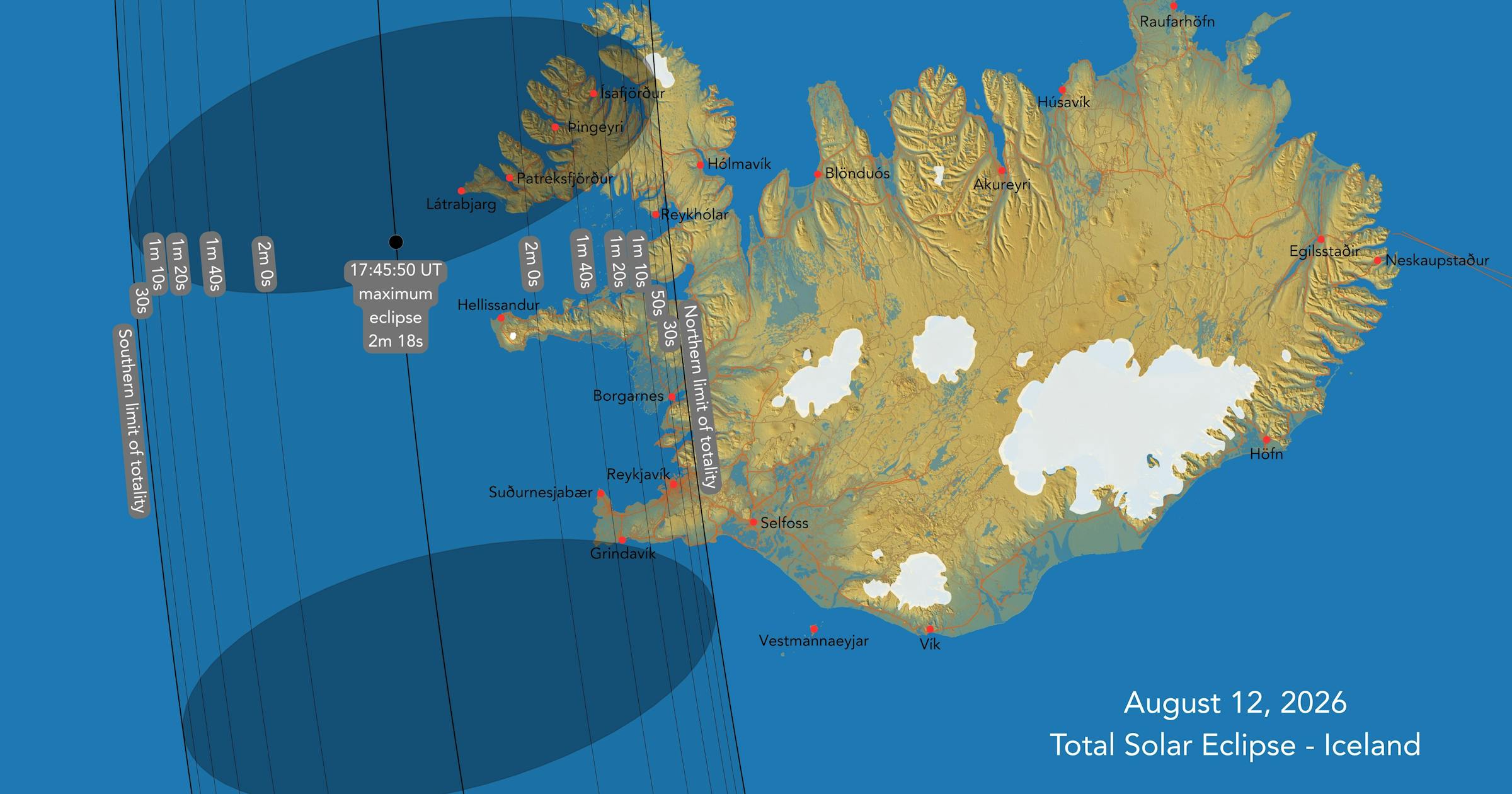
Iceland offers a dramatic backdrop for the 2026 eclipse. The path crosses the western part of the island, including the capital, Reykjavik. However, Iceland’s weather is notoriously unpredictable. Observers should be prepared to move locations quickly if cloud cover threatens the view. The duration of totality in Iceland will be approximately 2 minutes and 10 seconds.
Spain: The Sunset Eclipse
In Spain, the eclipse will occur late in the evening. In cities like Burgos and Zaragoza, the Sun will be very low in the sky—around 10 degrees or less—at the moment of totality. This provides a rare opportunity for photographers to capture the solar corona alongside terrestrial landmarks. However, the low altitude increases the risk of local obstructions (mountains/buildings) and atmospheric haze.
Frequently Asked Questions
When is the next "ring of fire" eclipse in the US?
The next significant annular solar eclipse visible from the contiguous United States will not occur until May 21, 2048. While there are annular eclipses in the interim, they largely pass over the Pacific Ocean, Alaska, or the extreme northern reaches of Canada.
Can I use a welding mask to watch the partial eclipse in 2026?
Only welding filters with a Shade 12 or higher are safe for direct solar viewing. Most standard welding masks are Shade 9 or 10, which is insufficient to prevent permanent eye damage. If you are unsure of the shade level, do not use it.
Why is the 2045 eclipse called the "Great American Eclipse"?
The August 12, 2045, event is nicknamed this because its path of totality covers an immense amount of US territory, crossing through major population centers. Furthermore, its duration of totality is exceptionally long (over 6 minutes), making it one of the most significant astronomical events of the 21st century for North America.
Will the August 2026 eclipse be visible from California?
No. The August 12, 2026, eclipse will not be visible from the western or central United States. The Moon's shadow will be too far east, meaning the Sun will have already set or the eclipse will have ended before it becomes visible in those time zones.
Do solar eclipse glasses expire?
According to NASA and the American Astronomical Society (AAS), if your glasses are compliant with the ISO 12312-2 safety standard and the lenses are not scratched, punctured, or torn, they do not expire and can be reused. However, some older glasses manufactured before 2015 may carry a three-year expiration warning, which should be respected.
Practical Recommendation for 2026
If you are located in the Northeastern United States (Maine, Vermont, New Hampshire), plan to be at a location with a clear, western horizon by 5:15 PM EDT on August 12, 2026. While the obscuration will be minor, it is a rare opportunity to see a celestial alignment. For those seeking the "totality" experience, 2026 is an excellent year to plan a trip to Spain or Iceland, as these locations will offer the most accessible views of the solar corona before the long wait for the 2044 and 2045 US events begins.
Image Gallery