Resident Alien Card vs. Permanent Resident Card: Key Differences and Legal Evolutions
In the context of U.S. immigration law in 2026, a Resident Alien Card and a Permanent Resident Card refer to the same legal status—the right to live and work indefinitely in the United States. The primary difference is historical: "Res...
In the context of U.S. immigration law in 2026, a Resident Alien Card and a Permanent Resident Card refer to the same legal status—the right to live and work indefinitely in the United States. The primary difference is historical: "Resident Alien Card" is an older designation for the identification document now officially known as the "Permanent Resident Card" (Form I-551), commonly referred to as a Green Card.
Contents
For decades, terminology regarding immigration has shifted to reflect both policy changes and cultural sensitivities. While the terms are often used interchangeably in casual conversation, understanding the technical nuances between them is essential for maintaining legal status, fulfilling tax obligations, and navigating employment verification. In 2026, the document issued to those granted lawful permanent residence is exclusively the Permanent Resident Card, though the term "Resident Alien" remains a critical classification for tax purposes under the Internal Revenue Service (IRS).
The Historical Evolution of the Identification Card
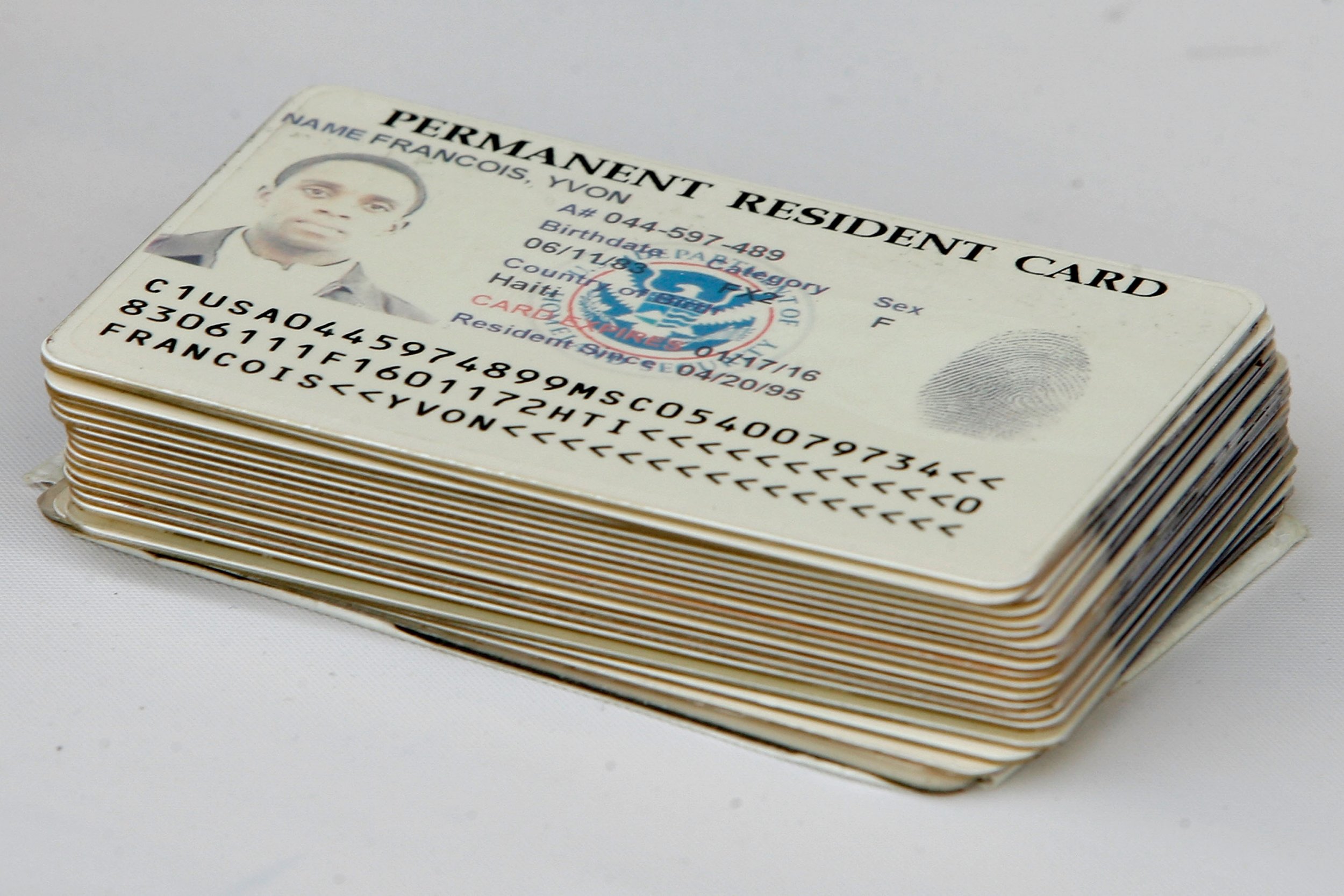
The journey from the "Resident Alien Card" to the "Permanent Resident Card" reflects the modernization of the U.S. immigration system. Prior to the mid-1990s, the official document issued to immigrants was Form I-151, frequently titled "Alien Registration Receipt Card" or colloquially "Resident Alien Card."
The Transition from I-151 to I-551
The transition began in earnest when the Immigration and Naturalization Service (INS)—the predecessor to today’s U.S. Citizenship and Immigration Services (USCIS)—phased out the old Form I-151. By March 20, 1996, the I-151 was officially invalidated for use as proof of registration. It was replaced by the I-551, which introduced better security features to combat document fraud.
The shift in nomenclature from "Resident Alien" to "Permanent Resident" on the physical card was intended to provide a more accurate description of the holder's status. While "alien" is a legal term defined in the Immigration and Nationality Act (INA) as any person not a citizen or national of the United States, the term "Permanent Resident" emphasizes the authorized duration and stability of the individual's stay.
Why Old Terms Persist
Despite the official change, the term "Resident Alien" persists in two main areas:
- Older Documentation: Individuals who were granted residency decades ago may still refer to their status using the language present on their original paperwork.
- Tax Law: The IRS continues to use the term "Resident Alien" to distinguish individuals who are not U.S. citizens but meet either the "Green Card Test" or the "Substantial Presence Test" for tax purposes.
Defining the Permanent Resident Card (Form I-551) in 2026
As of 2026, the Permanent Resident Card is a high-tech identity document that serves as valid proof of an individual’s authorization to live and work in the United States. It is a "List A" document for Form I-9, Employment Eligibility Verification purposes, meaning it establishes both identity and employment authorization.
Key Features of the Modern Card
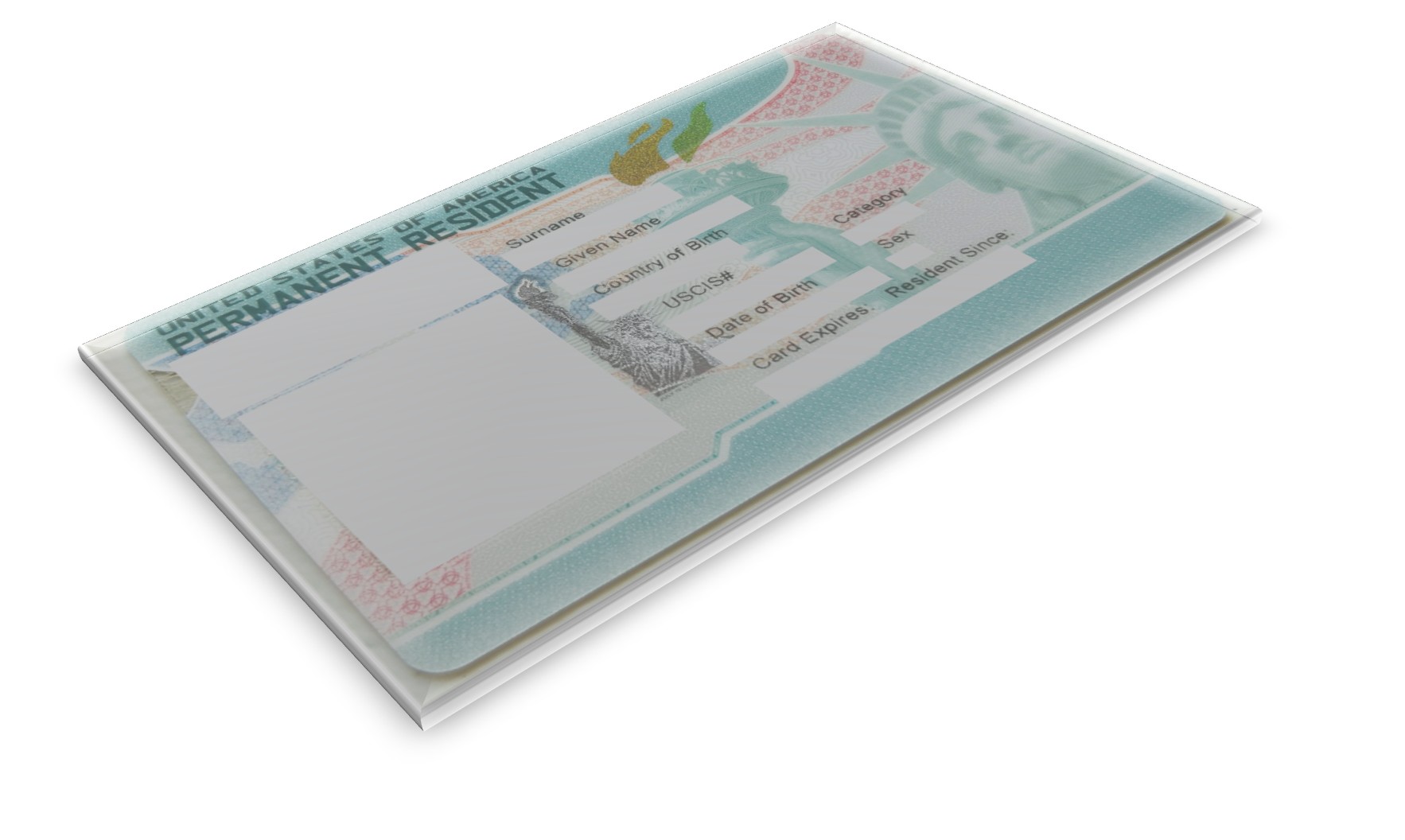
The current version of the card, updated most recently in early 2023 with continued refinements through 2026, includes several sophisticated security measures:
- Holographic Images: Optically variable ink and holographic features that change appearance when tilted.
- Tactile Printing: Raised lettering that is difficult to replicate through standard printing methods.
- Secure Data Storage: Embedded chips or specialized barcodes that allow for rapid verification by Customs and Border Protection (CBP) officers at ports of entry.
- Expiration Dates: Most cards are valid for 10 years, though conditional permanent residents (typically those who obtained residency through a recent marriage or entrepreneurship) receive cards valid for only two years.
Rights Granted by the Card
Holding a Permanent Resident Card confers significant rights, including the ability to:
- Work in any legal job for which the holder is qualified (with rare exceptions for specific government positions requiring citizenship).
- Apply for a Social Security number and a driver’s license.
- Travel outside the U.S. and return, provided certain conditions are met.
- Petition for certain family members to join them in the United States.
- Apply for U.S. citizenship (naturalization) after meeting residency requirements (usually five years, or three years if married to a U.S. citizen).
The IRS Perspective: When "Resident Alien" Still Matters
While USCIS favors the term "Permanent Resident," the IRS maintains the "Resident Alien" classification. This is where most confusion arises for newcomers. You can be a "Resident Alien" for tax purposes without having a "Permanent Resident Card."
The Green Card Test
Under IRS Publication 519, you are a resident alien if you are a lawful permanent resident of the United States at any time during the calendar year. This is known as the "Green Card Test." Once you receive your Permanent Resident Card, you are generally taxed on your worldwide income, similar to a U.S. citizen.
The Substantial Presence Test
This is a critical distinction. A person may be classified as a "Resident Alien" for tax purposes if they spend a significant amount of time in the U.S., even if they only hold a non-immigrant visa (like an H-1B or L-1). If you are physically present in the U.S. for at least 31 days during the current year and 183 days over a three-year period (calculated via a specific formula), the IRS considers you a resident alien.
In this scenario, a person is a Resident Alien but does not possess a Permanent Resident Card. They have the tax obligations of a resident but not the immigration security of a permanent resident.
Comparing Resident Alien vs. Permanent Resident Terminology
| Feature | Resident Alien (Historical/Tax Term) | Permanent Resident (Current Official Term) |
|---|---|---|
| Primary Agency | IRS / Historical INS | USCIS / Department of Homeland Security |
| Document Form | Form I-151 (Obsolete) | Form I-551 (Current) |
| Validity | Based on physical presence or card status | Usually 10 years (Renewable) |
| Tax Treatment | Taxed on worldwide income | Taxed on worldwide income |
| Employment | Authorization depends on specific visa | Full, unrestricted work authorization |
| Primary Usage | Tax filings and older legal texts | Identity verification and travel |
Common Misconceptions and Troubleshooting
Navigating the nuances of these terms often leads to specific practical challenges, particularly regarding document expiration and employment.
"My card says Resident Alien. Is it still valid?"
If you possess a card that explicitly says "Resident Alien" and carries the form number I-151, it is not valid. You must file Form I-90, Application to Replace Permanent Resident Card, to receive a current Form I-551. If your card says "Resident Alien" but is an early version of the I-551 (issued between 1977 and 1989 without an expiration date), USCIS generally recommends replacing it to ensure you have a card with modern security features, though some older I-551s technically remain valid for entry into the U.S.
Employment Verification (Form I-9) Issues
Employers are sometimes confused by older terminology. In 2026, an employer must accept a valid, unexpired Permanent Resident Card (Form I-551) as proof of both identity and work authorization. If an employee presents an old "Resident Alien Card" that has expired, the employer cannot accept it. The employee must present a receipt for a Form I-90 renewal or a different combination of acceptable documents (such as a driver’s license and an unrestricted Social Security card).
Travel and the I-551 Stamp
If your Permanent Resident Card is lost or expired, and you need to travel or prove your status, you can request an ADIT stamp (Alien Documentation, Identification, and Telecommunication). This is a temporary I-551 stamp placed in your foreign passport by a USCIS officer. This stamp serves as the legal equivalent of a Permanent Resident Card, proving you are a lawful resident alien even without the physical plastic card.
Maintaining Your Status in 2026
Possessing the card is only part of being a permanent resident; you must also "maintain" that status. Failure to do so can lead to the loss of residency, regardless of what the card is called.
- Avoid Abandonment: If you stay outside the U.S. for more than one year without a reentry permit, CBP may determine you have abandoned your residency. In 2026, CBP uses advanced biometric tracking to monitor entry and exit dates more strictly than in previous decades.
- File Taxes: As a resident alien (by the Green Card test), failing to file U.S. tax returns or claiming "non-resident" status on tax forms can jeopardize your path to citizenship and may be used as evidence that you have abandoned your residence.
- Address Updates: You are legally required to notify USCIS of any change of address within 10 days by filing Form AR-11. This ensures you receive renewal notices and official correspondence.
Frequently Asked Questions
1. Is a "Green Card" different from a Permanent Resident Card?
No. "Green Card" is the informal, popular name for the Permanent Resident Card. The name originated because the original cards issued in the 1940s were green. After decades of different colors (including blue, pink, and yellow), the card returned to a predominantly green color scheme in 2010, which has been maintained through the 2023 and 2026 design iterations.
2. Can I use my Resident Alien Card to re-enter the U.S. in 2026?
Only if it is a Form I-551. If you have an old Form I-151 "Resident Alien Card," it will not be accepted for travel. You will likely be detained at the border for secondary inspection and may face a fine or a requirement to file for a replacement immediately. Always check the form number on the back of the card.
3. What should I do if my Permanent Resident Card expires while I am abroad?
You should contact the nearest U.S. Embassy or Consulate to apply for a "Boarding Foil" (formerly known as a transportation letter), which allows the airline to board you. Once back in the U.S., you must immediately file Form I-90 to replace the expired card.
4. Does the term "Resident Alien" on tax forms mean I'm not a permanent resident?
Not necessarily. As noted, the IRS uses "Resident Alien" as a broad category. You are a Resident Alien for tax purposes if you have a Green Card OR if you meet the Substantial Presence Test. Therefore, all Permanent Residents are Resident Aliens, but not all Resident Aliens are Permanent Residents.
5. Are there different types of Permanent Resident Cards?
Yes. The most common is the 10-year renewable card. However, there is also the 2-year Conditional Permanent Resident Card. This is issued to people who obtained residency through marriage to a U.S. citizen (where the marriage was less than two years old at the time of approval) or through investment. Conditionals must file Form I-751 or I-829 within the 90 days before the card expires to remove the conditions and receive a standard 10-year card.
Final Recommendation
If you are currently holding a document labeled "Resident Alien Card," check the form number and expiration date immediately. In 2026, having up-to-date documentation is vital for seamless travel and employment. If your card is an I-151 or an expired I-551, your priority should be filing Form I-90 with USCIS to obtain a current Permanent Resident Card. For those managing their finances, ensure you are filing as a "Resident Alien" if you meet the IRS criteria, as this consistency between your immigration status and tax filings is essential for a successful naturalization application in the future.
Image Gallery