What Is General Liability Insurance Coverage for Contractors?
General liability insurance for contractors is a foundational commercial insurance policy that protects construction businesses from financial losses resulting from third-party claims of bodily injury, property damage, and personal or...
General liability insurance for contractors is a foundational commercial insurance policy that protects construction businesses from financial losses resulting from third-party claims of bodily injury, property damage, and personal or advertising injury. As of 2026, it remains a nearly universal requirement for obtaining building permits, signing client contracts, and maintaining professional trade licensing.
Contents
The Core Components of General Liability Coverage
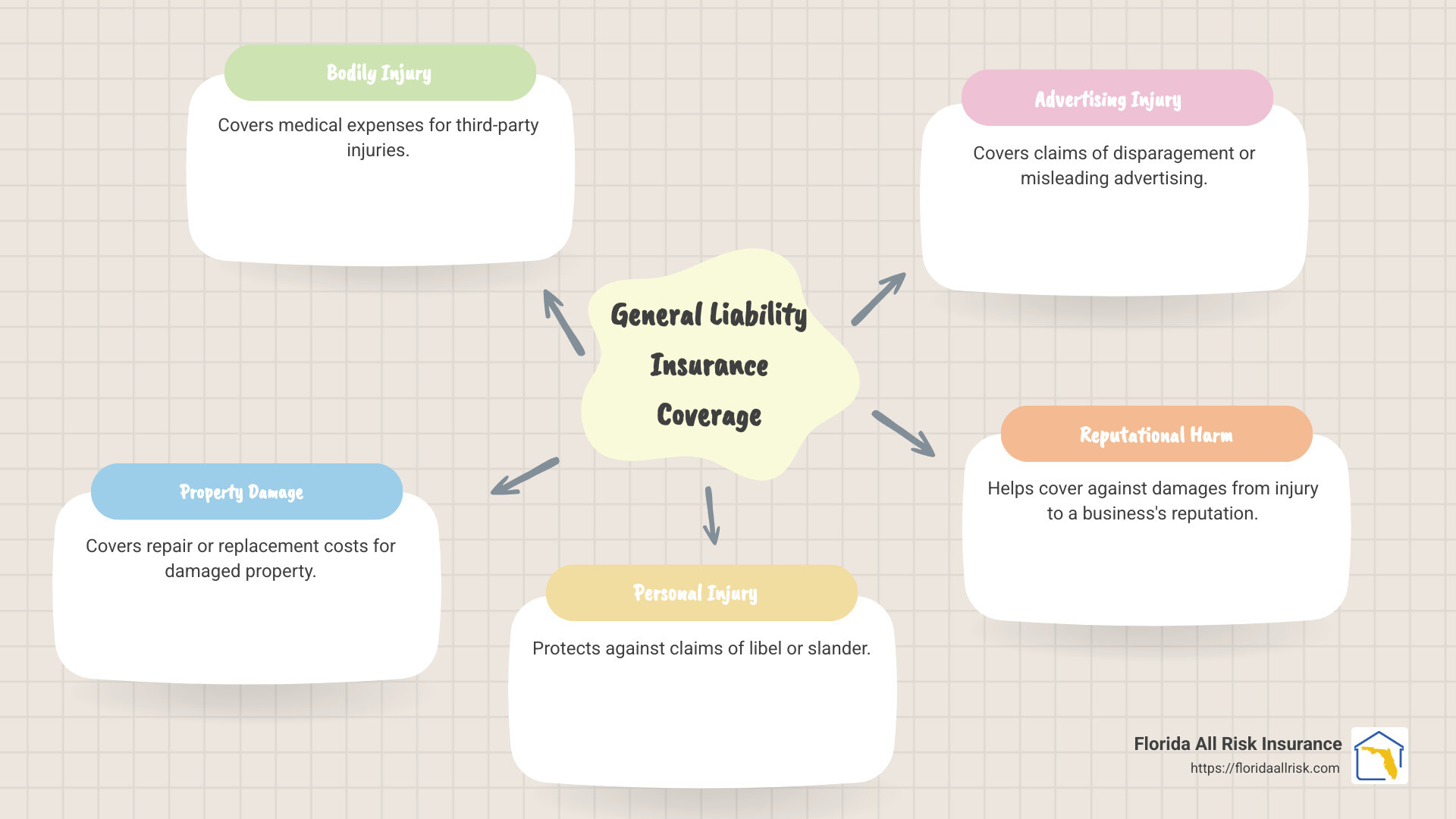
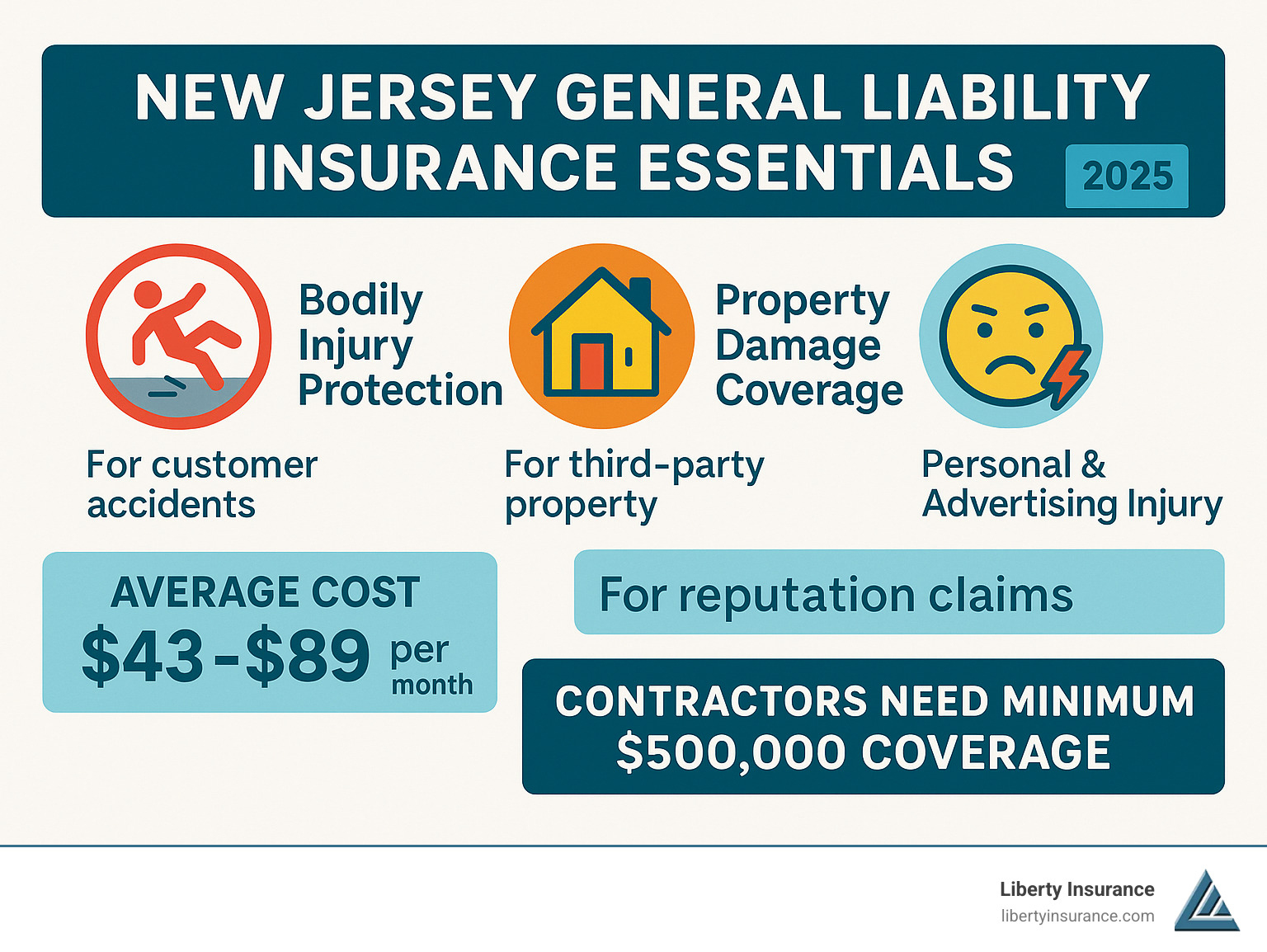
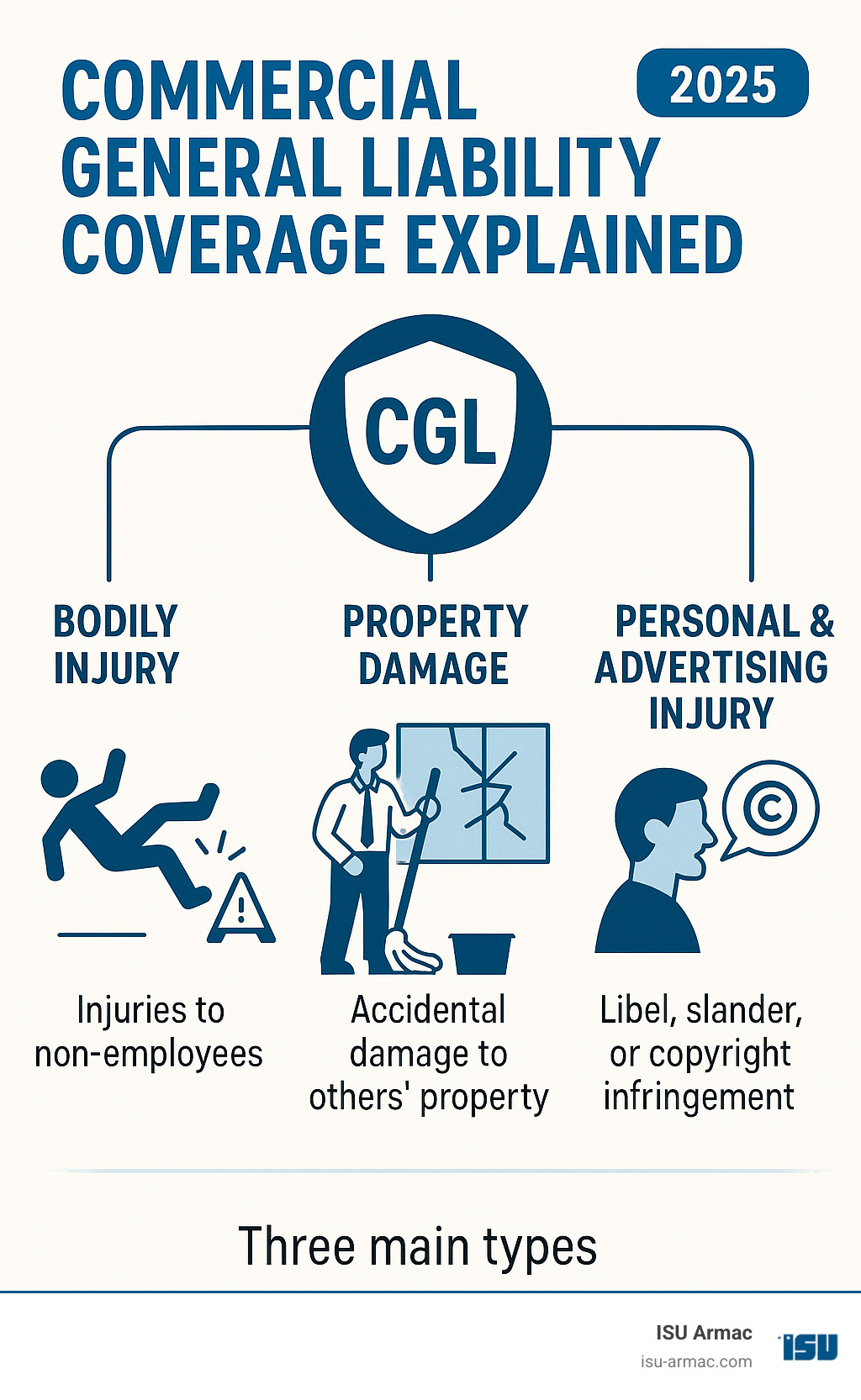
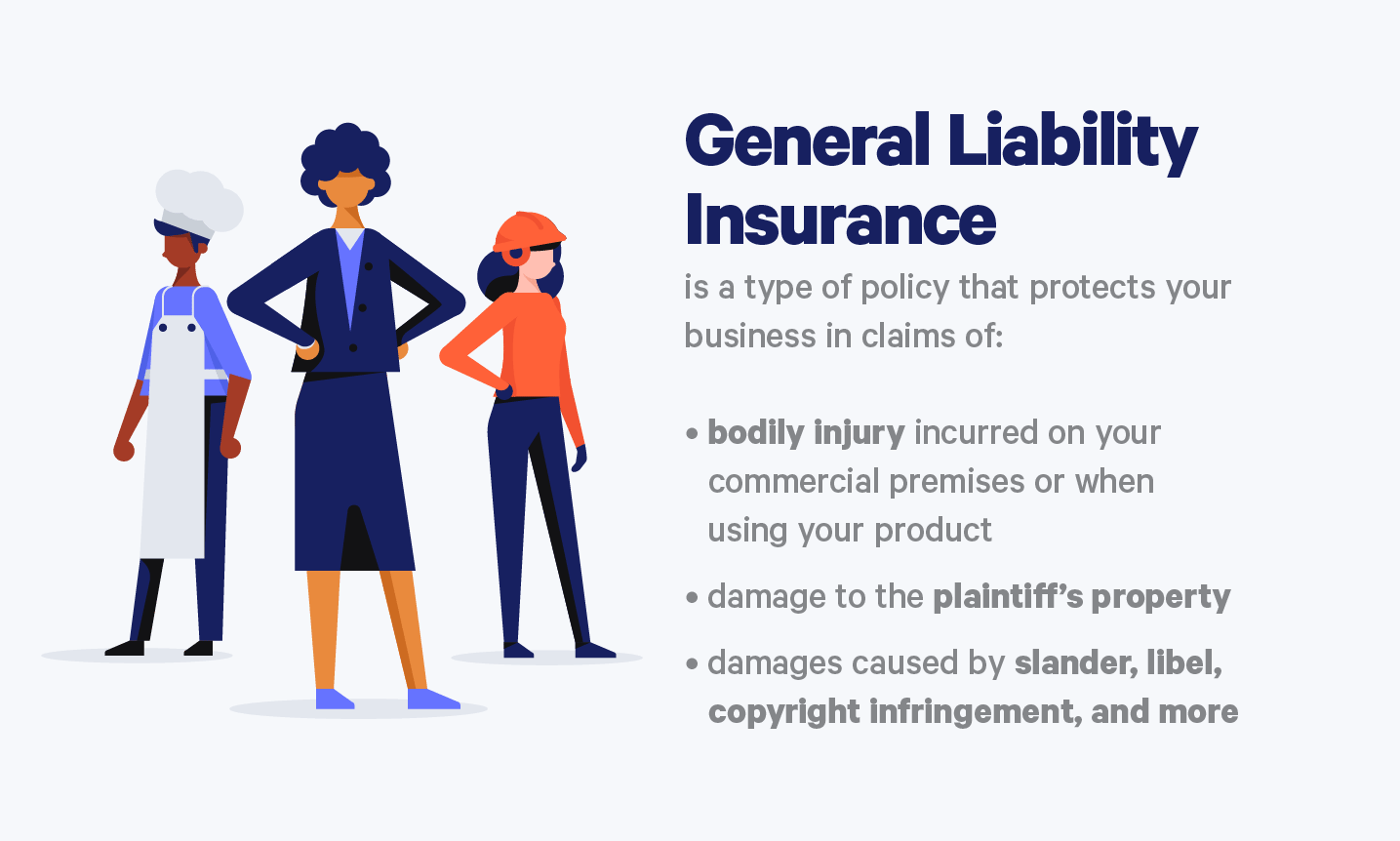
General liability insurance (GLI) serves as the first line of defense for a contractor’s assets. While the specific terms can vary between carriers, the standard ISO (Insurance Services Office) forms used in 2026 generally provide three primary areas of protection.
Bodily Injury and Property Damage Liability
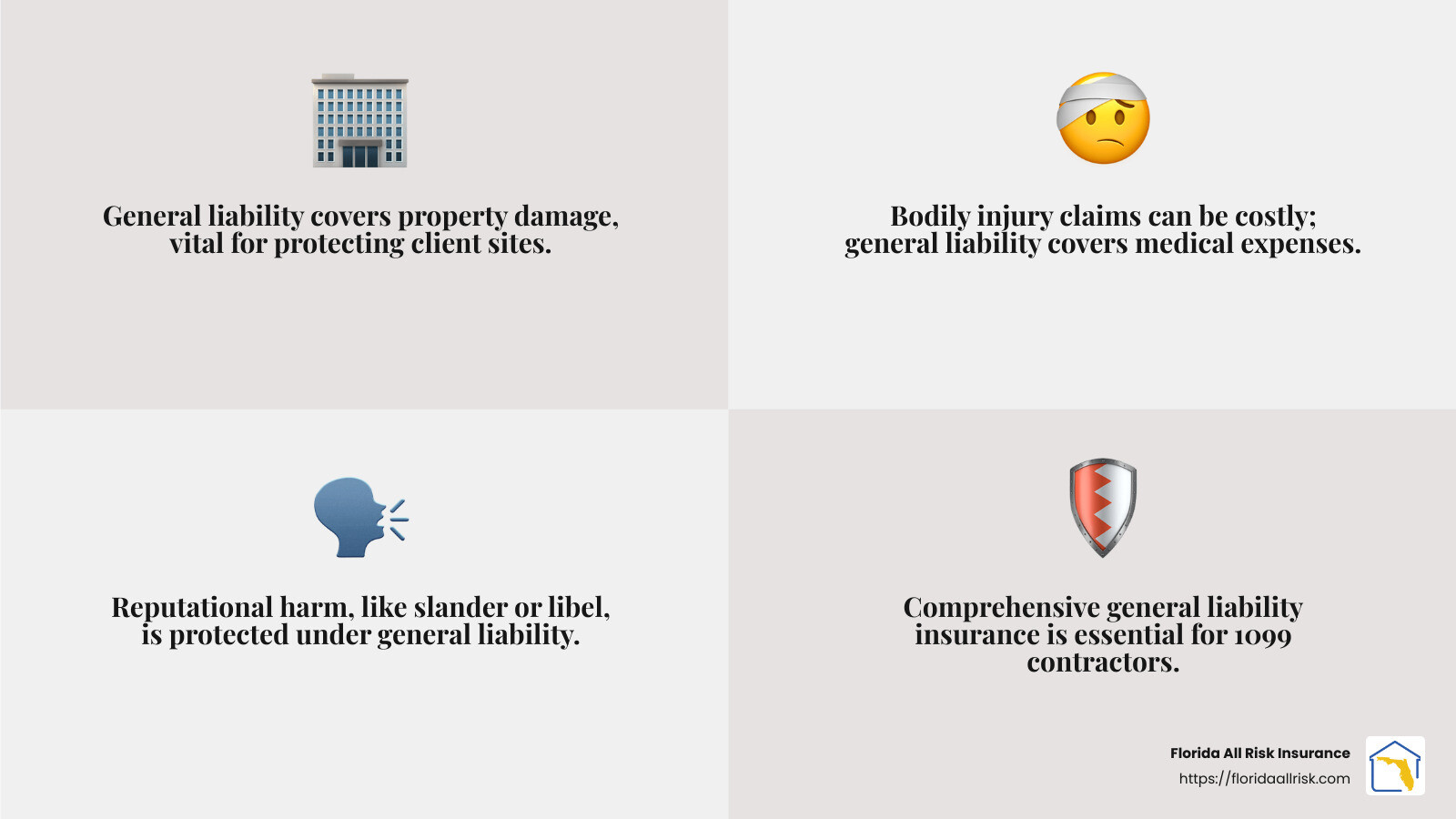
This is the most frequent source of claims for contractors. If a visitor to a job site trips over a stray piece of lumber or if a contractor accidentally ruptures a water line that floods a client’s basement, this coverage handles the resulting costs. It compensates the third party for their medical expenses or repair costs and covers the contractor’s legal defense fees if the third party sues.
It is important to distinguish that bodily injury coverage applies only to non-employees. If a member of the contractor's crew is injured, that claim falls under workers' compensation insurance, not general liability. Similarly, property damage generally covers damage to the property of others, rather than the contractor's own tools or equipment.
Personal and Advertising Injury
This component protects the business from non-physical harms. This includes claims of libel, slander, or copyright infringement in the contractor’s marketing materials. For example, if a contractor uses a photograph of a competitor’s project in their own brochure without permission, or if a social media post makes disparaging and false remarks about another local builder, this coverage can mitigate the legal fallout.
Medical Payments
Often referred to as "no-fault" coverage, medical payments provide a small limit (typically $5,000 to $10,000) to pay for immediate medical expenses if someone is injured on the contractor’s premises or job site. Unlike the broader bodily injury coverage, medical payments can be triggered without the claimant having to prove the contractor was legally liable. This is often used to settle minor injuries quickly and prevent them from escalating into larger lawsuits.
The Significance of Products and Completed Operations Coverage
For contractors, the "Completed Operations" portion of a general liability policy is perhaps the most critical element. Construction risks do not end when the crew packs up and leaves the site; often, the most significant liabilities arise months or even years after a project is finalized.
Products and Completed Operations coverage protects the contractor if their work eventually causes bodily injury or property damage to a third party. For instance, if an electrical contractor finishes a wiring project in 2026, but a faulty connection causes a fire in 2028, the completed operations coverage from the 2028 policy period would typically respond to the claim (assuming the policy has been maintained continuously).
Without this specific coverage, a contractor could be held personally liable for construction defects that lead to physical harm or external property damage long after the contract is closed. Many state statutes of repose allow for claims to be filed several years after project completion, making the continuous maintenance of this coverage essential for long-term business viability.
Key Policy Limits and How They Function
Understanding how policy limits are structured is vital for ensuring adequate protection. Most general liability policies for contractors utilize two primary limits:
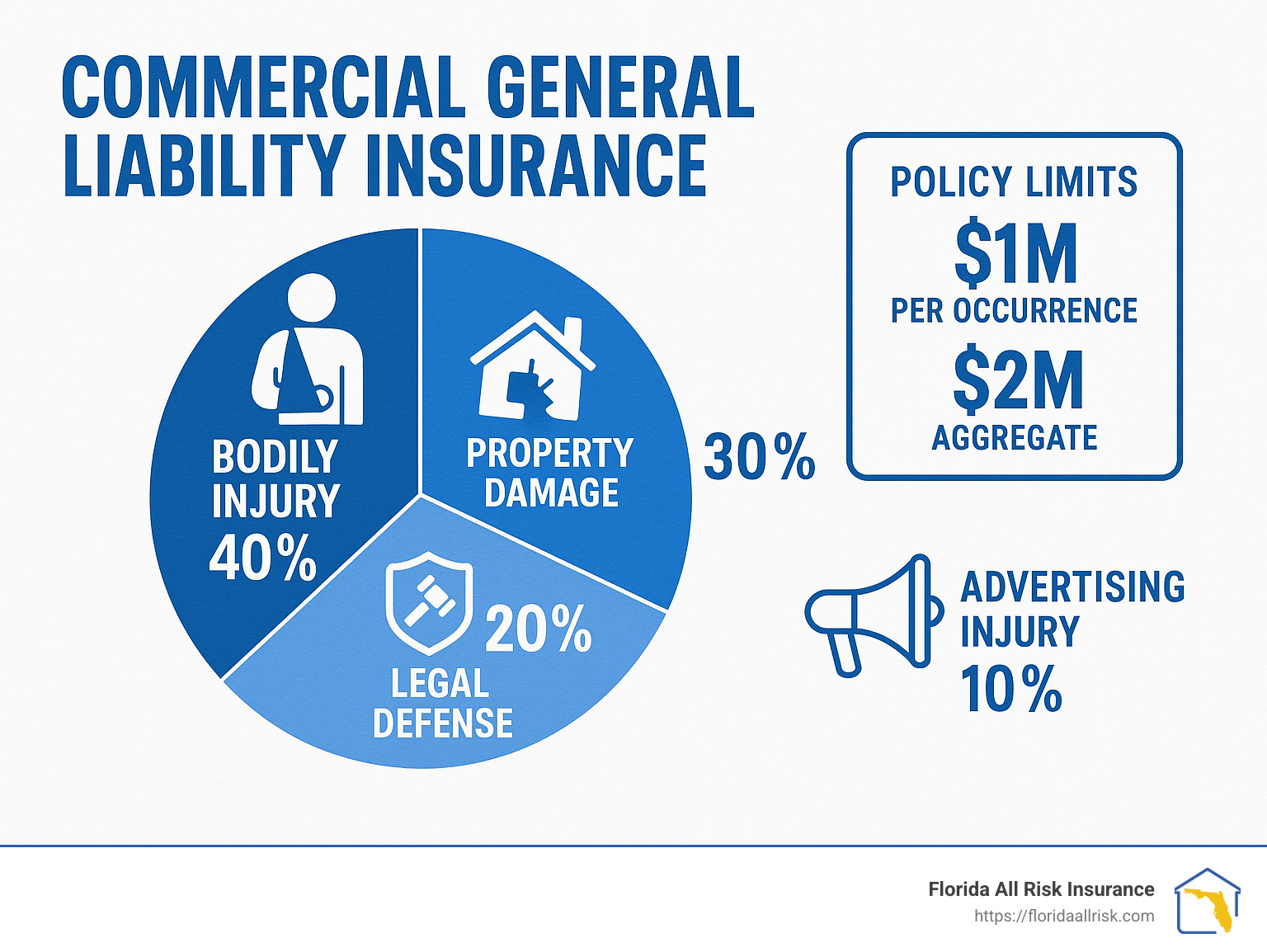
- Each Occurrence Limit: This is the maximum amount the insurer will pay for a single claim or incident. In the current 2026 market, a standard occurrence limit is often $1,000,000.
- General Aggregate Limit: This is the total amount the insurer will pay for all claims combined during the entire policy term (usually one year). A common aggregate limit is $2,000,000.
Contractors should also be aware of the Products-Completed Operations Aggregate, which is a separate "bucket" of money specifically reserved for claims arising from finished work. If a contractor works on high-value residential or commercial projects, clients may require higher limits, often necessitating a commercial umbrella or excess liability policy to sit on top of the primary general liability coverage.
Common Exclusions Contractors Must Understand
A general liability policy is not an "all-perils" catch-all. There are specific exclusions that contractors must account for by purchasing additional types of insurance or implementing risk management strategies.
- Your Own Work: General liability typically does not cover the cost to repair or replace the contractor’s own faulty work. If a contractor installs a roof poorly and it leaks, GLI will likely pay for the damage the water caused to the hardwood floors (third-party property damage), but it will not pay for a new roof or the labor to fix the original mistake.
- Care, Custody, and Control: Standard policies often exclude damage to property that is in the contractor's immediate care. If a contractor is moving an expensive antique cabinet for a client and drops it, the policy may deny the claim because the item was under the contractor’s direct control.
- Professional Liability (Errors and Omissions): GLI covers physical damage, not economic loss due to bad advice or design errors. If a contractor provides design-build services and the design is flawed—causing delays or financial loss without physical damage—a professional liability policy is required.
- Pollution and Asbestos: Claims related to the release of pollutants or the disturbance of asbestos are generally excluded from standard GLI policies and require specialized environmental or pollution liability endorsements.
Comparing General Liability to Other Contractor Policies
To build a comprehensive insurance program, contractors must understand where general liability ends and other policies begin. The following table outlines the differences between the most common coverages in 2026.
| Policy Type | Primary Protection Focus | Who/What Is Covered? | Required By |
|---|---|---|---|
| General Liability | Third-party bodily injury & property damage | Clients, passersby, and their property | Most contracts & licenses |
| Workers' Compensation | Employee work-related injuries | Your own employees and subcontractors | State law (most states) |
| Professional Liability | Errors in design, advice, or management | Financial losses due to professional errors | Project owners/Design-build contracts |
| Inland Marine | Tools, equipment, and materials in transit | Your own tools and uninstalled materials | Lenders & business owners |
| Commercial Auto | Accidents involving business vehicles | Company trucks, vans, and trailers | State law |
Factors Influencing Contractor Insurance Premiums in 2026
Insurance carriers do not use a one-size-fits-all pricing model. In 2026, premiums are calculated based on the specific risk profile of the contracting business. The following variables are the primary drivers of cost:
- Class of Trade: High-risk trades, such as roofing, structural steel, or excavation, face significantly higher premiums than interior painters or flooring installers. The potential for catastrophic loss is much higher in trades involving heights or heavy machinery.
- Gross Receipts and Payroll: Carriers use these figures as a proxy for the volume of work being performed. More work generally equates to more exposure to potential claims.
- Geographic Location: Rates vary by state and even by ZIP code. Contractors working in highly litigious jurisdictions or areas with high construction costs will see higher premiums.
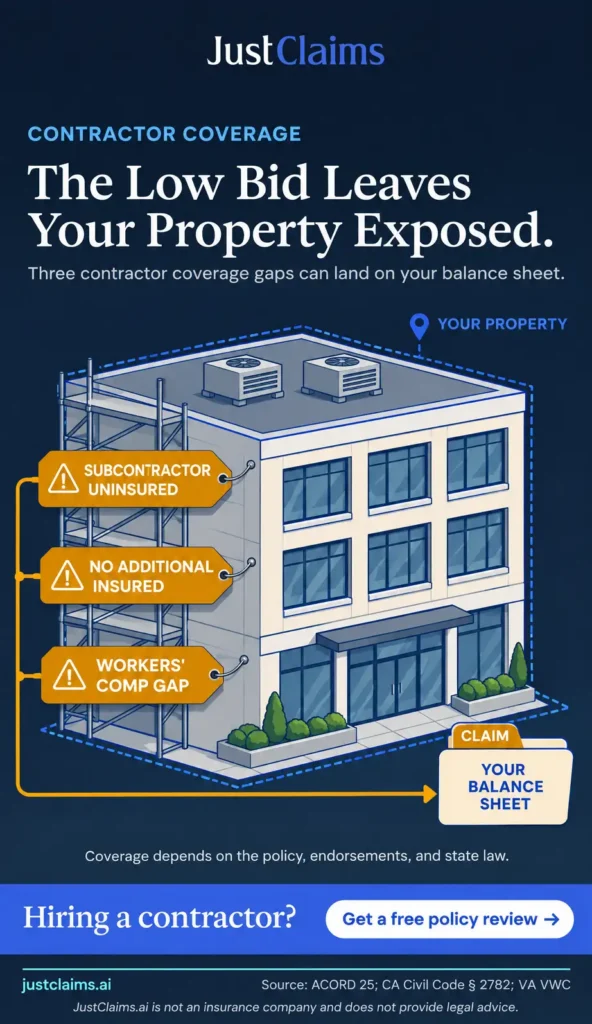
- Subcontractor Exposure: If a general contractor hires several subcontractors, the insurer will look at whether those subcontractors carry their own insurance. If the subcontractors are uninsured, the general contractor's premium will spike to cover that added risk.
- Claims History: A "loss run" report showing frequent claims in the past five years will lead to higher premiums or even a refusal to renew the policy. Conversely, a clean history often earns "loss-free" discounts.
How to Obtain and Maintain a Certificate of Insurance (COI)
A Certificate of Insurance is a one-page document that proves a contractor has active general liability coverage. It is the "passport" of the construction industry. Clients and general contractors will almost always demand a COI before allowing a contractor onto a job site.
When requesting a COI from an agent, contractors should ensure that any "Additional Insured" requirements are met. It is common for a property owner to require being named as an additional insured on the contractor's policy. This grants the owner a degree of protection under the contractor's policy for claims arising out of the contractor's work. In 2026, most sophisticated clients also require "Primary and Non-Contributory" wording, ensuring the contractor’s insurance pays first before the client’s own insurance is touched.
Frequently Asked Questions
Does general liability insurance cover my tools if they are stolen from a job site?No. General liability insurance is designed to cover damage you cause to others, not loss or damage to your own property. To protect your tools, equipment, and machinery, you need an Inland Marine policy (often called a "tools and equipment floater").
Is a general contractor responsible for a subcontractor’s liability?Potentially, yes. If a subcontractor causes damage or injury and does not have their own insurance, the claim often "flows up" to the general contractor. This is why most GCs require subcontractors to provide a COI and name the GC as an additional insured before work begins.
What is the difference between an "occurrence" policy and a "claims-made" policy?An occurrence policy covers claims based on when the incident happened, regardless of when the claim is filed, provided the policy was active during the incident. A claims-made policy only covers claims that are both occurred and reported while the policy is active. Most contractors prefer occurrence-based coverage because it provides more certain long-term protection for completed operations.
How much does general liability insurance cost for a small contractor in 2026?Costs vary wildly by trade, but a sole proprietor in a low-risk trade like painting might pay between $600 and $1,200 annually. A general contractor with several employees and high revenue could see premiums ranging from $3,000 to over $20,000, depending on the scope of their projects and location.
Can I cancel my policy once a project is finished to save money?This is highly discouraged. Doing so creates a "coverage gap." If a claim arises from a completed project while your policy is inactive, you will likely have no coverage for that claim. For long-term protection, contractors should maintain continuous coverage.
Practical Recommendation
For contractors operating in 2026, the best course of action is to partner with an independent insurance agent who specializes in construction risks. Do not simply purchase the cheapest policy available online; ensure the policy includes Products and Completed Operations and that the limits meet the requirements of your largest potential contracts. Always collect and verify Certificates of Insurance from every subcontractor you hire to prevent their liabilities from becoming your financial burden.
Image Gallery