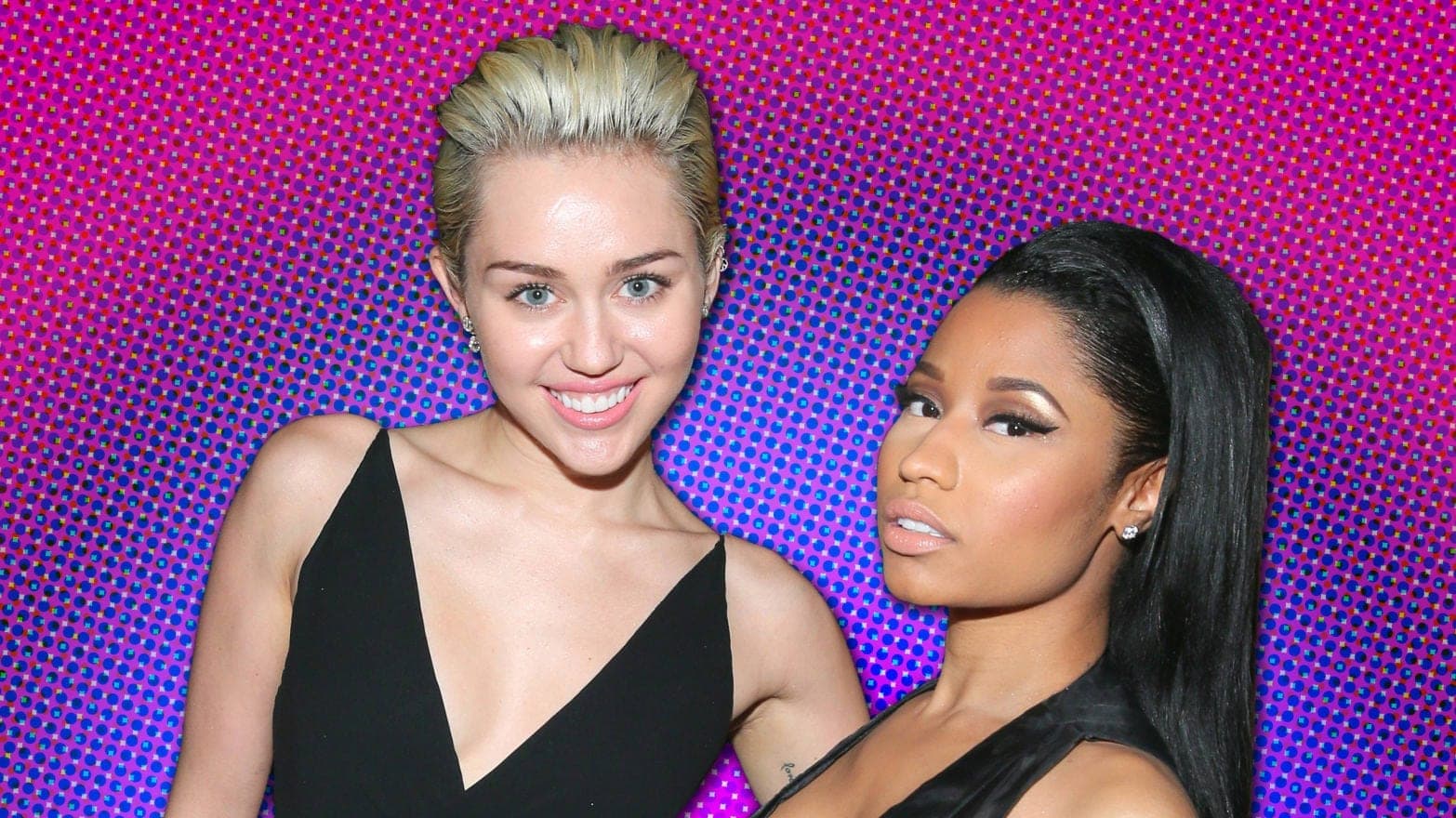
Nicki Minaj Calls Out Miley Cyrus in Social Media Feud: A Definitive History
The social media and televised feud between Nicki Minaj and Miley Cyrus remains one of the most culturally significant confrontations in modern pop history. Triggered by a 2015 New York Times interview where Cyrus criticized Minaj’s re...
The social media and televised feud between Nicki Minaj and Miley Cyrus remains one of the most culturally significant confrontations in modern pop history. Triggered by a 2015 New York Times interview where Cyrus criticized Minaj’s response to the MTV Video Music Award (VMA) nominations, the conflict escalated into a live televised confrontation. Minaj famously addressed Cyrus during her acceptance speech with the phrase, "Miley, what's good?", sparking a years-long cycle of social media exchanges, diss tracks, and public debates regarding intersectionality and tone policing in the music industry.
Contents
The Origins of the Conflict: The 2015 VMA Nominations
The tension did not begin on the VMA stage but rather in the weeks leading up to the 2015 ceremony. When MTV announced the nominees for Video of the Year, Nicki Minaj’s record-breaking "Anaconda" video was notably absent from the top category. Minaj took to Twitter (now X) to express her frustration, suggesting that the industry favors a specific aesthetic—specifically, videos that feature "very slim bodies."
While Minaj’s comments were aimed at systemic biases within the music industry and the lack of recognition for Black women’s contributions to pop culture, they were interpreted by some as a personal attack. Taylor Swift initially responded, thinking the tweets were directed at her, though the two quickly reconciled. However, the situation shifted when Miley Cyrus, who was set to host the 2015 VMAs, was asked about the exchange during an interview with the New York Times.
Cyrus claimed that Minaj’s approach was "not too kind" and suggested that Minaj’s grievances were rooted in "anger" rather than a legitimate critique of the industry. This characterization of Minaj as an "angry" woman—a common trope used against Black women speaking out—set the stage for the live confrontation that would follow.
The "Miley, What's Good?" Moment
On August 30, 2015, the Microsoft Theater in Los Angeles became the site of one of the most viral moments in awards show history. After winning the award for Best Hip-Hop Video for "Anaconda," Minaj concluded her acceptance speech by turning her attention to the host.
Minaj stated: "And now, back to this b***h that had a lot to say about me the other day in the press; Miley, what's good?"
The camera immediately cut to a visibly startled Cyrus, who attempted to de-escalate the situation while remaining on script. Cyrus responded, "We’re all in this industry, we all do interviews, and we all know how they manipulate s**t; Nicki, congratulations." The exchange was not scripted, as confirmed by various production sources in the following years, and it immediately dominated social media platforms.
The Social Media Aftermath
In the hours following the broadcast, "Miley, what's good?" became a global trending topic and eventually a permanent fixture in internet meme culture. The feud moved from the stage to Instagram and Twitter, where fans (the "Barbz" and "Smilers") engaged in heated debates. Minaj doubled down on her stance, while Cyrus remained relatively quiet on social media in the immediate wake of the event, though she later addressed it in subsequent interviews and song lyrics.
The significance of this call-out extended beyond celebrity gossip. It forced a mainstream conversation about tone policing—the practice of focusing on the emotion or delivery of a message rather than the validity of the argument itself. Minaj argued that her critique of MTV was professional and systemic, while Cyrus’s response focused on Minaj’s "attitude," effectively dismissing the underlying issue of racial bias in awards ceremonies.
Timeline of the Minaj-Cyrus Feud
The conflict did not end in 2015. Over the next several years, both artists referenced the event through music and public appearances.
| Year | Event | Medium | Impact |
|---|---|---|---|
| 2015 | NYT Interview | Print/Digital | Cyrus criticizes Minaj's "anger" regarding VMA snubs. |
| 2015 | MTV VMAs | Live Television | Minaj confronts Cyrus on stage ("Miley, what's good?"). |
| 2018 | "Queen" Release | Music | Minaj's album contains subtle references to industry peers. |
| 2019 | "Cattitude" | Music | Cyrus releases a song with the lyric, "I love you Nicki, but I listen to Cardi." |
| 2019 | Queen Radio | Radio/Streaming | Minaj responds to Cyrus, calling her a "Perdue chicken" and criticizing her "cultural appropriation." |
| 2024-2026 | Retrospectives | Digital Media | Ongoing analysis of the feud's impact on intersectional feminism. |
The 2019 Escalation and "Cattitude"
After a period of relative silence, the feud was reignited in 2019 when Miley Cyrus released the song "Cattitude." The track featured the lyrics: "I love you Nicki, but I listen to Cardi." This was a direct reference to the high-profile rivalry between Nicki Minaj and Cardi B, which had reached a breaking point at a New York Fashion Week event in 2018. By siding with Minaj's primary rival in a song, Cyrus effectively signaled that the 2015 tension had not been fully resolved.
Minaj responded on her Queen Radio show on Apple Music. She did not hold back, criticizing Cyrus for what she perceived as "disrespectful" behavior over the years. Minaj pointed out that Cyrus had frequently utilized Black culture and aesthetics during her "Bangerz" era, only to distance herself from hip-hop culture later when it was no longer convenient for her brand image.
Minaj's critique highlighted a major point of contention: cultural appropriation. She argued that Cyrus had no right to criticize the "anger" of Black women while simultaneously profiting from Black musical styles and dance. This added a layer of academic and social depth to what had previously been viewed as a simple "catfight."
Impact on the Music Industry and Awards Standards
The fallout from the Nicki Minaj and Miley Cyrus feud led to tangible changes in how awards shows and media outlets approach diversity and artist grievances. In the years since 2015, there has been a more visible effort by organizations like the Recording Academy and MTV to address the "Black box" of nomination processes.
- Transparency in Nominations: Artists now more frequently use social media to demand transparency regarding how nominees are selected.
- Recognition of Visual Artistry: The "Anaconda" snub highlighted the discrepancy between commercial/cultural impact and "prestige" as defined by older, predominantly white voting blocks.
- Moderation of Conflict: Award show producers now have stricter "hot mic" and camera-switching protocols, though the viral nature of the 2015 incident remains a goal for many networks seeking high ratings.
From a 2026 perspective, the "Miley, what's good?" moment is viewed as a precursor to the modern era of "call-out culture." It demonstrated that artists, particularly those from marginalized backgrounds, no longer felt the need to remain silent to keep their seats at the table.
Common Misconceptions About the Feud
To understand the full scope of the disagreement, it is necessary to dispel several myths that have persisted since the 2015 VMAs.
- Myth 1: It was a scripted PR stunt. While the VMAs are known for "shock" moments, multiple producers and the artists' own camps have confirmed the confrontation was spontaneous. The tension in the room was genuine, and the broadcast script did not include Minaj's remarks.
- Myth 2: It was just about Taylor Swift. Swift was the initial person to respond to Minaj's tweets, but the two resolved their issue within 48 hours. The conflict with Cyrus was a separate issue based on Cyrus's specific comments in the New York Times.
- Myth 3: They have reconciled. As of 2026, there is no public record of a formal reconciliation or "truce" between the two. While they no longer actively trade barbs on social media, they do not move in the same circles or support each other's work.
Frequently Asked Questions
What did Miley Cyrus say in the New York Times that upset Nicki Minaj?
Cyrus stated that Minaj was not "very polite" and that she made the VMA snub about herself. She suggested that Minaj’s argument was fueled by "anger" and that if Minaj wanted to talk about race, she should have approached it with more "love" and a "kind" attitude.
Did Nicki Minaj and Miley Cyrus ever collaborate?
No, the two artists have never officially collaborated on a track. Given the history of their public disagreements and the differing directions of their musical careers, a collaboration remains highly unlikely.
Why did Nicki Minaj mention Cardi B during the feud?
Minaj didn't initially mention Cardi B; it was Miley Cyrus who brought up the rivalry in her 2019 song "Cattitude." Cyrus used the lyric "I love you Nicki, but I listen to Cardi" to capitalize on the existing tension between the two rappers, which Minaj viewed as a further provocation.
How did the public react to the "Miley, what's good?" moment?
The reaction was deeply divided. Many fans praised Minaj for her directness and for standing up for herself against tone policing. Others felt the move was unprofessional for a live awards ceremony. Over time, the consensus among cultural critics has shifted toward supporting Minaj's right to address the "angry Black woman" trope.
Is the "Miley, what's good?" meme still relevant in 2026?
Yes, the phrase remains a shorthand for confronting someone who has spoken behind your back. It is frequently used in digital discourse and has been immortalized in various forms of merchandise and pop culture references.
Practical Recommendation: Understanding Cultural Context
When analyzing celebrity feuds like that of Nicki Minaj and Miley Cyrus, it is essential to look beyond the "drama" and examine the underlying social issues. This specific feud serves as a case study in how race, gender, and the media intersect. For those interested in the evolution of pop culture, studying the 2015 VMAs provides a clear look at the moment when the "polite" facade of award shows began to give way to more authentic, albeit uncomfortable, public reckonings.
Image Gallery