Why Hispanic Ads Matter in Modern Media: Strategies for 2026 and Beyond
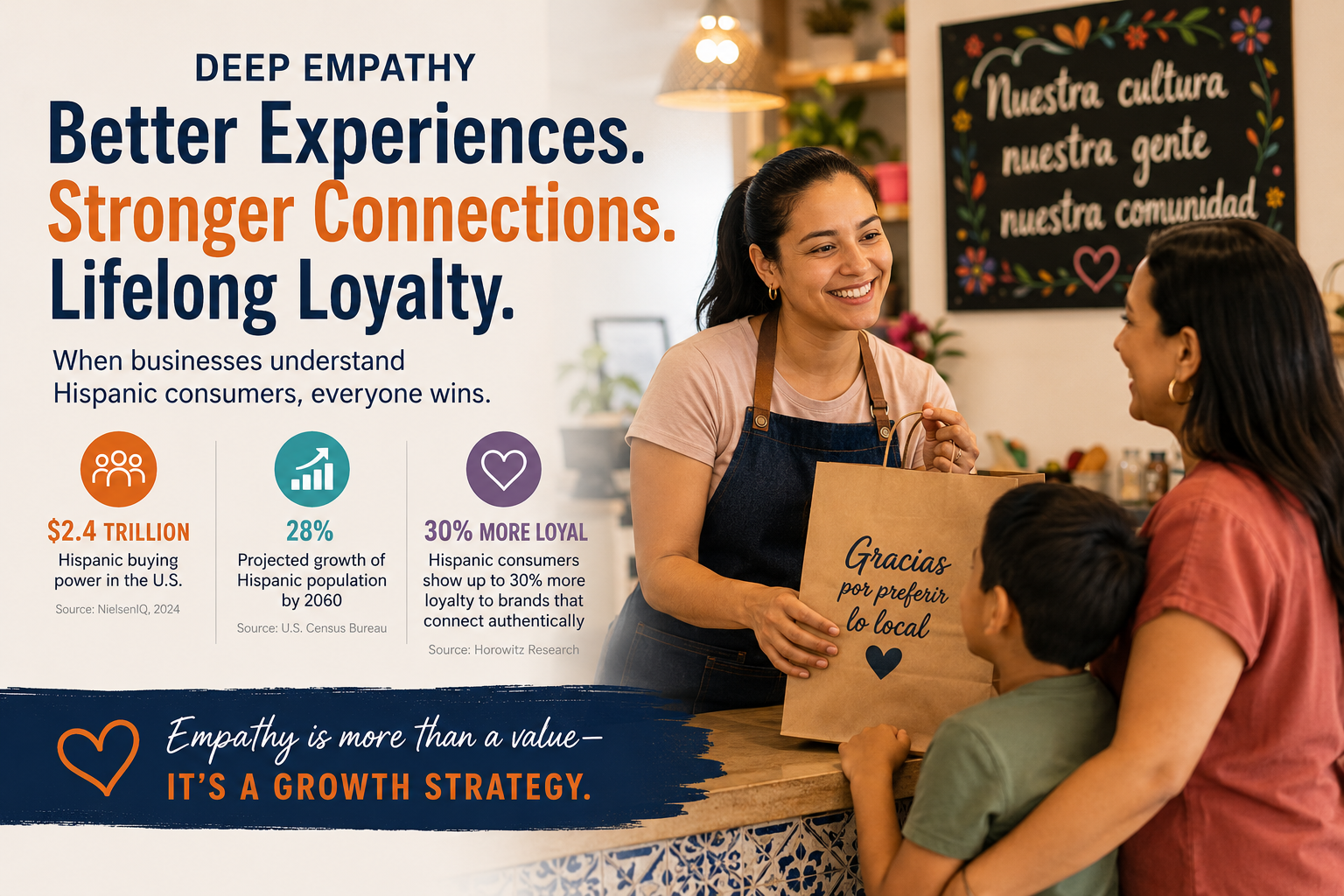
Hispanic advertising has shifted from a specialized marketing niche to a fundamental driver of U.S. economic growth. In 2026, with Hispanic purchasing power exceeding $2.6 trillion and a population that is younger and more digitally na...
Hispanic advertising has shifted from a specialized marketing niche to a fundamental driver of U.S. economic growth. In 2026, with Hispanic purchasing power exceeding $2.6 trillion and a population that is younger and more digitally native than the national average, brands must prioritize culturally resonant engagement to maintain market share and ensure long-term brand viability.
Contents
The Demographic Shift and the New Mainstream
The landscape of American consumption has undergone a permanent transformation. As of 2026, the Hispanic population in the United States has reached a critical mass that can no longer be addressed as a secondary audience. This demographic represents nearly 20% of the total population, but more importantly, it represents a disproportionate share of "new" consumers.
One of the primary reasons Hispanic ads matter is the median age gap. The median age for U.S. Hispanics is approximately 30, nearly a decade younger than the non-Hispanic white median age of 44. This youthfulness means that Hispanic consumers are entering key life stages—buying first homes, starting families, and establishing brand loyalties—at a higher rate than other groups. When a brand invests in Hispanic-focused advertising, it is not just buying impressions; it is investing in the "lifetime value" (LTV) of a consumer who has decades of purchasing ahead of them.
Furthermore, the concept of the "New Mainstream" has emerged. This acknowledges that multicultural consumers are the primary drivers of trend-setting in music, fashion, technology, and food. In 2026, "General Market" advertising that ignores Hispanic cultural cues often feels outdated and out of touch, even to non-Hispanic audiences who have grown up in a pluralistic culture.
The Economic Powerhouse: Trillions in Purchasing Power
If the U.S. Hispanic market were a standalone economy, its GDP would rank as one of the largest in the world, rivaling nations like France or India. This economic weight is the most pragmatic reason why Hispanic ads matter in modern media.
Growth in Household Income
In 2026, we see a continued upward trajectory in Hispanic household income. A significant surge in entrepreneurship and higher education attainment over the last decade has led to a burgeoning Hispanic middle and upper-middle class. Brands in the automotive, financial services, and luxury sectors—once hesitant to move beyond general market campaigns—now find that their primary growth segments are Hispanic.
Consumption Patterns
Hispanic consumers often over-index in specific categories that are vital for retail health. They tend to live in multi-generational households, which results in larger "basket sizes" at grocery stores and big-box retailers. Advertising that speaks to the needs of these larger households—focusing on value, family-sized packaging, and community-centric messaging—yields a much higher Return on Ad Spend (ROAS) than generic messaging.
Cultural Intelligence vs. Simple Translation
A common mistake in previous decades was the assumption that "Hispanic advertising" simply meant translating English copy into Spanish. In 2026, this approach is not only ineffective but can be actively detrimental to a brand's reputation. Why Hispanic ads matter today is rooted in Cultural Intelligence (CQ).
Transcreation and Context
Modern media demands "transcreation"—the process of adapting a message from one language and culture to another while maintaining its intent, style, tone, and context. A successful Hispanic ad in 2026 considers the nuances between different sub-groups, such as Mexican-Americans in the Southwest, Puerto Ricans in the Northeast, and Cuban-Americans in Florida. While a unified Hispanic identity exists, localized cultural cues—slang, regional foods, and specific musical genres—demonstrate a brand's commitment to the community.
The Rise of the "200%ers"
The term "200%er" refers to individuals who feel 100% American and 100% Hispanic. For this segment, which dominates Gen Z and Gen Alpha, language is fluid. They may consume media in English but maintain deep cultural ties to their heritage. Hispanic ads matter here because they validate this dual identity. Advertising that utilizes "Spanglish" or focuses on cultural values like familismo (the importance of family) and personalismo (valuing personal relationships) resonates more deeply than purely linguistic targeting.
Media Consumption and Digital Habits in 2026
To understand why Hispanic ads matter, one must look at where the audience lives. Hispanic consumers have historically been early adopters of technology, and in 2026, their digital habits dictate the direction of modern media.
Mobile-First Dominance
Hispanic audiences are significantly more likely to be mobile-only or mobile-heavy internet users. Advertising campaigns that are not optimized for vertical video, rapid loading, and mobile-commerce (m-commerce) integrations fail to reach this demographic. Social platforms like TikTok, Instagram, and YouTube remain the primary hubs for Hispanic consumer engagement, where video content—especially that featuring Hispanic creators—sees the highest engagement rates.
Streaming and Linear Media
While linear Spanish-language television (like Univision and Telemundo) remains a vital pillar for reaching older demographics and sports fans (particularly for soccer), streaming (OTT/CTV) has become the battleground for younger Hispanics. Modern media planning must include a mix of Spanish-language "heritage" media and culturally-targeted digital placements to ensure full-funnel coverage.
| Feature | General Market Approach | Modern Hispanic Strategy (2026) |
|---|---|---|
| Primary Language | English | Bilingual / Spanglish / Nuanced Spanish |
| Consumer Mindset | Individualistic / Self-focused | Collectivist / Family-oriented |
| Media Priority | Omni-channel / Broad | Mobile-first / Creator-led / Social |
| Key Value Proposition | Efficiency and Price | Trust, Heritage, and Community |
| Primary Demographic | Aging / Mature | Young / Growth-oriented |
| Creative Process | Translation of existing assets | Rooted in cultural insights (Transcreation) |
The Role of Trust and Authenticity
In an era of deepfakes and algorithmic noise, authenticity is the highest currency in advertising. Hispanic consumers traditionally place a high value on trust and "word-of-mouth," which in 2026 translates to the "Creator Economy."
Influencer Marketing
Hispanic ads matter when they are delivered by trusted voices within the community. Micro-influencers who speak to specific cultural experiences—such as the "first-generation struggle" or the joy of traditional celebrations—build a bridge of trust that corporate entities cannot replicate alone. Brands that partner with these creators gain "cultural permission" to enter the conversation.
Avoiding Stereotypes
The negative impact of "Hispandering"—the act of a brand or politician superficially attempting to win over Hispanic people—is more severe in 2026 than ever before. Modern consumers can easily identify when a brand is only interested in their "Latino dollar" during Hispanic Heritage Month. Continuous, year-round engagement is required. Why Hispanic ads matter is that they provide a platform for genuine representation, moving away from tropes like "colorful festivals" toward realistic portrayals of Hispanic professionals, tech-savvy parents, and diverse lifestyles.
Measuring Success: Metrics and ROI
For CMOs and media planners, the justification for Hispanic advertising must be backed by data. In 2026, attribution models have become sophisticated enough to track the specific impact of multicultural campaigns.
- Incremental Reach: Hispanic ads often reach "dark" segments of the market that general market ads never touch, providing a true net gain in audience size.
- Brand Affinity: Data consistently shows that Hispanic consumers are more loyal to brands that demonstrate an understanding of their culture. This results in lower churn rates and higher long-term profitability.
- Social Sharing: Culturally resonant content is shared at a higher frequency within Hispanic social circles, providing "earned media" that significantly lowers the effective Cost Per Mille (CPM).
Strategic Implementation for 2026
To leverage the importance of Hispanic ads, organizations should follow a structured approach to integration:
- Internal Diversity: Ensure that creative teams and decision-makers include Hispanic voices. Cultural intelligence cannot be effectively outsourced as a final "check"; it must be part of the ideation process.
- Data Segmentation: Move beyond the "Hispanic" monolith. Use data to segment by country of origin, acculturation level, and language preference to tailor messages accurately.
- Year-Round Commitment: Allocate a dedicated percentage of the annual budget to Hispanic-focused media rather than relying on seasonal "pulsing" during specific months.
Common Pitfalls to Avoid
- Assuming English is Enough: Even for English-dominant Hispanics, cultural context matters. A "one-size-fits-all" English campaign often misses the emotional triggers that drive Hispanic purchase decisions.
- Over-reliance on Translation Software: AI-driven translation has improved by 2026, but it still lacks the ability to capture cultural wit, idioms, and emotional resonance. Human oversight is mandatory.
- Ignoring Local Nuance: Treating a Cuban consumer in Miami the same as a Mexican consumer in Los Angeles ignores the distinct historical and cultural backgrounds that shape their preferences.
FAQs
Is it necessary to use Spanish in all Hispanic advertisements?
No. In 2026, many younger U.S. Hispanics are English-dominant. However, the context and cultural cues are more important than the language itself. Often, a bilingual approach or an English-language ad featuring Hispanic cultural values is more effective for Gen Z, while Spanish remains crucial for reaching heads of households and recent immigrants.
What is the "200%er" and why does it matter for ads?
The "200%er" is a consumer who identifies as 100% American and 100% Hispanic. This group is significant because they navigate both worlds effortlessly. Advertising that reflects this duality—showing the blend of American lifestyle with Hispanic traditions—resonates because it mirrors their daily reality.
Which industries see the highest ROI from Hispanic advertising?
While all industries benefit, sectors like Consumer Packaged Goods (CPG), Financial Services, Automotive, and Healthcare see the highest immediate returns. This is due to the high volume of Hispanic consumption in retail and the massive growth in Hispanic wealth, leading to increased demand for banking and high-ticket items.
How does Hispanic media consumption differ from the general market in 2026?
Hispanic consumers are significantly more engaged with mobile video and social media platforms. They also tend to stream more content via CTV (Connected TV) and are more likely to interact with influencers who share their cultural background compared to the non-Hispanic white demographic.
Why is year-round advertising better than just during Hispanic Heritage Month?
Hispanic Heritage Month is a peak time for competition, which drives up ad costs. Year-round advertising builds a consistent relationship and trust with the community, showing that the brand values the consumer beyond a single month of the year. Consistent presence leads to much higher brand loyalty.
Recommendation for Next Actions
To remain competitive in 2026, brands should immediately audit their current media mix to determine if their Hispanic ad spend aligns with the demographic reality of their market. If your Hispanic ad budget is less than 15-20% of your total spend, you are likely under-investing in your primary growth engine. Begin by partnering with a specialized multicultural agency or hiring internal experts to develop a "Transcreation Framework." Focus first on high-growth regions and mobile-first creative to capture the attention of the younger, more influential Hispanic segments.
Image Gallery