What to Do in a Car Accident With No Injuries: Step-by-Step Guide
If you are involved in a car accident with no injuries, immediately move your vehicle to a safe location out of traffic, turn on your hazard lights, and confirm that all passengers and other drivers are unharmed. Exchange contact, driv...
If you are involved in a car accident with no injuries, immediately move your vehicle to a safe location out of traffic, turn on your hazard lights, and confirm that all passengers and other drivers are unharmed. Exchange contact, driver's license, vehicle registration, and insurance information with the other party, document the scene thoroughly with photographs, and report the incident to local law enforcement or your state motor vehicle agency if property damage exceeds your state's legal threshold. Finally, notify your auto insurance carrier to initiate the claims process.
Contents
Disclaimer: This guide provides general informational guidance regarding property-damage-only motor vehicle accidents. It does not constitute formal legal or insurance advice. Reporting requirements, liability laws, and policy conditions vary significantly by state and country. For specific legal or coverage questions, consult a licensed attorney or your insurance representative.
Step 1: Secure the Scene and Prioritize Safety
Even when an accident results in zero apparent injuries, the immediate post-collision environment on a roadway remains hazardous. Secondary collisions—where oncoming vehicles strike disabled cars or pedestrians standing on the road—are a leading cause of severe injuries and fatalities in traffic incidents.
Move Vehicles Out of Active Traffic Lanes
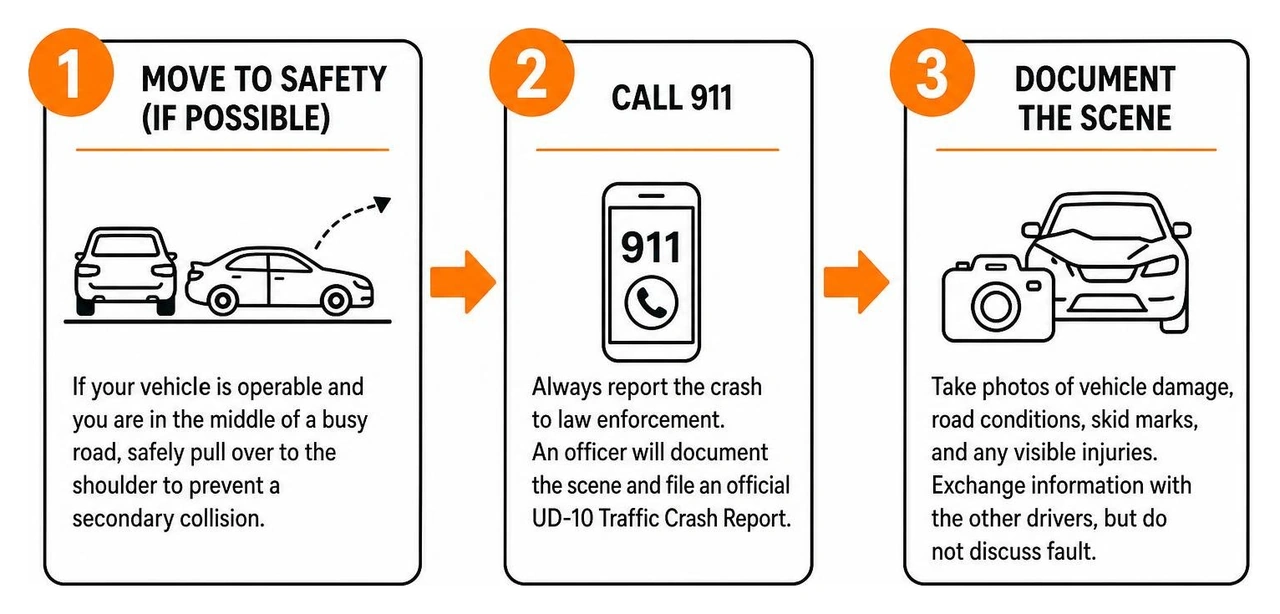
If the vehicles are operable and there are no severe bodily injuries, clear the travel lanes as quickly as possible. Many jurisdictions enforce "Steer It, Clear It" statutes, which legally mandate that drivers move functioning vehicles onto the shoulder, median, or an adjacent parking lot following a minor fender bender. Staying stopped in the middle of a busy highway or intersection increases the risk of secondary crashes and may result in traffic citations.
Before moving the vehicles, take a quick wide-angle photo of the initial resting positions if it is safe to do so. If stopping on the roadway is unavoidable due to vehicle disablement:
- Put the vehicle in park and engage the emergency parking brake.
- Turn on your emergency hazard flashers immediately to alert approaching traffic.
- If you carry reflective flares, LED safety beacons, or warning triangles in your emergency kit, set them up several yards behind your vehicle to establish a visibility buffer.
Re-Confirm Health Status
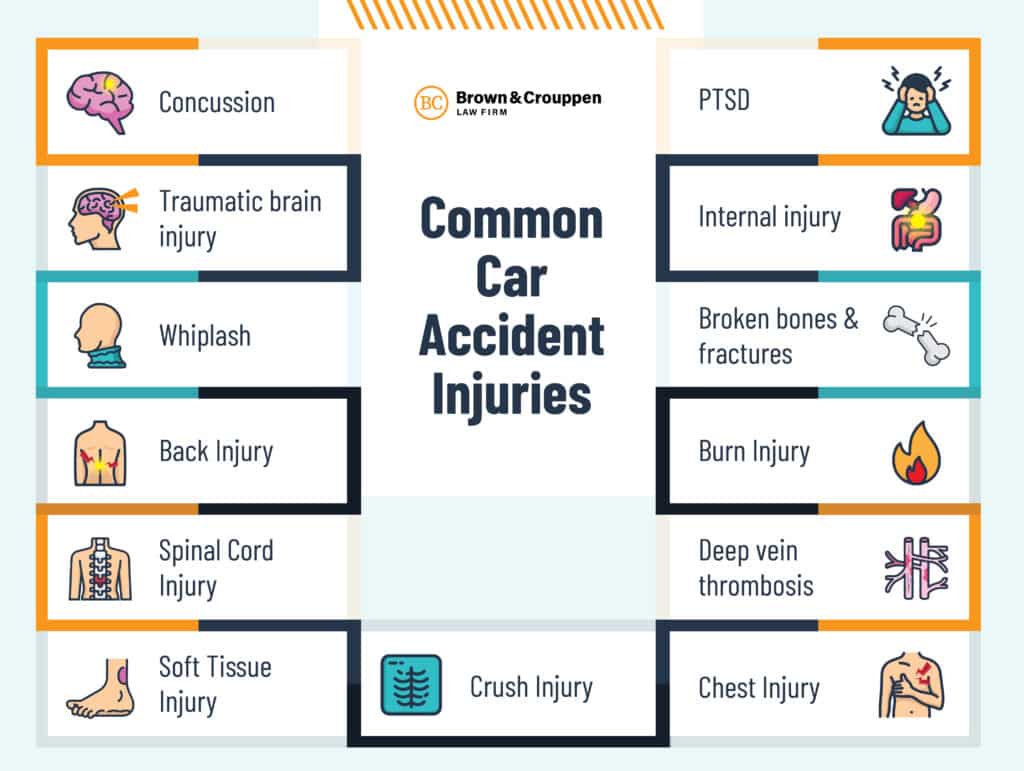
While no one may appear hurt initially, adrenaline and shock often mask symptoms of soft tissue injuries, concussions, or internal bruising. Ask all occupants in your vehicle and the other vehicle if they feel fine. Remind everyone to stay calm and avoid rushing out of the vehicle onto high-speed lanes. If anyone exhibits confusion, dizziness, neck pain, or stiffness later, arrange for immediate medical evaluation.
Step 2: Determine Mandatory Reporting and Call Law Enforcement
A common dilemma after a minor non-injury crash is whether to call the police. While local police departments may assign a lower response priority to property-damage-only (PDO) collisions during peak hours, contacting law enforcement remains a critical defensive step.
Legal Reporting Thresholds
Most U.S. states and international jurisdictions set a monetary threshold for mandatory accident reporting. For instance, state laws often require drivers to submit a formal accident report if total property damage appears to exceed $500, $1,000, or $2,000. Because modern vehicle bumper systems, sensor arrays, and headlight assemblies are expensive to recalibrate and replace, even minor cosmetic scrapes frequently cross these statutory thresholds.
| State / Region Context | Typical Property Damage Threshold for Mandatory Filing | Recommended Dispatch / Reporting Action |
|---|---|---|
| Low-Threshold Jurisdictions (e.g., $500 threshold) | $500 total estimated damage | Call non-emergency police line; request an officer or self-report online within 24–48 hours. |
| Standard Jurisdictions (e.g., $1,000 threshold) | $1,000 total estimated damage | Request an officer to the scene if traffic is blocked or the other driver is uncooperative; otherwise file a driver crash report. |
| Property Damage Only on Private Property (e.g., parking lots) | Varies; police may not respond unless hit-and-run or DUI is suspected | Exchange complete information; file a direct report with your insurer and complete a state counter report if required. |
| Uncooperative or Uninsured Driver Present | Any monetary damage level | Call 911 or local emergency dispatch immediately; request officer presence to verify credentials and document non-compliance. |
When Police Do Not Dispatch an Officer
In high-volume traffic corridors or during severe weather, police dispatchers may advise callers that officers will not respond to non-injury collisions on private property or minor street crashes. If an officer will not be attending:
- Ask the dispatcher for an incident or CAD (Computer-Aided Dispatch) log number to confirm you called.
- Complete an official Driver's Report of Traffic Crash (often available through your state's Department of Motor Vehicles or Department of Public Safety website). Most states give drivers between 5 and 10 days to submit this form when police do not investigate at the scene.
Step 3: Conduct a Thorough Information Exchange
Exchanging complete, accurate information is a mandatory legal obligation following any traffic collision. Failing to exchange details can be treated as leaving the scene of an accident (hit-and-run), even if no physical injuries occurred.
Mandatory Data Points to Collect
Gather the following details from every driver and vehicle involved:
- Driver Identification: Full legal name, current residential address, phone number, and driver’s license number (along with state of issuance and expiration date).
- Vehicle Identification: Vehicle Identification Number (VIN), make, model, model year, color, and license plate number with state.
- Insurance Details: Auto insurance company name, policy number, named policyholder on the card, and policy effective/expiration dates.
- Owner Information: If the driver does not own the vehicle, record the registered owner’s full name, contact information, and relation to the driver.
Critical Rules on Verbal Communication
What you say immediately after a crash can affect liability determinations made by insurance adjusters and legal representatives.
- Never apologize or admit fault: Simple phrases like "I'm so sorry, I didn't see you" or "My foot slipped off the brake" can be recorded as admissions of legal liability.
- Keep conversations neutral and factual: Limit your discussion with the other party strictly to health checks and the logistical exchange of contact and insurance data.
- Do not speculate on damage costs: Avoid estimating repair expenses on the spot or agreeing to informal cash payouts without professional estimates.
Step 4: Document the Scene and Damage Comprehensive Baseline
Insurance claims depend heavily on objective physical evidence collected right after the crash. Do not rely solely on memory or the other driver's account.
| Scene Documentation Checklist | Details |
|---|---|
| Wide-Angle Photos | Overall vehicle placement, road layout, signals/signs |
| Close-Up Photos | Specific impact points, dent patterns, paint transfer |
| Environment & Context | Weather, road surface, skid marks, view obstructions |
| Vehicle Details | License plates, VIN barcodes, dashboard displays |
| Third-Party Data | Witness names, phone numbers, responding officer badge |
High-Resolution Photo and Video Protocol
Use your smartphone camera to capture a complete visual record before vehicles are moved, or immediately after pulling onto the shoulder:
- Vehicle Damage: Take close-up photos of all damaged panels, cracked lights, scraped wheels, and detached trim. Also photograph undamaged areas of both cars to establish that pre-existing damage was not part of this event.
- Context and Environment: Capture wide-angle shots showing the intersection layout, traffic signals, stop signs, lane markings, and relevant speed limit signs.
- Road and Weather Conditions: Document wet pavement, glare, icy patches, construction zones, or physical obstructions (such as overgrown trees blocking a sign).
- Physical Evidence: Photograph skid marks, gouge marks in the asphalt, shattered glass, scattered vehicle debris, and fluid spills.
- Documentation Images: Take clear, readable photos of the other driver’s license, insurance card, and vehicle registration card to avoid transcription errors.
Independent Witnesses
If bystanders, pedestrians, or occupants of other non-involved vehicles saw the collision occur, ask for their names, phone numbers, and email addresses. Independent witness statements carry significant weight during insurance fault investigations, particularly in conflicting "he-said, she-said" scenarios.
Step 5: Notify Your Insurance Provider and Evaluate Claim Strategy
Even if you do not plan to file a collision claim through your own insurance policy, nearly all standard auto policy contracts include a duty to cooperate clause. This requires policyholders to report any accident within a reasonable timeframe.
The Notification vs. Claim Distinction
Reporting an accident to your insurer is not the same as opening an active payout claim. Notifying your agent or carrier creates an official notification record in case the other driver subsequently files an unexpected liability claim against you or reports delayed physical injuries.
When evaluating how to handle vehicle repairs, consider the financial structure of your policy:
- Calculating the Deductible Threshold: If the estimated repair cost for your vehicle is $1,200 and your collision deductible is $1,000, the insurance company will only cover $200. In such cases, paying out of pocket may prevent potential rate increases upon policy renewal.
- Third-Party Claims (At-Fault Other Party): If the other driver was clearly at fault (e.g., rear-ending your stationary car at a red light), you can file a third-party claim directly with their insurance company. This path allows you to avoid paying your own deductible and may cover a rental car while yours is in the shop.
- Using Your Own Coverage (Subrogation): If the other driver's insurer delays processing the claim or disputes liability, you can file under your own collision coverage. Your insurer will pay for repairs (minus your deductible) and subsequently pursue the at-fault driver's insurance company through subrogation to recover the funds, including your deductible.
To review official guidance on auto claims, policyholder rights, and subrogation procedures, consult the regulatory resources provided by the National Association of Insurance Commissioners (NAIC).
Common Mistakes to Avoid in Non-Injury Accidents
Avoid these common missteps that can lead to financial losses, legal penalties, or denied insurance claims:
- Agreeing to an Off-the-Record Cash Settlement: Drivers sometimes offer cash on the scene to avoid involving their insurance companies. These informal arrangements frequently break down when hidden mechanical damage is discovered at a repair facility or when the at-fault driver cuts off communication.
- Failing to Identify Hidden Mechanical Damage: Modern vehicles feature delicate sensors, radar units, lane-assist cameras, and structural crumple zones concealed behind plastic bumpers. What looks like a minor paint scrape can hide thousands of dollars in sensor misalignments or bumper reinforcement bar damage.
- Delaying Medical Evaluation if Symptoms Appear: Soft-tissue injuries such as whiplash, neck sprains, and mild traumatic brain injuries (concussions) often do not manifest until 24 to 72 hours after the collision. If you begin experiencing stiffness, headaches, or tingling, seek medical attention immediately and update your insurance report.
- Neglecting to Request a Rental Car Allowance: If you are making a claim against an at-fault driver's property damage liability insurance, you are generally entitled to loss-of-use compensation, which covers the cost of a comparable rental vehicle during the repair period.
Frequently Asked Questions
Do I need to call the police if neither driver is injured?
Yes, in most situations it is best to contact the local non-emergency police number. Many states legally require filing an official report if total property damage exceeds a specific limit (often $500 to $1,000). Even if officers do not respond due to low severity, contacting dispatch creates a verifiable record that you attempted to report the accident.
What should I do if the other driver refuses to give me their insurance information?
Do not engage in a heated confrontation. Step back, remain inside or near your vehicle in a safe location, and call 911 or local dispatch immediately. Explain to the dispatcher that the other driver is withholding mandatory legal identification or attempting to leave the scene. Record their license plate number, vehicle make, model, and physical description of the driver.
Should I report a minor fender bender to my insurance company if I don't plan to make a claim?
In most cases, yes. Almost all auto insurance contracts contain a clause requiring prompt notification of any incident. Informing your insurer protects you if the other driver changes their mind, files a property damage claim against you later, or reports delayed injuries.
How long do I have to file a report after a non-injury car accident?
Statutory deadlines vary by jurisdiction. State DMV self-reporting windows typically range from 24 hours to 10 days following an accident. For insurance claims, policies require prompt or reasonable notice, which usually means within a few days. Check your state's motor vehicle website for exact legal deadlines.
What if the accident occurred on private property, like a shopping mall parking lot?
In many jurisdictions, police officers will not issue traffic citations or compile formal crash reports for minor accidents on private property unless a crime (such as driving under the influence or hit-and-run) has occurred. However, you must still exchange complete driver, vehicle, and insurance details with the other party and document the scene thoroughly with photos before leaving.
Can I choose my own auto body shop for repairs?
Yes. In almost all states and jurisdictions, insurance companies cannot force you to use a specific repair facility. While insurers may suggest their network of "direct repair program" (DRP) shops for faster processing and guaranteed work, you maintain the legal right to select any licensed collision repair center.
Recommended Next Steps
- Verify State-Specific Reporting Requirements: Visit your state’s Department of Motor Vehicles or Department of Public Safety website to check the monetary property damage threshold and download any mandatory driver crash report forms.
- Schedule a Professional Mechanical Inspection: Schedule a teardown inspection at a certified collision repair facility to verify that underlying bumper structures, safety sensors, and frame components remain structurally sound.
- Organize Your Documentation: Create a dedicated digital folder or physical binder containing scene photographs, the official police report or CAD reference number, witness contact details, repair estimates, and communication logs with insurance adjusters.
- Review Policy Terms: Read through your auto insurance declaration page to understand your collision deductible, rental car reimbursement limits, and specific claim filing timelines.
Image Gallery