Gail Miller Net Worth Explained: Wealth, Legacy, and Business Empire
Gail Miller’s net worth reflects decades of disciplined business leadership, real estate stewardship, and civic investment, estimated in the billions of dollars primarily through her ownership of the Larry H. Miller Group of Companies....
Gail Miller’s net worth reflects decades of disciplined business leadership, real estate stewardship, and civic investment, estimated in the billions of dollars primarily through her ownership of the Larry H. Miller Group of Companies. Her wealth stems not from a single viral enterprise, but from a diversified portfolio spanning automotive dealerships, professional sports ownership, real estate development, and entertainment.
Contents
Understanding the financial standing of Gail Miller requires a look past simple celebrity net worth calculators. Her wealth is deeply intertwined with a sprawling enterprise that transformed a single Utah car dealership into a multi-industry economic powerhouse. This analysis breaks down the sources of her wealth, the evolution of her business empire, her philanthropic foundations, and the structural management of her assets.
The Foundation of the Larry H. Miller Group of Companies
The cornerstone of Gail Miller’s financial profile is the Larry H. Miller Group of Companies (LHM Group). Founded alongside her late husband, Larry H. Miller, in 1979 with the acquisition of a single Toyota dealership in Murray, Utah, the enterprise expanded rapidly over the subsequent decades.
Car dealerships traditionally operate on high volume and tight margins, but scaling a network of dozens of locations across multiple states creates immense, recurring cash flow. The LHM Group grew to include dozens of automotive dealerships across the western United States, making it one of the largest privately owned dealership groups in the country.
Beyond automotive retail, the group diversified into several key verticals:
- The Larry H. Miller Real Estate Group: Managing commercial properties, master-planned communities, and land acquisitions.
- The Larry H. Miller Sports & Entertainment: Encompassing minor league baseball teams, movie theaters, and the Larry H. Miller Tour.
- Investment Holdings: Capital allocations across private equity, financial services, and energy sectors.
This diversification insulated the family wealth from downturns in any single industry, ensuring a resilient balance sheet that weathered economic recessions, automotive market disruptions, and changing consumer habits.
The Utah Jazz Sale and Liquidity Event
A defining moment in the valuation and liquidity of Gail Miller’s estate occurred in late 2020. The Miller family reached an agreement to sell the Utah Jazz basketball franchise, along with associated properties like Vivint Arena and the Triple-A baseball affiliate Salt Lake Bees, to tech billionaire Ryan Smith.
While the exact purchase price for the Utah Jazz was kept private, sports industry valuation experts estimated the transaction value to be approximately $1.66 billion. Because the Miller family owned a controlling stake in the franchise and its real estate assets, this transaction converted an illiquid, high-value asset into a massive influx of liquid capital.
| Asset Category | Description | Approximate Valuation / Impact |
|---|---|---|
| Automotive Retail | Dozens of regional dealerships | Multi-million dollar annual revenue / Core enterprise |
| Utah Jazz (Sold 2020) | NBA franchise & arena assets | Estimated $1.66 billion transaction value |
| Real Estate Portfolio | Commercial and residential land holdings | Significant long-term equity appreciation |
| Entertainment & Media | Movie theaters, sports teams, hospitality | Supplementary cash-flow generators |
This liquidity event did not diminish Gail Miller's net worth; rather, it restructured it. Moving capital from a capital-intensive sports franchise into diversified investments, liquid equities, and philanthropic endowments maximized wealth preservation and tax efficiency.
Transition to Stewardship: The Legacy Trust Model
A crucial factor in analyzing Gail Miller’s financial footprint is how her wealth is structured and governed. Rather than dispersing the family fortune entirely through traditional generational inheritance, Gail Miller transitioned the ownership of the LHM Group into a perpetual stewardship model.
In 2022, the family announced a restructuring where leadership and ownership were placed into a trust and governance framework designed to protect the business legacy and ensure ongoing philanthropic contributions. This model separates family ownership from executive management, placing experienced professional operators at the helm of the LHM Group while preserving the family's values and charitable mission.
This ownership structure ensures that the enterprise continues to generate economic value, employ thousands of workers, and fund community initiatives without risking fragmentation or liquidation during generational wealth transfers.
Philanthropy and Economic Impact
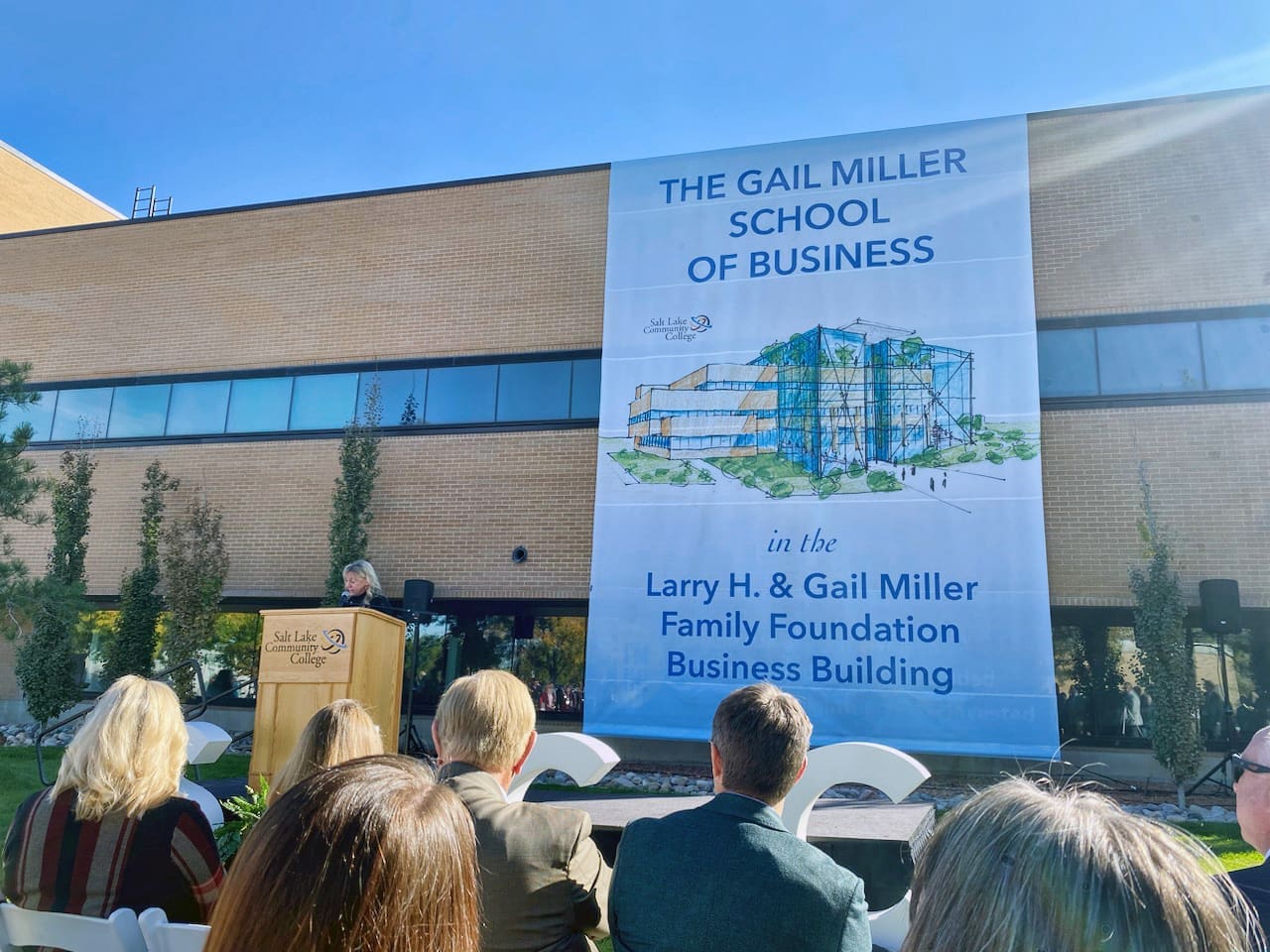
Gail Miller’s financial story is incomplete without examining her philanthropic commitments. Wealth of this magnitude carries significant civic responsibilities, which Miller has managed primarily through the Larry H. & Gail Miller Family Foundation.
The foundation directs tens of millions of dollars annually toward educational institutions, healthcare research, community programs, and cultural initiatives in Utah and the broader Intermountain West. Major beneficiaries include the University of Utah, various technical colleges, and community service organizations.
From a financial perspective, these structured philanthropic vehicles provide strategic tax advantages while simultaneously cementing the family's brand reputation and regional influence, ensuring that their capital actively shapes the local economy.
Summary of Wealth Drivers
To understand how Gail Miller accumulated and maintains her multibillion-dollar financial standing, several core factors must be considered:
- Strategic Expansion: Starting from a single automotive dealership and scaling through disciplined reinvestment.
- Asset Timing: Capitalizing on peak sports franchise valuations through the strategic sale of the Utah Jazz.
- Diversification: Spreading risk across automotive retail, real estate development, and entertainment.
- Institutional Governance: Utilizing trusts and professional management to protect enterprise value across generations.
Frequently Asked Questions
What is Gail Miller's estimated net worth?
Gail Miller's net worth is estimated in the multibillion-dollar range, largely driven by the long-term success of the Larry H. Miller Group of Companies and the multibillion-dollar sale of the Utah Jazz in 2020. Exact private figures vary depending on real estate valuations and private equity holdings.
How did Gail Miller build her wealth?
She built her wealth primarily alongside her late husband, Larry H. Miller, by starting with a single car dealership in 1979 and expanding into a vast empire encompassing automotive retail, professional sports, real estate development, and entertainment holdings.
Does Gail Miller still own the Utah Jazz?
No. In December 2020, the Miller family finalized the sale of the Utah Jazz, Vivint Arena, and related sports properties to Qualtrics co-founder Ryan Smith. The sale represented one of the largest sports franchise transactions in NBA history.
What is the Larry H. Miller Group of Companies?
It is a privately held conglomerate headquartered in Sandy, Utah. It operates a diverse portfolio of businesses, including automotive dealerships, real estate development projects, entertainment venues, and financial investments.
How is Gail Miller's wealth managed today?
Her wealth and business interests are managed through structured family trusts and professional governance models designed to ensure long-term enterprise stability, operational continuity, and sustained philanthropic giving.
Next Actions and Further Reading
For those analyzing executive net worth, private equity structures, or regional economic development in the Intermountain West, examining the official corporate filings of the Larry H. Miller Company provides deeper operational insights. Readers interested in sports business economics can also review historical NBA franchise valuations leading up to the 2020 Utah Jazz transaction to understand the market conditions that facilitated the sale.
Image Gallery