Alpaca Antibody Overview and Applications: Navigating VHH Technology
Alpaca antibodies, specifically their heavy-chain-only antibodies (HCAbs) and the resulting variable domains known as nanobodies or VHH fragments, represent a transformative advancement in biotechnology. These small, highly stable, and...
Alpaca antibodies, specifically their heavy-chain-only antibodies (HCAbs) and the resulting variable domains known as nanobodies or VHH fragments, represent a transformative advancement in biotechnology. These small, highly stable, and versatile protein tools are utilized in clinical diagnostics, therapeutic development, and molecular imaging, offering unique structural advantages over conventional mammalian antibodies.
Contents
The Unique Biology of Camelid Antibodies
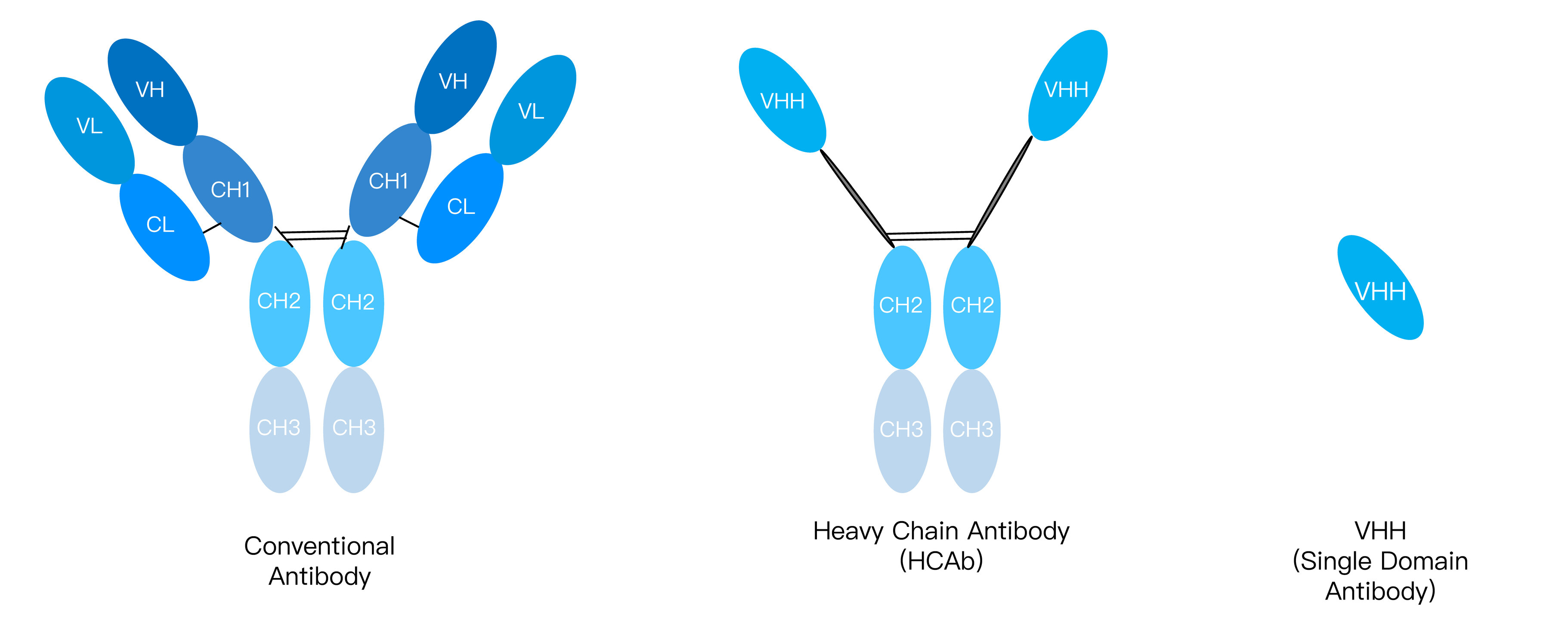
To understand the utility of alpaca antibodies, one must first distinguish them from the conventional immunoglobulin G (IgG) found in most mammals. Standard antibodies are composed of two heavy chains and two light chains, creating a Y-shaped structure where the antigen-binding site is formed by the interaction of both the variable heavy (VH) and variable light (VL) domains.
Alpacas, alongside other camelids like llamas and camels, possess a specialized subset of antibodies that lack light chains entirely. These heavy-chain-only antibodies (HCAbs) bind to targets using only a single variable domain, known as the VHH domain or nanobody. Despite this simplified architecture, nanobodies retain full antigen-binding capacity.
Structural Advantages of VHH Domains
The structural simplicity of VHH domains confers several biophysical benefits that researchers exploit:
- Small Size: At approximately 12–15 kDa, nanobodies are roughly one-tenth the size of conventional antibodies. This allows them to penetrate dense tissues, such as solid tumors or the blood-brain barrier, much more effectively than full-length antibodies.
- High Stability: Nanobodies are remarkably resistant to temperature fluctuations, extreme pH levels, and chemical denaturants. This robustness simplifies shipping, storage, and long-term diagnostic applications.
- Solubility and Expression: Because they are single-domain proteins, nanobodies are highly soluble and can be produced efficiently in microbial expression systems like E. coli or yeast, leading to lower production costs compared to mammalian cell culture.
- Targeting Cryptic Epitopes: The long, flexible complementarity-determining regions (CDRs) of alpaca antibodies allow them to reach deep into active sites of enzymes or hidden protein crevices that are physically inaccessible to the bulky structure of conventional antibodies.
Key Applications in Research and Medicine
The distinct properties of alpaca-derived nanobodies have opened new avenues across various scientific disciplines. By tailoring the binding specificity to particular molecular targets, researchers employ these tools in both controlled laboratory environments and clinical settings.
Diagnostics and Biosensors
Nanobodies are increasingly used in lateral flow assays and ELISA-based diagnostics. Their stability ensures that diagnostic kits maintain integrity even in resource-limited settings without constant refrigeration. Furthermore, their small size allows for high-density immobilization on sensor surfaces, increasing the sensitivity of biosensors used for detecting biomarkers, toxins, or pathogens in complex biological samples.
Targeted Therapeutics
In therapeutic development, nanobodies are engineered to act as antagonists or agonists. Their ability to neutralize pathogens or modulate receptor signaling without the immunogenicity risks associated with large, multi-domain proteins makes them attractive candidates for drug development. In 2026, researchers are utilizing nanobody-based therapies for chronic inflammatory diseases and targeted oncology treatments, where precision is required to minimize off-target effects.
Molecular Imaging
The rapid blood clearance of nanobodies—due to their small size and absence of the Fc region—is highly advantageous for in vivo imaging. When conjugated with radionuclides or fluorescent markers, nanobodies provide high-contrast images of tumors or organs within hours of injection, whereas conventional antibodies might require days to clear from the systemic circulation, causing high background noise.
Comparison: Nanobodies vs. Conventional Antibodies
| Feature | Conventional IgG | Alpaca Nanobody (VHH) |
|---|---|---|
| Molecular Weight | ~150 kDa | ~12–15 kDa |
| Structure | Two heavy, two light chains | Single domain (heavy chain only) |
| Production System | Mammalian cell culture | Microbes (E. coli, yeast) |
| Stability | Moderate (sensitive to heat/pH) | High (stable at high temp/extreme pH) |
| Tissue Penetration | Low | High |
| Immunogenicity | Potential risk | Lower (humanization is simpler) |
Procedural Workflow: From Immunization to Selection
The process of generating high-affinity alpaca antibodies follows a structured immunological and molecular pipeline.
- Immunization: The alpaca is immunized with the target antigen. The animal’s immune system responds by producing high-affinity HCAbs specific to the target.
- Library Construction: B-lymphocytes are isolated from the alpaca’s blood. The mRNA encoding the VHH domains is extracted and converted into cDNA. This sequence is then cloned into a phagemid vector to create a vast, diverse phage display library.
- Selection (Panning): The phage display library is screened against the target antigen. Phages that bind with high affinity are isolated and amplified through repetitive rounds of washing and elution.
- Verification: The selected nanobody sequences are expressed in E. coli, purified, and tested for binding affinity, specificity, and thermal stability to ensure the product meets technical requirements.
Troubleshooting Common Challenges
While alpaca antibody technology is robust, practitioners often encounter specific technical hurdles. The most common involves the selection of binders with insufficient affinity. If a screen yields weak binders, increasing the stringency of the washing steps during phage display or employing a different immunization strategy (e.g., using different adjuvants or immunization schedules) can often improve the results.
Additionally, humanization of the nanobody is a critical step for therapeutic applications. While nanobodies are less immunogenic than murine antibodies, they are still foreign proteins. Standard engineering techniques, such as grafting the CDRs onto a humanized framework, are required to ensure the molecule is not cleared by the patient's immune system prematurely.
Frequently Asked Questions
Are alpaca antibodies identical to llama antibodies? Both are members of the Camelidae family and both produce HCAbs. While their VHH domains are highly similar in structure and function, they are distinct at the genetic and amino acid sequence level. Most laboratory protocols for generating nanobodies are effectively interchangeable between the two species.
Can nanobodies be used for intracellular targeting? Yes. Because of their small size and stability, nanobodies can be expressed within cells as "intrabodies" to track or inhibit protein function in real-time, a feat that is significantly more difficult with full-size antibodies.
What is the primary limit of alpaca antibodies? The main limitation is their short half-life in the bloodstream due to rapid renal filtration. To address this, developers often fuse nanobodies to an albumin-binding domain or use multivalent formats (linking multiple nanobodies together) to increase their molecular weight and extend circulation time.
Is it necessary to have the alpaca on-site for antibody production? No. Most research institutions and commercial developers purchase pre-constructed phage display libraries or outsource the immunization and selection process to specialized contract research organizations (CROs) that manage the animal husbandry and molecular engineering under strict ethical guidelines.
Do alpaca antibodies require cold-chain logistics? Generally, no. One of their most significant advantages is their thermal stability. Many nanobodies retain their structural integrity at room temperature for extended periods, significantly reducing the costs and logistical complexities associated with temperature-sensitive pharmaceutical distribution.
Next Steps for Implementation
For organizations looking to integrate alpaca antibody technology, the first step is to define the intended application. If you require a high-affinity probe for a diagnostic assay, focus on optimizing the selection process within your phage display library. If your goal is therapeutic development, prioritize the humanization of lead candidates and testing for pharmacokinetic properties early in the development cycle. Consult with specialized protein engineering services to ensure that your chosen sequence meets the necessary binding kinetics for your specific target.
Image Gallery