Why You Need Data Center Security Measures: Protecting Critical Infrastructure and Enterprise Assets
Data center security measures protect physical hardware, hosted applications, and proprietary data against physical intrusion, cyberattacks, environmental hazards, and operational downtime. Implementing layered physical and logical con...
Data center security measures protect physical hardware, hosted applications, and proprietary data against physical intrusion, cyberattacks, environmental hazards, and operational downtime. Implementing layered physical and logical controls ensures business continuity, prevents costly data breaches, maintains regulatory compliance, and protects an organization's reputation and financial stability across modern enterprise and cloud infrastructure.
Contents
The Expanding Threat Landscape Facing Modern Data Centers
Data centers form the backbone of modern enterprise operations, hosting server stacks, storage arrays, networking gear, and critical digital intellectual property. As organizations rely increasingly on cloud services, high-performance computing, and real-time processing, the security of these facilities becomes paramount. A breach or outage at the data center level carries catastrophic implications, ranging from operational paralysis to severe financial liabilities.
The threat environment targeting data centers has evolved far beyond simple physical break-ins or isolated malware infections. Modern facilities face complex physical, digital, and environmental risks that require continuous vigilance:
- Sophisticated Cyberattacks: Threat actors deploy automated ransomware, distributed denial-of-service (DDoS) floods, advanced persistent threats (APTs), and supply chain exploits designed to breach perimeter firewalls or take down networking equipment.
- Physical Intrusion and Sabotage: Unauthorized personnel gaining physical access to server racks can install hardware keyloggers, rogue wireless access points, or physically remove drives containing unencrypted enterprise data.
- Insider Threats: Malicious or negligent employees, contractor personnel, and third-party vendors with elevated access privileges present a significant vector for data exfiltration or operational disruption.
- Environmental and Infrastructure Hazards: Power grid failures, thermal runaways, localized fires, plumbing leaks, and seismic events can instantly corrupt data storage systems and destroy millions of dollars in equipment if environmental controls fail.
Failing to implement robust data center security measures leaves organizations exposed to crippling remediation costs, legal actions from affected customers, lost business revenues, and regulatory fines.
Core Pillars of Data Center Security: Physical and Digital Defense
Effective data center protection relies on a defense-in-depth strategy, a multi-layered security model where multiple defense mechanisms are layered throughout the facility. If one layer fails, subsequent layers prevent unauthorized access or system compromise. This strategy divides security into two primary domains: physical security and logical security.
- DEFENSE-IN-DEPTH MODEL
- Layer 1: Perimeter: Security Fencing, K-Rated Barriers, CCTV
- Layer 2: Building: Biometrics, Mantrap Portals, Security Staff
- Layer 3: Computer: Locked Server Cages, Rack Biometrics, Sensors
- Layer 4: Network: Zero Trust, Micro-segmentation, DDoS Shield
- Layer 5: Data: Hardware Encryption, HSMs, IAM Controls
Physical Security Infrastructure
Physical security controls prevent unauthorized individuals from physically touching or approaching server hardware, power distribution units (PDUs), and network cabling. Physical protection is typically structured into concentric security zones:
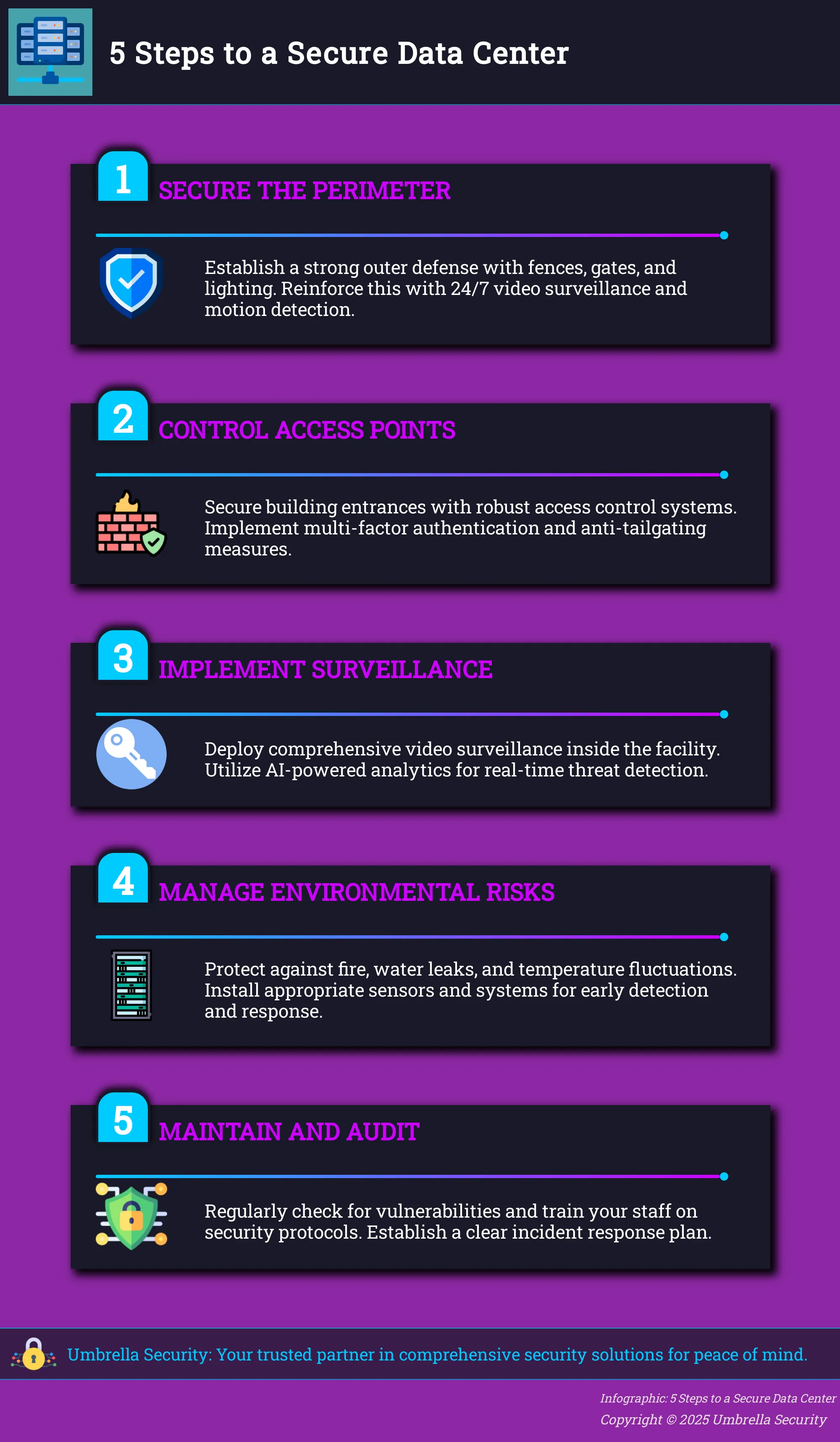
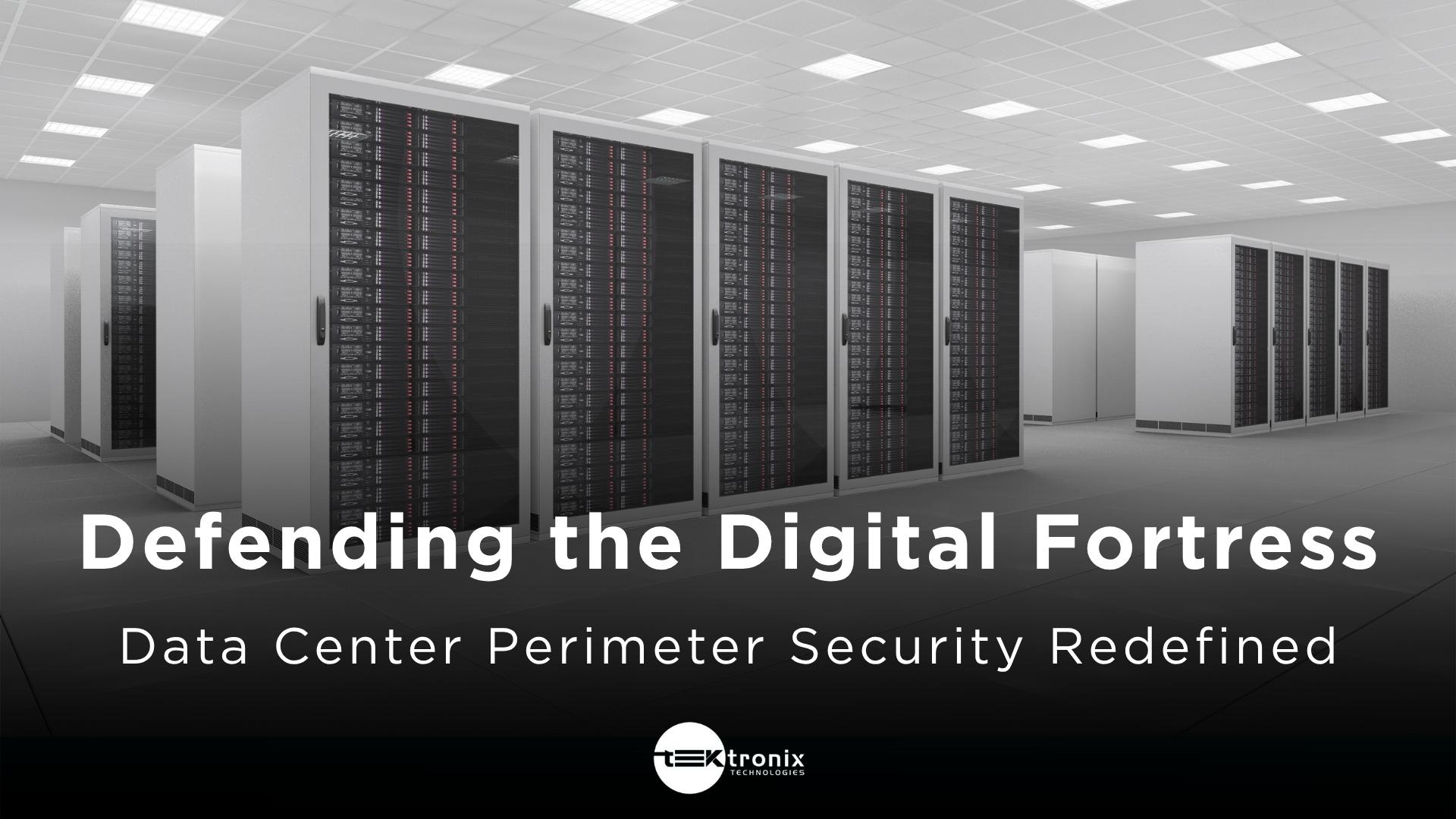
- Perimeter Guarding: High-security fencing, K-rated anti-ram bollards, vehicular access gates, license plate recognition systems, and continuous infrared video surveillance monitor facility grounds.
- Building Entry Access: Two-factor authentication (2FA) or multi-factor authentication (MFA) combining access badges with biometric scanners (iris, fingerprint, or facial recognition). Access is funneled through security-mantrap portals—interlocking dual-door entries that prevent tailgating.
- Data Hall Controls: Server rooms require elevated access permissions. Server racks are housed within locked wire cages or individual biometric rack locks, ensuring technicians only access the specific servers assigned to their work tickets.
- Environmental and Utility Resilience: Industrial-grade heating, ventilation, and air conditioning (HVAC) systems maintain precise temperature and humidity ranges. Automated clean-agent fire suppression systems (such as Novec 1230 or Inergen gas) extinguish fires without using water that would destroy sensitive electronics. Backup power systems—including redundant Uninterruptible Power Supply (UPS) battery banks and onsite diesel generators—ensure continuous operation during power grid failures.
Logical and Cybersecurity Infrastructure
Logical security controls govern digital access to network switches, hypervisors, cloud management consoles, and hosted data repositories.
- Zero Trust Network Architecture (ZTNA): Zero Trust operates on the principle of "never trust, always verify." Every user, device, and application request must be authenticated, authorized, and continuously validated before being granted network access.
- Micro-segmentation: Dividing network topologies into isolated sub-zones prevents lateral movement. If a single web server is compromised, micro-segmentation prevents the attacker from moving laterally into enterprise database segments.
- Hardware Security Modules (HSMs): Dedicated, tamper-resistant crypto-processors generate, store, and manage cryptographic keys. HSMs protect encryption keys used for full-disk encryption and secure data transmissions.
- DDoS Mitigation Systems: Automated traffic scrubbers sit at the carrier edge to filter out volumetric denial-of-service traffic, preventing network interface saturation and keeping application endpoints available.
Regulatory Compliance and Governance Standards
Implementing standardized security controls is necessary to comply with legal mandates and industry regulations. Organizations operating data centers—or leasing colocation space—must demonstrate adherence to recognized compliance frameworks to maintain operational licenses and customer contracts.
Major regulatory standards governing data center operations include:
- ISO/IEC 27001: An international standard detailing criteria for establishing, implementing, maintaining, and continually improving an Information Security Management System (ISMS). ISO/IEC 27001 certification verifies that a data center systematically manages operational security risks.
- SOC 2 Type II: Developed by the American Institute of CPAs (AICPA), SOC 2 reports evaluate an organization's controls based on the Trust Services Criteria: Security, Availability, Processing Integrity, Confidentiality, and Privacy. A Type II report evaluates the operational effectiveness of these controls over a extended testing period (typically 6 to 12 months).
- PCI DSS (Payment Card Industry Data Security Standard): Mandatory for facilities hosting systems that process, store, or transmit credit card data. Requirements specify strict physical access restrictions, network monitoring, and encrypted storage of cardholder data environments (CDE).
- HIPAA (Health Insurance Portability and Accountability Act): In the United States, data centers hosting electronic Protected Health Information (ePHI) must comply with HIPAA Security Rule requirements, enforcing physical safeguards, access controls, and audit logs.
- NIST SP 800-53: A comprehensive catalog of security and privacy controls created by the National Institute of Standards and Technology for federal information systems and organizations supporting government infrastructure.
Failure to uphold these standards can lead to severe regulatory fines, loss of merchant processing privileges, and contract cancellations by enterprise clients.
Comparative Overview: Physical vs. Digital Data Center Security Controls
The table below highlights how physical and digital security controls address distinct risk vectors within a modern data center environment:
| Control Category | Primary Objective | Technologies & Measures Deployed | Common Risks Addressed |
|---|---|---|---|
| Perimeter Security | Deter and delay physical intrusion at property lines | K-rated bollards, perimeter fencing, thermal cameras, motion sensors | Vehicle ramming, physical trespassing, vandalism |
| Facility Access Control | Authenticate identity of all entering personnel | Biometric scanners (iris/fingerprint), mantrap portals, RFID badges | Tailgating, unauthorized visitor access, identity impersonation |
| Rack-Level Security | Restrict access to individual physical servers | Smart locks, biometric cage handles, server rack enclosure sensors | Physical drive theft, malicious USB insertion, rogue hardware installation |
| Network Segmentation | Contain lateral cyber threats within micro-zones | Next-Generation Firewalls (NGFW), Virtual LANs (VLANs), Zero Trust Network Access | Lateral movement, privilege escalation, internal malware propagation |
| Data Encryption | Render stolen or intercepted data unreadable | AES-256 encryption at rest, TLS 1.3 in transit, Hardware Security Modules (HSMs) | Data exfiltration, packet sniffing, unauthorized storage drive inspection |
| Environmental Controls | Prevent physical damage from non-human hazards | Gas fire suppression (Novec 1230), dual UPS banks, diesel generators, HVAC sensors | Equipment overheating, electrical surge, power loss, fire damage |
| Continuous Auditing | Verify integrity of all physical and logical events | SIEM platform integration, video retention systems, access log reviews | Unidentified compliance gaps, insider threat activity, unrecorded breaches |
Strategic Business Benefits of Comprehensive Data Center Security
Investing in data center security yields tangible operational and strategic advantages that directly protect corporate profitability and enterprise viability.
- STRATEGIC VALUE OF DC SECURITY
- Uptime Guarantee: Tier III/IV Standards
- Enterprise Trust: SLA Compliance
- Risk Mitigation: Zero Downtime
- Result: Sustained Competitive Advantage & Regulatory Compliance
Ensuring Uptime and High Availability
System downtime carries substantial financial costs. Unplanned outages result in lost sales revenue, missed operational deadlines, emergency IT labor expenses, and potential contractual penalties associated with Service Level Agreements (SLAs).
Standardized data center security measures directly contribute to continuous availability. Physical redundancy (N+1 or 2N infrastructure for power and cooling) combined with proactive network security prevents both operational hardware failures and malicious distributed service disruptions. Facilities rated under the Uptime Institute Tier Standard (Tier III or Tier IV) mandate high levels of concurrent maintainability and fault tolerance to support 99.982% to 99.995% uptime guarantees.
Safeguarding Intellectual Property and Customer Trust
For SaaS platforms, financial institutions, healthcare providers, and e-commerce enterprises, client trust is tied directly to data integrity. A publicized security breach involving customer records or corporate secrets leads to immediate loss of enterprise value. Comprehensive physical access controls and continuous cyber monitoring ensure that sensitive data remains isolated from unauthorized actors, protecting corporate brand equity.
Mitigating Third-Party and Insider Risks
Modern data centers accommodate numerous third-party vendor technicians, equipment vendors, and facility contractors daily. Comprehensive security controls—such as mandatory background checks, escorted access policies, privileged access management (PAM) tools, and video auditing—significantly lower the risk of insider sabotage, accidental misconfiguration, or data theft by external contractors.
Key Steps to Modernize Data Center Security
Upgrading facility security requires a structured approach to identify vulnerabilities and implement appropriate physical and logical controls.
Step 1: Conduct a Comprehensive Risk Assessment and Security Audit
Evaluate existing physical and logical infrastructure against industry benchmarks such as ISO/IEC 27001 or NIST SP 800-53. Identify single points of failure, unmonitored entries, legacy network hardware running end-of-life firmware, and gaps in employee access control logs.
Step 2: Enforce Zero Trust Access and Least Privilege Architecture
Transition all digital access workflows to a strict Zero Trust model. Apply the principle of least privilege, ensuring employees and contractors receive only the minimum access permissions required to complete specific tasks. Implement Privileged Access Management (PAM) to session-record administrative actions.
Step 3: Upgrade Physical Perimeter and Access Control Interfaces
Replace outdated badge-only access readers with multi-factor biometric authenticators. Install mantrap portals at all primary entrances to the data hall and upgrade video monitoring to high-definition IP cameras equipped with continuous cloud/on-premise log retention.
Step 4: Establish Continuous Threat Monitoring and Incident Response
Integrate security event feeds from physical access control systems, network firewalls, and server operating systems into a unified Security Information and Event Management (SIEM) or Security Orchestration, Automation, and Response (SOAR) platform. Perform regular disaster recovery simulation exercises and quarterly third-party penetration testing to validate baseline response procedures.
Frequently Asked Questions
What is the difference between physical security and logical security in a data center?
Physical security involves tangible protective measures that keep unauthorized people away from hardware equipment, including security guards, biometric locks, video surveillance, fencing, and environmental suppression systems. Logical security refers to software-based controls that protect networks and data, such as firewalls, encryption protocols, Zero Trust access policies, and identity management systems.
What are the main physical security zones within a data center?
Physical data centers typically use four security zones: Zone 1 (Perimeter Security, such as fences, gates, and parking surveillance); Zone 2 (Facility Entry, including reception desks, security check-in, and visitor management); Zone 3 (Computer Hall Access, using mantrap portals and biometric access); and Zone 4 (Rack Security, consisting of locked server cages and biometric rack handles).
How do data center security measures support continuous uptime?
Security measures protect infrastructure from external disruptions. Environmental monitoring prevents hardware failures caused by overheating or water leaks, redundant power paths prevent outages during power grid failures, and network scrubbers stop DDoS attacks from overwhelming system bandwidth.
Why is micro-segmentation critical for data center network security?
Micro-segmentation divides data center networks into isolated, secure sub-zones. If an attacker gains entry to one node or virtual machine, micro-segmentation prevents them from moving laterally to access database servers or administrative controllers.
How often should a data center undergo security audits?
Data centers should undergo physical and logical security audits at least annually to maintain certifications such as SOC 2 Type II or ISO/IEC 27001. Penetration testing of external and internal networks should occur biannually or immediately following major infrastructure modifications.
Building a Resilient Security Strategy
Securing a data center requires a balanced, multi-layered approach that addresses both physical infrastructure vulnerabilities and digital cyber threats. As facilities expand to support higher computing densities and distributed cloud architectures, maintaining robust access controls, zero-trust network policies, continuous monitoring, and strict regulatory compliance is essential.
Organizations should begin by auditing their current security posture against established frameworks like NIST SP 800-53 or ISO/IEC 27001, identifying single points of failure, and deploying automated, defense-in-depth protections across physical and logical assets.
Image Gallery