The VA Loan MPR Checklist: Meeting Department of Veterans Affairs Property Requirements
When buying a home with a Department of Veterans Affairs (VA) loan, meeting the Minimum Property Requirements (MPRs) is just as critical as qualifying for the mortgage financially. The VA loan MPR checklist ensures that the property a...
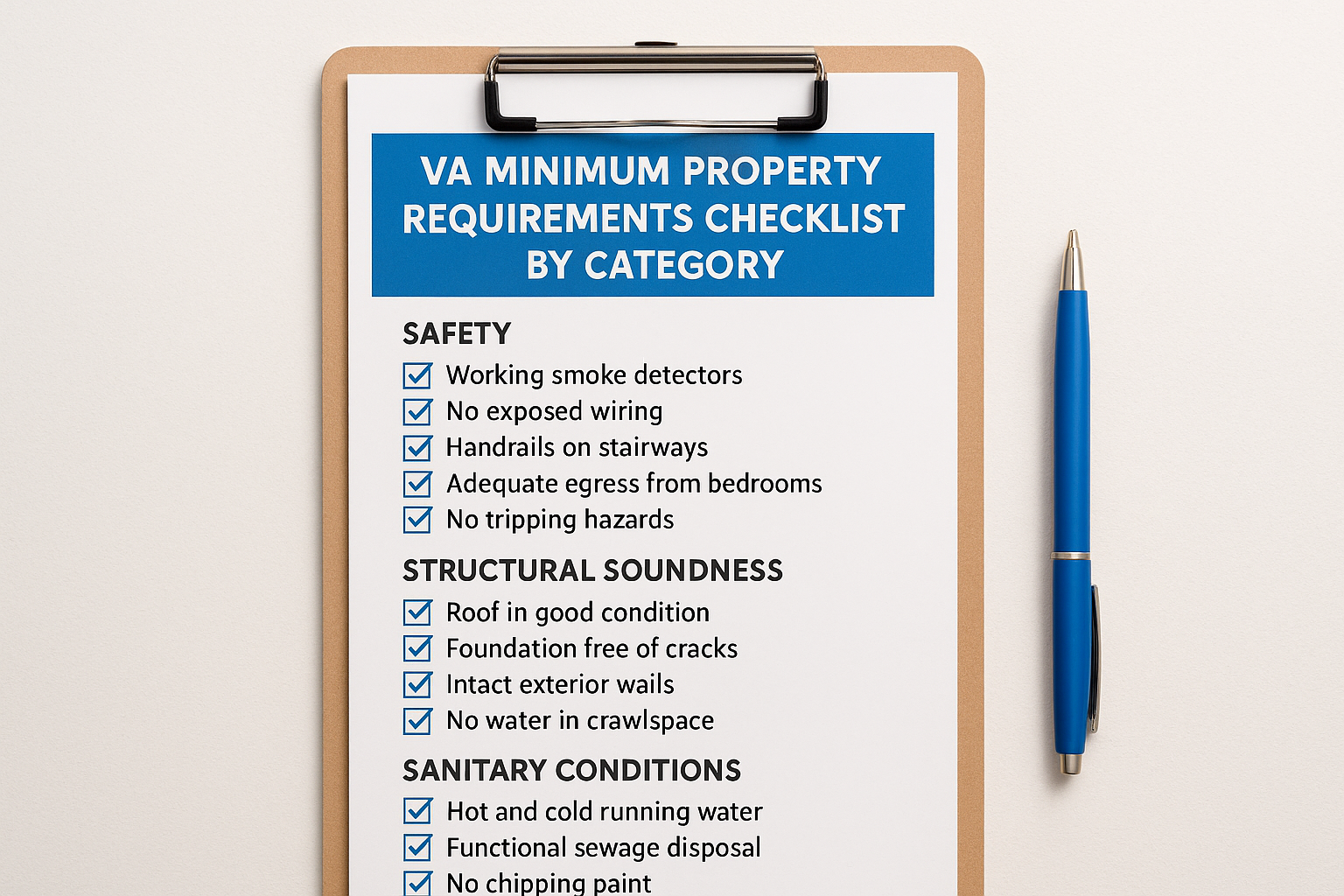
When buying a home with a Department of Veterans Affairs (VA) loan, meeting the Minimum Property Requirements (MPRs) is just as critical as qualifying for the mortgage financially. The VA loan MPR checklist ensures that the property a service member, veteran, or eligible surviving spouse wishes to purchase is safe, structurally sound, and sanitary. Unlike standard home inspections, which focus on the overall condition and remaining lifespan of a home's components, VA appraisals focus strictly on these baseline habitability standards set by the federal government.
Contents
Understanding VA Minimum Property Requirements (MPRs)
The Department of Veterans Affairs established Minimum Property Requirements to protect both the borrower and the financial integrity of the VA home loan guaranty program. These guidelines ensure that a home does not require immediate, costly repairs that would stretch a veteran's budget past their comfortable limits. MPRs derive their authority from federal guidelines enforced during the appraisal process, distinguishing them significantly from standard private home inspections.
It is important for buyers and sellers to recognize that a VA appraisal is not a comprehensive home inspection. While an appraiser looks for visible defects, code violations, and structural compromises, they do not dismantle systems, crawl into every tight space, or test every single electrical outlet with specialized diagnostic tools. The primary objective is to verify that the property meets the baseline criteria of safety, soundness, and security. If a property fails to meet these standards, the transaction cannot proceed until the issues are corrected or a formal waiver or repair agreement is established between the parties involved.
Core Categories of the VA Loan MPR Checklist
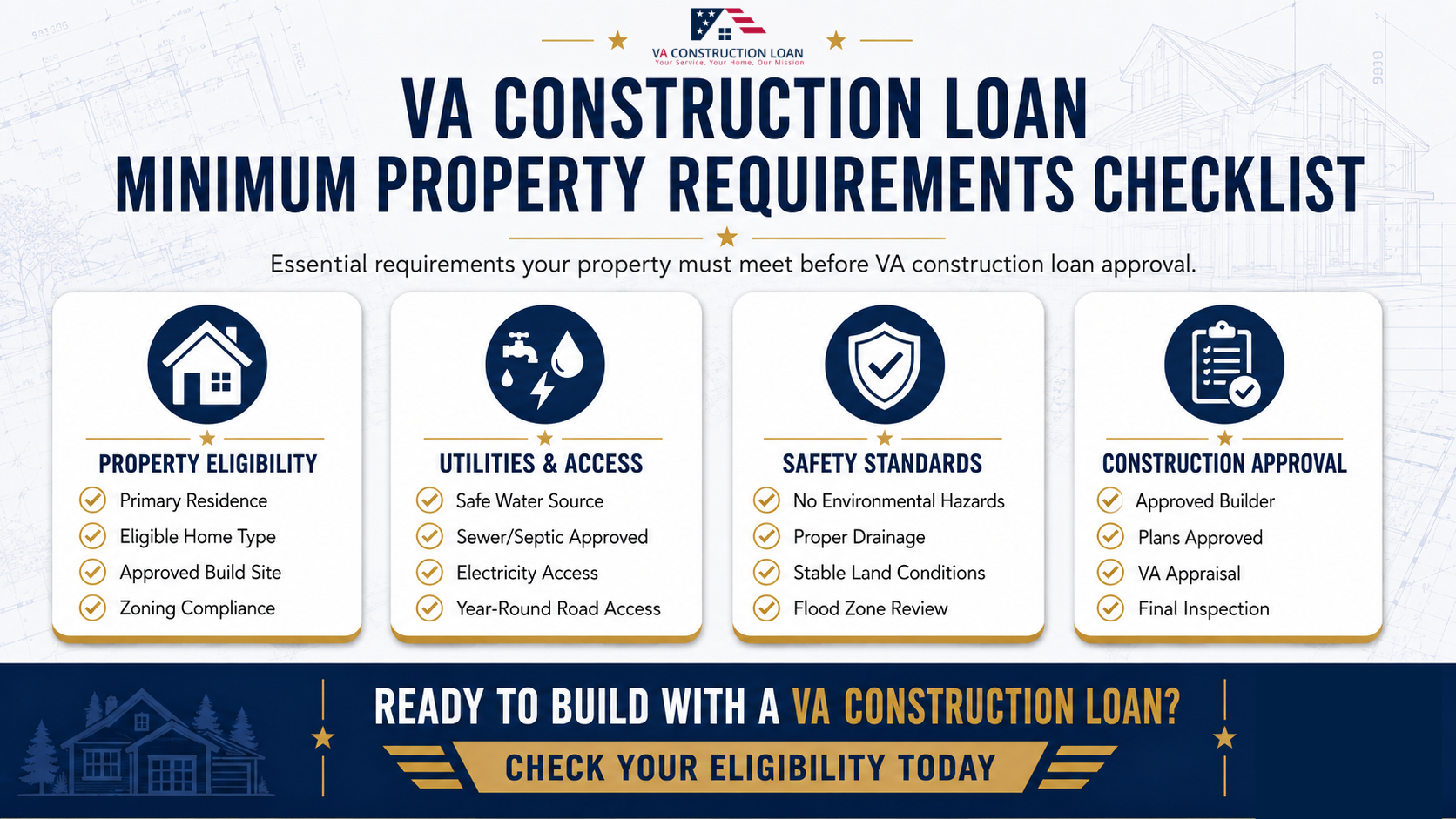
The VA MPR checklist covers several structural and environmental categories. Every home financed through this program must satisfy these conditions before the loan can clear underwriting and move to closing.
1. Safe and Adequate Property Access
A property must provide safe and continuous pedestrian and vehicular access from a public or private street. If a driveway or private road serves the property, it must be passable year-round under normal weather conditions. Furthermore, shared private roads typically require a legally binding maintenance agreement signed by all participating property owners to ensure long-term upkeep and emergency vehicle access.
2. Structural Soundness and Integrity
The physical structure of the home must be completely sound. The foundation, framing, roof structure, floors, walls, and ceilings must show no signs of major structural failure, excessive settling, or advanced decay. Any water penetration from the roof or exterior walls must be corrected, and the roof must have a reasonable remaining useful life. If an appraiser notes missing shingles, sagging rooflines, or active leaks, repairs will be required prior to loan approval.
3. Mechanical Systems and Utilities
Essential utilities—including electricity, gas, water, and sewage disposal—must be fully operational and safe. Electrical systems must be modern enough to avoid severe fire hazards; exposed knob-and-tube wiring, overloaded breaker panels, or frayed wiring will trigger a mandatory repair condition. Plumbing systems must supply adequate potable water, maintain proper water pressure, and dispose of wastewater safely through a public sewer system or a functioning, locally approved septic tank.
4. Heating and Cooling Standards
A home purchased with a VA loan must feature a permanent, thermostatically controlled heating system capable of maintaining a safe and comfortable indoor temperature (typically a minimum of 50 degrees Fahrenheit) in all habitable rooms. If the regional climate necessitates cooling, local building codes and standard underwriting guidelines apply, though the baseline federal mandate heavily emphasizes reliable heat. Space heaters, unvented gas logs, or portable units generally do not meet the requirement for permanent heating infrastructure.
5. Water Quality and Supply
Properties reliant on private wells must pass rigorous local water quality tests to ensure the supply is safe for human consumption. The water system must provide a continuous, dependable flow of potable water. If the water fails chemical or bacteriological testing, filtration or purification systems must be installed and re-tested before the real estate transaction can close.
6. Hazardous Materials and Environmental Safety
The VA maintains strict zero-tolerance policies for hazardous environmental conditions. Properties built before 1978 require close inspection for peeling, chipping, or flaking lead-based paint, which must be completely remediated and repainted. Additionally, properties must be free from soil contamination, asbestos hazards, underground storage tanks that show signs of leaking, and excessive dampness that could promote toxic mold growth.
VA Loan Minimum Property Requirements at a Glance
| Category | Primary Focus Area | Common Requirement / Restriction |
|---|---|---|
| Roofing | Structural integrity & weatherproofing | Must be free of major leaks; reasonable remaining lifespan required. |
| Utilities | Electricity, water, and gas | Must be fully operational, safe, and up to baseline safety codes. |
| Heating | Permanent climate control | Must have a fixed, thermostatically controlled heating system. |
| Paint | Lead-based paint (pre-1978 homes) | All peeling or chipping paint must be scraped and repainted. |
| Access | Roads and driveways | Safe, all-weather vehicle and pedestrian access from a public street. |
| Pests | Wood-destroying insects (termites) | Clear termite inspection report required in many geographic regions. |
Wood-Destroying Insect Inspections
In addition to standard visual appraisals, many regional VA loan guidelines mandate a specialized wood-destroying insect (WDI) inspection. Termites, carpenter ants, and powder-post beetles can compromise the structural integrity of a wood-framed building within a matter of years.
An authorized pest inspector must evaluate the property for active infestations, previous damage, and structural vulnerabilities. If active termites or structural damage from wood-boring pests are discovered, professional extermination and structural repairs must be completed, followed by a re-inspection verifying that the problem has been completely eradicated before the loan can close.
Common Reasons Properties Fail the VA Appraisal
Navigating the VA appraisal process can occasionally introduce friction if the property has deferred maintenance. Sellers and buyers frequently encounter specific hurdles that cause a property to fail the initial evaluation:
- Peeling Paint: The most common hurdle for older homes, requiring the complete removal of loose paint and a fresh coat of paint on bare wood.
- Missing Handrails: Staircases with four or more risers must have secure handrails installed for safety.
- Damaged Crawlspaces: Crawlspaces must be dry, properly vented, and free of excessive moisture or standing water.
- Broken Windows: Cracked or broken windowpanes must be repaired or replaced to maintain weatherproofing and home security.
- Malfunctioning Appliances: Built-in appliances that convey with the sale, such as stoves or ranges, must be in proper working order.
How to Handle Repairs and Re-Inspections
When a property fails to meet a requirement on the VA loan MPR checklist, the appraiser issues a conditional commitment noting the required repairs. At this stage, the buyer, seller, and real estate agents must negotiate who will pay for and complete the corrective work.
Sellers are not legally mandated by the federal government to pay for repairs, but market conditions often dictate whether they agree to fix the items to salvage the sale. Once repairs are finished, the appraiser returns to perform a compliance inspection (often referred to as a "re-inspection") to verify that the work meets professional standards. Only after this verification will the lender issue clear-to-close status. In rare cases where a minor cosmetic repair cannot be finished before closing due to weather, an escrow holdback agreement may be established, though this requires formal lender and VA approval.
Frequently Asked Questions
What is the difference between a VA appraisal and a home inspection?
A VA appraisal is ordered by the lender to determine the fair market value of the property and ensure it meets federal Minimum Property Requirements. A home inspection is optional, ordered by the buyer, and provides an exhaustive evaluation of the home's mechanical condition and remaining lifespan. Buyers should always secure an independent home inspection in addition to the mandatory VA appraisal.
Can I buy a "fixer-upper" with a VA loan?
Traditional VA loans are not designed for major fixer-uppers because the property must meet MPR standards before the loan closes. However, borrowers can utilize a VA Renovation Loan, which allows buyers to finance both the purchase price and the cost of necessary repairs into a single monthly mortgage payment.
Who pays for the VA appraisal and required re-inspections?
The veteran borrower typically pays for the initial VA appraisal fee upfront as part of their closing costs. If repairs are required and the appraiser must return to verify the work, the cost of the compliance re-inspection is negotiated between the buyer and seller based on local real estate contract customs.
What happens if the seller refuses to fix MPR violations?
If a seller refuses to make required repairs to satisfy the VA MPR checklist, the buyer can walk away from the purchase contract and retain their earnest money deposit (provided the contract includes standard financing contingencies). Alternatively, the buyer can negotiate to pay for the repairs themselves, provided they have available cash reserves and the seller agrees to the modifications.
Are swimming pools subject to VA MPR rules?
Yes. If a property features an in-ground or above-ground swimming pool, it must comply with local safety fencing codes and feature a functional filtration and pumping system. Unsecured or heavily damaged pools that pose a drowning hazard or breeding ground for mosquitoes will fail the appraisal until secured or repaired.
Next Steps for Buyers and Sellers
To ensure a smooth transaction, buyers working with a VA loan should proactively review potential properties for obvious maintenance issues before making an offer. Real estate agents experienced in military relocations and veteran financing can spot peeling paint, roof wear, and access concerns early, preventing wasted appraisal fees. For comprehensive guidelines and official updates, consult the U.S. Department of Veterans Affairs Home Loans portal.
Image Gallery