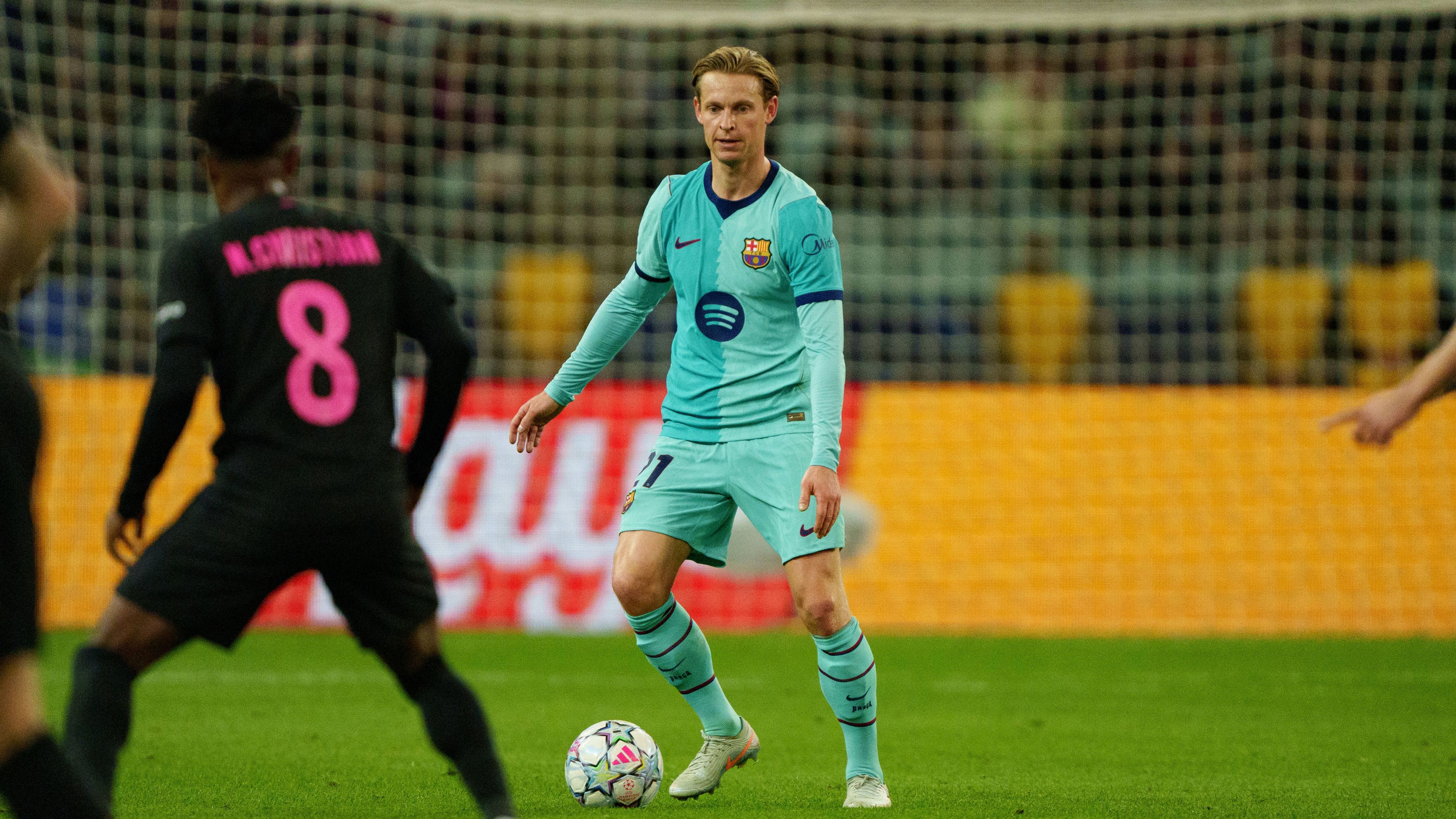
Analyzing Frenkie de Jong’s Tactical Space for the Netherlands
Frenkie de Jong operates as the dynamic engine of the Netherlands national team, anchoring deep midfield transitions, dictating tempo from the first phase of build-up, and carving out spatial dominance through press resistance, progres...
Frenkie de Jong operates as the dynamic engine of the Netherlands national team, anchoring deep midfield transitions, dictating tempo from the first phase of build-up, and carving out spatial dominance through press resistance, progressive carrying, and intelligent positional rotations.
Contents
Introduction to Frenkie de Jong’s Tactical Blueprint
The tactical identity of the Netherlands national team under various managerial iterations frequently pivots around the unique profile of Frenkie de Jong. Operating primarily as a deep-lying playmaker or a box-to-box controller, de Jong provides a bridge between the defensive line and the advanced attacking units. Understanding his tactical space requires examining how he occupies zones between opposing forward lines, how he receives under pressure, and how his movement triggers structural advantages for Oranje.
Unlike traditional holding midfielders who remain tethered horizontally across the pitch, de Jong thrives on dynamic spatial occupation. He drops into the backline to create numerical superiority against high presses, drifts into the half-spaces to collect vertical passes, and accelerates the game through line-breaking carries. This comprehensive analysis breaks down the mechanics of his positioning, his interactions with tactical systems, the defensive structures required to maximize his output, and the common constraints placed upon him by international opponents.
The Foundation: Build-Up Phase and Deep Progression
The initial phase of the Dutch possession game relies heavily on de Jong’s ability to manipulate space during opposition pressing sequences. When the Netherlands build out from the goalkeeper, de Jong frequently executes a salida lavolpiana rotation, dropping either between the central defenders or immediately to the side of them. This creates a situational back three, forcing opposing strikers to make acute pressing decisions.
By dropping deep, de Jong exploits the blind spots of the opponent's first defensive line. If the opposing forwards commit to pressing the central defenders, de Jong finds time and space on the half-turn. His exceptional body orientation allows him to scan the pitch before receiving the ball, enabling him to instantly transition from defense to attack.
[Opposing Pressing Line] (Forward) (Forward) --------------------------- [CB] [DE JONG] [CB] <-- De Jong drops into half-space --------------------------- [Fullback] [Fullback]
Furthermore, his elite press resistance acts as a structural safety valve. When opponents deploy man-oriented pressing schemes, de Jong uses his deceleration and acceleration cadence to invite pressure, draw markers out of position, and release the ball into the vacated space. This spatial creation is not merely about where he stands, but how his movement distorts the opponent's defensive block.
Half-Space Dominance and Intermediary Zones
Once the Netherlands bypass the initial pressure, de Jong shifts his focus to the intermediary zones, particularly the left half-space. Operating predominantly on the left side of a double pivot or as the progressive anchor in a three-man midfield, he establishes passing triangles with the left-back, the left winger, and the advancing central midfielder.
- Vertical Passing Lanes: De Jong positions his body to receive vertical balls from the center-backs, instantly turning upfield to face the opponent's block.
- Half-Space Overloads: By shifting into the left channel, he draws interior midfielders away from the center, opening central channels for the central attacking midfielder or dropping striker.
- Pace Regulation: He alternates between slow, methodical circulation to rest the team in possession and explosive, multi-line-breaking carries that force defensive line compressions.
This spatial occupation forces opponents into a tactical dilemma. If they step up to engage him, they leave space behind their midfield line for runners. If they drop off to protect the space, de Jong gains unchecked time to dictate the rhythm of the match.
Positional Interplay with Tactical Systems
The structural efficacy of de Jong's spatial freedom depends heavily on the tactical framework deployed by the Dutch manager. Whether utilizing a 4-3-3, a 3-5-2, or a 4-2-3-1, the core requirement remains consistent: de Jong requires a positional partner who can secure the central axis when he vacates his zone to carry the ball forward.
When paired with a disciplined destroyer or a positional controller—such as Marten de Roon, Tijjani Reijnders, or Jerdy Schouten in recent iterations—de Jong receives the defensive insurance necessary to roam. Without this structural cover, teams that exploit transitional moments can target the space left behind his progressive surges. Consequently, the tactical space allocated to de Jong is an ecosystem built on coordinated shifting: when he moves forward, a fullback tucks inside or a midfielder drops deep to maintain a stable rest-defense structure.
Comparative Tactical Profiles
To understand de Jong's unique spatial contribution, it is valuable to compare his profile against other elite international deep controllers. While players like Rodri or Joshua Kimmich prioritize metronomic positional discipline and shielding, de Jong's game is defined by ball-carrying dynamism and spatial expansion through movement.
| Midfield Profile | Primary Spatial Habit | Progression Method | Defensive Responsibility |
|---|---|---|---|
| Frenkie de Jong | Dynamic half-space drifting, deep dropping | Progressive carrying, receiving on half-turn | Positional recovery, tactical fouling |
| Metronomic Anchor | Central axis holding, stationary circulation | Short-medium passing combinations | Direct shielding of central defenders |
| Box-to-Box Runner | High-intensity penalty box penetration | Late runs, off-ball sprinting | High pressing, ball recovery in final third |
This comparison highlights why de Jong cannot be deployed as a static defensive shield. Limiting his movement to a rigid zone diminishes his primary weapon: the capacity to turn a defensive recovery into a 40-meter transitional attack through sheer spatial manipulation.
Defensive Responsibilities and Pressing Coordination
While much of the discourse surrounding de Jong focuses on his offensive output, his spatial awareness heavily influences the Dutch defensive structure. Out of possession, the Netherlands frequently shift into a mid-block or an aggressive high press, and de Jong’s role transitions from a spatial creator to a spatial blocker.
He uses his anticipation to intercept passing lanes rather than engaging in heavy physical duels. By cutting off central passing options, he forces opponents into the wide channels where the Dutch fullbacks and wingers can trap them against the touchline. However, defensive transitions present a specific vulnerability: when de Jong is caught high up the pitch during a turnover, the Netherlands can experience structural fragmentation in the central corridor, requiring rapid recovery runs from central defenders.
Common Constraints and Tactical Solutions
International opponents frequently deploy specific countermeasures to neutralize de Jong's influence on the match. Recognizing his importance to the Dutch build-up, elite coaches regularly implement player-oriented marking systems to deny him clean receptions.
Man-Marking Neutralization
When opponents assign a dedicated forward or attacking midfielder to shadow de Jong, his primary spatial outlet is restricted. To counter this, the Netherlands utilize coordinated decoy movements:
- Rotation: A central defender steps into midfield with the ball, while de Jong drifts wide or deep to drag the marker out of position.
- Third-Man Combinations: De Jong acts as a decoy himself, drawing the marker toward the touchline to open the central corridor for a pivot partner or dropping forward.
Physical Pressing and Compact Blocks
Compact low blocks that deny space between the midfield and defensive lines also limit de Jong's effectiveness. In these scenarios, his role shifts from breaking lines with carries to circulating the ball rapidly from side to side, exhausting the opponent's defensive shape until a momentary lapse in concentration creates an exploitable pocket of space.
Frequently Asked Questions
What is Frenkie de Jong’s preferred tactical position for the Netherlands?
Frenkie de Jong typically operates as a deep-lying playmaker or central midfielder, most comfortably on the left side of a double pivot or a three-man midfield. This position grants him the necessary lateral and vertical freedom to drop into the defensive line during build-up and surge forward into the half-spaces during transitions.
How does Frenkie de Jong create space against high-pressing teams?
He creates space by executing deep positional drops to form a numerical advantage, utilizing his exceptional body orientation to receive on the half-turn, and drawing opposing pressers out of position before releasing the ball or carrying it past the first line of pressure.
Why is a defensive partner essential for de Jong’s tactical success?
Because de Jong frequently vacates his central zone to conduct progressive ball-carries and join attacks, a disciplined midfield partner is required to maintain structural balance, cover central spaces, and protect the defensive transition against counter-attacks.
What are the main limitations placed on de Jong by opposing teams?
Opposing teams frequently deploy man-marking strategies or compact low blocks to deny him clean receptions in the intermediary zones, forcing the Netherlands to rely on rotational movements and third-man combinations to free up his passing lanes.
Conclusion and Strategic Outlook
Frenkie de Jong remains the tactical heartbeat of the Netherlands national team, defining how the squad transitions from defense to attack. His mastery of spatial awareness, press resistance, and progressive carrying allows Oranje to bypass defensive blocks that stifle more rigid midfields. Maximizing his output requires a carefully balanced structural ecosystem—one that provides defensive security during his forward surges while offering dynamic passing outlets when opponents attempt to crowd him out. As international football continues to evolve toward hyper-compressed defensive blocks, de Jong’s ability to manipulate space will remain a cornerstone of Dutch tactical ambitions.
Image Gallery