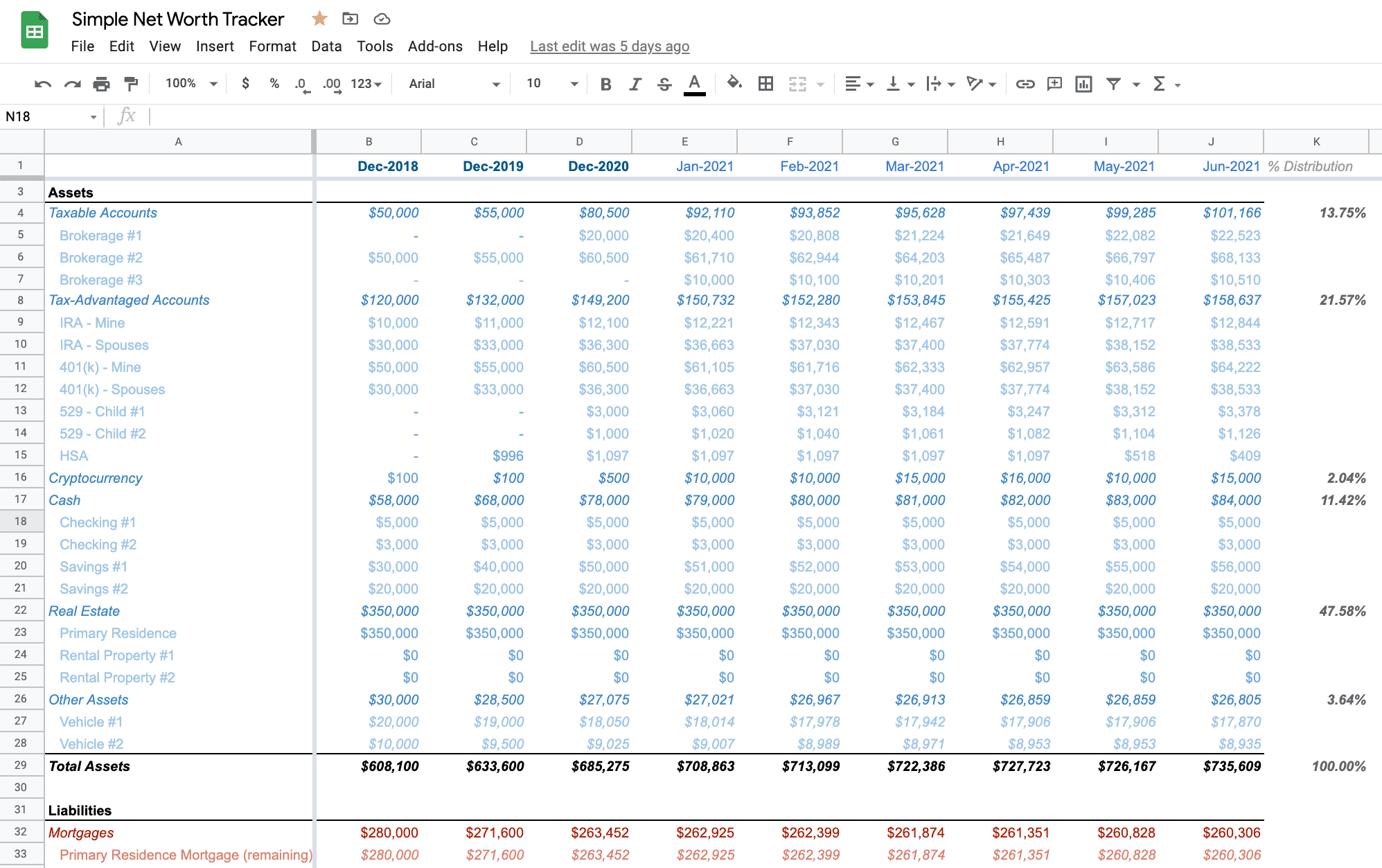
Total Net Worth Portfolio Planner: Architecture, Tools, and Strategy
A total net worth portfolio planner is a structured financial system that tracks, aggregates, and analyzes an individual's complete balance sheet—combining liquid investments, real estate, private equity, cash, and personal assets agai...
A total net worth portfolio planner is a structured financial system that tracks, aggregates, and analyzes an individual's complete balance sheet—combining liquid investments, real estate, private equity, cash, and personal assets against all short- and long-term liabilities. Unlike standard brokerage trackers focused strictly on market securities, a total net worth planner evaluates overall solvency, asset concentration, risk exposure, and tax-adjusted capital growth.
Contents
Core Architecture of a Total Net Worth Portfolio Planner
Managing personal wealth across fragmented financial institutions, private markets, and real property requires a unified analytical framework. A traditional investment tracker monitors equities, fixed income, or mutual funds held within specific brokerage accounts. However, a comprehensive total net worth portfolio planner incorporates non-brokerage holdings and structural debts to calculate true economic baseline strength.
To function effectively, a balance sheet planning framework must organize assets and liabilities by liquidity tier, risk exposure, and legal structure:
- Liquid Financial Assets: Checking and savings accounts, money market funds, short-term Treasuries, and publicly traded securities (stocks, ETFs, bonds) held in taxable brokerages, IRAs, or 401(k)s.
- Illiquid & Private Assets: Real estate equity, private equity, venture holdings, business ownership stakes, physical collectibles, and vested stock options.
- Short-Term Liabilities: Credit card balances, open lines of credit, tax liabilities due within twelve months, and short-term personal notes.
- Long-Term Debt: Mortgages, equity loans, commercial debt, student loans, and margin loans.
Total Net Worth = (Liquid Assets + Illiquid Assets) - (Short-Term Debt + Long-Term Debt)
Understanding this equation is fundamental, but advanced financial management requires tracking secondary metrics derived from these inputs. Key balance sheet metrics include:
- Liquid Net Worth: Net worth excluding illiquid assets like primary residences or private stock. This represents accessible capital during market downturns or liquidity events.
- Debt-to-Asset Ratio: Total liabilities divided by total assets. A lower ratio indicates higher financial solvency and lower insolvency risk during economic contractions.
- Risk-Adjusted Asset Allocation: The distribution of capital across broad asset classes (equities, fixed income, real estate, cash) weighted by asset volatility and inflation sensitivity.
Step-by-Step Guide to Building a Portfolio Planner
Designing a total net worth portfolio planner involves systematically cataloging assets, mapping liabilities, standardizing valuation frequencies, and establishing automated or manual rebalancing rules.
Step 1: Inventory Macro Asset Classes
Begin by listing every financial asset account and physical asset you own. Categorize them into structured asset classes to prevent double-counting and ensure clear segmentation:
- Public Equities: U.S. total market, international developed, emerging markets, and single-stock positions.
- Fixed Income: Government bonds, municipal bonds, corporate debt, and high-yield credit instruments.
- Cash & Cash Equivalents: Bank deposits, high-yield savings, certificates of deposit (CDs), and Treasury bills.
- Real Estate: Primary residence, residential rental properties, commercial real estate, and Real Estate Investment Trusts (REITs).
- Alternative Holdings: Commodities, precious metals, venture capital, private loans, and digital assets.
Step 2: Map Liabilities and Obligations
Document every outstanding financial debt along with key metadata: current principal balance, interest rate, monthly payment, amortizing terms, and tax deductibility.
Accurately capturing liabilities requires looking beyond standard bank mortgages. You must also include non-traditional liabilities, such as deferred tax obligations on unvested equity, potential capital gains taxes on highly appreciated assets, and contingent guarantees on commercial loans.
Step 3: Establish Valuation Protocols
Assets fluctuate in value on different timelines. Implementing standardized valuation protocols ensures your total net worth metrics remain accurate without adding unnecessary manual maintenance:
- Mark-to-Market (Daily/Real-Time): Applied to publicly traded equities, broad-market ETFs, crypto assets, and cash accounts via automated bank and brokerage API feeds.
- Mark-to-Model / Periodic (Quarterly/Annually): Applied to real estate holdings, private debt, and equity stakes in privately held operating companies. Real property valuations can leverage automated valuation models (AVMs) like Zillow Zestimates or periodic local comparative market analyses (CMAs), adjusted for estimated closing costs (typically 6% to 8%).
Step 4: Define Allocation Targets and Rebalancing Rules
A static view of net worth shows where your capital resides today, but dynamic planning dictates where it should move tomorrow. Establish target percentage allocations across asset classes based on your investment time horizon and risk capacity. Set clear rebalancing triggers—such as a 5% absolute deviation from target allocations—to prompt systematic rebalancing between overperforming and underperforming holdings.
Technical Implementations: API Aggregation vs. Custom Spreadsheets
Financial planners, software engineers, and private investors generally use two primary technical approaches for tracking net worth: automated financial software or custom spreadsheet models.
Option A: Open Banking APIs & SaaS Solutions
Modern wealth management applications aggregate accounts using open banking protocols and secure data aggregation APIs provided by services like Plaid, Yodlee, or MX. Software platforms automatically fetch balances, transactions, and holdings from financial institutions.
- Pros: Automated daily updates, historical performance graphs, built-in investment allocation dashboards, and minimal ongoing data entry.
- Cons: API connections frequently break due to multi-factor authentication (MFA) updates, custom or private investments require manual overrides, and personal financial data resides on third-party servers.
Option B: Custom Spreadsheets (Excel, Google Sheets)
Custom spreadsheets offer complete privacy, unlimited flexibility, and custom data modeling capabilities. Advanced models pull market prices using native functions like GOOGLEFINANCE or custom Python scripts interacting with financial APIs (such as Alpha Vantage or Yahoo Finance).
- Pros: Complete data ownership, full customizability for unlisted investments, custom tax calculations, and zero subscription costs.
- Cons: Requires manual transaction logs, periodic model upkeep, and manual asset valuation updates for private accounts.
Methodological Comparison of Wealth Tracking Frameworks
Selecting the right framework depends on balance sheet complexity, asset diversity, and privacy preferences.
| Feature / Dimension | Automated Aggregators | Custom Spreadsheets | Wealth Management Platforms |
|---|---|---|---|
| Primary Target Audience | Retail Investors, W-2 Earners | Self-Directed Investors, Engineers | High-Net-Worth Individuals, Family Offices |
| Setup Complexity | Low (Plug and Play) | Moderate to High | High (Requires Professional Setup) |
| Public Securities Tracking | Automated (Real-time/Daily) | Hybrid (Formula / Script Driven) | Automated (Direct Brokerage Integration) |
| Private Equity & Real Estate | Poor (Manual static inputs) | Excellent (Fully customizable models) | Good (Includes manual appraisal logs) |
| Data Privacy & Ownership | Third-party cloud storage | Local / Self-hosted security | Enterprise-grade cloud security |
| Tax-Adjusted Net Worth | Rarely Supported | Supported via Custom Formulas | Fully Supported (Integrated tax modeling) |
| Ongoing Maintenance Cost | $0 – $250 / year | $0 (Open Source / Self-built) | $1,000+ / year (SaaS or Advisor Fees) |
Advanced Strategies: Tax Adjustments and Stress Testing
Basic net worth tracking simply subtracts nominal debt from current nominal asset values. However, sophisticated wealth planning requires adjusting for tax drag, illiquidity discounts, and macro market shocks.
Accounting for Deferred Tax Liabilities
Not all dollars on a balance sheet carry equal purchasing power. A $1,000,000 balance in a traditional IRA carries a future income tax liability upon withdrawal, whereas a $1,000,000 balance in a Roth IRA grows and distributes tax-free.
To reflect true liquidation value, apply estimated tax haircuts to pre-tax accounts:
$$\text{Liquidation Value} = \text{Pre-Tax Asset Balance} \times (1 - \text{Estimated Marginal Tax Rate})$$
Similarly, taxable brokerage accounts with substantial unrealized capital gains should reflect embedded net capital gains tax liabilities (federal tax rates plus applicable state tax rates).
Scenario Modeling and Portfolio Stress Testing
A resilient portfolio plan should model performance under stress scenarios. Evaluate how your balance sheet holds up against market shocks using dynamic scenario testing:
- Equity Market Drawdown: Model a 30% to 50% drop in broad equity markets to evaluate its impact on your total asset value, leverage ratios, and liquid emergency reserves.
- Real Estate Liquidity Freeze: Assume real property illiquidity during a high-interest-rate environment, setting rental income projections to lower occupancy assumptions while applying higher cap rates to property valuations.
- Interest Rate Volatility: Assess the impact of rate hikes on variable-rate debt obligations, home equity lines of credit (HELOCs), and short-term debt refinancing.
For guidance on managing asset exposure and systemic risk, refer to resources provided by the U.S. Securities and Exchange Commission (SEC).
Common Pitfalls in Net Worth and Portfolio Tracking
Investors often make structural errors when designing and updating their net worth portfolio planners:
1. Counting Depreciating Personal Assets as Capital
Including personal vehicles, household electronics, or luxury goods at original purchase price inflates net worth. Unless an asset actively yields income or carries verifiable market value (e.g., investment-grade art or rare collectibles), exclude it from financial net worth calculations or mark its value down aggressively.
2. Confusing Nominal Net Worth with Real Purchasing Power
Failing to account for inflation over long periods distorts wealth accumulation metrics. A balance sheet growing at 3% annually in a 3.5% inflation environment is losing real purchasing power. Ensure your long-term planning tools calculate real, inflation-adjusted return metrics.
3. Ignoring Structural Illiquidity Risk
High net worth does not prevent cash flow crises if assets are trapped in non-liquid holdings. Investors heavily allocated in private real estate or unvested private stock may struggle during economic downturns if they lack adequate liquid reserves. Always track Liquid Net Worth alongside overall net worth.
Frequently Asked Questions
What is the difference between total net worth and liquid net worth?
Total net worth subtracts all liabilities from all assets, including non-liquid assets such as primary real estate, private business equity, and retirement funds. Liquid net worth excludes illiquid investments, measuring only assets that can be converted into cash within a few days without significant loss of capital.
How often should I update my portfolio balance sheet?
For public securities and bank accounts, automated tracking can occur daily or weekly. For comprehensive balance sheet updates—including real estate valuations, private holdings, and debt amortization reviews—a quarterly or annual cadence is optimal. Updating too frequently can encourage short-term overreaction to routine market volatility.
Should I include my primary residence in my total net worth planner?
Yes, your primary residence is a real asset that contributes to overall balance sheet equity. However, because it is an illiquid asset that generates housing costs rather than ongoing cash flow, track real estate equity separately from liquid investment portfolios. When accounting for home equity, deduct estimated transaction costs (typically 6% to 8%) to reflect realistic net realization.
How do I account for unvested stock options or restricted stock units (RSUs)?
Unvested equity awards should generally be excluded from your balance sheet net worth until they fully vest, as they remain subject to forfeiture upon separation from employment. Once vested, record the net equity value after accounting for required tax withholdings and income tax obligations.
Is Excel or automated tracking software better for net worth planning?
Excel or Google Sheets provides unmatched privacy, customized formula modeling, and full control over private assets and complex tax estimations. Automated SaaS trackers offer convenience, automatic account syncs, and real-time updates for public accounts. Many high-net-worth investors use a hybrid model: automated software for daily monitoring and a customized master spreadsheet for quarterly tax and strategic analysis.
Strategic Next Steps
Building a comprehensive total net worth portfolio planner begins with establishing an accurate, baseline view of your global assets and liabilities:
- Gather Accounts and Documents: Collect your latest statements across all bank accounts, taxable brokerages, tax-advantaged retirement plans, real estate mortgage balances, and debt instruments.
- Select Your Architecture: Choose between an automated tracking tool for ease of use or a custom spreadsheet model for granular privacy, tax management, and private asset tracking.
- Calculate Your True Baselines: Measure both your Total Net Worth and your Liquid Net Worth, applying tax-adjusted haircuts to pre-tax accounts and deducting transaction costs from illiquid assets.
- Set Allocation Rules: Define target asset allocation percentages across equities, debt, real estate, and cash reserves, establishing automated triggers to rebalance whenever market movements cause material drift.
By maintaining a clear, updated balance sheet framework, you can make informed decisions around risk management, tax planning, asset allocation, and overall long-term financial strategy.
Image Gallery