Alaska National Park Crossword Solving Strategies for the Unique Clues
Mastering Alaska-themed crosswords requires a combination of geographical knowledge, an understanding of National Park Service nomenclature, and specific linguistic patterns common to puzzle construction. Because Alaska contains some o...
Mastering Alaska-themed crosswords requires a combination of geographical knowledge, an understanding of National Park Service nomenclature, and specific linguistic patterns common to puzzle construction. Because Alaska contains some of the largest and most remote protected areas in the United States, clues regarding these parks often rely on specific identifiers—such as names of glaciers, mountain ranges, or indigenous terminology—that distinguish them from parks in the lower 48 states. Solving these unique clues involves systematic deconstruction of the hint, verifying the count of the letters, and applying specialized knowledge of the Last Frontier’s vast topography.
Contents
Understanding the Landscape of Alaska National Park Clues
The primary challenge with Alaska National Park crossword clues is that they often cross the boundary between general knowledge and obscure geography. Constructors frequently lean on the sheer scale of the Alaskan landscape to create difficulty. For example, clues might focus on superlatives: the largest park, the highest peak, or the most remote landing strip.
To effectively solve these, you must categorize your approach based on the type of clue provided. Is the clue asking for a specific name (like DENALI), a physical feature (like TAIGA or GLACIER), or perhaps a designation (like PRESERVE)? By determining if the answer is a proper noun or a descriptive term, you can narrow down your search area within the grid. Furthermore, constructors often use the unique relationship between Alaskan parks and the National Park Service (NPS) to hide clues within the official acronyms and designations.
Essential Geographical Entities and Acronyms
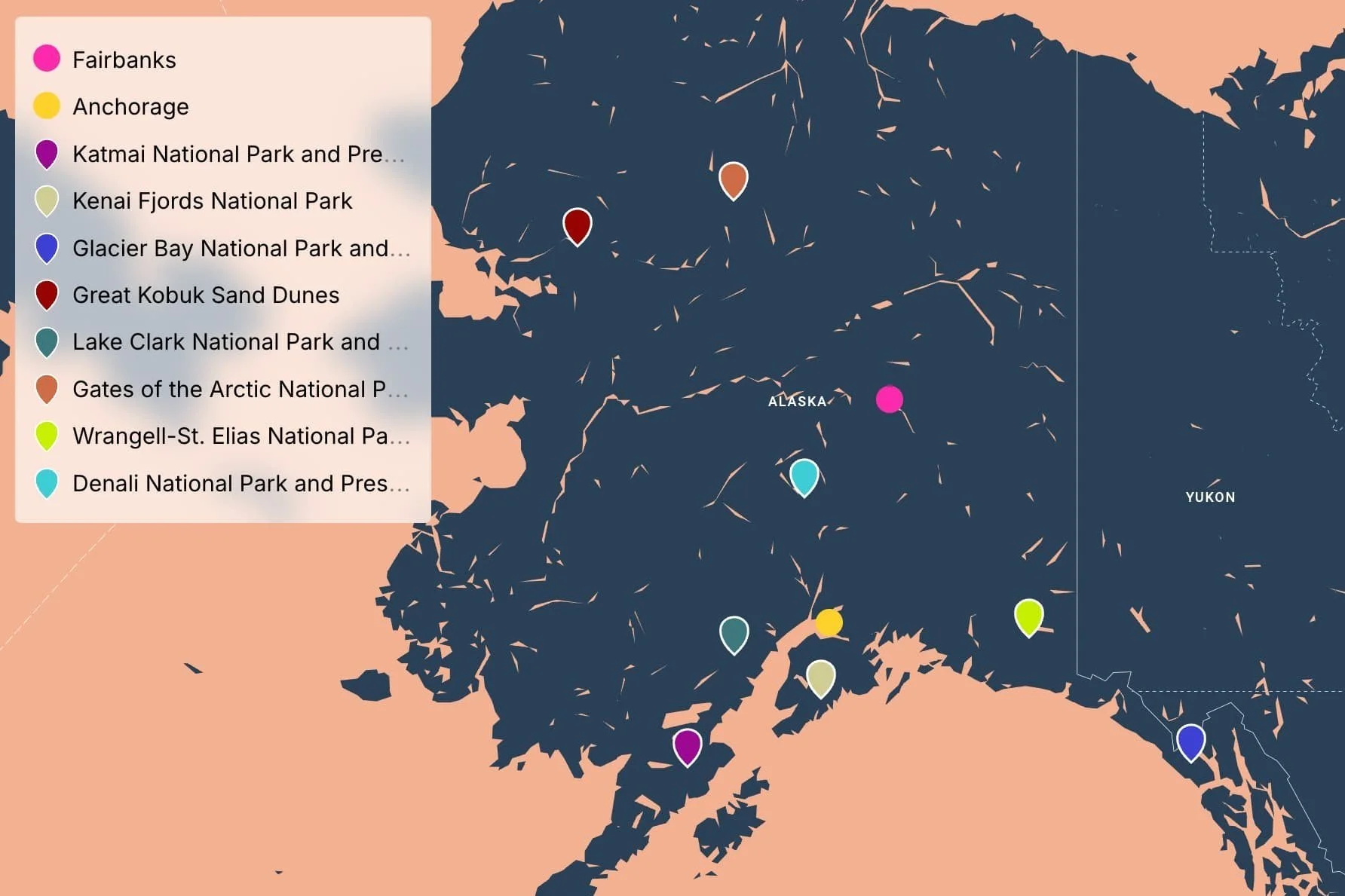
Alaska is home to eight distinct National Park units. Knowing these names is a prerequisite for solving almost any crossword puzzle focused on this region. Constructors expect you to recognize these names instantly:
- Denali: Often featured due to its name change from Mount McKinley and its status as the highest peak in North America.
- Gates of the Arctic: A common answer in long-form grids due to its length and the evocative nature of the name.
- Glacier Bay: Frequently paired with clues about marine life or ice-calving events.
- Katmai: Notable for the Valley of Ten Thousand Smokes and the high density of brown bears.
- Kenai Fjords: Often the answer for clues involving coastal geography or proximity to Seward.
- Kobuk Valley: Often appears in puzzles that use "X" or "K" in difficult grid positions.
- Lake Clark: Frequently used in clues involving volcanic activity or early homesteading.
- Wrangell-St. Elias: The largest national park in the United States, often used in clues referencing its massive scale or international border status.
Analyzing Common Clue Patterns and "Cheat" Methods
When faced with a difficult Alaska-related clue, look for these specific patterns that constructors frequently employ to balance the grid.
1. The "Largest/Smallest" Strategy
Constructors love superlatives. If a clue asks for "Largest U.S. National Park," the answer is almost certainly WRANGELLSTELIAS. Because this is a massive string of characters, it is usually reserved for corners of the puzzle. If the clue asks for the "highest peak," the answer is DENALI. Always count your boxes first; if you have 6 boxes, you aren't looking for the full name of the largest park.
2. The Designation Trap
Pay close attention to whether the clue specifies a "National Park" or a "National Preserve." Alaska has many areas that are both (or combined). If the clue is "Alaska ___," and the word "park" isn't in the clue, consider if it might be an administrative designation or a specific feature like a bay or a sound.
3. Native Nomenclature
Many locations in Alaska have roots in Tlingit, Koyukon, or other indigenous languages. If a clue seems phonetically unusual or contains "uncommon" letter combinations, consider looking for the indigenous name of the feature or park.
Strategies for Resolving Difficult Clues
If you are stuck, treat the crossword as a technical problem. Cross-referencing is the most reliable method for validation.
| Feature Type | Typical Clue Keywords | Potential Answer Examples |
|---|---|---|
| Geographic superlatives | Biggest, Tallest, Largest | DENALI, WRANGELLSTELIAS |
| Water-based features | Bay, Fjord, Inlet, Sound | GLACIERBAY, KENAI |
| Animal-related | Grizzly, Bears, Salmon | KATMAI, KODIAK |
| Ecosystem descriptors | Tundra, Taiga, Permafrost | BOREAL, TUNDRA |
Step-by-Step Resolution Process
- Grid Analysis: Check the intersecting letters. If you have "D-N-L-," the word is almost certainly DENALI. Do not ignore these "free" letters, as they are the primary anchor for solving complex entries.
- Contextual Association: If the clue mentions a "National Park" in the context of "bears" and has 6 letters, your first target should be KATMAI. If the clue mentions "fjords" and has 5 letters, KENAI is your primary candidate.
- Cross-Reference: Always verify if an answer fits the intersecting clues. If your answer for "Alaska Park" creates an impossible word in an intersecting row, reconsider the administrative designation (e.g., is it a Preserve? Is it a National Monument?).
- The 2026 Context: In 2026, puzzles are increasingly incorporating updated geographical naming conventions. If you are solving a puzzle from a recent publication, expect the use of the official name "Denali" rather than its former McKinley moniker.
Common Mistakes to Avoid
One of the most frequent errors in solving Alaska-themed puzzles is confusing state-specific parks with federal National Parks. Alaska has an extensive State Park system, including places like Chugach State Park or Kachemak Bay State Park. If you are struggling, ensure you aren't trying to fit a state-managed location into a clue that explicitly references the "National Park Service."
Another mistake is miscounting the length of multi-word answers. Names like "Gates of the Arctic" are often compressed into a single block of text in the crossword grid. If a clue suggests a phrase, be prepared to remove spaces. Conversely, if you are looking for a short answer (3-4 letters), look for abbreviations like "NP" (National Park) or geographical shortcuts like "AK" (Alaska).
FAQ for Alaska Park Crosswords
How do I handle clues that reference the size of an Alaska park? Usually, these refer to Wrangell-St. Elias. Always count the grid spaces. If the space is too small for the full name, the clue might be looking for a specific feature within that park, like "STELIAS" or a mountain range.
Are there specific letters that appear more often in Alaskan crossword clues? Yes. Due to the influence of indigenous languages and the presence of unique geological terms, expect to see the letters K, X, and Y more frequently than in a standard metropolitan-themed puzzle.
What if the clue references a "preserve" instead of a "park"? In the context of the National Park Service in Alaska, many units are "National Parks and Preserves." If "park" doesn't fit, "PRESERVE" is a high-probability candidate for the grid.
Do crossword compilers use updated names for Alaska landmarks? As of 2026, standard puzzle construction follows the official U.S. government nomenclature. Always prioritize the modern, official name (e.g., Denali) over older, replaced colonial names.
Final Recommendation for Enthusiasts
To improve your solving speed and accuracy for Alaska-focused puzzles, maintain a quick-reference list of the eight primary National Parks and their defining characteristics (e.g., Katmai = Bears, Denali = Peak, Glacier Bay = Ice). When you encounter an Alaskan clue, immediately isolate the letter count and search for potential NPS unit names that match that length. If the clue is descriptive, focus on the unique topographical features—like permafrost or specific glacial formations—that are synonymous with the Alaskan wilderness. By treating these clues as data-matching exercises rather than trivia tests, you will see a significant increase in your completion rate.
Image Gallery