The Realistic Cost to Install Solar Panels in Your Home in 2026
In 2026, the realistic gross cost to install a residential solar power system ranges between $18,000 and $35,000 for a standard 8kW to 10kW system. After applying the 30% Federal Investment Tax Credit (ITC), most homeowners can expect...
In 2026, the realistic gross cost to install a residential solar power system ranges between $18,000 and $35,000 for a standard 8kW to 10kW system. After applying the 30% Federal Investment Tax Credit (ITC), most homeowners can expect a net investment between $12,600 and $24,500, depending on equipment quality and regional labor rates.
Contents
Understanding the Economics of Solar in 2026
The landscape of residential solar energy has matured significantly as we move through 2026. While the raw cost of photovoltaic (PV) modules has reached a historic plateau due to manufacturing efficiencies, the "soft costs"—including permitting, customer acquisition, and skilled electrical labor—remain the primary drivers of the final invoice. To understand the realistic cost, one must distinguish between the gross contract price and the net cost after federal and state incentives are applied.
The Federal Investment Tax Credit (ITC) remains the most powerful financial lever for homeowners. Under current legislation, the credit sits at 30% for systems installed through the end of 2032. This is a dollar-for-dollar reduction in your federal income tax liability, not merely a deduction. For a homeowner facing a $25,000 installation bill, this represents a $7,500 direct saving, provided they have sufficient tax appetite. When combined with state-level rebates or Performance-Based Incentives (PBIs), the effective "out-of-pocket" cost can often drop below 60% of the original quote.
Detailed Breakdown of Solar Installation Components
To evaluate a quote accurately, you must understand where every dollar is allocated. A solar installation is not a single product but a complex integration of hardware, engineering, and legal compliance.
Solar Hardware and Equipment
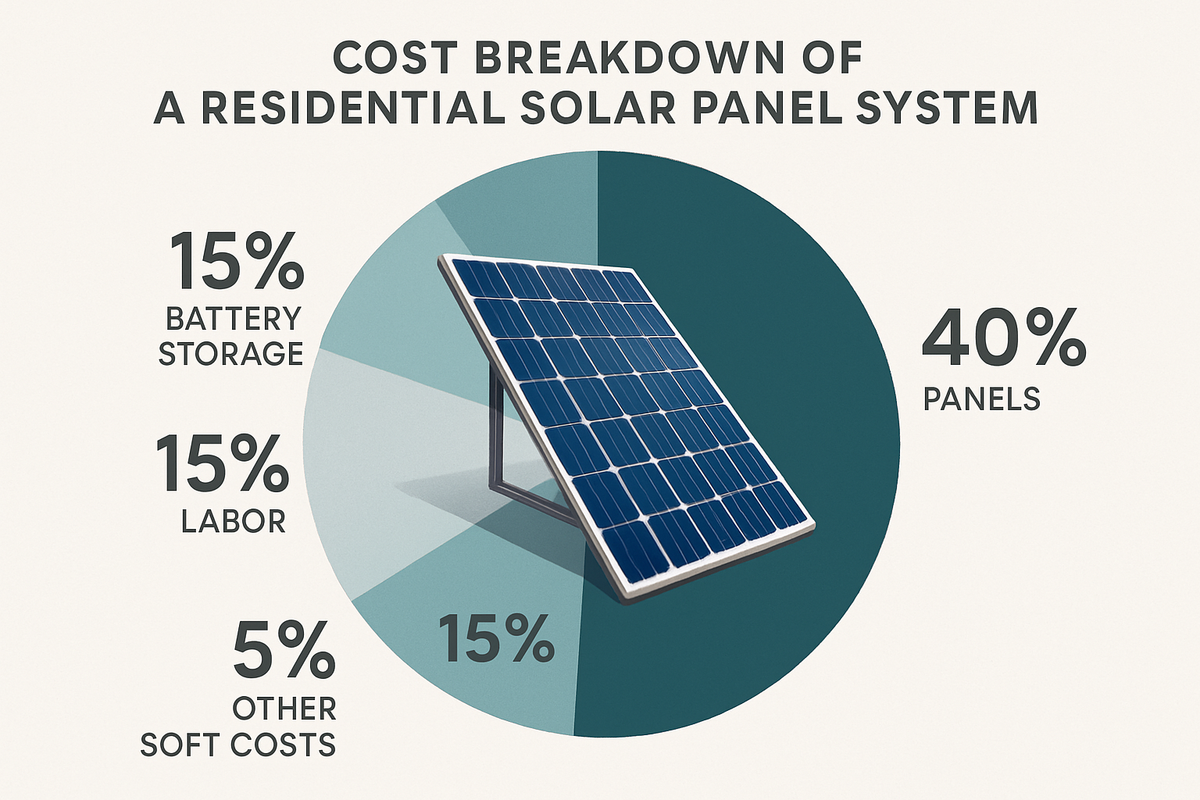
Hardware typically accounts for 25% to 35% of the total system cost. In 2026, high-efficiency monocrystalline N-type cells have become the industry standard, offering better degradation rates and higher wattage per square foot than older technologies.
- Solar Panels: Expect to pay more for "Tier 1" manufacturers who offer 25-year comprehensive warranties. These panels generally cost between $0.70 and $0.90 per watt at the wholesale level before installer markup.
- Inverters: This is the "brain" of your system. You will choose between a central string inverter (often paired with power optimizers) or micro-inverters. Micro-inverters, while roughly 15% to 20% more expensive, allow each panel to operate independently, which is crucial if your roof experiences intermittent shading.
- Racking and Mounting: The physical structures that secure panels to your roof must be rated for local wind speeds and snow loads. High-quality, flashing-protected mounts are essential to prevent roof leaks.
Soft Costs and Labor
Often overlooked, soft costs represent nearly 60% of the total price in the 2026 market. This includes:
- Installation Labor: Professional electricians and solar technicians are in high demand. Labor costs vary wildly by geography, with urban centers in the Northeast and West Coast commanding premium rates.
- Permitting and Interconnection: Your local municipality and utility company charge fees to review your plans and inspect the final installation. These "red tape" costs can range from $500 to $2,500 depending on the complexity of your local jurisdiction.
- Operational Overhead: This covers the installer's marketing, office staff, and the essential 25-year service warranties that reputable companies provide.
Factors That Shift Your Realistic Quote
No two roofs are identical, and several variables can push your cost toward the higher or lower end of the national average.
Roof Complexity and Material
A standard composite shingle roof with a simple south-facing gable is the least expensive to outfit. Conversely, if your roof is made of Spanish tile, slate, or wood shakes, the labor cost increases because these materials require specialized mounting brackets and more careful handling to prevent breakage. Furthermore, a "steep-slope" roof (anything over a 7:12 pitch) requires additional safety equipment and more man-hours, adding roughly $1,000 to $3,000 to the total labor bill.
System Size and Energy Requirements
Solar pricing follows economies of scale. A small 4kW system will have a higher cost-per-watt than a 12kW system because the fixed costs—such as permitting, truck rolls, and basic electrical upgrades—are spread across fewer panels. In 2026, most American households require an 8kW to 11kW system to achieve "net-zero" energy consumption, particularly as electric vehicle (EV) adoption and heat pump installations have increased home electrical loads.
Main Service Panel Upgrades
Many older homes (built before 1990) have 100-amp or 125-amp electrical panels that cannot handle the additional current back-fed by a modern solar array. If your project requires a Main Lug Conversion or a full panel upgrade to 200 amps, expect to add $2,500 to $4,500 to your initial estimate. While this increases the upfront cost, it is a necessary safety upgrade and adds long-term value to the home.
The Role of Battery Storage in 2026
By 2026, the "solar-only" installation has become less common than "solar + storage" configurations. This shift is driven by changes in utility billing, such as Net Billing or "Time of Use" (TOU) rates, where utilities pay less for the energy you export during the day than they charge for energy you consume at night.
A realistic cost for a 10kWh to 13.5kWh lithium-iron-phosphate (LFP) battery backup is between $10,000 and $15,000 installed. While this significantly increases the initial investment, it provides two critical benefits:
- Energy Independence: You can use your own stored solar power during peak evening hours when utility rates are highest.
- Resiliency: The battery provides backup power during grid outages, a feature that standard solar systems (without batteries) cannot offer due to safety "anti-islanding" regulations.
2026 Solar Investment Comparison Table
The following table outlines the estimated costs for different system configurations based on 2026 market data. These figures assume a standard roof type and include the 30% Federal ITC.
| System Size (kW) | Estimated Gross Cost | 30% Federal ITC Value | Estimated Net Cost | Best Suited For |
|---|---|---|---|---|
| 5 kW | $16,500 | $4,950 | $11,550 | Small homes or partial offset |
| 8 kW | $23,200 | $6,960 | $16,240 | Average 2,000 sq. ft. home |
| 10 kW | $28,500 | $8,550 | $19,950 | Large homes or high AC usage |
| 12 kW | $33,600 | $10,080 | $23,520 | Homes with EVs and heat pumps |
| 10 kW + Battery | $41,500 | $12,450 | $29,050 | Full backup and TOU optimization |
Financing and Its Long-Term Impact
How you pay for solar dramatically affects the "realistic" cost over time. In 2026, three primary paths exist:
- Cash Purchase: This offers the highest Return on Investment (ROI) and the shortest payback period (typically 6 to 9 years). You own the equipment from day one and receive all tax benefits directly.
- Solar Loans: Many specialized lenders offer "low-APR" loans. However, be cautious of "dealer fees." In 2026, some installers buy down interest rates by adding 15% to 30% to the principal of the loan. A $25,000 system might be quoted at $32,000 to achieve a "0.99% interest rate." Always ask for the "cash price" to identify these hidden finance charges.
- Power Purchase Agreements (PPAs) and Leases: These involve a third party owning the system on your roof while you pay a monthly fee for the power. While this requires $0 down, you do not receive the 30% tax credit, and the long-term cost is usually 2x to 3x higher than a cash purchase.
Calculating Your Payback Period
To determine if the cost is "realistic" for your budget, calculate the Simple Payback Period. Take your net system cost (after incentives) and divide it by your annual electricity savings.
For example, if a 10kW system costs $19,950 net and saves you $2,400 per year in utility bills, your payback period is approximately 8.3 years. Given that modern Tier 1 panels are warranted to produce at least 85% of their original power after 25 years, you are essentially pre-paying for nearly 17 years of "free" electricity after the system has paid for itself.
Common Pitfalls That Inflate Costs
Homeowners often encounter unexpected expenses because of poor initial site assessments. To keep your costs realistic, be aware of these common issues:
- Structural Reinforcement: If your attic rafters are not spaced correctly or show signs of sagging, an engineer may require structural sistering before a permit is issued. This can add $2,000 to $5,000.
- Tree Removal: If your "solar window" is obstructed by mature trees, the cost of professional arborist services must be factored into your project ROI.
- Distance to Meter: If your solar array is on a detached garage far from the main electrical meter, the cost of trenching and heavy-gauge copper wire will increase significantly.
Frequently Asked Questions
Do solar panels require expensive annual maintenance?
No. Solar panels have no moving parts and are designed to be largely self-sufficient. In most climates, natural rainfall is sufficient to keep the panels clean. A realistic maintenance budget should include a professional inspection and cleaning every 3 to 5 years, costing roughly $250 to $500. The most likely component to require replacement is the central inverter, which typically carries a 12-to-15-year warranty and costs about $2,000 to $3,500 to replace out-of-warranty.
What happens to the cost if I need to replace my roof later?
It is highly recommended to install solar only on a roof with at least 10 to 15 years of remaining life. If you must replace the roof after the panels are installed, you will pay a "remove and reinstall" (R&R) fee. In 2026, the market rate for R&R is approximately $200 to $300 per panel. For a 25-panel system, this could add $5,000 to $7,500 to your future roofing bill.
Does the 30% tax credit apply to the roof replacement too?
Generally, no. According to IRS guidance, the ITC applies to the solar energy property (panels, inverters, wiring, batteries). It does not apply to the structural integrity of the home, including the roof itself, even if the roof is required to support the panels. Always consult a tax professional regarding specific eligibility for "solar roofing tiles" or specialized structural work.
Will solar panels increase my property taxes?
In many states, there are property tax exemptions for residential renewable energy systems. This means that while the solar installation increases the market value of your home, the assessed value for tax purposes remains unchanged. Verify your local state statutes, as this can result in thousands of dollars in indirect savings over the life of the system.
Can I install solar myself to save on costs?
While "DIY" kits exist, they are not recommended for most homeowners. Modern building codes, utility interconnection requirements, and high-voltage DC electricity make professional installation a matter of safety and legality. Furthermore, most Tier 1 manufacturers will not honor warranties unless the system is commissioned by a licensed contractor.
Practical Recommendation
Before signing a contract, obtain at least three itemized quotes from local installers who have been in business for more than five years. Ensure every quote specifies the price per watt, the exact model of panels and inverters, and whether a main electrical panel upgrade is included. Prioritize companies that offer an in-house service department over those that subcontract their installations, as this ensures accountability for the 25-year lifespan of your investment.
Image Gallery