Yngwie Malmsteen’s Age Revealed: Exploring the Life and Legacy of a Guitar Icon
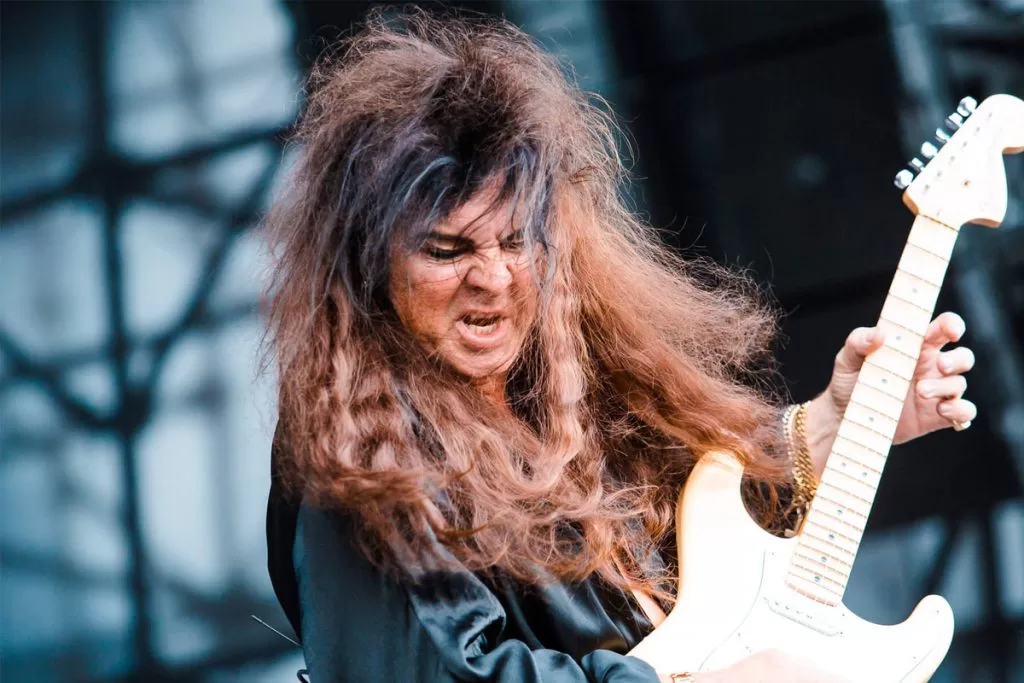
As of 2026, the legendary neoclassical metal guitarist Yngwie Malmsteen is 63 years old. Born Lars Johan Yngve Lannerbäck on June 30, 1963, in Stockholm, Sweden, he has maintained a career spanning over four decades, fundamentally alte...
As of 2026, the legendary neoclassical metal guitarist Yngwie Malmsteen is 63 years old. Born Lars Johan Yngve Lannerbäck on June 30, 1963, in Stockholm, Sweden, he has maintained a career spanning over four decades, fundamentally altering the trajectory of heavy metal guitar technique and music composition.
Contents
The Origins of a Virtuoso
Yngwie Malmsteen’s journey began in Stockholm, Sweden, where he was exposed to classical music and rock and roll from an early age. His unique approach to the electric guitar—which marries the speed and harmonic complexity of Niccolò Paganini and Johann Sebastian Bach with the heavy distortion of 1970s hard rock—did not emerge in a vacuum. Rather, it was the result of thousands of hours of disciplined practice during his formative years in the late 1970s.
By the time he was in his late teens, Malmsteen had already developed the "shred" guitar style that would eventually define the neoclassical subgenre. Moving to the United States in the early 1980s, he quickly rose to prominence. His age at the time of his breakout performances in the early 1980s—often playing for audiences that were unaware of his youth—solidified his reputation as a prodigy. By 1984, the release of his debut solo album, Rising Force, marked a definitive shift in rock music, proving that a young guitarist could command the stage with technical precision that rivaled the most accomplished symphony orchestra performers.
Chronology of a Career
Understanding Malmsteen’s age in the context of his discography provides insight into the evolution of a musician who has rarely deviated from his signature style. Having been born in 1963, he was barely 21 years old when Rising Force was released. This album remains a cornerstone of instrumental rock, and its longevity is a testament to the fact that his technical capabilities were fully formed before most musicians reach their professional prime.
The following table outlines significant milestones in his career, correlating his age with his professional trajectory:
| Milestone/Release | Year | Malmsteen’s Age | Significance |
|---|---|---|---|
| Birth in Stockholm | 1963 | 0 | Born Lars Johan Yngve Lannerbäck |
| Rising Force Debut | 1984 | 21 | Established neoclassical metal as a genre |
| Odyssey Release | 1988 | 25 | Peak commercial visibility with Joe Lynn Turner |
| Concerto Suite | 1998 | 35 | First full-scale orchestral composition |
| Career 40th Anniversary | 2023 | 60 | Global celebration of his technical impact |
| Current Status | 2026 | 63 | Continuing active touring and recording |
Technical Mastery and Consistency
One of the most remarkable aspects of Malmsteen’s career is the level of physical consistency required to maintain his high-speed playing well into his sixties. Shred guitar relies heavily on fine motor skills, extreme accuracy, and endurance. Unlike many vocalists who may experience a change in range over time, or drummers who may encounter joint wear, Malmsteen has successfully navigated the mechanical demands of his instrument through a rigorous, almost athletic approach to maintenance and practice.
His influence on the guitar industry is equally significant. He popularized the use of scalloped fretboards, a modification that allows for greater control over vibrato and bending, which had been rare in mass-produced instruments prior to his association with Fender. In 2026, even after four decades of professional performance, his signature guitars and pedals remain among the most sought-after tools for guitarists aiming to emulate his specific tonal characteristics.
Influence on the Neoclassical Genre
The "age" of a musician is often less relevant than the "era" they defined. Malmsteen sits at the intersection of the transition from analog, high-fidelity guitar recordings to the digital revolution. While he famously insists on analog tube amplification, he has adapted to modern production standards without sacrificing the raw, aggressive energy that made him famous in the mid-1980s.
His work bridged the gap between the complex compositional structures of the 18th-century Baroque period and the high-energy output of modern hard rock. By demonstrating that an electric guitar could perform technical passages once reserved for the violin, he paved the way for generations of "shredders" who prioritize high-speed, technically demanding performances. This influence is not merely historical; it remains a living legacy as younger guitarists continue to study his instructional materials and techniques.
Challenges and Evolution
No career spanning over 40 years is without its challenges. Malmsteen has weathered significant changes in the music industry, including the shift away from guitar-dominated radio in the 1990s, the decline of physical media sales, and the rise of streaming platforms. His ability to remain relevant while staying true to his specific artistic vision—a vision that critics have sometimes labeled as rigid—is a case study in branding. He has maintained a dedicated fan base by focusing on high-quality live performances and consistent, uncompromising studio albums.
Furthermore, as he has entered his sixties, the conversation around Malmsteen has shifted from wonder at his youthful virtuosity to appreciation for his sustained output. He is now regarded as one of the "elder statesmen" of the guitar community, frequently acting as a mentor figure for emerging talent and a guardian of the traditional "guitar hero" archetype in an era dominated by programmed music.
Frequently Asked Questions
How long has Yngwie Malmsteen been performing professionally? Malmsteen began his professional career in the early 1980s, primarily starting in the American scene with bands like Steeler and Alcatrazz before launching his solo career in 1984. By 2026, he has maintained a professional output spanning over 43 years.
Does Yngwie Malmsteen still tour regularly? Yes. Despite his age, Malmsteen maintains an active international touring schedule. He is known for rigorous performance cycles that include both headlining tours and appearances at major metal festivals, where he performs setlists that lean heavily on his classic 1980s catalog.
What is the "scalloped fretboard" technique he is famous for? A scalloped fretboard is a guitar neck where wood is carved out between the frets, creating a concave surface. This allows the player’s fingers to make contact only with the strings, reducing friction against the fretboard and enabling lighter, more precise vibrato and bends. Malmsteen popularized this feature in his signature Fender models.
How has his style changed as he has gotten older? While his core sound—characterized by heavy distortion, classical modes, and rapid-fire arpeggios—remains intact, his later works show increased experimentation with vocal-heavy arrangements and orchestral collaborations. He has retained his signature "tone" while evolving his production style to match modern engineering capabilities.
Where is Yngwie Malmsteen based in 2026? Malmsteen has resided in the United States for the majority of his adult life. While he maintains his Swedish heritage, his professional base and primary residence remain in Florida, where he conducts much of his recording work.
Conclusion and Next Steps
Yngwie Malmsteen’s career serves as a roadmap for any musician aspiring to achieve longevity through technical excellence. If you are looking to understand the mechanics behind his sound, start by analyzing his foundational 1984 album Rising Force. For those interested in his technical philosophy, his official instructional content and masterclasses provide deep insights into the practice routines that have sustained him for over 40 years. To keep up with his current performances and releases, monitor his official website or verified social media channels, as he remains an active participant in the global music touring circuit in 2026.
Image Gallery