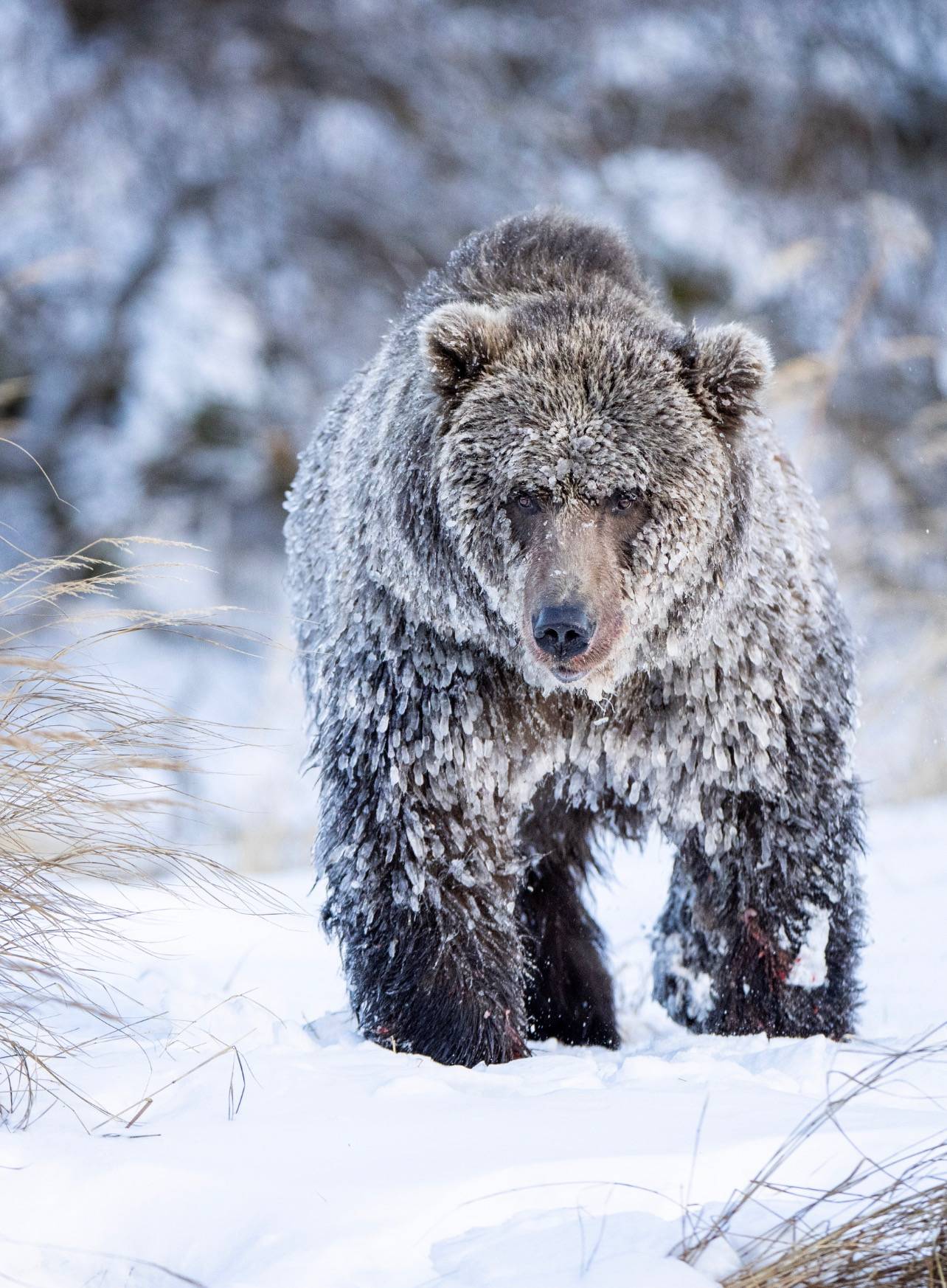
Kodiak Bears Outsize Grizzlies for Most Hunters: Trophy Sizes, Biology, and Hunting Expectations
For hunters evaluating North American big game, the physical disparity between a Kodiak brown bear and a mainland interior grizzly bear is dramatic. Kodiak bears consistently outsize mainland grizzlies by hundreds of pounds in weight a...
For hunters evaluating North American big game, the physical disparity between a Kodiak brown bear and a mainland interior grizzly bear is dramatic. Kodiak bears consistently outsize mainland grizzlies by hundreds of pounds in weight and several inches in total skull score due to thousands of years of genetic isolation, a protein-rich salmon diet, and the mild maritime climate of the Kodiak Archipelago.
Contents
| Kodiak Brown Bear (Ursus arctos middendorffi) | Mainland Interior Grizzly (Ursus arctos horribilis) |
|---|---|
| • Weight: 800–1,400+ lbs (Fall) | • Weight: 350–700 lbs (Fall) |
| • B&C Skull Min: 28 Inches | • B&C Skull Min: 24 Inches |
| • Hide Square: 9.0–10.5+ Feet | • Hide Square: 6.5–8.0 Feet |
| • Diet: High-protein coastal salmon | • Diet: Roots, berries, sporadic ungulate prey |
Taxonomical and Geographic Distinctions: Kodiak Bear vs. Grizzly
While both animals belong to the species Ursus arctos, they are classified as distinct subspecies based on geography, morphology, and genetic divergence. The Kodiak bear (Ursus arctos middendorffi) is native exclusively to the islands of the Kodiak Archipelago in southwestern Alaska, including Kodiak, Afognak, Shuyak, Raspberry, and Uganik islands. Separated from the mainland for approximately 10,000 to 12,000 years following the last glacial period, these island populations developed distinct physical traits.
In contrast, the mainland grizzly bear (Ursus arctos horribilis) ranges across interior Alaska, the Yukon, the Northwest Territories, western Canada, and portions of the northern Rocky Mountains in the contiguous United States.
To maintain fair record-keeping, major trophy organizations like the Boone and Crockett Club establish strict geographic boundaries separating the "Alaska Brown Bear" (which includes the Kodiak subspecies as well as coastal mainland bears) from the "Grizzly Bear."
Under Boone and Crockett rules, bears taken along the coastal rim of Alaska—including the Kodiak Archipelago and Alaska Peninsula—are categorized as Alaska Brown Bears. Bears taken inland from designated mountain crests or boundary lines across Alaska and Canada are scored under the Grizzly Bear category. This distinction exists primarily because the physiological size gap between coastal bears and interior bears is so vast that pooling them into a single competition category would render interior grizzlies virtually incapable of matching coastal trophy scores.
Biological Drivers of Extreme Body Mass
The primary factor driving the Kodiak bear's massive body frame is nutritional access. Interior grizzlies inhabit environments characterized by brief summers, cold winters, and dispersed, low-calorie food resources. An interior grizzly's diet relies heavily on plant roots, alpine berries, ground squirrels, insect larvae, and seasonal ungulate calves (such as moose or caribou). Finding adequate calories requires constant movement across vast territories.
- Kodiak Archipelago
- Mild maritime winter climate
- Abundant salmon biomass
- High population density
- Result: Extreme Body Mass & Skeleton
- Interior Mainland
- Severe subarctic winter
- Foraged roots, berries, prey
- High territorial dispersion
- Result: Moderate Frame & Fat Stores
KODIAK BEARS BENEFIT FROM THREE ECOLOGICAL ADVANTAGES:
- Unmatched Caloric Intake: From late spring through autumn, multiple species of Pacific salmon—including sockeye, pink, chum, and coho—migrate up Kodiak streams by the millions. Kodiak bears gorge on these protein- and lipid-dense fish, ingesting tens of thousands of calories per day during hyperphagia.
- Supplemental Coastal Forage: In addition to salmon runs, coastal bears have access to nutrient-dense marine vegetation, intertidal shellfish, and ocean mammals washed ashore, such as whales and seals.
- Milder Winters and Reduced Energy Loss: The maritime climate of the Gulf of Alaska keeps winter temperatures significantly milder than the frozen interior tundra. Consequently, Kodiak bears experience shorter hibernation periods, entering dens later in the winter and emerging earlier in spring. This reduces the duration of winter starvation and limits the amount of bone and muscle mass lost while dormant.
These factors allow Kodiak bears to allocate excess metabolic energy toward structural skeletal growth and heavy muscular deposition rather than basic metabolic survival.
Measuring the Difference: Skull Scores, Weights, and Hide Squares
When hunters compare a trophy Kodiak bear to a trophy interior grizzly, three primary metrics define the size differential: overall weight, skull dimensions, and hide square measurement.
- Skull Measurement
- Max Length (Without Jaw) + Max Width (Zygomatic Arch)
- Official Boone & Crockett Score
Body Weight
An adult male (boar) interior grizzly typically weighs between 350 and 700 pounds at peak autumn weight, with females (sows) averaging 250 to 450 pounds.
By contrast, a mature Kodiak boar easily weighs 800 to 1,200 pounds in the spring, and can top 1,400 pounds or more in late autumn after months of feeding on salmon. Exceptional Kodiak boars in captivity or prime wild habitats have been recorded exceeding 1,500 pounds.
Skull Dimensions
Trophy record books measure bear size based on skull dimensions—specifically the maximum length of the skull (excluding the lower jaw) added to the maximum width across the zygomatic arches, measured in sixteenths of an inch.
- Boone and Crockett Minimums: The minimum entry score for an All-Time record Alaska Brown Bear (including Kodiak) is 28 inches. For an interior Grizzly Bear, the minimum entry score drops to 24 inches.
- Trophy Averages: A skull score of 24 to 25 inches represents an exceptional, once-in-a-lifetime trophy for an interior grizzly hunter. On Kodiak Island, however, mature boars regularly yield skulls measuring 27 to 30+ inches.
Hide Square Size
A bear hide is measured by laying it flat, measuring the length from the tip of the nose to the base of the tail, measuring the width across the outstretched front claws from tip to tip, adding those two numbers together, and dividing by two.
- Interior Grizzly Hide: A mature interior grizzly hide typically squares between 6.5 and 8 feet.
- Kodiak Bear Hide: A mature Kodiak boar hide routinely squares between 9.0 and 10.5+ feet, presenting a massive physical profile that dwarfs an interior hide when displayed.
Comparative Overview: Kodiak Brown Bear vs. Interior Grizzly Bear
The physiological and management differences between these two iconic game animals reflect their distinct habitats and diets:
| Metric / Biological Characteristic | Kodiak Brown Bear (U. a. middendorffi) | Mainland Interior Grizzly (U. a. horribilis) |
|---|---|---|
| Primary Native Range | Kodiak Archipelago, Alaska | Interior AK, Yukon, NWT, BC, US Rockies |
| Average Mature Male Fall Weight | 800 – 1,400+ lbs | 350 – 700 lbs |
| Average Mature Female Fall Weight | 500 – 800 lbs | 250 – 450 lbs |
| B&C All-Time Minimum Skull Score | 28.0 Inches | 24.0 Inches |
| Typical Mature Male Hide Square | 9.0 – 10.5+ Feet | 6.5 – 8.0 Feet |
| Primary Caloric Source | Anadromous salmon runs & marine forage | Roots, berries, small mammals, ungulate calves |
| Hibernation Period | Shorter (~4 to 5 months) | Longer (~5 to 7 months) |
| Population Density | High (~0.7 to 1 bear per sq mile) | Low (1 bear per 10 to 50+ sq miles) |
| B&C Category | Alaska Brown Bear | Grizzly Bear |
Hunting Regulations, Permit Draws, and Logistics in Alaska
Because Kodiak Island is a managed island ecosystem, hunting brown bears there involves strict regulatory oversight administered by the Alaska Department of Fish and Game (ADFG).
Non-Resident Bear Hunting Workflow:
- Step 1: Select Game Management Unit (GMU 8 - Kodiak Archipelago)
- Step 2: Contract a Registered Guide (Mandatory for Non-Residents)
- Step 3: Apply for ADFG Draw Permit (Spring or Fall Season)
- Step 4: Validate Tag Upon Harvest & Present Skull/Hide for Sealing
Game Management Unit 8 Rules
The entirety of the Kodiak Archipelago falls within Alaska's Game Management Unit (GMU) 8. To maintain population health, ADFG regulates harvest quotas strictly through a permit draw system.
- Resident vs. Non-Resident Permits: Alaska residents may participate in draw hunts or registration hunts depending on the specific area and season. Non-resident hunters must apply through a competitive draw process for specific hunt areas.
- Mandatory Guide Requirement: Under Alaska State Statute, all non-resident big game hunters harvesting brown or grizzly bears must be accompanied in the field by a licensed Alaska master or registered guide (or a qualified Alaska resident relative within the second degree of kindred).
Spring vs. Fall Seasons
GMU 8 bear hunting is split into two distinct seasons:
- Spring Season (April – May): Bears are emerging from dens. Hides are thick, long, and unrubbed. Weights are lower due to winter fasting, but tracking across snow-covered high country is easier, and boars are actively searching for mates.
- Fall Season (October – December): Bears are at their maximum physiological body weight after feeding on salmon all summer. Hides are dense but may show shorter hair early in the season. Bears are concentrated near low-elevation stream beds, altering hunting strategies.
Recommended Calibers and Terminal Ballistics
The structural mass, heavy muscle density, and thick bone structure of a 1,000-pound Kodiak boar demand significantly greater stopping power and terminal bullet penetration than an interior grizzly. While a .30-06 Springfield or .300 Winchester Magnum loaded with heavy, premium bullets is widely considered the baseline for interior grizzlies, experienced Alaskan outfitters generally prefer heavier medium-bore magnum calibers for Kodiak hunts.
Caliber Performance Tier:
- Minimum Acceptable (Interior Grizzly Baseline)
- .30-06 Springfield / .300 Winchester Magnum
- Recommended Standard (Kodiak Archipelago)
- .338 Winchester Magnum / .35 Wheeler
- Optimal Stopping Power (Dense Brush / Close Range)
- .375 H&H Magnum / .375 Ruger
Bullet Selection and Kinetic Requirements
When hunting Kodiak bears, bullet construction is often more critical than diameter. Soft-point cup-and-core bullets designed for deer or elk can break apart upon impact with a Kodiak bear's heavy shoulder blade, leading to shallow penetration and non-lethal wounds.
- Recommended Bullets: Heavy-for-caliber, premium controlled-expansion bullets (such as Swift A-Frame, Nosler Partition, or Barnes TSX/TTSX monolithic solids) are essential to drive through heavy hide, thick fat layers, and dense bone into vital chest organs.
- Minimum Energy Target: Professional guides generally recommend choosing a cartridge that delivers at least 3,000 to 4,000 foot-pounds of muzzle energy, maintaining high momentum at target distances (which are often inside 150 yards in thick coastal alder brush).
Field Judging Techniques and Common Hunter Mistakes
Evaluating a bear's size in the field requires patience, as bears lack horn or antler structures that offer immediate visual scale. On Kodiak Island, where even young bears can appear large to an inexperienced hunter, field judging requires specific morphological checks.
Field Judging a Boar:
- Head Profile: Wide skull, small ears set wide, noticeable facial dish
- Body Profile: Blocky legs, chest hangs low to knees, belly sags
- Gait Profile: Wide-stance waddle, rolling shoulder muscles
1. Ear Size Relative to Skull Width
- Young / Small Bears: The ears appear large, pointed, and positioned high on top of the head, similar to a dog's ears.
- Mature Trophy Boars: The skull is so wide that the ears appear small, rounded, and set low on the sides of the head.
2. Body Proportions and Clearance
- Young / Small Bears: Legs appear long, creating significant daylight under the chest and belly. The body looks sleek and agile.
- Mature Trophy Boars: Legs appear short and blocky relative to the torso. The brisket hangs low toward the knees, and the belly sags toward the ground, especially in autumn.
3. Facial Morphology and Gait
A mature boar possesses a broad, blocky snout with a wide bridge across the nose and pronounced muscle mass along the jawline. When walking, an oversized boar exhibits a wide-stance waddle, rolling his shoulders outward with every step to clear his massive ribcage.
Common Field Traps: "Brush Shrinkage"
A frequent mistake hunters make on Kodiak Island is judging a solitary bear without physical reference points. In dense alder thickets or open coastal flats, a 7-foot juvenile boar can easily be misjudged as an 8.5-foot bear. Experienced guides always insist on observing a bear next to fixed terrain features—such as specific alder trunks, boulders, or stream banks—before committing to a stalk.
Frequently Asked Questions
Are Kodiak bears classified as a different species than mainland grizzlies?
No. Kodiak bears and mainland grizzlies belong to the exact same species (Ursus arctos). However, the Kodiak bear is recognized as a distinct subspecies (Ursus arctos middendorffi) due to its long geographic isolation on the Kodiak Archipelago and its distinct physical size.
Why does Boone and Crockett separate Alaska Brown Bears from Grizzlies?
Boone and Crockett separates them because coastal brown bears have access to high-calorie salmon streams, resulting in dramatically larger skull dimensions. If interior grizzlies (Ursus arctos horribilis) were scored against coastal brown bears, interior bears would rarely meet record book qualification standards.
How much bigger is a Kodiak bear skull than a typical interior grizzly skull?
An All-Time record book interior grizzly skull starts at a minimum score of 24 inches (length plus width). An All-Time record book Alaska Brown Bear (including Kodiak) requires a minimum score of 28 inches. That 4-inch difference in total skull score represents a massive physiological variance in skeletal size.
Do non-residents need a guide to hunt Kodiak bears in Alaska?
Yes. Under Alaska State Statute, non-resident hunters must be accompanied in the field by a licensed Alaska master or registered guide, or by an Alaskan resident relative within the second degree of kindred (such as a parent, sibling, or child).
What is the average hide square size for a trophy Kodiak bear?
While an interior grizzly hide typically squares between 6.5 and 8 feet, a mature Kodiak boar hide regularly squares between 9.0 and 10.5+ feet when properly skinned and measured.
Practical Recommendations for Hunters
For big game hunters planning a bear hunt in Alaska, understanding the size difference between species shapes draw strategies, physical preparation, gear selection, and budget planning.
- Match the Hunt to Your Expectations: If your goal is harvesting a bear with a 9-to-10-foot hide and a 28-inch skull, focus your efforts on GMU 8 (Kodiak Archipelago) or the Alaska Peninsula. If you prefer high-country backpack hunting for a 7-to-8-foot bear in alpine tundra, an interior grizzly hunt in the Brooks Range or Yukon is a better fit.
- Plan Drawings Early: Draw permit applications for GMU 8 typically open in late fall for the following year's spring and fall seasons. Ensure you have established a guide-client contract if required prior to applying for non-resident draw tags.
- Bring Appropriate Firepower: Upgrade to a heavy medium-bore magnum rifle (.338 Win Mag or .375 H&H Mag) loaded with premium, heavy-grain bonded or monolithic bullets. Practice shooting from unanchored field positions across steep coastal terrain.
- Prepare for Harsh Weather: Kodiak's maritime climate brings rapid weather shifts, driving rain, high winds, and dense fog. Invest in high-grade synthetic layering systems and commercial-grade waterproof outerwear to handle grueling field conditions.
Image Gallery