Determining the Best Laser Eye Surgery for Astigmatism: A Clinical Overview
Finding the best laser eye surgery for astigmatism depends on a precise evaluation of your corneal topography, the severity of your refractive error, and your overall ocular health. While LASIK and PRK remain the foundational gold stan...
Finding the best laser eye surgery for astigmatism depends on a precise evaluation of your corneal topography, the severity of your refractive error, and your overall ocular health. While LASIK and PRK remain the foundational gold standards for correcting astigmatism, advancements such as Contoura Vision and SMILE offer highly customized or minimally invasive alternatives depending on individual anatomical requirements.
Contents
Understanding Astigmatism and Surgical Correction
Astigmatism is not a disease but a common refractive error caused by an irregular curvature of the cornea or, less commonly, the lens. In a healthy eye, the cornea is shaped like a perfect sphere; in an eye with astigmatism, it is shaped more like an American football. This irregularity prevents light from focusing on a single point on the retina, resulting in blurred or distorted vision at all distances.
Laser eye surgery addresses astigmatism by reshaping the cornea to create a uniform, spherical surface. The "best" procedure is defined by the technology’s ability to map these irregularities and remove microscopic layers of tissue with extreme accuracy. Because astigmatism is directional—measured in diopters and axes—the laser must be programmed to treat specific meridians of the eye rather than just a general power correction.
Primary Surgical Modalities
The current landscape of refractive surgery includes several established procedures, each utilizing specific laser platforms to address astigmatism.
1. LASIK (Laser-Assisted In Situ Keratomileusis)
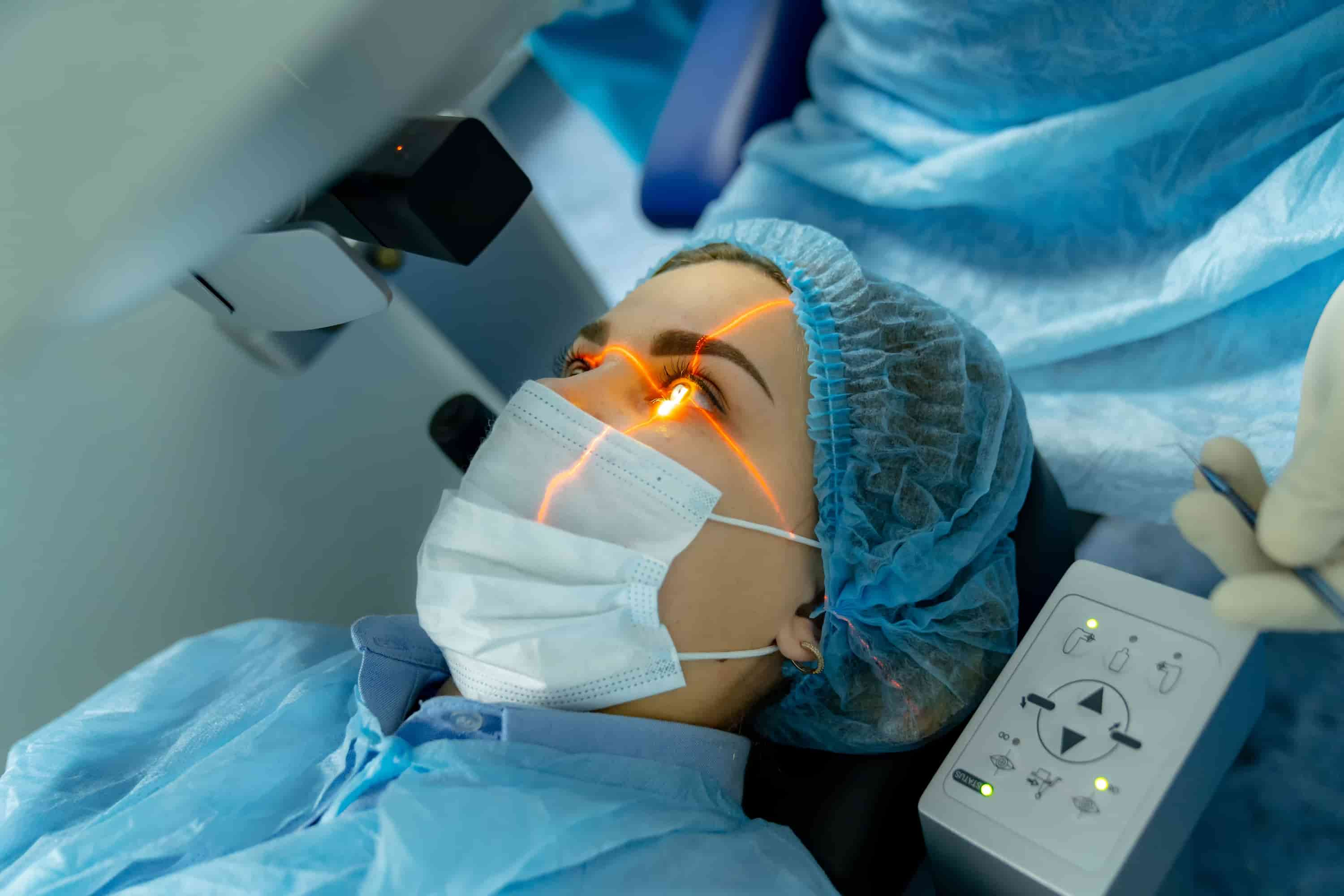
LASIK remains the most popular choice for astigmatism due to its rapid recovery time and high predictability. During the procedure, a surgeon creates a thin flap on the surface of the cornea using a femtosecond laser. Once the flap is folded back, an excimer laser removes tissue from the underlying stroma to correct the corneal shape.
2. PRK (Photorefractive Keratectomy)
PRK is often the preferred "best" option for patients with thinner corneas or those who have had previous eye trauma. Unlike LASIK, PRK does not involve a corneal flap. Instead, the surgeon removes the outer layer of the cornea (the epithelium), which then regenerates naturally over several days. While recovery is longer than LASIK, it avoids flap-related complications.
3. SMILE (Small Incision Lenticule Extraction)
SMILE is a minimally invasive procedure where a femtosecond laser creates a tiny, disc-shaped piece of tissue (a lenticule) within the cornea. This lenticule is then removed through a small incision. While highly effective for myopia, SMILE is now increasingly utilized for astigmatism, though it may not be suitable for all degrees of cylindrical power.
4. Topography-Guided LASIK (Contoura Vision)
This is widely considered the most advanced refinement for astigmatism. Unlike traditional wavefront-optimized LASIK, which treats the average refraction of the eye, topography-guided surgery maps up to 22,000 points on the cornea. By accounting for the unique, personalized "map" of your eye’s surface, it treats the specific irregularities that cause distorted vision, often leading to better visual quality than glasses or contact lenses.
Comparative Analysis of Refractive Procedures
| Procedure | Technique | Recovery Time | Best For |
|---|---|---|---|
| LASIK | Flap creation + Excimer ablation | 24–48 hours | Standard astigmatism; quick recovery |
| PRK | Epithelial removal + Excimer ablation | 3–7 days | Thin corneas; high-impact lifestyles |
| SMILE | Lenticule extraction | 2–5 days | Low to moderate astigmatism |
| Contoura | Topography-guided ablation | 24–48 hours | Highly irregular corneas |
Prerequisites and Eligibility
Not every patient is a candidate for laser surgery. Determining the "best" option begins with a comprehensive pre-operative screening, usually conducted by an ophthalmologist or a refractive surgeon.
- Stable Prescription: Your astigmatism must have been stable for at least 12 months. Fluctuating vision can lead to over-correction or under-correction.
- Corneal Thickness: You must have sufficient stromal tissue to support the laser ablation safely. Patients with extremely thin corneas may be disqualified from LASIK but potentially eligible for PRK.
- Ocular Health: Conditions such as severe dry eye, keratoconus, or uncontrolled glaucoma typically disqualify patients from elective refractive surgery.
- Pupil Size: Patients with naturally large pupils may experience increased halos or glare at night post-surgery, which must be factored into the treatment planning.
Potential Risks and Limitations
While modern laser technology boasts high success rates, all surgical procedures carry inherent risks. Understanding these is vital for setting realistic expectations. The most common side effect is temporary dry eye, which occurs as the nerves in the cornea heal.
Other considerations include:
- Visual Disturbance: Some patients experience "starbursts" or halos around lights, particularly when driving at night. This is often temporary but can persist in rare cases.
- Regression: In some instances, the eye may slowly shift back toward its original shape, though this is less common with modern topography-guided treatments.
- Enhancement Procedures: A small percentage of patients may require a "touch-up" procedure months or years after the initial surgery if the desired visual acuity is not fully achieved or if the prescription shifts slightly.
Next Steps and Professional Guidance
Choosing the best surgery is a diagnostic process. The first step is to schedule a consultation with an ophthalmologist who specializes in refractive surgery. Request a "refractive evaluation" rather than a routine eye exam, as this will include corneal mapping (topography) and wavefront analysis.
Ask your surgeon about their specific experience with high-cylinder astigmatism and which laser platform they use. In 2026, many leading clinics utilize integrated systems that combine diagnostic data directly into the laser computer, minimizing human error in the calculation process. Ensure you discuss your lifestyle, profession, and vision goals so the surgeon can tailor the treatment plan to your daily needs.
Note: This information is for educational purposes and does not constitute medical advice. Surgical outcomes vary by individual. Always consult with a board-certified ophthalmologist to determine your specific candidacy.
Frequently Asked Questions
Which procedure is most accurate for high astigmatism? Topography-guided LASIK (Contoura Vision) is often the most accurate because it maps the specific irregularities of your cornea, allowing the surgeon to address complex astigmatism that standard procedures might miss.
Does insurance cover laser eye surgery for astigmatism? Most health insurance providers classify LASIK and similar procedures as elective, cosmetic surgeries and do not provide coverage. However, some vision-specific plans offer discounts, and many clinics offer financing programs.
How long does the vision correction last? The physical change to the cornea is permanent. However, as the eye ages, your natural lens may change (presbyopia), meaning you may eventually require reading glasses. This is a separate physiological process unrelated to the laser procedure.
Is the procedure painful? No. Surgeons use topical anesthetic drops to numb the eye before the procedure. You may feel slight pressure during the initial phase of LASIK, but actual pain is rare. Most patients report only mild discomfort or grittiness during the initial 24–48 hours of recovery.
Can I get laser surgery if I have both astigmatism and nearsightedness? Yes. Modern excimer lasers are highly efficient at correcting multiple refractive errors simultaneously. During a single session, the laser can reshape the cornea to correct both your myopia (nearsightedness) and your astigmatism.
Image Gallery