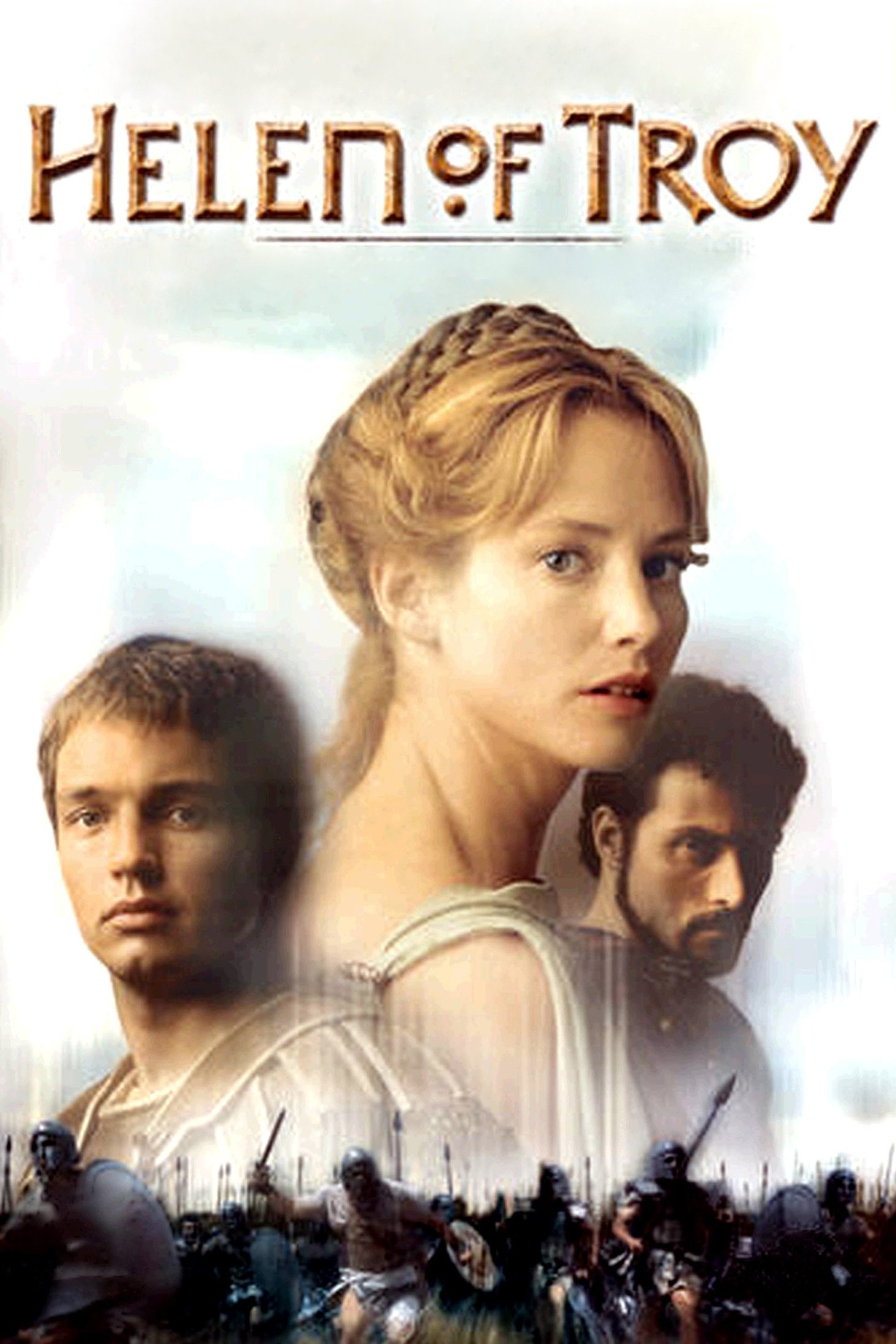
The Helen of Troy Cast That Defined the 2003 Miniseries
The 2003 Helen of Troy miniseries featured a defining cast led by Sienna Guillory as Helen, Matthew Marsden as Paris, and Rufus Sewell as Agamemnon. Supported by veteran actors like John Rhys-Davies and Stellan Skarsgård, the ensemble...
The 2003 Helen of Troy miniseries featured a defining cast led by Sienna Guillory as Helen, Matthew Marsden as Paris, and Rufus Sewell as Agamemnon. Supported by veteran actors like John Rhys-Davies and Stellan Skarsgård, the ensemble brought a grounded, character-driven depth to the mythological epic, distinguishing it from later cinematic adaptations.
Contents
As of 2026, the 2003 Helen of Troy miniseries remains a significant touchstone for fans of historical drama and classical mythology. Originally aired on the USA Network, this two-part television event sought to humanize the "face that launched a thousand ships" by focusing on Helen’s perspective—from her childhood abduction by Theseus to the eventual fall of Troy. While big-budget spectacles often prioritize action, the success of this miniseries rested largely on the shoulders of its diverse and talented cast.
The Ethereal Lead: Sienna Guillory as Helen
Finding an actress to portray the most beautiful woman in the world is a daunting task for any casting director. For the 2003 production, the choice of Sienna Guillory was pivotal. At the time, Guillory was a rising British star, and her portrayal of Helen was characterized by an ethereal, almost otherworldly quality that suited the semi-mythological tone of the script.
Unlike the Helen depicted in Homer's Iliad, who is often a passive figure, Guillory’s Helen was written with more agency and emotional complexity. The performance captured the burden of being a political pawn, first in the hands of her father Tyndareus and later between Menelaus and Paris. Guillory’s background as a model provided the necessary visual impact, but her theatrical training allowed her to convey the deep melancholy of a woman whose very existence was used as a catalyst for world-ending conflict. Following this role, Guillory transitioned into major franchise work, most notably as Jill Valentine in the Resident Evil series, but for many period-drama enthusiasts, she remains the definitive Helen.
The Romantic Catalyst: Matthew Marsden as Paris
Matthew Marsden took on the role of Paris, the Trojan prince whose forbidden love for Helen ignites the war. In this adaptation, Paris is framed less as a cowardly archer and more as a misunderstood romantic hero. Marsden, who had previously appeared in Black Hawk Down and the long-running British soap Coronation Street, brought a rugged yet sensitive energy to the role.
The chemistry between Marsden and Guillory was the engine of the miniseries. Their scenes in Sparta and their eventual flight to Troy were filmed with a focus on intimacy, making the subsequent destruction of a civilization feel like a tragic personal consequence of their devotion. Marsden’s portrayal helped bridge the gap between the legendary "judgment of Paris" and the human reality of a man choosing love over duty.
The Power-Hungry Antagonist: Rufus Sewell as Agamemnon
While Helen and Paris provided the heart of the story, Rufus Sewell provided its most compelling menace. Playing Agamemnon, the King of Mycenae and leader of the Greek forces, Sewell delivered a performance rooted in political ambition and ruthless pragmatism.
Sewell has long been recognized for his ability to play complex, often villainous characters with a magnetic intensity. His Agamemnon is not merely a warrior; he is a master manipulator who uses his brother Menelaus’s wounded pride as a convenient excuse to launch a war of conquest. In 2026, looking back at Sewell’s extensive filmography—including The Man in the High Castle and The Diplomat—his work in Helen of Troy stands out as a masterclass in portraying the "Great King" archetype. He effectively overshadowed the more "heroic" characters, making the Greek side of the conflict feel genuinely dangerous.
Supporting the Epic: The Elders and the Warriors
The casting of the supporting characters was equally deliberate, ensuring that the political stakes of the Trojan War felt grounded in established history and family legacy.
John Rhys-Davies as King Priam
The legendary John Rhys-Davies, fresh from his success as Gimli in The Lord of the Rings, portrayed King Priam of Troy. Rhys-Davies brought a sense of weary wisdom and doomed nobility to the role. His Priam was a father who loved his sons—both Hector and Paris—too much to make the cold-blooded decisions necessary to save his city. His presence added a layer of "prestige television" weight to the production.
Stellan Skarsgård as Theseus
In a brief but impactful role, Stellan Skarsgård played Theseus, the legendary founder of Athens who abducts Helen when she is still a young girl. This subplot, often omitted from other adaptations, was crucial for establishing Helen’s trauma and her distrust of the men who sought to own her beauty. Skarsgård’s inclusion signaled the production's ambition to include deeper layers of Greek mythology beyond the standard Trojan War narrative.
James Callis as Menelaus
James Callis, who would later gain worldwide fame as Gaius Baltar in Battlestar Galactica, played Menelaus. His portrayal was unique; rather than a simple brute, he played Menelaus as a man deeply insecure and desperate for respect, making his reaction to Helen’s departure feel more grounded in personal hurt than just political embarrassment.
Comparative Cast Analysis: 2003 Miniseries vs. 2004 Film
The 2003 miniseries is often compared to the 2004 blockbuster Troy, directed by Wolfgang Petersen. While the film had a massive budget and stars like Brad Pitt and Diane Kruger, many critics and fans argue that the 2003 miniseries offered a more cohesive ensemble performance.
| Role | 2003 Miniseries Actor | 2004 Feature Film Actor | Key Performance Difference |
|---|---|---|---|
| Helen | Sienna Guillory | Diane Kruger | Guillory's role focuses on Helen's internal journey; Kruger's is more reactive. |
| Paris | Matthew Marsden | Orlando Bloom | Marsden plays Paris as a romantic lead; Bloom plays him as a flawed youth. |
| Agamemnon | Rufus Sewell | Brian Cox | Sewell is a calculating strategist; Cox is a boisterous tyrant. |
| Priam | John Rhys-Davies | Peter O'Toole | Rhys-Davies is fatherly and warm; O'Toole is frail and spiritual. |
| Menelaus | James Callis | Brendan Gleeson | Callis is emotionally volatile; Gleeson is a powerful, physical warrior. |
Production Context: The "Epic" Television Trend
The early 2000s were a "golden era" for historical and mythological television epics. Following the success of Gladiator (2000), networks were eager to produce long-form content that could capture the same grandeur. Helen of Troy benefited from being a miniseries, which allowed for roughly 175 minutes of storytelling—significantly more time than a standard feature film to explore the backstories of the ensemble cast.
The production was filmed largely in Malta, a location that has served as the backdrop for numerous ancient world epics due to its preserved architecture and rugged coastlines. This setting helped the cast immerse themselves in the era, providing a tangible sense of place that CGI-heavy productions of the 2020s sometimes lack. The costumes and production design focused on a "pre-classical" Aegean aesthetic, which the actors utilized to differentiate their characters' cultural origins (the structured Mycenaeans vs. the more refined Trojans).
The Legacy of the Cast in 2026
By 2026, the members of the Helen of Troy cast have gone on to anchor some of the most influential television and film projects of the last two decades. For Sienna Guillory, the series was a launchpad into the world of action and sci-fi. For Rufus Sewell, it solidified his status as one of the most reliable character actors in the industry.
The miniseries itself is often revisited by students of the "Troy" legend because of how it handles the character of Cassandra (played by Emilia Fox). The interaction between the cursed prophetess and Helen remains one of the most haunting elements of the production, highlighting the tragic foresight of the Trojan women that the men ignored. The depth of the female cast members—including Maryam d'Abo as Hecuba and Katie Blake as Clytemnestra—ensured that the story wasn't just about men fighting over a woman, but about the women who had to endure the consequences of those choices.
Frequently Asked Questions
Is the 2003 Helen of Troy miniseries accurate to the Iliad?
The miniseries takes significant creative liberties, incorporating elements from other Greek myths (like Helen's abduction by Theseus) and focusing more on the romance than the divine intervention of the gods. It is more of a "historical fiction" take on the myth than a literal adaptation of Homer's poem.
Where can I watch the 2003 Helen of Troy miniseries in 2026?
As of 2026, the miniseries is frequently available on streaming platforms that specialize in historical dramas, such as Prime Video or Peacock (depending on regional licensing). It is also available in remastered high-definition on physical media.
Who played Achilles in the 2003 miniseries?
Achilles was played by Joe Montana (not the football player). Unlike the 2004 film where Achilles is the protagonist, the 2003 miniseries keeps him as a secondary, albeit formidable, character, focusing instead on the royal families of Troy and Sparta.
Why was Sienna Guillory cast as Helen?
Director John Kent Harrison sought an actress who possessed a "timeless" beauty that wouldn't feel out of place in the Bronze Age. Guillory’s ability to project both strength and vulnerability during the audition process made her the top choice over several more established stars at the time.
Practical Recommendation for Viewers
If you are a fan of Greek mythology or the "sword and sandal" genre, the 2003 Helen of Troy is a mandatory watch. To get the most out of the experience, it is recommended to view it as a character study rather than a tactical military history. Pay close attention to the performances of Rufus Sewell and Emilia Fox; their portrayals of Agamemnon and Cassandra, respectively, provide the intellectual and thematic weight that elevates the series above standard television fare.
For those interested in a "mythology marathon," watching this miniseries back-to-back with the 2004 Troy film provides a fascinating look at how different casting choices and narrative focuses can completely change the tone of the same historical event.
Image Gallery