Choosing Between Chicago Midway and O'Hare: A Comprehensive Traveler’s Guide
Choosing between Chicago Midway International Airport and Chicago O'Hare International Airport depends primarily on your destination within the city, your airline preference, and your preferred mode of ground transportation. O'Hare ser...
Choosing between Chicago Midway International Airport and Chicago O'Hare International Airport depends primarily on your destination within the city, your airline preference, and your preferred mode of ground transportation. O'Hare serves as a massive global mega-hub with extensive international and domestic routes, while Midway operates on a smaller, more compact scale focused heavily on domestic low-cost carriers like Southwest Airlines, offering faster terminal navigation and closer proximity to the city's Southwest Side.
Contents
When planning a trip to or through the Chicago metropolitan area, selecting the right airport can dramatically alter your travel experience. Chicago is served by two major commercial airports managed by the Chicago Department of Aviation: Chicago O'Hare International Airport (ORD) and Chicago Midway International Airport (MDW). Understanding the distinct operational characteristics, geographical locations, airline rosters, and transit options of each facility ensures a smoother journey. This guide breaks down every factor you need to weigh when making your choice.
Core Differences Between O'Hare and Midway
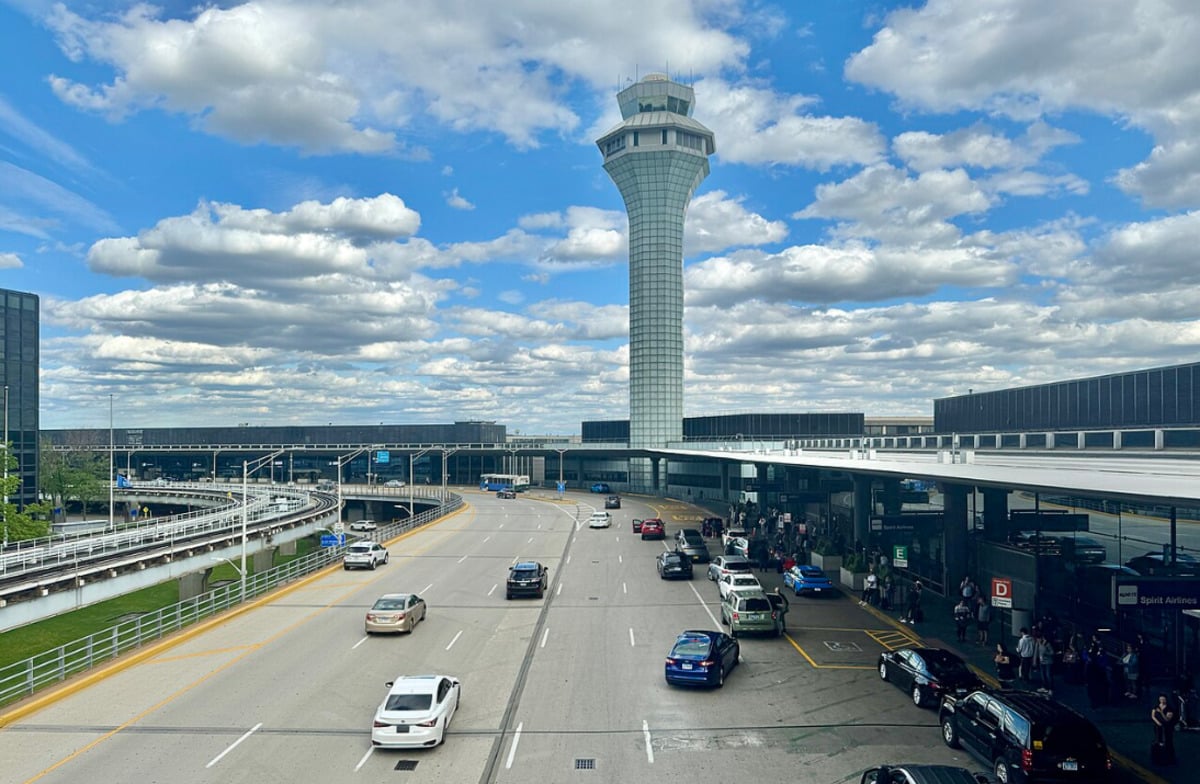
To understand which airport best suits your itinerary, you must first examine their structural and operational footprints. O'Hare spans thousands of acres on Chicago’s far Northwest Side, operating multiple massive terminals and a complex runway system that handles hundreds of thousands of aircraft operations annually. It is a primary domestic and international hub for major carriers, most notably United Airlines and American Airlines, connecting passengers to destinations across the globe.
Midway, located about eight miles southwest of the Loop, is significantly more compact. It features a single main terminal building and a fraction of O'Hare's acreage. Midway functions primarily as a high-frequency point-to-point and connecting hub, dominated heavily by Southwest Airlines, alongside carriers like Delta Air Lines and Volaris. Because of its smaller footprint, walking distances from the security checkpoints to the departure gates are considerably shorter at Midway than at O'Hare.
| Feature | Chicago O'Hare International Airport (ORD) | Chicago Midway International Airport (MDW) |
|---|---|---|
| Geographic Location | Northwest Side (approx. 17 miles from downtown) | Southwest Side (approx. 8 miles from downtown) |
| Primary Carriers | United Airlines, American Airlines, international carriers | Southwest Airlines, Delta, Volaris |
| Global Connectivity | Extensive international and domestic network | Primarily domestic, with select international routes |
| Terminal Layout | Multiple expansive terminals (Terminals 1, 2, 3, and 5) | Single centralized terminal with concourses A, B, and C |
| Transit Access | CTA Blue Line, Metra, Interstate 90/190 | CTA Orange Line, Stevenson Expressway (I-55) |
Geographic Location and Ground Transportation
Location plays a pivotal role in airport selection, especially when factoring in Chicago’s notorious traffic congestion. O'Hare sits roughly 17 miles northwest of downtown Chicago. Driving to or from O'Hare typically involves navigating the Kennedy Expressway (Interstate 90) or the Jane Addams Memorial Tollway (Interstate 90/90 West), both of which experience heavy commuter delays during peak morning and evening rush hours.
For rail commuters, O'Hare offers direct access via the Chicago Transit Authority (CTA) Blue Line rapid transit service, running 24 hours a day between the airport station and downtown’s Loop, taking approximately 45 minutes. Additionally, the O'Hare Transfer Station connects travelers to Metra's North Central Service.
Midway sits much closer to the city center—only about 8 miles southwest of the Loop. Driving to Midway usually utilizes the Stevenson Expressway (Interstate 55). While traffic on the Stevenson can also back up during rush hour, the shorter physical distance generally translates to a quicker cab, rideshare, or driving trip to downtown Chicago compared to O'Hare.
Rail travelers using Midway can utilize the CTA Orange Line, which originates at the Midway station and reaches downtown in roughly 25 minutes, making it one of the most efficient airport transit connections in the United States.
Airline Hubs and Flight Availability
Your airline choice often dictates your airport selection before you even begin comparing amenities. O'Hare is a massive global powerhouse. If you are flying internationally, traveling to Europe, Asia, or South America, or looking for widebody aircraft configurations with premium business class cabins, O'Hare is almost certainly your departure or arrival point. It hosts Star Alliance and oneworld mega-carriers alongside numerous foreign flag carriers.
Midway, conversely, is built for efficiency and domestic volume. Southwest Airlines maintains one of its largest operations at Midway, making the airport an optimal choice for travelers loyal to Southwest’s frequent flyer program, open seating or assigned boarding procedures, and waived baggage fees. While Midway does offer international flights—primarily to destinations in Mexico and the Caribbean via customs-cleared gates—its global reach cannot compete with O'Hare's extensive international network.
Navigational Ease and Terminal Experience
The passenger experience inside the terminals varies drastically between the two airports. O'Hare's vast size requires significant walking. Navigating between terminals often involves taking the Airport Transit System (ATS) automated people mover, and transferring between domestic and international flights (such as moving from Terminal 3 to Terminal 5) can require clearing security again and factoring in substantial transit time.
Midway offers a streamlined, pedestrian-friendly layout. Because all gates branch out from a single central terminal building equipped with a centralized security screening checkpoint, the walk from the curbside drop-off or the CTA Orange Line station to your departure gate is remarkably short. Navigational stress is minimized at Midway, making it popular among families, business travelers on tight schedules, and those with limited mobility.
Cost Considerations and Parking Options
When evaluating total travel costs, factor in ground transportation expenses and parking fees. O'Hare offers extensive on-site parking options, including economy lots with shuttle service, daily garages, and valet parking, but rates reflect its status as a major global hub. Off-site parking operators line the perimeter of both airports, offering competitive daily rates with shuttle connectivity.
Because Midway is smaller, its parking footprint is more constrained. The main parking garage sits directly adjacent to the terminal, offering convenient covered access, while economy lots provide budget-friendly alternatives. However, during peak holiday travel periods, Midway's parking structures can fill up quickly, requiring advance reservations.
Ground transportation costs also favor Midway for travelers heading to downtown or the South/West sides of the city due to the shorter mileage. Taxis, rideshares, and fuel costs drop noticeably when traveling from Midway rather than O'Hare.
Frequently Asked Questions
Which Chicago airport is closer to downtown?
Midway is significantly closer to downtown Chicago, located about 8 miles southwest of the Loop, whereas O'Hare is roughly 17 miles northwest. Under normal traffic conditions, a trip from Midway to downtown takes 25 to 30 minutes, while an O'Hare trip can take 45 minutes to over an hour.
Can I easily transfer between O'Hare and Midway if I have a connecting flight?
Transferring between the two airports requires a physical journey of roughly 25 miles across the city. You should allow at least four to five hours between flights if you must change airports, factoring in baggage claim, ground transit via taxi, rideshare, or rental car, and security re-screening at the second airport.
Which airport is better for international travel?
O'Hare is vastly superior for international travel. It handles direct flights to hundreds of global destinations across all major continents and features dedicated international processing facilities in Terminal 5. Midway offers a limited number of international flights, primarily to Mexico and parts of the Caribbean.
Which airport has better public transit connections?
Both airports boast direct rapid transit lines operated by the CTA, but they serve different parts of the city. O'Hare connects via the Blue Line (running northwest-southeast toward downtown and Forest Park), while Midway connects via the Orange Line (looping through the Southwest Side and downtown). Both lines provide reliable, traffic-free transit into the city center.
Is security faster at O'Hare or Midway?
Wait times at security checkpoints fluctuate based on time of day, season, and passenger volume at both airports. However, because Midway is a smaller facility with a centralized security checkpoint, processing lines can sometimes move faster, though O'Hare features multiple large checkpoints equipped with advanced screening technology across all terminals.
Final Recommendation
When deciding between Chicago Midway and O'Hare, let your destination, airline loyalty, and itinerary dictate your choice. If you are embarking on an international journey or require nonstop service to a secondary global market, book through O'Hare and allow extra time for transit and terminal navigation. If you are flying domestically—particularly on Southwest Airlines—and want a faster, more compact airport experience closer to the city center, choose Midway to save time and streamline your ground transit.
Image Gallery