Why Emily Blunt’s Role Defines the DNA of A Quiet Place
Emily Blunt’s portrayal of Evelyn Abbott serves as the emotional and thematic cornerstone of A Quiet Place. By grounding a high-concept horror premise in the visceral realities of motherhood and survival, her performance transforms a s...
Emily Blunt’s portrayal of Evelyn Abbott serves as the emotional and thematic cornerstone of A Quiet Place. By grounding a high-concept horror premise in the visceral realities of motherhood and survival, her performance transforms a silent monster movie into a profound character study, establishing the franchise's unique tonal identity and stakes.
Contents
The Architecture of Silence: Performance Beyond Dialogue
In a cinematic landscape often dominated by exposition and loud set pieces, A Quiet Place (2018) arrived as a masterclass in auditory restraint. At the center of this experiment was Emily Blunt. Her role as Evelyn Abbott is not merely a character within a plot; it is the vehicle through which the audience experiences the film’s central conceit: that sound equals death.
Blunt’s performance is defined by what she does not say. In a film where dialogue is sparse—estimated at less than 100 words of spoken English—the burden of narrative progression falls on physicality. Blunt utilizes a sophisticated vocabulary of micro-expressions and American Sign Language (ASL) to communicate complex internal states. Whether she is grieving the loss of a child or teaching her son how to survive, her eyes convey a level of urgency that dialogue could never achieve.
This technical depth was intentional. Blunt worked closely with the production’s ASL consultant, Douglas Ridloff, to ensure that her signing wasn't just accurate, but reflected the specific "dialect" of a family that had been using it for years. This attention to detail defines the film’s realism; the audience believes in the danger because Blunt’s physical responses to sound—the tensing of a shoulder, the sharp intake of breath—are so grounded in genuine physiological fear.
The Subversion of the "Final Girl" Trope
Traditional horror often relies on the "Final Girl" trope—the sole survivor who outlasts her peers through a combination of luck and resilience. Emily Blunt’s role defines A Quiet Place by moving beyond this archetype. Evelyn is not just a survivor; she is a nurturer, a teacher, and a formidable protector.
The film shifts the focus from individual survival to the preservation of the family unit. This is most apparent in the way Evelyn manages the household. Her role involves maintaining a sense of normalcy in an abnormal world. We see her homeschooling her children and listening to music through headphones—small acts of rebellion against a world that demands silence. By centering the story on a pregnant woman, the stakes are heightened exponentially. The pregnancy represents the ultimate vulnerability: a ticking time bomb of noise. Blunt’s ability to portray this dual state of extreme fragility and maternal ferocity is what gives the film its heart-pounding tension.
Anatomy of a Scene: The Bathtub Sequence
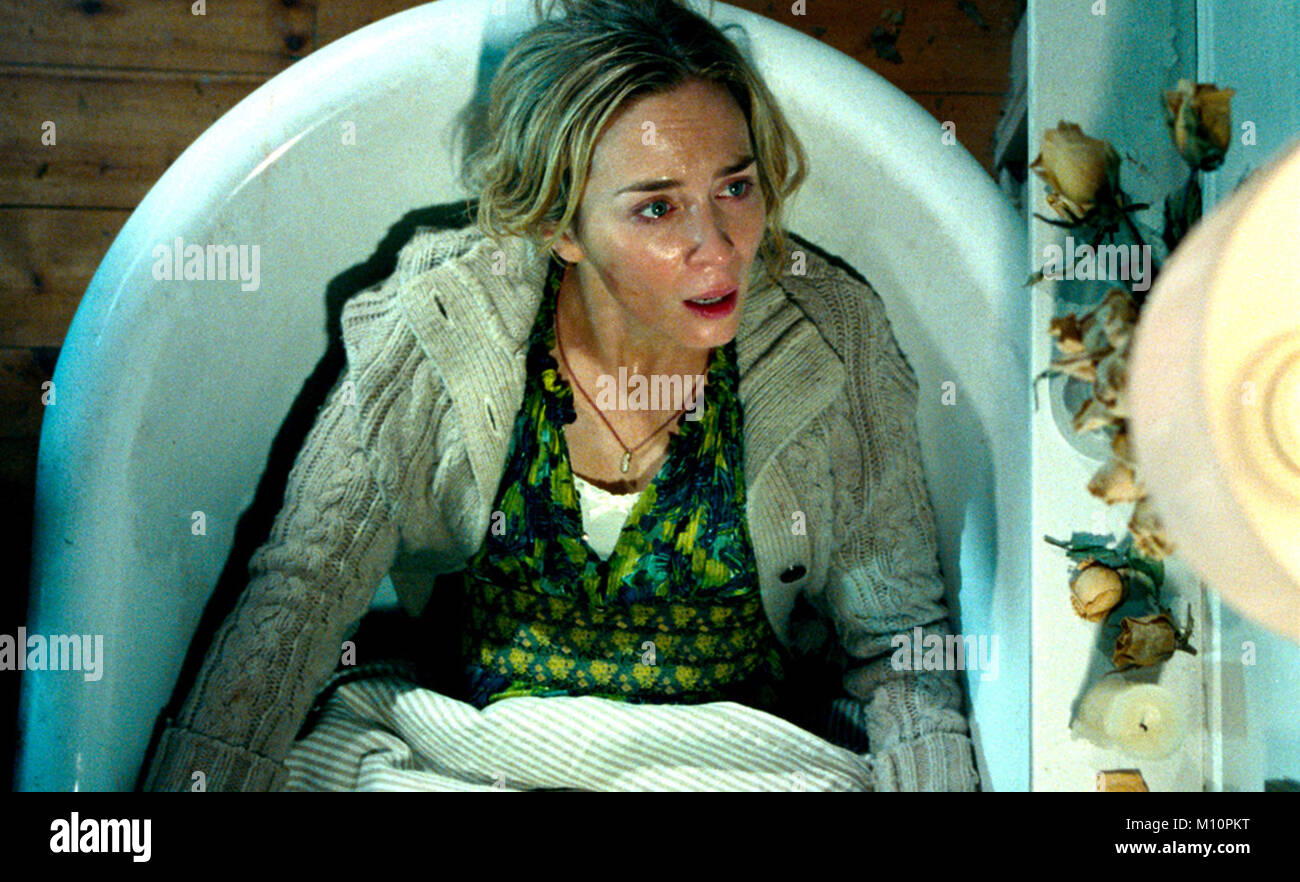
If one moment defines why Emily Blunt is the soul of this franchise, it is the bathtub sequence. This scene is frequently cited by critics and film historians as a benchmark in modern horror. In it, Evelyn is forced to go into labor alone while a creature stalks the house, all while she has a rusty nail driven through her foot.
The brilliance of Blunt’s acting here lies in the suppression of pain. The audience feels the agony of the labor and the injury, but the horror is magnified by her inability to scream. This creates a unique form of "participatory tension," where viewers often find themselves holding their breath alongside her.
From a technical perspective, the scene required Blunt to hit high emotional peaks while remaining virtually motionless. The contrast between her silent, tear-streaked face and the looming, clicking presence of the monster creates a visual and auditory counterpoint that defines the entire film’s aesthetic. Without Blunt’s total commitment to the physical reality of that pain, the scene could have felt like a generic jump scare; instead, it became a visceral experience of maternal sacrifice.
Themes of Generational Survival and Legacy
As we look back from 2026, the legacy of A Quiet Place is inextricably linked to the "Abbott Way" of survival, which Evelyn personifies. Her role defines the film because she is the bridge between the old world and the new. While John Krasinski’s character, Lee, focuses on the "how" of survival (the sand paths, the lights, the security), Evelyn focuses on the "why."
She famously tells Lee, "Who are we if we can't protect them?" This line is the thesis statement of the entire franchise. It moves the narrative from a monster hunt to a meditation on the responsibilities of parents to prepare their children for a world that is fundamentally broken.
In the sequel, A Quiet Place Part II, Blunt’s role evolves further as she takes the family out of the controlled environment of their farm. Her performance shifts to reflect the weary, hardened nature of a widow who must now lead. However, she retains the core empathy that makes her character relatable. This evolution underscores why her role is the definitive one: she provides the emotional continuity that allows the franchise to expand without losing its intimacy.
Comparing the Dynamics: Evelyn Abbott vs. Traditional Horror Protagonists
The following table illustrates how Emily Blunt’s character departs from standard horror conventions to define the specific niche of A Quiet Place.
| Feature | Traditional Horror Protagonist | Evelyn Abbott (Emily Blunt) |
|---|---|---|
| Primary Motivation | Personal Survival | Family Preservation/Education |
| Response to Fear | Audible (Screaming/Panting) | Internalized (Calculated Silence) |
| Role in Group | Often passive or reactive | Proactive leader and teacher |
| Key Attribute | Luck or Agility | Resilience and Preparation |
| Narrative Focus | Escaping the threat | Creating a life despite the threat |
Collaboration and Real-World Chemistry
The fact that Emily Blunt is married to the film’s director and co-star, John Krasinski, added a layer of authenticity that is rare in the genre. This real-life connection allowed for a shorthand in their on-screen communication that felt lived-in.
Blunt was actually the one who suggested she play the role after reading the script, despite Krasinski’s initial hesitation to ask her. Her involvement changed the project’s trajectory. With an actress of her caliber—fresh off successes like Sicario and Edge of Tomorrow—the film gained immediate prestige. She brought a "prestige drama" sensibility to a "creature feature," which is why the film was able to cross over from niche horror fans to general audiences and awards circuits.
Her influence extended to the editing room as well. Blunt’s understanding of pacing and the power of a "look" helped shape the final cut of the film, ensuring that the emotional beats were given as much weight as the suspenseful ones.
Frequently Asked Questions
Did Emily Blunt actually learn ASL for the role?
Yes, Emily Blunt, along with the rest of the cast, studied American Sign Language extensively. The production hired Douglas Ridloff as an ASL consultant to ensure that the signs used by the characters felt natural to their environment. This was crucial because the characters use "home signs"—variations of ASL that a family might develop privately over years of isolation.
Why is the bathtub scene considered so significant?
The bathtub scene is significant because it combines three distinct layers of tension: the physical pain of a foot injury, the biological inevitability of childbirth, and the external threat of an apex predator. Emily Blunt’s ability to navigate all three simultaneously without the use of vocalization is considered a landmark achievement in horror acting.
How does Emily Blunt’s role change in the sequel?
In A Quiet Place Part II, Blunt’s role transitions from a co-protector to the primary leader of the family. Following the death of Lee Abbott, Evelyn must navigate the outside world. Her performance becomes more rugged and desperate, reflecting the loss of her safety net, but her primary focus remains the empowerment of her children, particularly Regan.
What awards did Emily Blunt win for A Quiet Place?
Emily Blunt won the Screen Actors Guild Award for Outstanding Performance by a Female Actor in a Supporting Role for her performance in the first film. This was a notable win, as the SAG Awards rarely recognize performances in the horror genre, further proving how her role elevated the material.
Who directed Emily Blunt in A Quiet Place?
She was directed by her husband, John Krasinski. This professional collaboration is often cited as a key reason for the film’s intimate and authentic emotional tone, as the two were able to draw on their real-life experiences as parents to inform their characters' motivations.
Practical Recommendation for Viewers and Aspiring Actors
To truly appreciate why Emily Blunt’s role defines the film, viewers should watch the movie with a high-quality sound system or headphones. Pay close attention to her breathing and eye movements during the silent sequences. For actors, Blunt’s work here is a primary text on "active listening" and physical storytelling.
The next action for any fan of the franchise is to revisit the films with a focus on the "Abbott family rules." Notice how every action Evelyn takes is a calculated move designed to teach her children how to navigate a soundless world. Her role is the definitive blueprint for modern, elevated horror that prioritizes character over carnage.
Image Gallery