St. Alphonsus Liguori as the Patron Saint of Vocations: History, Theology, and Intercession
St. Alphonsus Liguori is widely recognized within Catholic tradition as a powerful heavenly intercessor and patron saint of vocations, guiding individuals as they discern priesthood, religious life, lay ministry, or holy matrimony. His...
St. Alphonsus Liguori is widely recognized within Catholic tradition as a powerful heavenly intercessor and patron saint of vocations, guiding individuals as they discern priesthood, religious life, lay ministry, or holy matrimony. His own arduous journey through legal studies, a crisis of direction, and ultimate surrender to the priesthood uniquely equips him to mentor those seeking their life's calling.
Contents
Understanding the Concept of Vocations in Catholic Tradition
Within Catholic theology, a vocation is not merely a career choice or a personal preference; it is a divine calling from God. Every person is called fundamentally to holiness, but this universal call is expressed through specific states in life. These primary avenues include the ordained priesthood, consecrated religious life (such as monks, nuns, and brothers), holy matrimony, and the single life lived in dedicated service to the Church and society. Discernment is the deliberate, prayerful process of listening for God's voice, weighing one's interior inclinations, evaluating external circumstances, and seeking wise spiritual counsel.
The search for a vocation frequently involves profound interior struggle, doubt, and external pressure. Throughout Church history, various saints have been designated as patrons to assist the faithful during these critical junctures. Among them, St. Alphonsus Liguori holds a distinct place of honor. His deep pastoral sensitivity, extensive writings on spiritual life, and personal background make him an ideal intercessor for anyone navigating the crossroads of major life decisions. Understanding why he is invoked for this purpose requires looking closely at his biography, his theological contributions, and the specific challenges he faced while finding his own path.
The Life and Journey of St. Alphonsus Liguori
Born into a noble Neapolitan family in 1696, Alphonsus Maria de' Liguori was a gifted youth who excelled academically. Encouraged by his ambitious father, a lawyer and naval officer, Alphonsus pursued a doctorate in civil and canon law, which he earned at the remarkably young age of sixteen. He embarked on a promising career as an advocate, quickly gaining a reputation for brilliance in the courtroom. For several years, he navigated the competitive, secular world of the legal profession in Naples, experiencing the high social standing and worldly success that accompanied it.
However, a pivotal turning point arrived in 1723. During a major legal case involving a complicated inheritance dispute, Alphonsus misread a crucial document and lost the case. Overcome by humiliation and disillusioned with the moral compromises often demanded by the legal system, he experienced a profound spiritual awakening. Stepping out of the courtroom, he heard an interior voice urging him to leave the world and give himself entirely to God.
This moment initiated a fierce internal conflict. Alphonsus faced intense opposition from his father, who had envisioned a brilliant secular and political future for his eldest son. Despite familial pressure and his own internal fears of inadequacy, Alphonsus persevered in prayer, eventually renouncing his inheritance, abandoning his legal career, and entering the seminary. He was ordained a diocesan priest in 1726 at the age of thirty. His transition from a worldly lawyer to a dedicated priest laid the foundation for his lifelong empathy toward those struggling to discern God's will against external expectations.
Pastoral Ministry and the Founding of the Redemptorists
As a newly ordained priest in Naples, Father Alphonsus dedicated himself to the marginalized segments of society. He worked extensively with the urban poor, the destitute youth of the city, and the rural peasants of the surrounding countryside who were largely neglected by the established parish structures. He founded the "Evenings' Chapels," informal gatherings where the poor could receive religious instruction, sing hymns, and experience community outside of formal church settings.
Recognizing the immense spiritual abandonment of the rural poor in southern Italy, Alphonsus founded the Congregation of the Most Holy Redeemer (commonly known as the Redemptorists) in 1732. The mission of this new religious institute was to imitate the virtues and example of Jesus Christ by preaching the word of God to the poor and abandoned.
Building and sustaining the Redemptorists required navigating immense administrative, canonical, and spiritual hurdles. Alphonsus faced internal dissent, external political suppression, and severe health trials, including crippling rheumatism that eventually left him paralyzed in a forward-leaning posture. Despite these obstacles, he guided the congregation with profound prudence and pastoral charity. His extensive experience in establishing a new religious community and fostering missionary vocations cemented his reputation as a master builder of religious life, deeply attuned to the challenges of cultivating and preserving vocations.
Theological Contributions and Doctor of the Church
Beyond his administrative and missionary work, St. Alphonsus Liguori was a prolific author and a towering figure in Catholic moral theology. He was declared a Doctor of the Church in 1871 by Pope Pius IX, an official recognition of the enduring value of his theological writings. His masterpiece, Theologia Moralis (Moral Theology), sought a balanced path between the extremes of rigorous legalism and laxity, emphasizing pastoral mercy, the informed conscience, and the accessibility of God's grace.
In addition to academic treatises, Alphonsus wrote extensively for the laity and clergy. Works such as Uniformity with God's Will, Visits to the Blessed Sacrament, and Prayer: The Great Means of Salvation offer practical guidance on spiritual alignment and discernment. His writings consistently emphasize that discovering and fulfilling God's will is the single most important task of human existence. Because he spent decades answering moral questions, hearing confessions, and directing souls, his theological legacy provides a robust intellectual framework for anyone seeking to understand what a vocation entails and how to respond to divine promptings.
Comparison of Patron Saints Associated with Vocations
While St. Alphonsus Liguori is a preeminent patron for vocations, the Catholic Church recognizes several other saints who assist the faithful in this domain. Each brings a unique historical perspective and specific intercessory focus.
| Saint Name | Primary Area of Patronage | Key Connection to Vocations |
|---|---|---|
| St. Alphonsus Liguori | Vocations, confessors, moral theologians | Navigated a dramatic career shift from law to priesthood; mastered discernment amidst family opposition. |
| St. Therese of Lisieux | Missionaries, vocations, florists | Emphasized the "Little Way" of doing small things with great love; discovered her vocation was "love" within the heart of the Church. |
| St. Joseph | Universal Church, workers, fathers, families | Model of quiet obedience to divine commands received through dreams and prayerful silence. |
| St. Anthony of Padua | Finding lost items, oppressed people, vocations | Renounced worldly comfort for the Franciscan life; renowned for preaching truth and guiding seekers. |
| St. John Bosco | Youth, apprentices, editors, young priests | Dedicated his life to the education and vocational training of abandoned boys, founding the Salesians. |
Why St. Alphonsus Liguori is Invoked for Vocations
The designation of St. Alphonsus Liguori as a patron saint of vocations rests on several intersecting biographical and spiritual realities.
First, his personal history mirrors the exact dilemma many discerners face. He understood the tension between a promising secular career, parental expectations, and a quiet, persistent interior call to religious life. His successful tenure as a lawyer gave him a grounded, practical perspective; he was not an isolated monk detached from reality, but a man who had lived in the demanding professional world before making his radical choice.
Second, his pastoral writings emphasize the necessity of prayer and surrender in discerning God's will. Alphonsus famously taught that God desires our salvation and sanctification more than we do, and that divine guidance is readily available to those who ask with humility and perseverance. For individuals struggling with fear, doubt, or confusion regarding whether they are called to marriage, the priesthood, or consecrated life, Alphonsus provides a model of trust and courageous obedience.
Third, as the founder of the Redemptorists, Alphonsus was intimately involved in cultivating vocations within his own community. He knew the qualities required for apostolic life, the trials of formation, and the importance of perseverance. Consequently, bishops, vocation directors, and seminary rectors frequently invoke his intercession to guide young men and women toward authentic discernment, free from worldly ambition or self-deception.
Practical Steps in Vocational Discernment Using Ignatian and Alphonsian Principles
Discernment is rarely a sudden lightning bolt of clarity; rather, it is a deliberate, structured journey of faith. Integrating the spiritual wisdom of St. Alphonsus Liguori with traditional Catholic discernment practices involves several concrete steps:
- Establish a Foundation of Regular Prayer: Alphonsus taught that prayer is the primary channel of grace. Consistent daily prayer, including mental prayer, meditation on Scripture, and regular participation in the sacraments (especially the Eucharist and Reconciliation), clears the interior noise necessary to hear God's voice.
- Examine Intentions Objectively: Reflect on the motivations driving your choices. Are you seeking status, comfort, or the approval of others, or are you genuinely motivated by a desire to love God and serve your neighbor? St. Alphonsus experienced the emptiness of worldly success and urged souls to seek treasures that endure.
- Seek Wise Spiritual Direction: Do not attempt discernment in isolation. Meet regularly with a qualified priest, deacon, or trained spiritual director who can provide objective feedback, test your spiritual movements, and offer canonical or practical guidance.
- Evaluate Concrete Opportunities: Take practical steps toward your suspected calling. If considering the priesthood or religious life, visit seminaries or religious communities, speak with vocation directors, and participate in discernment retreats. If considering marriage, engage in healthy dating relationships rooted in shared faith and mutual respect.
- Cultivate Interior Freedom and Trust: Practice surrender to God's will, even when it involves sacrifice or stepping into the unknown. Trust that God will provide the necessary grace and strength to fulfill whatever state in life He calls you to embrace.
Frequently Asked Questions About St. Alphonsus Liguori and Vocations
What is St. Alphonsus Liguori the patron saint of?
St. Alphonsus Liguori is the patron saint of vocations, moral theologians, confessors, and laypeople working in the legal profession. His patronage extends particularly to those discerning a call to the priesthood, religious life, or lay ministry.
How did St. Alphonsus Liguori's career before the priesthood influence his ministry?
Before becoming a priest, Alphonsus was a successful civil and canon lawyer. This background trained his intellect, honed his analytical skills, and exposed him to the practical moral dilemmas faced by everyday people. When he later wrote moral theology and heard confessions, he balanced rigorous truth with deep pastoral empathy.
Can laypeople look to St. Alphonsus Liguori for guidance?
Yes. While he founded a religious order and was a bishop, his extensive writings were designed to help all Catholics achieve holiness in their daily lives. His spiritual classics provide practical advice for living out Christian virtues regardless of one's specific state in life.
What are some of the best-known writings of St. Alphonsus Liguori?
His most famous works include Theologia Moralis, Uniformity with God's Will, Visits to the Blessed Sacrament, and Preparation for Death. These texts focus heavily on the love of God, the importance of prayer, and the pursuit of eternal salvation.
When is the feast day of St. Alphonsus Liguori?
The liturgical feast day of St. Alphonsus Liguori is celebrated annually on August 1st in the General Roman Calendar.
How can someone ask for St. Alphonsus's intercession for a vocation?
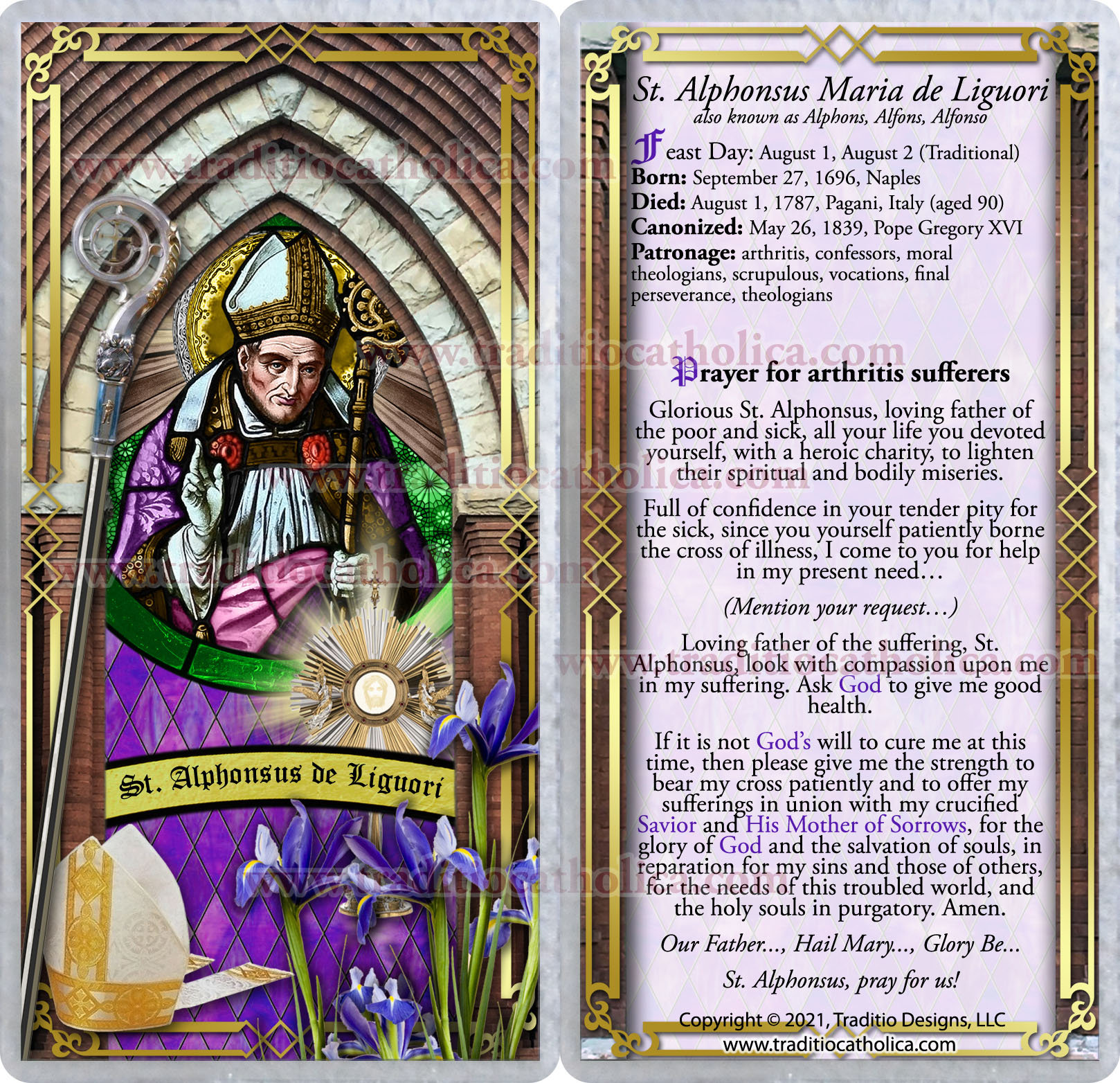
The faithful can offer personal novenas or specific prayers asking for his intercession. Vocation prayer cards bearing his image often contain traditional petitions asking him to guide young people toward generous hearts and clear discernment of God's plan.
Conclusion and Next Actions
St. Alphonsus Liguori remains an invaluable guide for anyone navigating the complex journey of vocational discernment. His transition from a worldly courtroom advocate to a zealous missionary, bishop, and Doctor of the Church demonstrates that God can redirect any life toward profound fruitfulness. For those actively discerning their calling, the recommended next step is to incorporate a daily prayer for vocational clarity, perhaps utilizing one of St. Alphonsus’s own meditations on God's will, while scheduling a conversation with a trusted spiritual director or parish priest to discuss practical next steps.
Image Gallery