Understanding the Policy Default Rate in Whole Life Insurance
The policy default rate in whole life insurance refers to the frequency at which policyholders stop paying premiums, causing their coverage to lapse or be surrendered. It also describes the credit default risk within an insurer’s gener...
The policy default rate in whole life insurance refers to the frequency at which policyholders stop paying premiums, causing their coverage to lapse or be surrendered. It also describes the credit default risk within an insurer’s general account, which directly impacts the dividends and long-term cash value growth for policyholders.
Contents
Whole life insurance is often marketed as a "permanent" solution, designed to last the entirety of the insured’s life. However, the success of this financial vehicle relies on a consistent flow of premiums and the institutional stability of the insurance company. In 2026, as the financial landscape continues to adapt to fluctuating interest rates and evolving regulatory standards, understanding the nuances of "default"—both at the individual and institutional levels—is essential for any policyholder or prospective buyer.
The Dual Nature of Policy Default: Lapse vs. Credit Risk
In the context of whole life insurance, "default" is not a singular term. It represents two distinct risks that can compromise the efficacy of a policy. To understand the health of a whole life contract, one must distinguish between the behavioral default of the policyholder and the structural default of the insurer’s investments.
Personal Policy Default: The Lapse Rate
When an individual fails to pay the required premium within the designated grace period, the policy is said to be in default. In industry terms, this is recorded as a lapse. A lapse occurs when a policy terminates without value, while a surrender occurs when a policyholder voluntarily terminates the contract to receive the accumulated cash value.
High lapse rates are a significant concern for insurance companies because the "acquisition costs"—the price of underwriting and agent commissions—are usually front-loaded. If a policy defaults in its first three to five years, the insurer often loses money on that specific contract. For the policyholder, a lapse in the early years usually results in a total loss of premiums paid, as cash value takes time to accumulate.
Institutional Default: Credit Risk in the General Account
Whole life insurance companies maintain a "general account" where they pool premiums to invest in a variety of assets, primarily high-quality corporate and government bonds. The investment default rate of this portfolio is a critical metric. If the bonds held by the insurer default at a rate higher than projected, the company’s ability to pay "non-guaranteed" dividends is diminished.
In 2026, insurers are meticulously managing these portfolios to avoid "credit migration"—a situation where bonds drop in rating, signaling a higher probability of default. Because whole life insurance offers a guaranteed death benefit and a guaranteed minimum interest rate, the insurer bears the primary risk of investment defaults. However, the policyholder feels the impact through reduced dividend scales.
How Economic Conditions in 2026 Influence Default Rates
The year 2026 follows a period of significant macroeconomic recalibration. Interest rates, which saw volatility in the early 2020s, have reached a point of relative stabilization, yet this has created a specific set of challenges for policy default rates.
The Impact of Prevailing Interest Rates
When interest rates are high, the opportunity cost of keeping money in a whole life policy increases. Some policyholders may experience "premium fatigue" and choose to default on their life insurance to redirect funds into higher-yielding short-term investments. Conversely, when rates are low, insurance companies struggle to earn the returns necessary to support high dividend payments, which can lead to policyholder dissatisfaction and higher surrender rates.
Inflation and Premium Affordability
Inflation remains a primary driver of policyholder default. As the cost of living fluctuates, discretionary spending is often curtailed. For many families, a life insurance premium can feel like a negotiable expense compared to immediate needs like housing or healthcare. Data from the National Association of Insurance Commissioners (NAIC) suggests that lapse rates tend to track closely with regional unemployment and consumer price index (CPI) changes.
The Mechanics of a Policy Lapse: What Happens During Default?
If a policyholder misses a payment, the policy does not disappear instantly. There is a structured sequence of events designed to protect the insured, provided the policy has been active long enough to build internal value.
- The Grace Period: Standard whole life contracts include a 31-day grace period. During this time, the coverage remains in full force. If the insured dies during this window, the death benefit is paid, minus the overdue premium.
- Automatic Premium Loan (APL): Many modern policies include an APL provision. If the premium is not paid by the end of the grace period, the insurer automatically takes a loan against the policy's cash value to cover the cost. This prevents a default but creates a debt that accrues interest.
- Non-Forfeiture Options: If there is no APL or the cash value is exhausted, the policy enters a "default" state. However, "non-forfeiture" laws require the insurer to provide the policyholder with the value they have earned. This usually takes the form of Extended Term Insurance (using the cash value to buy a term policy for the same death benefit) or Reduced Paid-Up Insurance (lowering the death benefit to an amount that requires no further premiums).
Monitoring the Financial Strength of Life Insurance Providers
For a policyholder, the "default rate" that matters most on an institutional level is the risk of the insurance company becoming insolvent. While rare in the United States due to strict reserve requirements, it is a factor that should be monitored through independent rating agencies.
Organizations such as AM Best and Standard & Poor's evaluate the "credit default risk" of insurance companies. A high rating (such as A++ or AA) indicates that the company has a very low probability of defaulting on its obligations to policyholders. These ratings are based on the company's "solvency ratio," which compares its available capital to its potential liabilities.
In 2026, analysts are paying close attention to "commercial mortgage-backed securities" (CMBS) within insurer portfolios. If the default rate in the commercial real estate sector rises, insurers with heavy exposure to these assets may see their financial strength ratings downgraded, which can be a precursor to reduced dividend performance for whole life policies.
Comparing Policy Status and Outcomes
When a policy faces a potential default, the outcome depends on the actions taken by the owner and the internal value of the contract.
| Policy Status | Premium Requirement | Death Benefit Status | Cash Value Access | Long-Term Impact |
|---|---|---|---|---|
| Active | Fully paid as scheduled. | 100% Guaranteed. | Fully accessible via loans/withdrawals. | Maximum growth and estate protection. |
| Lapsed | Not paid; grace period expired. | Terminated (Zero). | Lost (unless non-forfeiture applies). | Total loss of coverage and previous equity. |
| Reduced Paid-Up | No further premiums required. | Reduced to a lower fixed amount. | Remains in the policy; grows slowly. | Coverage stays for life; no further out-of-pocket cost. |
| Extended Term | No further premiums required. | 100% for a limited number of years. | Usually exhausted to buy the term. | Coverage eventually expires; no life-long protection. |
| Surrendered | Terminated by owner. | Terminated (Zero). | Paid out to owner (minus fees). | Cash is received, but insurance protection is gone. |
Mitigating Default Risk: Strategies for Policyholders
Preventing a policy default requires proactive management, especially during the first ten years of the contract when the risk of lapse is highest.
Utilizing Dividend Options
Many whole life policies allow dividends to be used to "vanish" or reduce premiums. Once a policy has sufficient cash value, the dividends can be directed to pay the annual premium. This creates a self-sustaining system that significantly lowers the risk of a personal default due to cash flow issues.
Policy Reinstatement
If a policy has already defaulted and lapsed, most insurers offer a "reinstatement" window, typically lasting three to five years. To reinstate, the policyholder must pay all back premiums plus interest and, in many cases, provide new "evidence of insurability" (a medical exam). This is often more cost-effective than buying a new policy, as it preserves the original lower entry age and cost structure.
Rightsizing Coverage
If a premium becomes unaffordable, it is often better to request a "partial surrender" or move to a "Reduced Paid-Up" status rather than allowing the policy to lapse entirely. This preserves a portion of the death benefit and keeps the underlying contract intact, which can have significant tax advantages compared to a total default.
Frequently Asked Questions
Does a policy loan increase the default rate of my insurance?
A policy loan does not technically count as a "default" as long as the total loan balance plus accrued interest does not exceed the policy’s cash value. However, if the debt grows too large, the policy will "strip out" and lapse. This can trigger a significant tax liability, as the IRS treats the forgiven debt as income to the extent it exceeds the policy's cost basis.
How can I check the default risk of my insurance company?
You should look at the insurer's annual report and their ratings from agencies like AM Best, Fitch, or Moody’s. Specifically, look for their "Comdex" score, which is a composite ranking of a company's standing across all major rating agencies on a scale of 1 to 100. A score above 90 is generally considered excellent.
Is the "lapse rate" higher for whole life than for term insurance?
Statistically, whole life insurance often has higher lapse rates in the very early years because the premiums are significantly higher than term insurance. However, once a whole life policy passes the 10-year mark, it tends to be much more stable. Policyholders who have built up significant cash value are far less likely to default than those with term policies that have no "equity."
What happens to my cash value if the insurance company defaults?
If an insurance company becomes insolvent, state "guaranty associations" step in to protect policyholders. While limits vary by state, most provide coverage up to $300,000 in death benefits and $100,000 in cash value. In the history of the U.S. insurance industry, most insolvent companies are bought by healthier insurers, and policies are transferred with minimal disruption to the policyholder.
Practical Recommendation
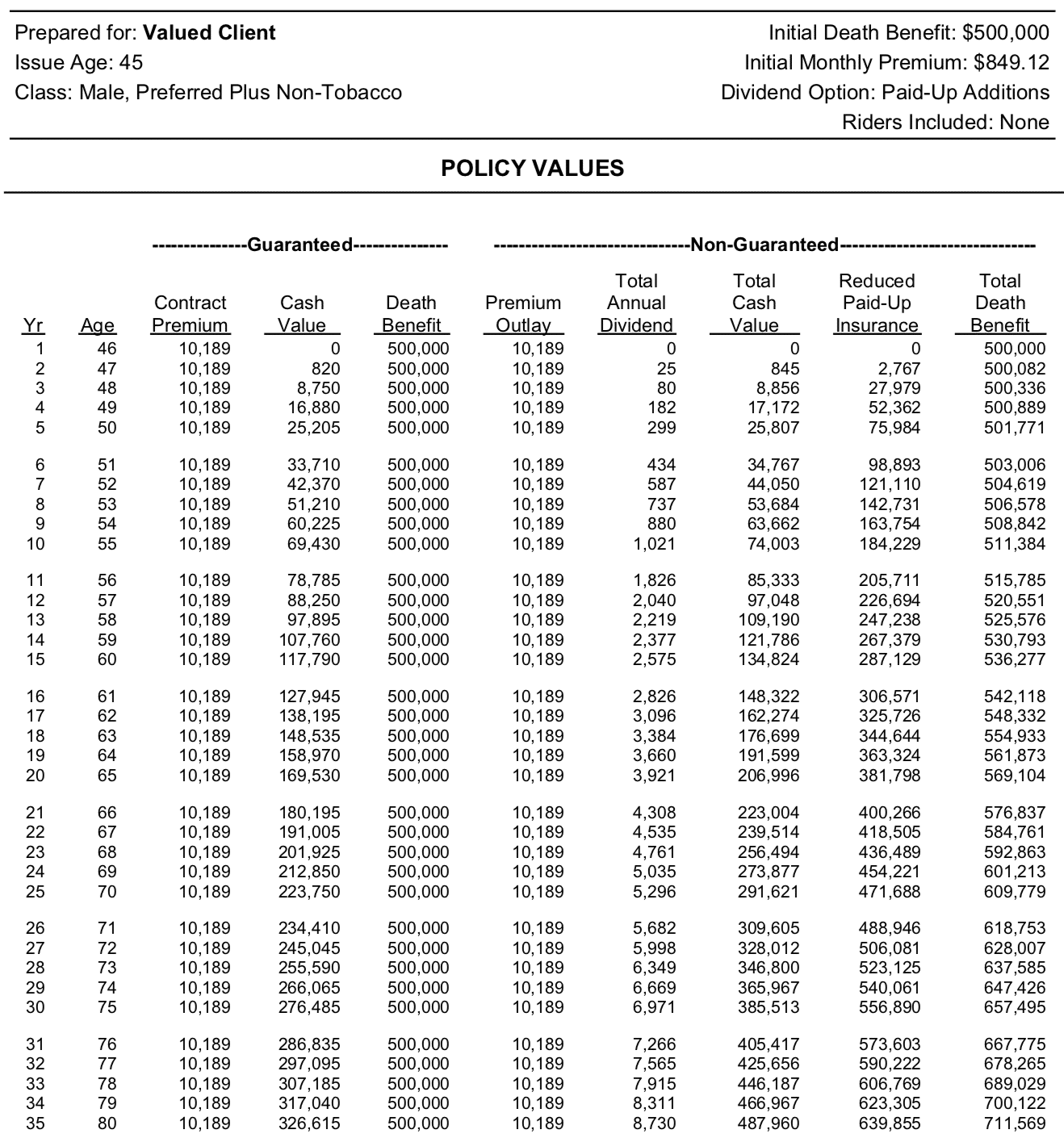
To protect yourself from the negative impacts of policy default, review your "In-Force Illustration" annually. This document shows exactly how your policy is performing relative to its original projections. If you notice the cash value is not growing as expected or if your ability to pay premiums has changed, contact your agent to discuss non-forfeiture options or premium offsetting using dividends. Staying ahead of the 31-day grace period is the most effective way to ensure your permanent coverage remains permanent.
Image Gallery