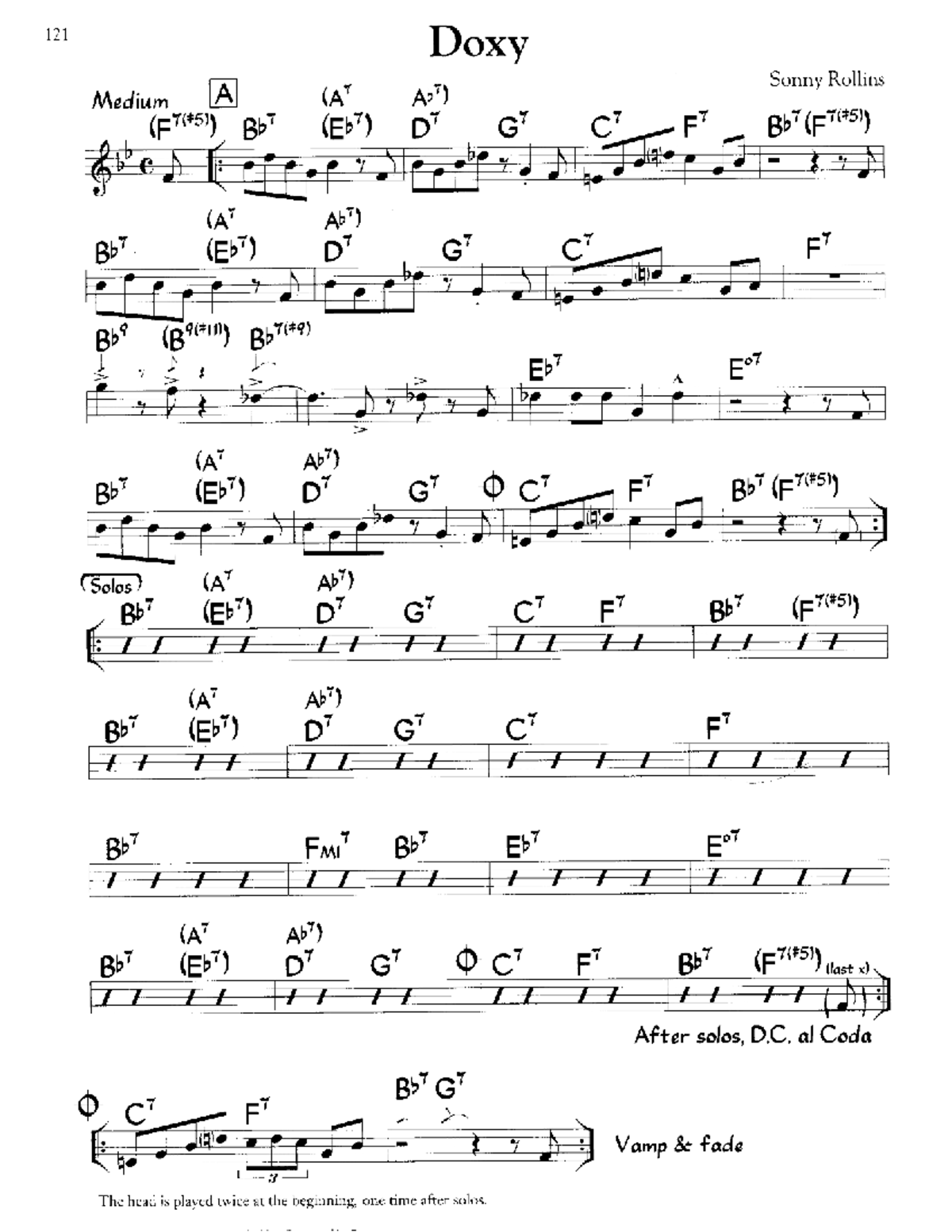
Understanding the Structure of Jazz Music: Form, Harmony, and Improvisation
The structure of jazz music relies on a cyclical architectural framework composed of the Head (the main written melody played at the beginning and end of a piece) and Solo Sections, where musicians improvise over the song’s underlying...
The structure of jazz music relies on a cyclical architectural framework composed of the Head (the main written melody played at the beginning and end of a piece) and Solo Sections, where musicians improvise over the song’s underlying chord progression, known as "the changes." Most classic and modern jazz arrangements utilize standardized song forms, such as 32-bar AABA, 32-bar ABAC, or 12-bar blues structures.
Contents
While jazz is renowned for spontaneous expression, it is rarely unstructured. Instead, jazz balances freedom and discipline: a fixed harmonic and rhythmic road map guides the ensemble, while individual performers improvise melodies, counterpoints, and rhythms within those boundaries.
The Overarching Architecture of a Jazz Performance
A standard jazz performance follows an overarching macro-structure. Regardless of whether a band is playing a swing standard, a bebop tune, or a hard bop composition, the arrangement typically progresses through distinct, predictable stages.
- Intro
- Head In
- Solo Choruses
- Trading Fours
- Head Out
- Outro/Coda
1. Count-In and Introduction
The performance begins with a count-in by the bandleader to establish tempo and meter, followed by an optional introduction. Introductions can range from a brief four-bar piano vamp to a fully arranged section that establishes the key, mood, and harmonic foundation of the piece.
2. Head In (Statement of the Main Theme)
The ensemble plays the primary melody of the song, called the Head. Front-line instruments (such as trumpets, saxophones, or vocalists) state the melody while the rhythm section (piano, guitar, double bass, and drums) provides harmonic and rhythmic accompaniment. The Head sets the thematic baseline that listeners and musicians will reference throughout the piece.
3. Solo Sections (The Choruses)
Once the Head is complete, the band enters the solo section. Each complete pass through the song's harmonic framework is called a chorus. During a chorus, the underlying chord progression remains identical to the progression used under the Head, but a soloist improvises a completely new melodic line over those chords.
An individual soloist may improvise over one, two, or several consecutive choruses, depending on the arrangement and tempo. When one soloist finishes, the next instrument takes over without breaking the rhythmic flow or altering the bar count.
4. Trading Fours or Eights
Toward the end of the solo section, the ensemble often engages in a conversational technique known as "trading." Soloists alternate short improvisational phrases—typically four or eight measures long—with the drummer or another soloist. For example, a saxophonist improvises for four bars, the drummer responds with a four-bar drum solo, and they repeat this pattern across one or more full song choruses.
5. Head Out (Restatement of the Theme)
After all solos and trading sections conclude, the ensemble returns to the Head Out. The main melody is restated in full, signaling to the audience that the song is approaching its conclusion. The Head Out mirrors the original Head In, though performers often add subtle variations or higher-energy embellishments.
6. Outro or Coda
The performance finishes with an outro or coda. This can take several forms:
- Vamp and Fade: The band repeats a short harmonic pattern while gradually decreasing volume.
- Tag: The band repeats the final two or four measures of the Head three times before resolving to the final chord.
- Cadenza: An unaccompanied, free-tempo improvisational ending performed by the lead instrument, ending with a final collective chord.
Standard Jazz Song Forms Explained
Within the macro-structure of a performance, the music itself adheres to specific micro-structures known as musical forms. A song form defines the internal organization of measures, phrases, and section repeats within a single chorus.
The 32-Bar AABA Form
The 32-bar AABA structure is one of the most common forms in jazz, derived from early 20th-century American popular songwriting (the Great American Songbook). It is divided into four 8-measure phrases:
- A Section (8 bars): Introduces the primary theme and harmonic progression.
- A Section (8 bars): Repeats the primary theme, often with a slightly altered final measure (a turnaround) to transition smoothly into the next section.
- B Section / The Bridge (8 bars): Introduces a contrasting melody and shifts to a different harmonic key center or chord sequence, creating tension.
- A Section (8 bars): Returns to the original main theme and resolves the harmonic tension established in the bridge.
Famous compositions built on the AABA form include Duke Ellington's "Take the 'A' Train" and George Gershwin's "I Got Rhythm." The chord progression of "I Got Rhythm" was adapted so frequently by bebop musicians that its specific harmonic structure became known as Rhythm Changes, serving as the foundation for hundreds of jazz tunes like Charlie Parker's "Anthropology."
The 32-Bar ABAC Form
Another widespread 32-bar structure is the ABAC form, which also uses four 8-measure phrases:
- A Section (8 bars): States the main theme.
- B Section (8 bars): Provides an initial contrasting melodic and harmonic direction.
- A Section (8 bars): Returns to the familiar main theme.
- C Section (8 bars): Introduces a secondary contrasting section that leads into a definitive final cadence rather than returning to the original phrase.
Standards such as "All the Things You Are" (with structural variations) and "Someday My Prince Will Come" use variations of the ABAC structure, offering continuous forward movement toward the end of each chorus.
The 12-Bar Blues Form
The blues is fundamental to jazz structure. The standard 12-bar blues form consists of three 4-measure phrases, typically anchored by three core chords: the tonic (I), subdominant (IV), and dominant (V).
In standard form, the 12-bar layout operates as follows:
| Measures | Harmonic Focus | Function |
|---|---|---|
| Bars 1–4 | Tonic (I chord) | Establishes the home key and primary harmonic center. |
| Bars 5–6 | Subdominant (IV chord) | Introduces harmonic movement away from the tonic. |
| Bars 7–8 | Tonic (I chord) | Returns briefly to the home key to resolve the initial move. |
| Bars 9–10 | Dominant (V chord) to Subdominant (IV chord) | Creates maximum harmonic tension. |
| Bars 11–12 | Tonic (I chord) with Turnaround (V chord) | Resolves tension and sets up the repeat of the 12-bar cycle. |
Jazz musicians often expand this basic framework using bebop blues progressions (such as "Bird Changes"), incorporating secondary dominant chords, minor ii-V progressions, and chromatic passing chords to create richer harmonic movement while preserving the 12-bar macro-structure.
Modal Jazz Form
Pioneered in the late 1950s by musicians like Miles Davis and John Coltrane, modal jazz moved away from dense, rapid chord changes. Instead of progressing through multiple keys, modal jazz structures center on slow harmonic movement over a small number of musical modes or scales.
For example, Miles Davis’s "So What" uses a 32-bar AABA form, but its harmonic structure is stripped down to just two modal centers:
- A Sections (16 bars total): D Dorian mode.
- B Section (8 bars): Eb Dorian mode (a half-step shift up).
- A Section (8 bars): Returns to D Dorian mode.
By reducing chordal movement, modal structures grant soloists greater freedom to explore linear, melodic improvisation over sustained tonal centers.
Free Jazz and Open Forms
In free jazz and avant-garde movements, traditional cyclic forms are intentionally altered or abandoned. Rather than adhering to a strict bar count or chord chart, open forms rely on alternative structural elements:
- Graphic Notation: Using visual symbols rather than traditional sheet music.
- Cued Transitions: Ensemble leaders signal changes in mood, tempo, or texture in real time.
- Textural and Dynamic Prompts: Structural transitions are triggered when a soloist reaches a dynamic climax or rhythmic shift.
Even in open forms, underlying structural elements exist; they are guided by collective listening and spontaneous interaction rather than a rigid bar count.
Harmonic Framework: "The Changes" and Chords
To understand how jazz musicians maintain structure while improvising, it is necessary to understand "the changes"—the sequence of harmony and chord progressions that form the foundation of a song.
The Role of the Chorus
When a soloist improvises, they are not creating notes out of thin air without spatial boundaries. They track where they are inside the chorus. If a piece is built on a 32-bar AABA form, measure 17 marks the start of the B section (the bridge). Musicians keep track of these measures internally through years of practice, listening to harmonic cues from the bass and piano to maintain sync across the ensemble.
The ii-V-I Progression
The ii-V-I (two-five-one) chord progression is the central building block of traditional jazz harmony. It creates a smooth, compelling cycle of tension and release:
ii Chord (Minor Seventh): Acts as a predominant chord, creating soft tension and establishing movement.
V Chord (Dominant Seventh): Creates strong harmonic tension, driving urgently toward resolution.
I Chord (Major Seventh or Tonic): Delivers full harmonic resolution and stability.
ii (Minor 7th) - Preparation
V (Dominant 7th) - Tension
I (Major 7th) - Resolution
In major keys (e.g., C Major), a ii-V-I progression moves from Dmin7 to G7 to Cmaj7. Jazz compositions weave multiple ii-V-I progressions—often modulating through different keys—into the 32-bar or 12-bar framework.
Chord Substitutions and Reharmonization
While the structural framework remains consistent, performers frequently alter individual chords during a performance through reharmonization:
- Tritone Substitution: Replacing a dominant V chord with a dominant seventh chord a tritone away (e.g., replacing G7 with Db7), creating a smooth chromatic bassline down to the tonic chord.
- Passing Chords: Inserting brief secondary chords between major structural anchors to increase harmonic momentum.
- Coltrane Changes: A complex system developed by John Coltrane (demonstrated in "Giant Steps") that divides an 8-bar phrase into equal thirds using major third key modulations.
Structural Roles of Ensemble Members
The structure of jazz depends heavily on how ensemble members execute distinct, functional roles. While the front-line instruments take center stage during melodic sections, the rhythm section serves as the structural engine of the performance.
- Front-Line Solos (Sax, Trumpet, Vocal)
- Interacts with:
- Rhythm Section
- Double Bass (Walking Bass / Anchors Root)
- Drums & Perc. (Swing Pulse / Keeps Structural Form)
- Piano / Guitar (Harmonic Comping / Voice)
The Double Bass (The Harmonic & Temporal Anchor)
The bassist maintains the temporal and harmonic foundation using a walking bassline. Playing predominantly quarter notes, the bassist outlines the root notes, chord tones, and passing tones of "the changes." This gives soloists clear acoustic cues indicating where the ensemble is within the form.
The Drums (Timekeeping and Structural Markers)
The drummer maintains the rhythmic feel (such as swing, Latin, or funk beats) while marking structural boundaries:
- The Ride Cymbal: Maintains the continuous, driving swing pulse.
- The Snare and Kick Drum: Provide rhythmic accents ("comping") that react to the soloist.
- Drum Fills: Signal upcoming structural shifts, such as the transition from an A section to a B section or the start of a new chorus.
Piano and Guitar (Harmonic Comping)
Harmonic instruments accompany the soloist through comping (short for accompanying or complementing). Rather than playing rigid, repetitive chords, comping musicians improvise rhythmic placement and chord voicings behind the soloist while adhering strictly to the song's underlying harmonic progression.
Front-Line Soloists (Melodic Narrative)
Saxophonists, trumpeters, trombonists, and vocalists craft melodic narratives over the structural framework. A soloist uses contrast, dynamic variation, motif development, and tension-and-release techniques across their assigned choruses to build a cohesive musical argument.
Comparing Primary Jazz Forms
The table below highlights the structural differences, measure counts, typical key movements, and famous examples across the primary jazz forms.
| Jazz Form | Bar Count | Internal Subdivision | Key Characteristics | Famous Examples |
|---|---|---|---|---|
| 12-Bar Blues | 12 Measures | Three 4-bar phrases | Built around I, IV, and V chords; heavy use of dominant 7ths and blues scales. | "Straight, No Chaser" (Thelonious Monk), "Now's the Time" (Charlie Parker) |
| 32-Bar AABA | 32 Measures | Four 8-bar phrases | Features a repeating main theme (A) contrasted by a harmonic bridge (B). | "Take the 'A' Train" (Billy Strayhorn), "I Got Rhythm" (George Gershwin) |
| 32-Bar ABAC | 32 Measures | Four 8-bar phrases | Features two distinct contrasting sections (B and C) with a return to the A theme in between. | "All the Things You Are" (Jerome Kern), "Someday My Prince Will Come" (Frank Churchill) |
| Modal Jazz Form | Flexible (often 16–32 bars) | Long static modal blocks (e.g., 8 or 16 bars per mode) | Minimal chord movement; relies on scale modes rather than fast functional harmony. | "So What" (Miles Davis), "Impressions" (John Coltrane) |
| Through-Composed / Extended Form | Variable | Custom, non-repeating movement sections | Multi-movement structural suites reminiscent of classical compositions. | "A Rhapsody in Blue" (George Gershwin), "Black, Brown and Beige" (Duke Ellington) |
Active Listening: How to Spot Jazz Structure in Real Time
Recognizing the structural layout of a jazz piece enhances active listening. Use this step-by-step approach to track the structure of a live or recorded jazz performance:
- Count the Pulse and Identify the Meter: Tap your foot to locate the steady beat (usually 4/4 time). Group the beats into four-beat measures.
- Memorize the Main Melody (The Head): Listen closely during the first minute of the track. Identify when the main melodic line starts, shifts, and repeats.
- Identify the Bridge (B Section): If listening to a 32-bar standard, notice when the melody shifts character, key, or tonal color around measure 17. That shift indicates the bridge.
- Track the Chorus Loop During Solos: Once the main soloist begins, continue counting the measures of the form. Notice how the rhythm section resets the chord progression every 12 or 32 bars.
- Listen for Turnarounds: Listen for dynamic drum fills or altered chord voicings in the final two measures of a chorus (bars 31–32 in an AABA form). These signal that the band is restarting the form.
Frequently Asked Questions About Jazz Structure
Is jazz music completely improvised without a structure?
No. While improvisation is a central element of jazz, it almost always takes place within a pre-determined structural framework. Musicians follow a fixed song form, bar count, tempo, and chord progression. The improvisation consists of inventing original melodies over those structured elements in real time.
What is a "chorus" in jazz music?
In jazz, a chorus refers to one complete pass through a song's entire structural form (e.g., one full 32-bar AABA cycle or one 12-bar blues cycle). A soloist may play multiple choruses during their solo section, maintaining the same measure count and chord sequence for each loop.
What does "trading fours" mean?
"Trading fours" is a structural variation during the solo section where performers alternate 4-measure improvisations. Most commonly, horn players or comping instruments trade back-and-forth phrases with the drummer (e.g., 4 bars saxophone, 4 bars drums, 4 bars trumpet, 4 bars drums) across a standard song chorus.
How do jazz musicians know when a solo is ending without speaking?
Musicians use auditory and visual cues to communicate structural transitions. A soloist will lower their dynamic volume, play a distinct resolving musical phrase (a coda motif or turnaround line), or look up at the next soloist to signal that they are finishing their final chorus.
What is the difference between an AABA form and a 12-bar blues form?
The primary differences are length, phrase structure, and harmonic progression. A 32-bar AABA form consists of 32 measures split into four distinct 8-bar sections, including a bridge (B section) that moves to a new key center. A 12-bar blues consists of 12 measures split into three 4-bar phrases anchored primarily around tonic, subdominant, and dominant chord relationships.
Practical Recommendation for Further Study
To gain a deeper practical understanding of jazz music structure:
- Select a Standard Jazz Record: Start with a classic recording built on a clear 32-bar AABA form, such as Miles Davis's "Walkin'" or Dexter Gordon's version of "Love for Sale."
- Use a Lead Sheet: Obtain the "lead sheet" (a simplified music score displaying only the melody and chord symbols) from an established fake book or authorized educational archive.
- Follow Along with a Stopwatch or Metronome: Track the measure count as the piece moves from the Head In, through each solo chorus, and into the Head Out. This practice builds an internal ear for chord changes and musical form.
Image Gallery